Cracks near doors and windows usually happen because your house settles over time, causing stress on the drywall around openings. Changes in temperature or humidity can also make the drywall expand or contract, leading to cracks. Poor installation methods can worsen the problem, resulting in shifting seams or weak spots. If you notice these cracks, there are simple fixes and signs to watch for that help keep your walls looking their best. Keep exploring to learn more.
Key Takeaways
- Natural home settling causes stress and movement around door and window openings, leading to cracks.
- Foundation shifting and uneven settling create stress points that result in drywall cracks near openings.
- Temperature fluctuations and humidity changes cause drywall expansion and contraction, leading to cracks over time.
- Poor drywall installation, such as weak seams or improper fasteners, increases the likelihood of cracks near doors and windows.
- Moisture issues, like leaks or mold, can weaken drywall and cause cracks around these areas.
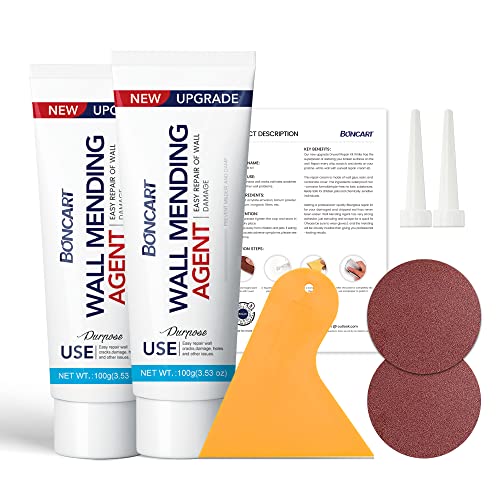
Drywall Repair Kit, 2-Pack Wall Mending Agent, Wall Spackle with Tools
- Includes Repair Tools: 2 wall mending agents, scrapers, sandpaper
- Easy Wall Repair: Quick, simple application with spatula
- Reusable and Versatile: Meet various repair needs
As an affiliate, we earn on qualifying purchases.
As an affiliate, we earn on qualifying purchases.
What Causes Cracks Near Doors and Windows?

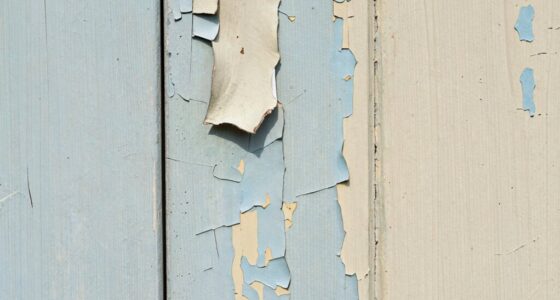
Cracks near doors and windows often result from the natural settling of your home over time. As your house shifts, it puts stress on the drywall around these openings, causing minor cracks to form. These cracks can affect your interior aesthetics, making your walls look less polished. Additionally, they can compromise paint durability, leading to peeling or chipping if not addressed. The movement creates stress points at the corners and edges of doors and windows, where drywall is most vulnerable. To maintain a smooth look and protect your paint job, understanding these causes helps you plan proper repairs, preventing minor issues from escalating into larger, more noticeable problems. Recognizing these signs early ensures your walls stay both attractive and structurally sound. Proper drywall repair techniques can effectively address these issues and restore your walls’ appearance.

Ranekie 14 Pack Drywall Repairs Patch, 4/6/8 Inch Drywall Repair Kit with Extended Self-Adhesive Mesh,Large Hole Patch Repair for Drywall,Heavy Duty Dry Wall Hole Repair Patch
- Complete Wall Repair Kit: 14 aluminum mesh patches in various sizes
- Includes Repair Tools: Scraper and sandpaper for smooth finishing
- High-Quality Materials: Lightweight, durable aluminum with strong adhesion
As an affiliate, we earn on qualifying purchases.
As an affiliate, we earn on qualifying purchases.
How Does House Settling Lead to Wall Cracks?

As your house naturally settles over time, the foundation shifts slightly, causing stress on the walls. This foundation movement can lead to drywall expansion and contraction, resulting in cracks near doors and windows. When the foundation moves unevenly, it creates tension in the wall framing, which then transfers to the drywall. Over time, this stress causes cracks to form, especially at points of weakness like door frames. Understanding this process helps you recognize that some cracks are a normal part of house settling. The table below highlights common effects of foundation movement:
| Effect of Foundation Movement | Result on Drywall |
|---|---|
| Uneven settling | Cracks near corners |
| Shifting foundation | Fractures at seams |
| Structural stress | Visible wall cracks |
Being aware of infrastructure movement can help you distinguish between normal settling and more serious structural issues.

LLPT Drywall Repair Fiberglass Joint Tape, 2" x 100 Ft, White
- Application Areas: Wall cracks, ceiling joints, drywall repairs
- Material: Fiberglass mesh for durability
- Resistance: Resists cracks, tears, shrinking
As an affiliate, we earn on qualifying purchases.
As an affiliate, we earn on qualifying purchases.
How Do Environmental Changes Cause Drywall Cracks?
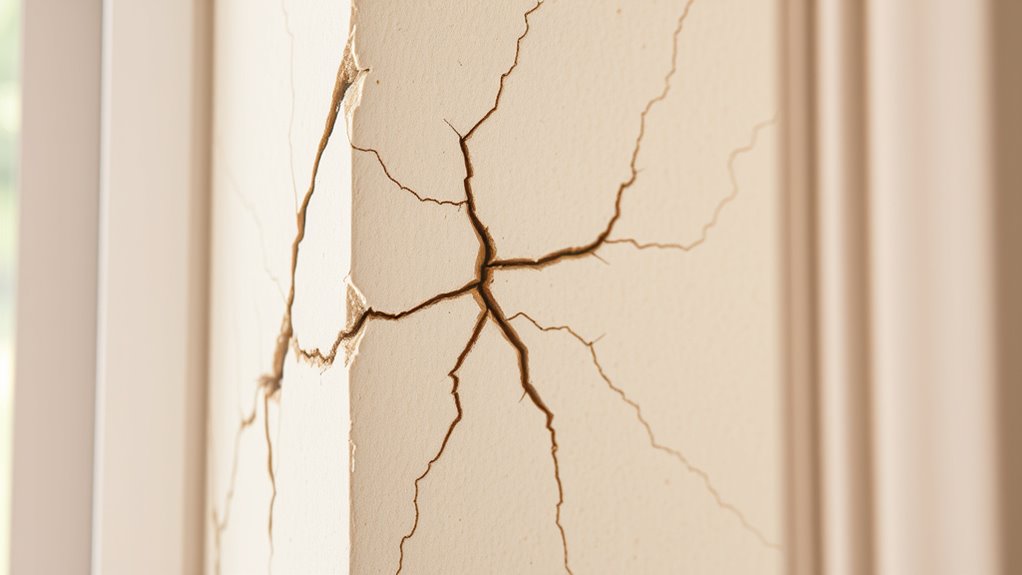
Environmental changes, such as fluctuations in temperature and humidity, can cause drywall to expand and contract. When temperatures rise or fall, the materials in your walls respond through material expansion or contraction. During hot days, drywall may expand slightly, while cooler temperatures cause it to contract. Repeated temperature fluctuations can weaken the drywall’s surface, leading to cracks, especially near doors and windows where stress concentrates. High humidity levels can also cause drywall to absorb moisture, swelling and then shrinking as conditions change. Over time, these constant movements create stress points that develop into visible cracks. Additionally, material expansion and contraction can weaken the drywall’s integrity over time, contributing to the development of cracks. Understanding how environmental changes impact drywall helps you recognize that these cracks aren’t always due to poor installation or settling—they can be a natural response to changing conditions.

Peohud Drywall Corner Tape, 100 Feet by 2 Inch Reinforced Drywall Corner Bead, Inside Outside Corner Tape with Metal for Wall Crack Repair, No Adhesive Side
- Length and Width: 100 feet long, 2 inches wide
- Reinforced Material: Galvanized steel strips on paper base
- Durability: Resistant to rust and wear
As an affiliate, we earn on qualifying purchases.
As an affiliate, we earn on qualifying purchases.
Why Do Poor Installations Result in Cracks?
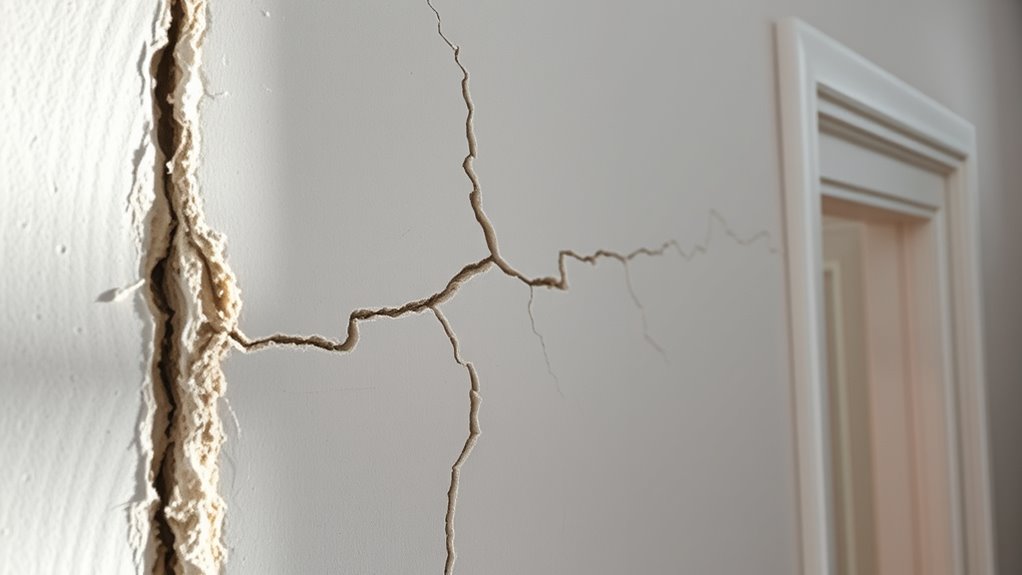
Poor installation practices can substantially increase the likelihood of drywall cracks near doors and windows. When drywall isn’t installed correctly, it can compromise the interior aesthetics, making imperfections more noticeable. Using subpar drywall materials or rushing the process can lead to weak seams that are prone to cracking over time. Improperly fastened drywall may shift or settle, especially around door and window openings, where stress concentrates. If joints aren’t properly taped and mudded, cracks will develop as the wall moves or expands. Additionally, failing to allow adequate drying time during installation weakens the overall structure. These poor practices result in a compromised finish, causing cracks that detract from your interior’s appearance and durability. Proper installation techniques are essential to prevent these issues and ensure a smooth, long-lasting surface.
How Can You Spot and Fix Cracks Near Doors and Windows?
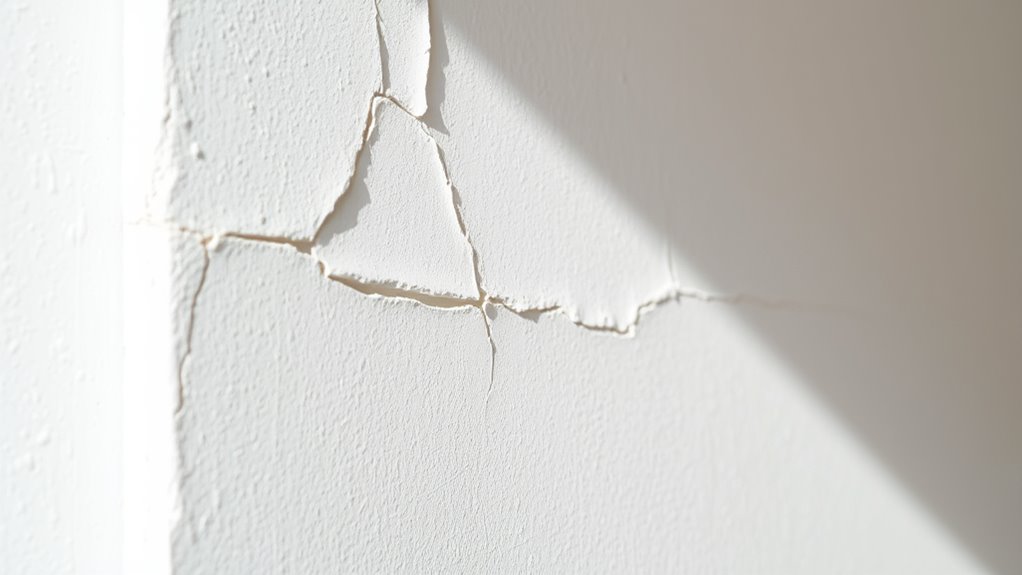
Cracks near doors and windows are often noticeable and can indicate underlying issues with the drywall. Look for signs like paint peeling around the cracks or mold growth, which suggest moisture problems or ongoing deterioration. To spot these issues, inspect the area closely—check for hairline cracks, uneven surfaces, or bulging drywall. Fix small cracks with spackle or joint compound, then sand and repaint for a seamless finish. Larger or recurring cracks may require professional assessment, especially if mold growth is present, as it indicates moisture intrusion. Addressing the root cause—such as leaks or structural shifts—prevents future cracking. Regular inspections help catch issues early, saving you from costly repairs and maintaining the integrity of your walls. Conducting proper assessments ensures you identify the underlying causes effectively.
Frequently Asked Questions
Can Humidity Fluctuations Worsen Drywall Cracks Over Time?
Yes, humidity fluctuations can worsen drywall cracks over time. When humidity levels change, moisture intrusion causes drywall to expand and contract, stressing the material and enlarging existing cracks. To prevent this, you should maintain proper humidity control in your home, ideally between 30-50%, and address any moisture intrusion issues promptly. Consistent humidity levels help keep drywall stable and reduce the likelihood of cracks worsening.
Are Certain Door or Window Materials More Prone to Causing Cracks?
Did you know that poorly installed vinyl window frames cause 60% of drywall cracks near doors and windows? Certain materials like vinyl or lightweight aluminum are more prone to expansion, leading to door frame expansion and stress on the drywall. Faulty window installation can also create gaps and movement, increasing crack risk. Choosing durable materials and ensuring proper installation help prevent these issues and keep your walls crack-free.
How Long Does It Take for Drywall Cracks to Appear After Construction?
Drywall cracks can appear within months after construction or even years later, depending on factors like building settlement and drywall aging. You might notice cracks as early as six months if the building settles unevenly, or they could take longer if the drywall naturally ages and expands. Regular inspections can help you catch these cracks early, preventing further damage and ensuring your home remains stable and comfortable over time.
Do Seasonal Temperature Changes Impact Drywall Stability?
Seasonal temperature changes can seriously impact drywall stability, like a rollercoaster ride for your walls. When temperatures drop or rise, thermal expansion and material contraction occur, causing drywall to shift and develop cracks near doors and windows. These natural movements are normal but can lead to cracks over time if not addressed. To prevent this, maintain consistent indoor temperatures and allow your walls to adapt gradually to seasonal changes.
What Are the Long-Term Risks of Ignoring Drywall Cracks Near Doors and Windows?
Ignoring drywall cracks near doors and windows can lead to serious issues over time. You risk foundation shifting, which worsens cracks and causes structural instability. Pest infestations may also find their way through these openings, damaging your home further. If you neglect these cracks, you could face costly repairs and compromised safety. It’s essential to address them early to prevent long-term damage and maintain your home’s integrity.
Conclusion
Cracks near doors and windows are common but manageable. Understanding that about 70% of drywall cracks stem from settling or environmental shifts helps you stay alert. By addressing issues early, you can prevent small cracks from becoming major repairs. Regular inspections and timely fixes keep your home safe and looking great. Don’t ignore these signs—acting quickly can save you hundreds in repair costs and maintain your home’s integrity for years to come.