Caramelization and browning may look similar, but they’re different processes. Caramelization happens when sugar heats above 320°F, causing sugar molecules to break down and develop sweet, toasty flavors with a shiny amber color. Browning involves reactions between proteins and sugars, like the Maillard reaction, leading to darker, matte surfaces with complex aromas. Understanding these differences helps improve your cooking control—keep exploring to learn how to master each technique perfectly.
Key Takeaways
- Caramelization involves sugar-only heating above 320°F, producing a shiny, amber color, while browning involves proteins and sugars at lower temperatures.
- Caramelization creates sweet, toasty flavors; browning (Maillard reaction) yields complex, roasted aromas and darker crusts.
- Caramelization occurs through sugar breakdown; browning involves chemical reactions between amino acids and reducing sugars.
- Visual cues differ: caramelization results in shiny, deep amber; browning appears as matte, darker crusts.
- Temperature control is crucial: caramelization needs high heat; browning occurs at moderate temperatures with specific ingredient interactions.
candy thermometer for caramelization
As an affiliate, we earn on qualifying purchases.
As an affiliate, we earn on qualifying purchases.
What Is Caramelization and How Does It Work?
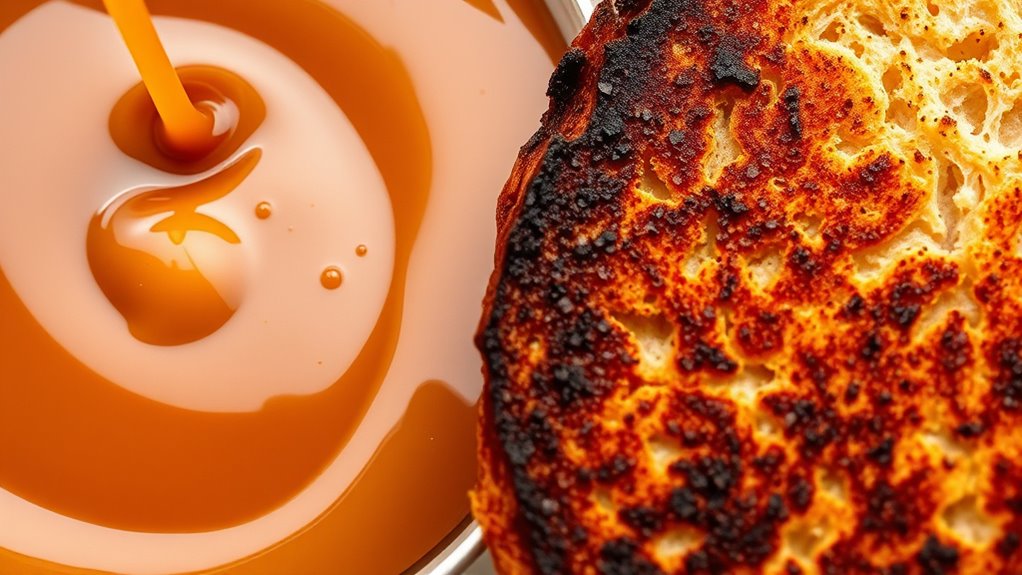
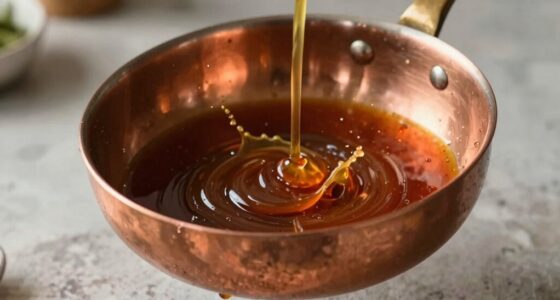
Caramelization is a chemical process that occurs when sugars are heated to high temperatures, causing them to break down and develop new flavors and colors. As you heat sugar, it begins to melt, transforming into a liquid known as sugar melting. During this process, the sugar molecules undergo complex reactions, resulting in the formation of caramel color, which gives foods a rich, amber hue. This browning effect is a signature of caramelization, creating a sweet aroma and deeper flavor profile. The process typically starts around 320°F (160°C), where the sugar melts and then gradually darkens as it continues to cook. Understanding how sugar melting leads to caramel color helps you control the process, ensuring the desired taste and appearance without burning the sugar. Additionally, controlling the temperature is essential for maintaining energy efficiency in cooking processes, aligning with sustainable practices.
Maillard reaction cooking kit
As an affiliate, we earn on qualifying purchases.
As an affiliate, we earn on qualifying purchases.
How Does Browning Differ From Caramelization?
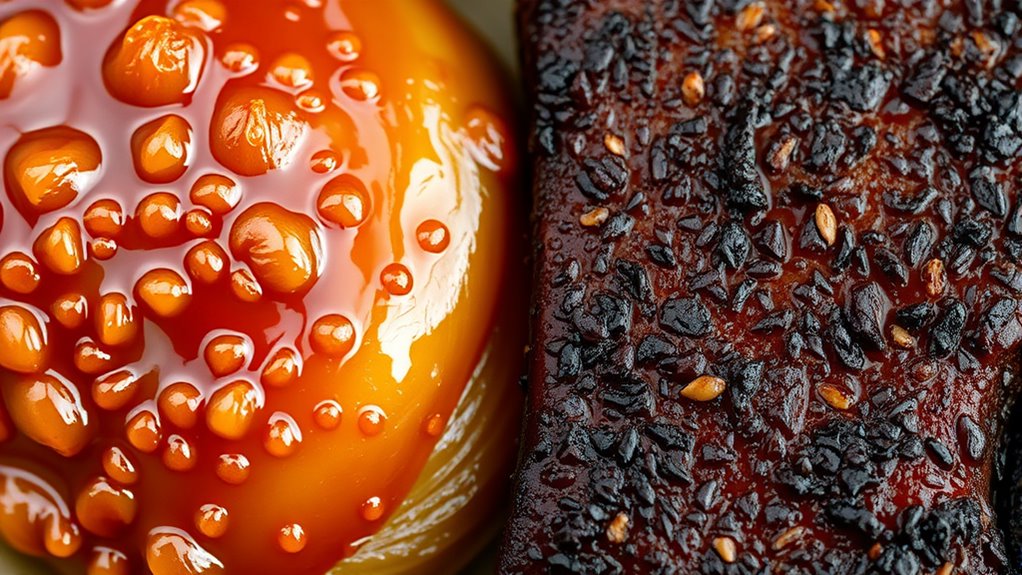
While caramelization involves the chemical reactions that sugars undergo when heated, browning encompasses a broader set of processes that occur during cooking. Browning includes reactions like the Maillard reaction, which involves amino acids and sugars, as well as caramelization. Unlike caramelization, which focuses solely on sugar breakdown, browning can happen with proteins and other food components. As a culinary technique, browning enhances flavor, aroma, and appearance through complex chemical reactions. It’s not just about sugar turning brown; it also involves interactions between proteins and sugars, creating different flavors and textures. So, browning is a more diverse process that occurs in many cooking methods, whereas caramelization is specific to sugar-rich foods heated to high temperatures.
sugar caramelization thermometer
As an affiliate, we earn on qualifying purchases.
As an affiliate, we earn on qualifying purchases.
What Ingredients and Conditions Trigger Each Process?
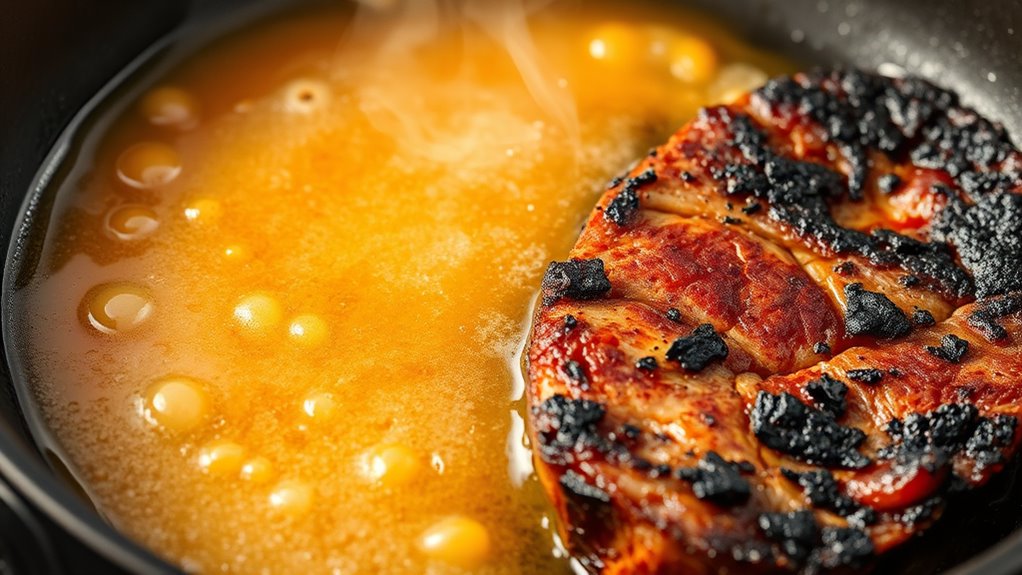
Both caramelization and browning are triggered by specific ingredients and conditions that promote their respective chemical reactions. For sugar caramelization, you’ll need sugars heated to high temperatures, usually above 320°F (160°C), which causes sugar molecules to break down and form complex compounds, resulting in the rich flavors and golden-brown color. In contrast, browning via the Maillard reaction requires amino acids and reducing sugars, like glucose and fructose, heated together at around 140–165°F (60–75°C). This process intensifies with dry heat, moderate temperatures, and low moisture, creating new flavor profiles and browning. The presence of moisture can slow both processes, but specific temperature ranges and the availability of sugars or amino acids are key to triggering caramelization or the Maillard reaction. Additionally, understanding the chemical processes behind these reactions helps in controlling the desired outcome in cooking and food preparation.
browning and caramelization cooking tools
As an affiliate, we earn on qualifying purchases.
As an affiliate, we earn on qualifying purchases.
How Can You Spot Caramelization and Browning?
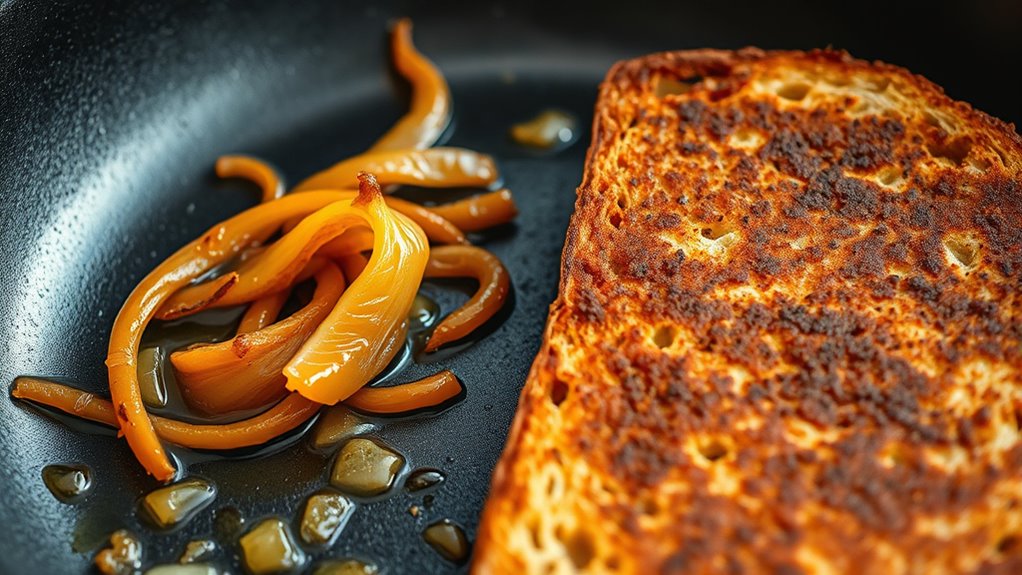
You can identify caramelization and browning by their visual cues and aroma. Caramelization typically shows a deep amber to dark brown color, with a shiny, slightly sticky surface. The smell indicators include a sweet, toasty aroma reminiscent of caramel or toasted sugar. Browning, especially from Maillard reactions, often results in a matte, uneven darker crust with a more complex scent. Recognizing the distinctive coloration helps differentiate the two processes. Here are some key signs:
- Rich, golden-brown color for caramelization
- Shiny, glossy surface
- Sweet, caramel-like smell indicators
- Matte, darker, sometimes uneven surface for browning
- Complex, roasted aroma with hints of nuttiness
Where Do You Find These Reactions in Cooking?
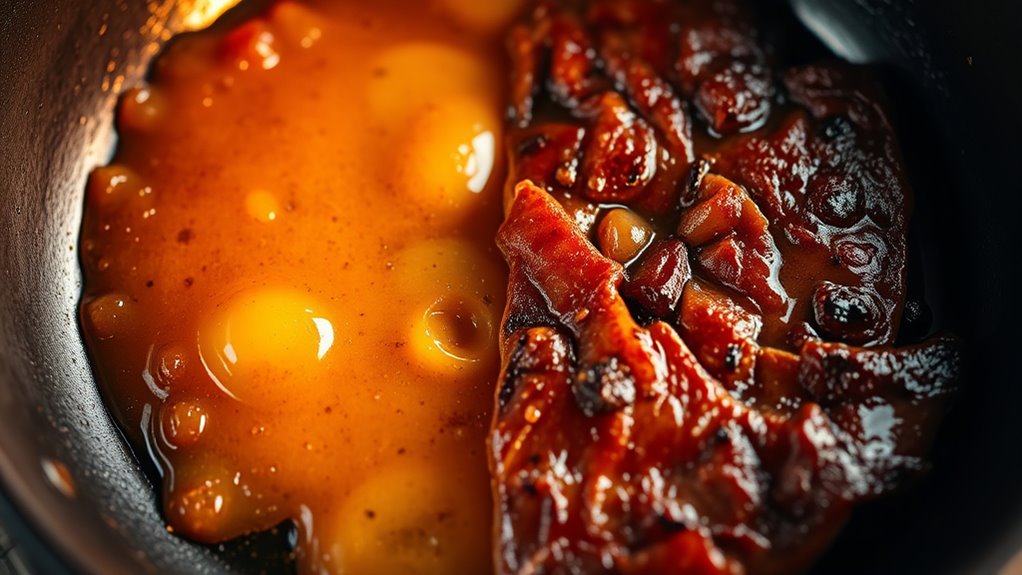
You’ll notice these reactions when you’re cooking meat, as they add rich flavors during searing or roasting. Baking bread also relies on browning to develop its crust and aroma. Understanding where these reactions happen helps you control the taste and texture of your dishes.
Flavor Development in Meat
Flavor development in meat occurs primarily through the Maillard reaction and caramelization during cooking. These reactions create complex, savory flavors that make your meat more appealing. When you marinate meat, you introduce ingredients that enhance these processes, boosting flavor and tenderness. As you cook, the heat causes sugars and amino acids to react, producing rich aromas and browning.
- The Maillard reaction develops deep, roasted notes on the surface.
- Caramelization adds sweetness and depth.
- Meat marination helps pre-activate flavor compounds.
- Proper searing maximizes browning and flavor enhancement.
- Cooking temperature influences the intensity of these reactions.
Baking Bread Techniques
Baking bread involves key chemical reactions that develop its characteristic flavor and crust. During baking, sugar chemistry plays a crucial role, especially through caramelization, which adds sweetness and depth. Equally important is the Maillard reaction, involving amino acids and reducing sugars, creating complex flavors and a rich brown crust. Here’s a quick look at where these reactions occur:
| Reaction Type | Key Features |
|---|---|
| Caramelization | Sugar breaks down, producing sweet, nutty flavors |
| Maillard Reaction | Amino acids and sugars combine, forming complex aromas |
| Temperature Range | 300°F to 400°F (149°C to 204°C) |
| Effect on Crust | Deepens color, adds flavor |
| Flavor Development | Both reactions create unique, appealing tastes |
Understanding these reactions helps you control bread’s flavor and appearance, especially when considering factors like heat management to optimize the reactions’ outcomes.
How to Control and Perfect Caramelization and Browning

Controlling and perfecting caramelization and browning requires careful attention to temperature, timing, and ingredient composition. To master these processes, understand sugar chemistry and how heat affects sugars and amino acids. Use a food thermometer to monitor exact temperatures, avoiding over- or under-browning. Adjust cooking times based on ingredient moisture and sugar concentration. Keep in mind that the Maillard reaction, involving amino acids and sugars, also influences browning, especially in proteins. For precise control, consider these key points:
- Maintain consistent heat to prevent burnt or underdeveloped flavors
- Use ingredients with balanced sugar content for even caramelization
- Stir regularly to promote uniform browning
- Preheat your pan or oven for better temperature control
- Adjust cooking time based on desired color and flavor intensity
- Understanding sugar chemistry is essential for predicting and controlling caramelization and browning outcomes.
Common Mix-Ups: Clearing Up Confusions in Cooking Terms

Understanding the differences between caramelization and browning can be confusing because the terms are often used interchangeably, but they refer to distinct processes. Caramelization involves heating sugar types at specific temperature thresholds, typically between 320°F and 350°F, causing sugars to break down and develop rich flavors and colors. Browning, on the other hand, includes various reactions like the Maillard reaction, which occurs when proteins and sugars interact at higher temperatures, usually above 300°F. It’s common to mix these up because both produce brown hues and complex flavors. However, knowing that caramelization is sugar-specific and temperature-dependent helps clarify the distinction. Recognizing these nuances prevents mistakes and helps you control cooking techniques more precisely, ensuring your dishes turn out perfectly every time.
Frequently Asked Questions
Can Caramelization or Browning Occur Simultaneously in a Recipe?
Yes, caramelization and browning can happen simultaneously in your recipe. As you heat sugar, sugar crystallization slows down while caramelization creates the rich flavors and color. At the same time, the Maillard reaction occurs between amino acids and sugars, producing browning and complex tastes. You’ll notice these processes overlap, giving your dish depth and a layered flavor profile. Keep an eye on temperature to balance both reactions effectively.
Are There Specific Utensils That Promote Better Caramelization or Browning?
You should choose utensils made from materials with good heat distribution, like copper or cast iron, to promote better caramelization or browning. These materials heat evenly, preventing hot spots that can cause uneven cooking. Avoid thin or low-quality pans, which can lead to inconsistent results. Using the right utensil guarantees your food browns or caramelizes uniformly, giving you better flavor and texture in your dishes.
How Do Temperature Variations Affect Each Process’s Outcome?
Sure, cranking up the heat might turn your sugar into a smoky mess or give your meat a lovely crust, but beware—the temperature effects can make or break your process outcomes. Too high, and caramelization burns; too low, and browning drags on. You need just the right heat to coax those flavors out without turning your kitchen into a smoky disaster zone. Balance, my friend, is key.
Can You Reverse Over-Browned Food Without Losing Quality?
You can sometimes reverse over-browned food by adding moisture and gentle heat, but it’s tricky. For example, if sugar types like sucrose are overcooked, adding a splash of water and simmering can soften the caramelized layers. Using gentle cooking techniques helps prevent further browning. Keep in mind, though, that some quality loss might occur, so it’s best to monitor your temperature and timing carefully to avoid overdoing it in the first place.
Do Different Sugars Influence Caramelization Differently?
Yes, different sugar types influence caramelization differently because each has unique flavor profiles. For example, glucose caramelizes quickly and offers a mild sweetness, while sucrose provides richer, more complex flavors. Fructose caramelizes at lower temperatures, producing a more intense caramel taste. Your choice of sugar affects not just the color but also the final flavor, so selecting the right type depends on the desired taste and appearance of your dish.
Conclusion
Understanding the difference between caramelization and browning helps you master your cooking. Did you know that caramelization begins at around 320°F, while browning can occur at lower temperatures? By recognizing these processes, you can enhance flavors and textures in your dishes. With a little practice, you’ll control these reactions perfectly. So next time you cook, remember: mastering these techniques can turn simple ingredients into culinary masterpieces!


![GPT-5.6 Sol Ultra produces proof of the Cycle Double Cover Conjecture [pdf]](https://micronomicon.com/wp-content/uploads/2026/07/gpt-5-6-sol-ultra-produces-proof-of-the-cycle-double-cover-conjecture-pdf-featured-260x140.jpg)