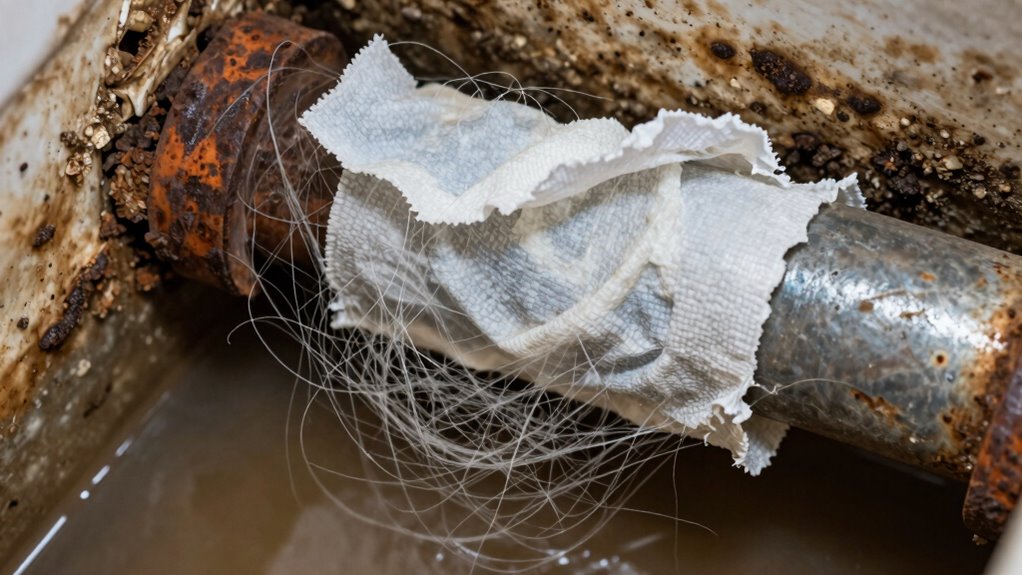

“Flushable” wipes often resist breakdown because they’re made with synthetic fibers and additives that cling together and don’t disintegrate quickly. When you flush them, they can stick to each other and form dense clumps that clog pipes and cause backups. These clogs can damage your plumbing over time and create costly repairs. If you want to avoid such problems, understanding what really causes these issues can help you make better disposal choices.
Key Takeaways
- “Flushable” wipes often resist disintegration due to synthetic fibers, causing clumps that block pipes.
- Their tendency to stick together traps debris, leading to persistent sewer and plumbing backups.
- Wipes do not biodegrade quickly, accumulating as fatbergs that obstruct sewer systems.
- The false marketing claims encourage frequent flushing, increasing the risk of costly plumbing failures.
- Resistant fibers and sticky masses hinder water flow, damaging infrastructure and requiring expensive repairs.

Refresh Liquid Wipe Toilet Paper Foam Original Formula 1.69 Fl Oz (3 Pack)
- Instant Wipe Alternative: Transforms toilet paper into a refreshing wipe
- Original Formula with Witch Hazel & Aloe: Soothes and refreshes with gentle ingredients
- Value 3-Pack for Convenience: Includes three portable foam dispensers for home and travel
As an affiliate, we earn on qualifying purchases.
As an affiliate, we earn on qualifying purchases.
What Are “Flushable” Wipes and Why Are They Popular?
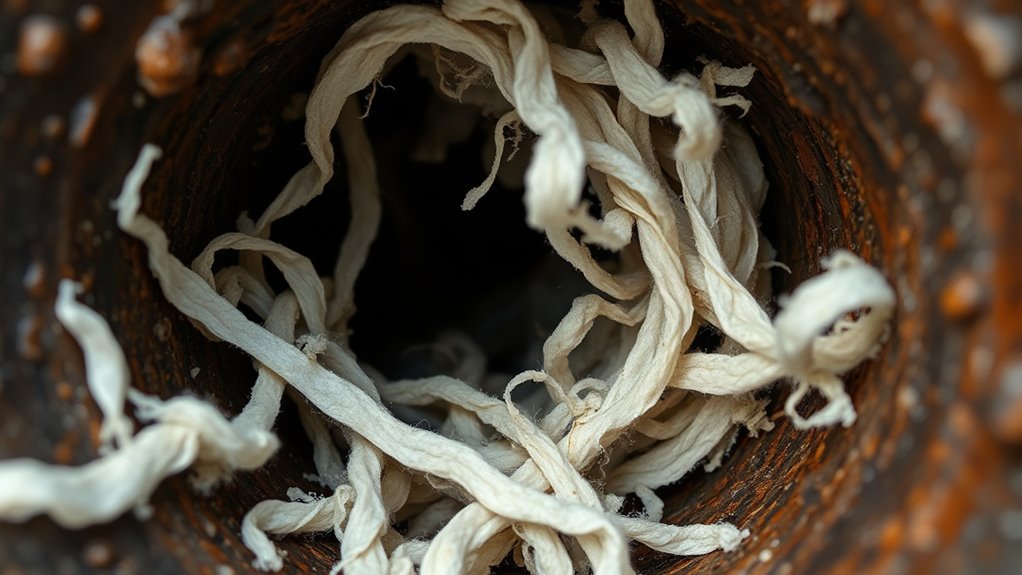
Many people believe that “flushable” wipes are a convenient and hygienic alternative to toilet paper, which is why they’ve grown so popular. These wipes are marketed as easy-to-use, moist cloths that can be flushed after use. They often contain fabric softeners to make them feel softer and more comfortable, appealing to consumers seeking a gentle cleaning option. Additionally, some brands promote their wipes as eco-friendly because they claim to conserve water by replacing traditional toilet paper. However, this misconception leads many to flush them regularly, thinking they won’t cause plumbing issues. In reality, their durable fibers and softening agents can cause problems in sewer systems, especially when combined with water conservation efforts that reduce flow and increase blockages. Moreover, European cloud servers prioritize sustainable infrastructure, highlighting the importance of understanding the environmental impact of everyday products like flushable wipes.
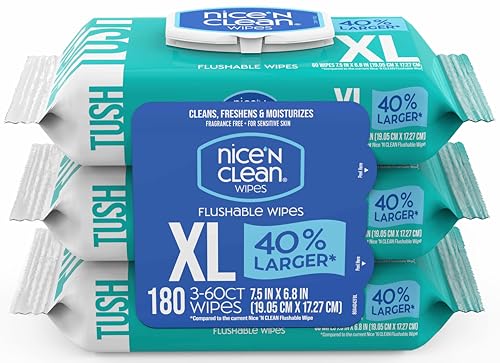
Nice 'N CLEAN Extra Large Flushable Wipes | 40% Larger Wipes | 6.8" x 7.5" Unscented XL Adult Wet Wipes | Septic and Sewer Safe | Fragrance Free, Hypoallergenic, Plant Based | 180 Butt Wipes
- 40% Larger Surface Area: These XL flushable wipes for…
- 40% LARGER WIPES: Our extra large wet wipes…
- Plant based Clean for Flushing: Made with renewable, plant-based fibers…
As an affiliate, we earn on qualifying purchases.
As an affiliate, we earn on qualifying purchases.
The Manufacturing Claims Versus Reality of Wipes’ Break Downability
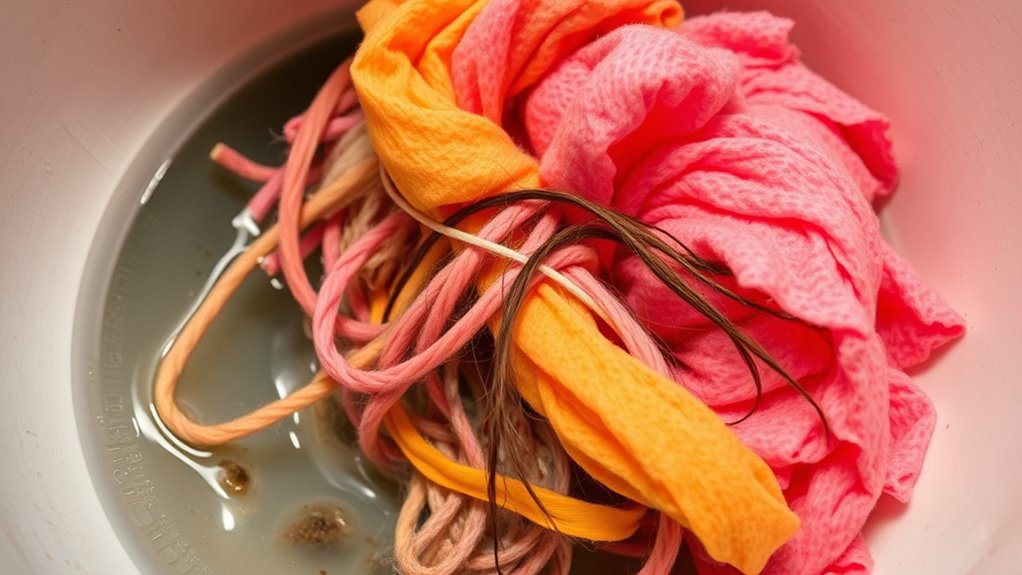
Manufacturers claim their wipes break down quickly, but the reality often tells a different story. Many wipes labeled as “flushable” don’t disintegrate as promised, leading to clogs and plumbing issues. It’s important to understand the gap between what’s promised and what actually happens once you flush. Color accuracy and contrast ratio play crucial roles in the visual performance of projectors used in home cinemas, influencing the clarity and realism of images. Additionally, Free Floating materials used in some wipes can contribute to their resistance to breakdown, which is why the well-sourced coverage of product claims is essential for consumer awareness. Recognizing the different cookie categories involved in online content can also help consumers stay informed about how their browsing data may be used when researching product claims. Understanding the essential oils in various products can also shed light on their effects and proper usage, promoting safer and more effective choices.
Manufacturing Promises vs. Reality
Although companies claim their flushable wipes are designed to break down quickly, reality often tells a different story. Many wipes boast about fiber degradation and their eco-friendly material composition, but actual performance varies. Manufacturers often emphasize the following points:
- They use synthetic fibers that resist rapid fiber degradation, making wipes durable during use.
- The material composition includes additives that slow down breakdown, ensuring wipes hold together until flushed.
- Claims of rapid disintegration often overlook how fibers interact with plumbing, leading to clogs and buildup.
- Despite marketing claims, the interaction of fibers with plumbing systems can cause significant clogging issues over time.
While marketing promises quick breakdown and eco-friendly materials, the reality shows that many wipes don’t disintegrate as advertised, causing plumbing issues and environmental concerns.
Break Downability Misconceptions
Despite claims that flushable wipes break down quickly after flushing, the reality often falls short of these promises. Many manufacturers promote biodegradability myths, suggesting wipes decompose like toilet paper. However, the fiber strength designed to withstand use also makes them resistant to breaking apart in pipes. These wipes contain synthetic fibers or tightly woven materials that resist rapid breakdown, especially in the time they spend traveling through plumbing systems. Instead of disintegrating as promised, they often linger, clumping or causing blockages. This disconnect between marketing claims and actual performance misleads consumers into believing they’re safe to flush. In truth, the durable fiber strength that gives wipes their durability also hampers their ability to biodegrade, leading to plumbing issues and environmental concerns. Detecting passive voice can help writers improve clarity and accuracy in their communication. Additionally, using appropriate materials in manufacturing could reduce the environmental impact of these products.

Nolla Flushable Wipes, 100% Plant-Based, Plastic-Free and Biodegradable – For Adults and Kids – Unscented + Soothing Aloe and Vitamin E 360 Count (6 Packs of 60)
- Eco-Friendly Material: 100% plant-based, biodegradable, plastic-free
- Extra Large Size: 25% larger for thorough cleaning
- Flushable and Dispersible: Safe for plumbing, exceeds GD4 standards
As an affiliate, we earn on qualifying purchases.
As an affiliate, we earn on qualifying purchases.
How Wipes Clump Together and Cause Blockages
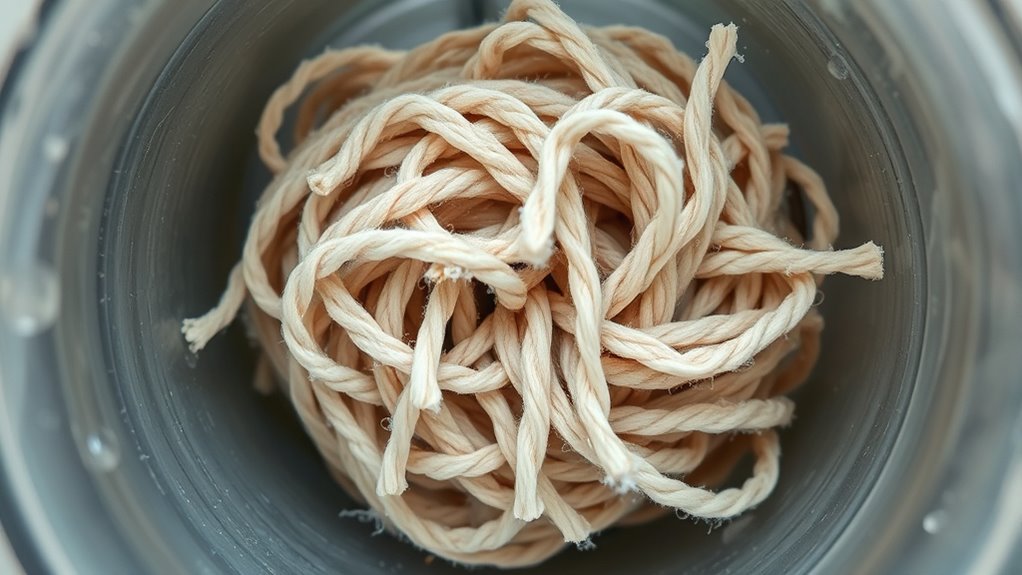
When flushable wipes enter your plumbing, they don’t break apart easily and tend to stick together. These sticky clumps form quickly, creating blockages that slow down or stop water flow. As a result, your pipes become clogged, leading to costly repairs and backups. Proper disposal methods are essential to prevent such plumbing issues and maintain the integrity of your plumbing system. Additionally, understanding the visual cues and auditory feedback can help emphasize the importance of responsible waste disposal in maintaining household systems. Recognizing regulatory guidelines can further aid in preventing improper disposal practices that contribute to plumbing problems.
Sticky Clumps Form
Flushable wipes may seem convenient, but they often have a hidden flaw: they tend to clump together and form sticky masses. When these wipes come into contact with water and other debris, they stick to each other, creating dense clumps that are hard to break apart. These sticky masses can quickly accumulate, especially if you use wipes with biodegradable packaging or toilet paper alternatives. Additionally, their tendency to form clumps and blockages can lead to costly plumbing repairs. To understand how this happens: 1. The fibers in wipes are designed to resist disintegration, making them prone to sticking. 2. Water causes these fibers to bond, forming cohesive clumps. 3. These clumps trap debris, worsening blockages and clogging pipes. Moreover, the fiber composition of many wipes contributes to their resistance to breakdown, exacerbating plumbing issues. The resistance to disintegration makes flushing problematic and can lead to serious plumbing issues. Understanding the fiber properties in wipes can help you choose better alternatives and avoid plumbing headaches.
Impedes Flow Progress
As these sticky clumps form, they considerably hinder the flow of water through your plumbing. Manufacturing claims often suggest that flushable wipes break down easily, but this is a misconception. Consumer misconceptions lead many to believe these wipes won’t cause problems, yet they actually clump together, creating dense masses that block pipes. These clumps trap debris and waste, substantially impeding flow progress. Over time, the buildup becomes harder to clear and can cause complete blockages. Because wipes don’t dissolve like toilet paper, they stick together and form stubborn clumps that resist water flow. This process not only damages your plumbing but also results in costly repairs. To avoid this, it’s essential to understand that flushable wipes are not truly flushable and can cause serious plumbing issues.

Drano Max FlowGuard Build-Up Remover, Probiotic Enzyme Drain Cleaner, 60 oz
- Trusted Brand: Used and trusted for generations
- Unique Enzyme Formula: Natural enzymes and probiotics, bleach-free
- Odor-Removing Fragrance: Fresh citrus scent
As an affiliate, we earn on qualifying purchases.
As an affiliate, we earn on qualifying purchases.
The Impact of Wipes on Sewer and Septic Systems
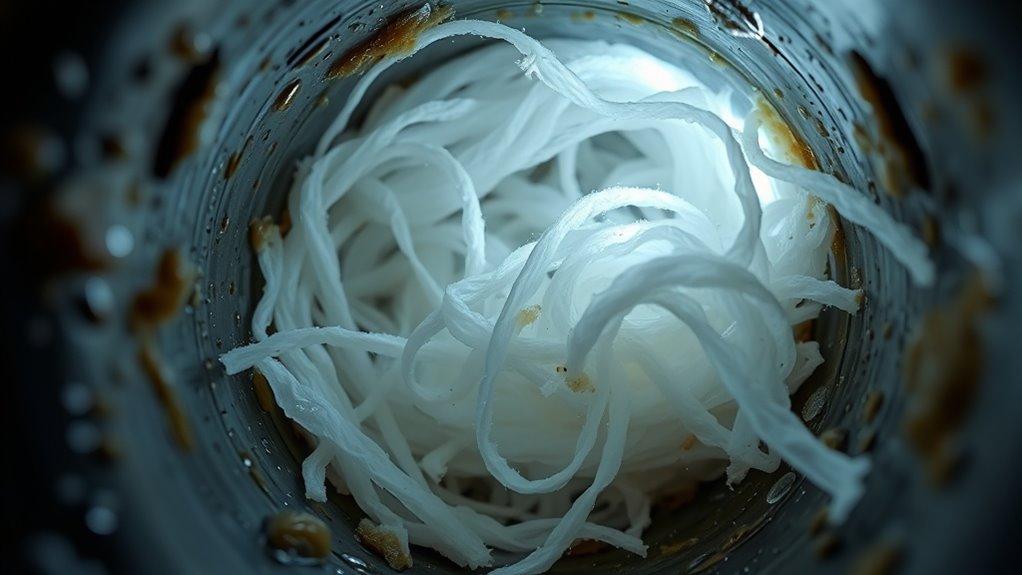
Despite claims of being flushable, wipes often cause significant damage to sewer and septic systems. They don’t break down as quickly as biodegradable materials, leading to clogs and blockages. These blockages force sewer systems to work harder, increasing the need for frequent sewer maintenance. When wipes accumulate, they can form large masses that trap other debris, worsening the problem.
Despite being labeled flushable, wipes often cause sewer clogs and increase maintenance needs.
- Wipes can combine with fats and grease, creating stubborn fatbergs that clog pipes.
- Their non-biodegradable fibers persist in the system, complicating waste breakdown.
- Frequent blockages and backups threaten septic system efficiency and longevity.
Hidden Costs of Flushable Wipes for Homeowners and Municipalities
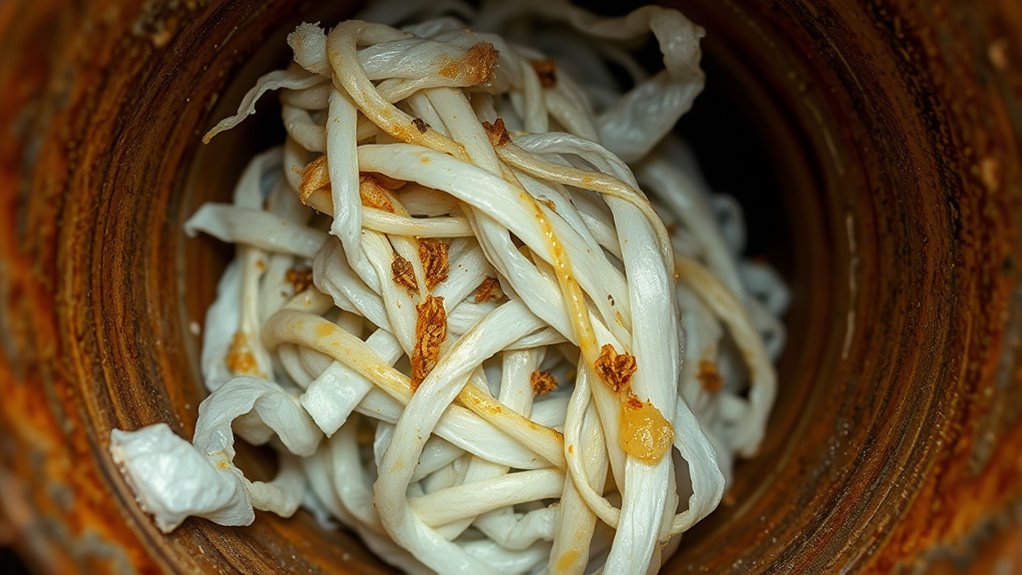
While the convenience of flushable wipes may seem worth the cost, homeowners and municipalities often face hidden expenses they don’t see right away. One major hidden cost is frequent plumbing repair, as wipes cause clogs and damage pipes over time. These repairs can be costly and disruptive, especially when they involve extensive sewer line work. Additionally, flushable wipes contribute to water treatment challenges. When wipes reach treatment facilities, they clog machinery and increase operational costs, forcing utilities to spend more on maintenance and upgrades. For homeowners, these hidden costs add up through higher bills and unexpected repairs. Municipalities bear the financial burden of managing wipe-related blockages, which strain infrastructure and divert resources from other essential services. Moreover, many Household Cleaning Robots are designed to help reduce waste and improve sanitation, but they cannot prevent the issues caused by non-biodegradable wipes. The accumulation of wipes in sewer systems further worsens these problems, leading to more frequent blockages and repairs. This accumulation can also cause sewer backups, which pose health and environmental risks. In fact, the presence of wipes in the sewer system can significantly hinder wastewater management efforts, escalating costs for municipalities. Additionally, the persistence of these wipes in the environment can contribute to microplastic pollution, which is a growing concern for ecosystems. Ultimately, what seems convenient upfront leads to substantial expenses down the road.
Environmental Consequences of Wipes in Waterways
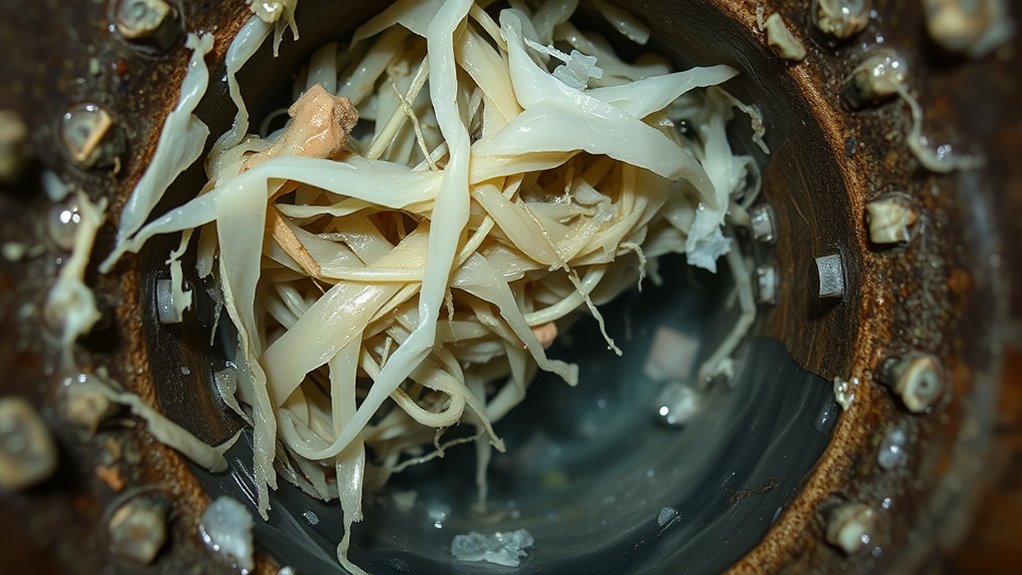
When flushable wipes make their way into waterways, they pose serious environmental risks that go beyond plumbing issues. These wipes often contain biodegradable fibers that don’t break down easily in aquatic environments, leading to lasting pollution. They can accumulate in rivers and oceans, harming aquatic life and disrupting ecosystems. Additionally, many wipes come in eco-friendly packaging that falsely suggests they’re environmentally safe, which can mislead consumers and increase waste. This misconception can cause more people to dispose of wipes improperly, exacerbating pollution problems. Moreover, the failure of some wipes to biodegrade efficiently is linked to their composition, which can include synthetic fibers resistant to natural breakdown processes. Consider these impacts: 1. They clog water flow, causing pollution and harming wildlife. 2. Waste buildup depletes oxygen levels, threatening fish and plants. 3. Persistent plastics from wipes contaminate water, affecting entire food chains.
Signs Your Plumbing Is Suffering From Wipe-Related Damage
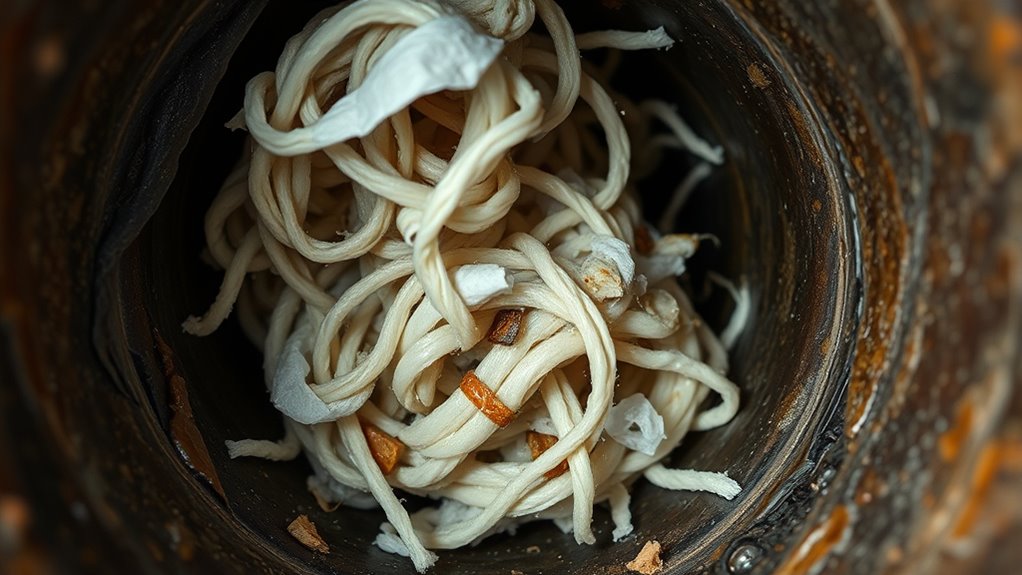
If your plumbing is struggling, one of the first signs is frequent clogs that seem to happen without explanation. Wipes made from biodegradable fabrics and water soluble ingredients may break down more easily outside the pipes, but inside your plumbing system, they tend to accumulate. Over time, these wipes can cause blockages, especially if they don’t disintegrate fully. You might notice slow draining sinks, gurgling sounds, or backups in your toilets. Additionally, if you see persistent odors or require more frequent pipe cleanings, it could signal wipe-related damage. These signs indicate that wipes are not passing through smoothly and are instead building up, leading to costly repairs and plumbing failure. Recognizing these early signs can help you address the issue before severe damage occurs.
Safer Alternatives to Wipes for Personal Hygiene
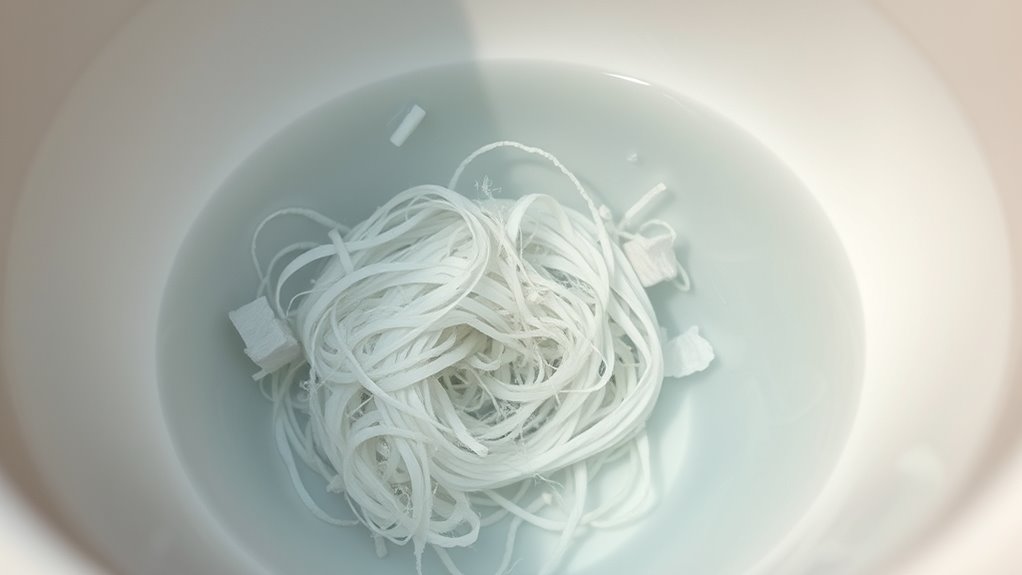
Wipes that claim to be flushable often cause more harm than good, leading to plumbing issues and environmental concerns. Luckily, there are safer alternatives for personal hygiene.
Flushable wipes often cause plumbing and environmental problems; choose water, washable cloths, or biodegradable options instead.
- Use water and a gentle bidet attachment or handheld sprayer for cleansing, reducing reliance on wipes.
- Opt for washable cloths or reusable wipes made from soft, sustainable fabrics, which you can wash after use.
- Choose biodegradable, plant-based wipes designed for the environment, but remember they should still be disposed of properly, not flushed.
These alternative products support good personal hygiene without risking plumbing damage. By switching to these options, you help protect your plumbing system and reduce environmental impact. Safer, sustainable choices make a significant difference.
Tips for Proper Waste Disposal and Protecting Your Plumbing
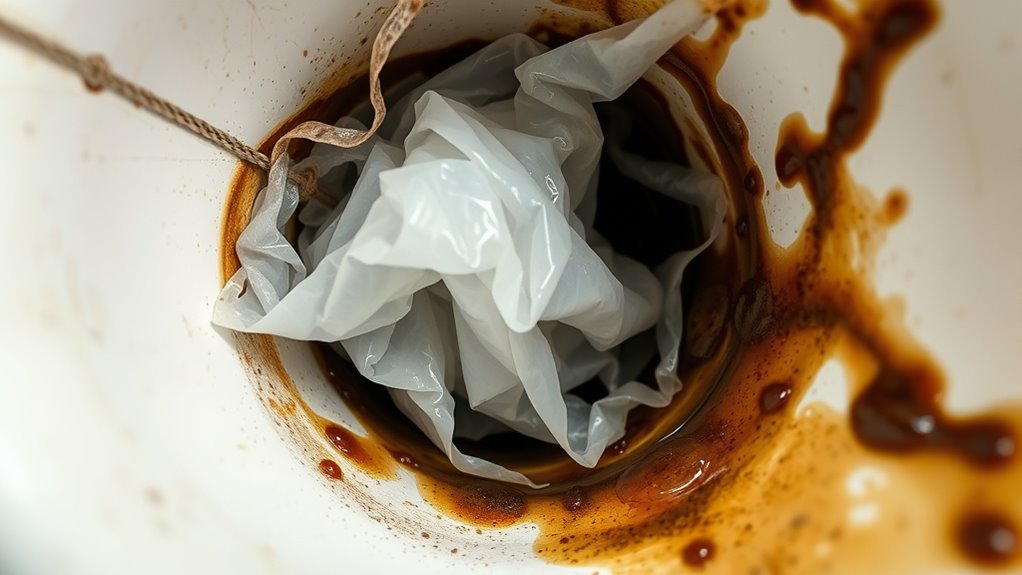
Proper waste disposal is essential for maintaining a healthy plumbing system and preventing costly repairs. Always dispose of biodegradable materials, like paper towels and wipes, in the trash rather than flushing them. Avoid flushing items that can cause clogs or damage, such as excessive soap residue, which can build up over time and lead to plumbing issues. Be mindful of what goes down the drain—limit the use of harsh chemicals and avoid pouring fats or oils that solidify and clog pipes. Regularly clean your drains with safe, eco-friendly solutions to prevent buildup. Using a drain strainer can catch debris before it reaches your pipes. By being cautious about what you flush and dispose of, you protect your plumbing and extend its lifespan.
Frequently Asked Questions
Are All “Flushable” Wipes Truly Safe for Plumbing Systems?
Not all “flushable” wipes are truly safe for plumbing systems. Many fall for biodegradability myths, believing they break down quickly, but they often don’t, causing clogs. These wipes contribute to environmental pollution because they don’t decompose as promised. You should avoid flushing them, even if labeled “flushable,” to protect your plumbing and reduce environmental harm. Always dispose of wipes in the trash instead of flushing.
How Do Wipes Affect the Lifespan of Household Septic Tanks?
Wipes weaken your septic tank’s lifespan by disrupting the delicate bacterial balance needed for effective septic tank maintenance. When you flush wipes, they often clog or accumulate, causing tanks to fill faster and strain. Over time, this buildup can lead to leaks or system failure. To protect your septic system, avoid flushing wipes altogether, and instead, dispose of them properly to preserve the bacteria that keep your septic tank functioning smoothly.
What Are the Financial Impacts of Wipe-Related Plumbing Repairs?
You face costly repairs when wipe-related clogs damage your plumbing, leading to expensive fixes like pipe replacements or septic tank repairs. These issues often result in insurance claims, increasing your premiums or out-of-pocket expenses. Ignoring the problem can escalate costs over time, making it vital to avoid flushable wipes or use alternatives. Staying proactive helps you save money and prevents unexpected financial burdens from plumbing emergencies.
Can Wipes Cause Damage to Municipal Sewer Infrastructure?
Yes, wipes can cause damage to municipal sewer infrastructure. Despite their biodegradable claims, many wipes don’t break down properly and accumulate, leading to sewer blockages. These blockages strain the system, cause backups, and increase maintenance costs. When you flush wipes, you’re risking damage to the entire sewer network, which can result in costly repairs and environmental hazards. Always dispose of wipes in the trash to protect the infrastructure.
Are There Specific Brands of Wipes That Are Better for Plumbing?
Choosing the right wipes is like finding a gem in a sea of options. Some brands, like Cottonelle and Seventh Generation, compare favorably because they use fewer synthetic ingredients and are more biodegradable. Always check ingredient concerns—avoid wipes with added lotions or plastics that can clog pipes. By selecting brands known for better ingredients and eco-friendliness, you help protect your plumbing and the environment.
Conclusion
While it’s tempting to believe “flushable” wipes are convenient, they can seriously damage your plumbing and harm the environment. Sure, they seem like a quick fix, but the costs—clogs, repairs, and pollution—aren’t worth it. Instead, try using biodegradable alternatives or tossing wipes in the trash. Protect your pipes and the planet by making smarter choices—you’ll save money and avoid messy, costly problems down the line.