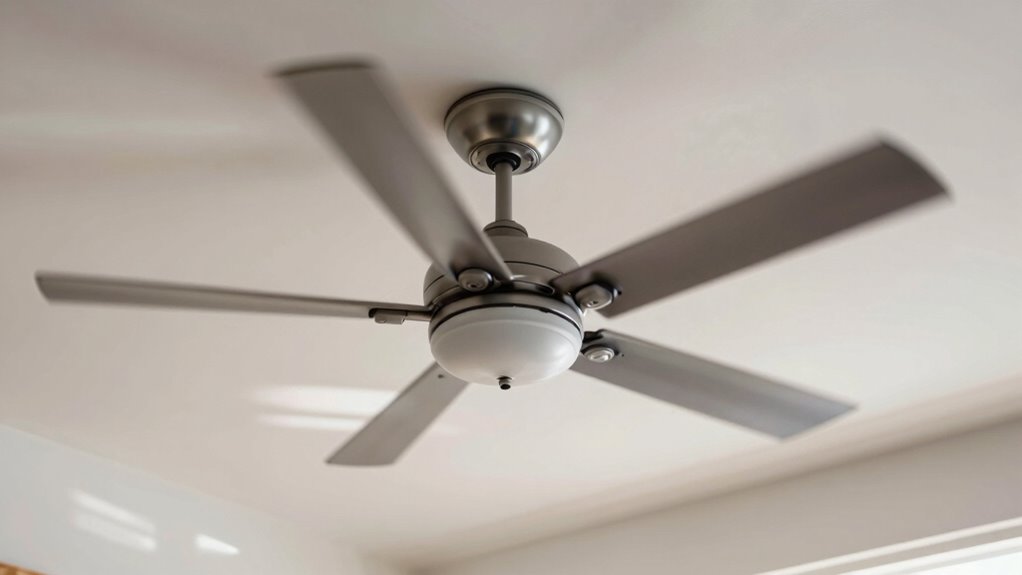

Many people get ceiling fan directions mixed up, but it’s easier than you think. When set to clockwise, your fan pushes warm air down, making your space cozier in winter. Counterclockwise creates a cooling breeze for warmer months. A simple switch on the motor housing changes the direction, helping you save energy and stay comfortable year-round. Want to master this trick and boost your home’s efficiency? Keep going to learn more about proper fan operation.

Prime made for students and young adults
- Fast, free delivery for dorm and study essentials
- Prime Video and Amazon Music included
- Member-only deals
Key Takeaways
- Many people confuse blade pitch with motor rotation as the factor for fan direction.
- Correct ceiling fan direction depends on the motor’s rotation, not blade angle or pitch.
- Counterclockwise rotation creates a cooling breeze, while clockwise is for winter warmth.
- Some believe changing blade tilt changes fan direction, which is a common misconception.
- Properly setting the fan’s motor switch ensures optimal airflow and energy efficiency year-round.
Popular right now

Bose QuietComfort True Wireless Earbuds with Active Noise Cancellation, Black

Shark Rocket Pet Plus Corded Stick Vacuum, Bordeaux, HV322
Dyson Car+Boat Cordless Handheld Vacuum
As an affiliate, we earn on qualifying purchases.
How Do Ceiling Fan Directions Work? Clockwise vs. Counterclockwise
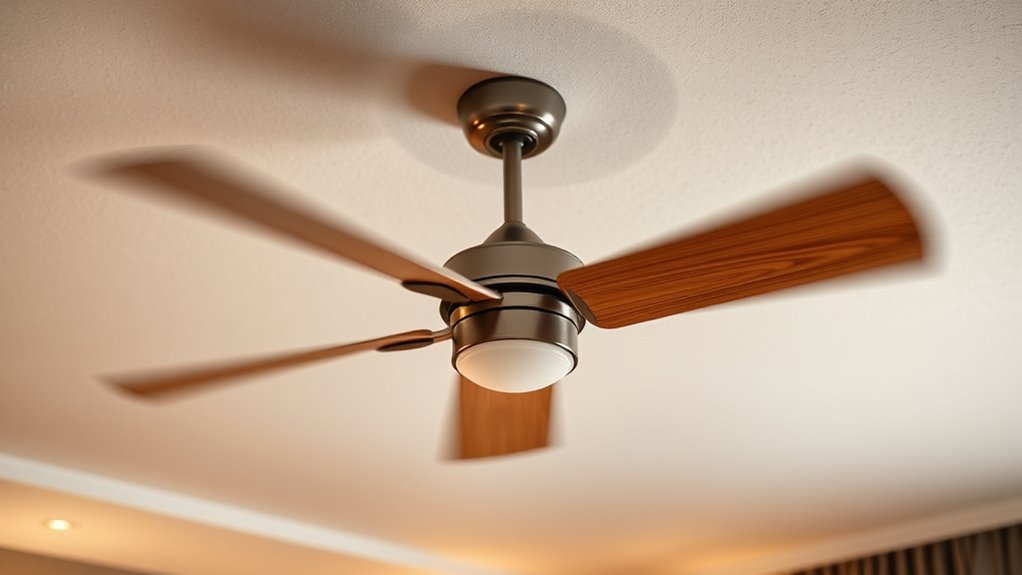
Understanding how your ceiling fan’s directions work is essential for using it effectively. The key lies in blade pitch and motor rotation. When the fan rotates clockwise, typically during winter, the blades tilt to create a gentle upward air flow, pushing warm air down without creating a breeze. This is achieved by changing the motor rotation direction, which affects how the blades move. Conversely, in summer, you switch to counterclockwise rotation. This causes the blades to tilt in the opposite direction, producing a strong downward airflow that cools the room. The blade pitch determines how much air is moved with each rotation, influencing both comfort and efficiency. Mastering these directions helps you optimize your fan’s performance for different seasons. Proper understanding of thermal behavior can further enhance your control over airflow and energy use.
Why Fan Direction Matters for Your Heating and Cooling
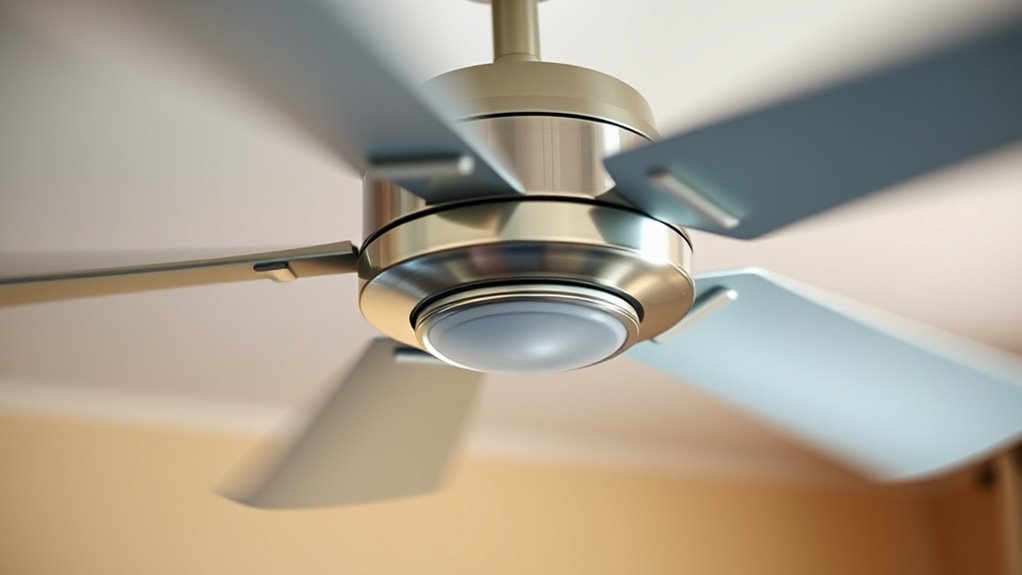
The direction your ceiling fan spins can considerably impact your heating and cooling efficiency. When set to rotate clockwise in winter, it pushes warm air down, helping to maintain comfort without cranking up the heater. Conversely, in summer, running the fan counterclockwise creates a breeze that cools the room naturally, reducing your reliance on air conditioning. Proper fan direction boosts energy efficiency by lowering your utility bills and minimizes unnecessary strain on your HVAC system. It also improves room comfort, making spaces feel more pleasant without overworking your heating or cooling systems. By adjusting your fan’s direction seasonally, you optimize comfort and save energy, ensuring your home remains cozy in winter and cool in summer. Understanding the airflow dynamics of your fan can help you make the most effective adjustments for each season.
How to Change Your Fan’s Direction in Just a Few Steps
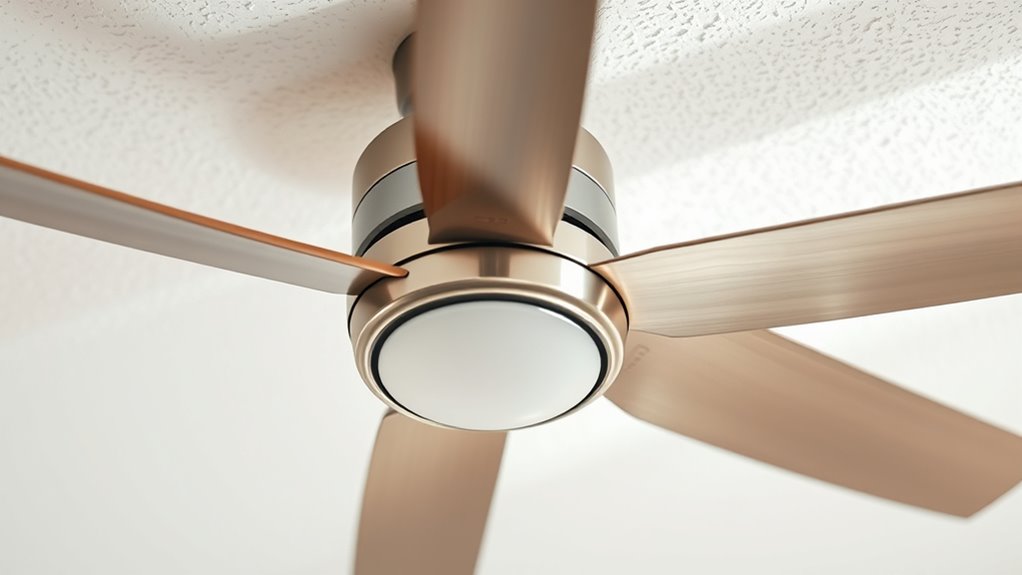
Changing your fan’s direction is quick and easy—just a few simple steps, and you’ll have it set perfectly for the season. First, turn off the fan and wait for the blades to stop moving. Most fans have a small switch on the motor housing for fan maintenance; flip this switch to alter the direction. If your fan doesn’t have a switch, you’ll need to manually spin the blades to check their rotation. Adjusting the direction can enhance both functionality and aesthetic choices, making your space more comfortable or stylish. Remember, regular fan maintenance ensures smooth operation, prolongs lifespan, and keeps your fan looking great. With just a quick switch, you can optimize your fan’s performance for any season. Proper fan operation helps ensure safety and efficiency during use.
Using Your Fan Year-Round: Summer and Winter Tips

To get the most out of your ceiling fan year-round, you need to adjust its direction based on the season. Proper seasonal adjustments can maximize energy savings and comfort. For summer, set your fan to spin counterclockwise to create a cooling breeze. In winter, switch it to clockwise to gently circulate warm air. Here are three tips:
- Regularly change the fan’s direction with the seasons.
- Use the fan to supplement your heating or cooling system, reducing energy bills.
- Keep the fan blades clean to guarantee efficient airflow.
- Understanding fan operation can help you optimize your ceiling fan’s performance throughout the year.
Busting Myths About Ceiling Fan Direction
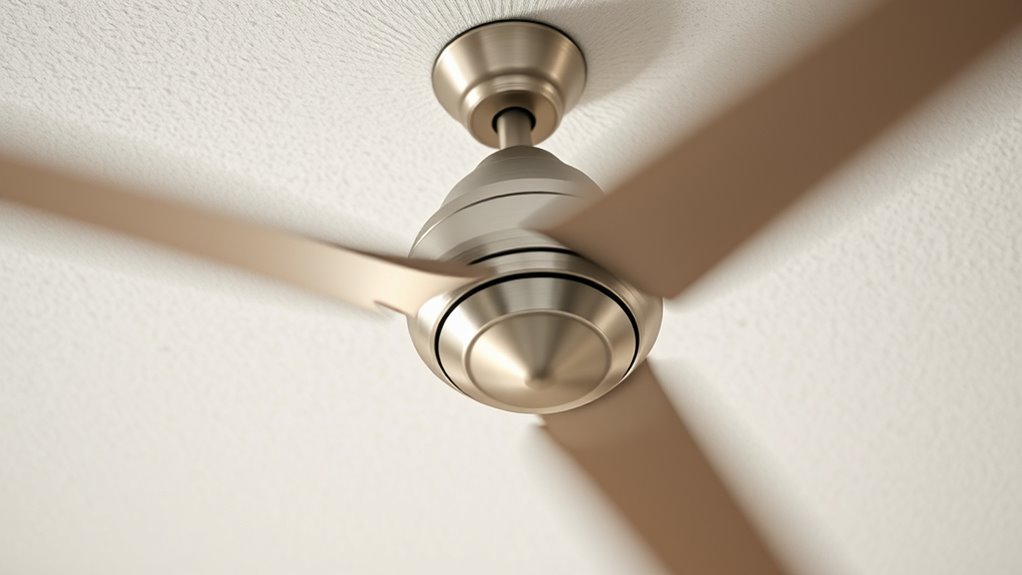
Many people believe they know how ceiling fan direction works, but several common myths can lead to inefficient use. One myth is that fan blade angles determine the direction, but it’s actually the motor rotation that matters. When the motor rotates counterclockwise, the fan pushes air downward, creating a cooling breeze. Clockwise rotation pulls air up, helping distribute warm air during winter. Another misconception is that changing blade angles alters direction; in reality, blade angles affect airflow volume, not direction. By understanding that motor rotation controls fan direction, you can optimize your fan’s performance year-round. Correctly setting the fan’s rotation ensures you’re using your ceiling fan efficiently, saving energy and maintaining comfort. Proper fan operation not only enhances comfort but can also lead to energy savings. Busting these myths helps you make smarter choices about your fan’s operation.
Frequently Asked Questions
Can Ceiling Fan Direction Affect Energy Bills Significantly?
Yes, changing your ceiling fan direction can impact your energy bills. When you set the fan to clockwise in winter, it helps with temperature regulation by pushing warm air down, reducing your heating needs. Conversely, in summer, setting it counterclockwise creates a breeze that cools the room. These adjustments promote energy savings by optimizing comfort without overusing your HVAC system, lowering your overall energy costs.
Do Different Ceiling Fan Models Have Unique Direction Settings?
Yes, different ceiling fan models often have unique direction settings. You might find variations based on fan motor types and blade pitch angles, which influence how the fan circulates air. Some models feature more intuitive controls, while others require you to manually adjust the motor or blades. Always check your fan’s specific instructions to guarantee you’re setting it correctly for summer or winter to maximize comfort and efficiency.
Is It Safe to Change Fan Direction While the Fan Is On?
It’s not safe to change fan direction while the fan is on because fan safety is important. You should turn off the fan before switching the switch operation to prevent injury or damage. Always guarantee the blades have stopped spinning completely before adjusting the direction. This simple step keeps you safe and prolongs your fan’s lifespan, avoiding unnecessary wear or electrical issues.
How Do Ceiling Fan Blades Influence Airflow Direction?
Think of your ceiling fan blades as the wings of a bird guiding airflow. The blade angle influences how air moves; a steeper angle pushes more air downward, creating a breeze, while a shallower angle directs airflow upward. The blades shape the airflow patterns, determining whether you feel a cool draft or gentle circulation. Adjusting the blade angle or fan direction can optimize comfort, so understand how your blades influence airflow to get it just right.
Are There Specific Ceiling Fan Features for Seasonal Adjustments?
Yes, there are ceiling fans with specific features for seasonal adjustments. You’ll find fans with adjustable fan blade design options that help you switch airflow direction easily. Many models also come with remote control features, allowing you to change the fan’s rotation and speed without getting up. These features make it simple to optimize your fan’s performance for both summer and winter, ensuring comfort year-round.
Conclusion
Now that you know the real trick behind ceiling fan directions, don’t let confusion keep you guessing. When you flip that switch correctly, you could be saving money and boosting comfort all year round. But here’s the catch—you might still be doing it wrong without even realizing it. Are you confident you’ve got it right? One simple change could make all the difference, but only if you’re paying attention. Will you access the full potential of your fan tonight?