
The best science stocking stuffers for kids pair a quick start with an idea children can explore after the wrapping is gone. My best overall pick is the Discovery Mini Science Kit 8-Pack, which offers a range of activities in small packages; the Invisible Ink Pens with UV Lights are a simpler choice for an instant, low-mess science surprise, while the Creativity for Kids Grow ‘N Glow Terrarium Kit suits kids drawn to living things. The main tradeoff is between compact gifts that work right away and bigger kits that offer more experiments but may need adult help, space, or extra setup. Age fit and whether the child enjoys chemistry, building, nature, or visual effects matter as much as the experiment count. Read on for the full breakdown and help match a stocking-sized gift to the child receiving it.

Prime made for students and young adults
- Fast, free delivery for dorm and study essentials
- Prime Video and Amazon Music included
- Member-only deals
Key Takeaways
- The Discovery Mini Science Kit 8-Pack leads for variety: its multiple small kits make it a stronger all-round stocking choice than a single-theme activity, though individual experiments may be brief.
- Quick-start gifts and project kits solve different problems: Invisible Ink Pens and the Energy Stick favor immediate play, while the wooden radio, terrarium, and egg-drop challenge call for more time and attention.
- Experiment counts do not tell the whole story: UNGLINGA and Discovery offer many activities, but adult setup, materials, and the child’s patience affect how much of the kit gets used.
- Several standout gifts lean toward a specific interest: the Bug Catcher suits outdoor observation, the plasma ball offers a visual electricity display, and the paper airplane kit is best for making and testing rather than chemistry.
- Seasonal and messy kits need a little planning: the Santa’s Christmas Science Workshop Kit fits holiday activities, while the geyser, bath-bomb, and chemistry options may need space, supervision, or cleanup.
| Steve Spangler Science Energy Stick Electricity Kit | 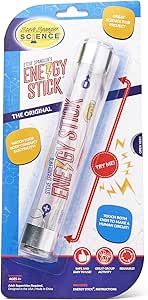 | Best for Quick Circuit Demos | Brand: Steve Spangler Science | Item type: Science kit | Length: 7.5 inches | VIEW LATEST PRICE | See Our Full Breakdown |
| ANNISOKA DIY Wooden Radio STEM Kit |  | Best Build-and-Use Electronics Gift | Brand: ANNISOKA | Model: DK02 | Age range: 6 years and up | VIEW LATEST PRICE | See Our Full Breakdown |
| Creativity for Kids Paper Airplane Squadron Mini Craft Kit, 20 Airplanes |  | Best for Creative Flight Experiments | Brand: Creativity for Kids | Product type: Paper airplane craft kit | Airplanes: 20 | VIEW LATEST PRICE | See Our Full Breakdown |
| Creativity for Kids Grow ‘N Glow Terrarium Kit |  | Best for Nature and Ongoing Observation | Recommended age: 6 years and up | Planting cycles: 2 | Seeds: Chia and wheatgrass | VIEW LATEST PRICE | See Our Full Breakdown |
| UNGLINGA Science Kit for Kids, 40+ Chemistry Experiments |  | Best for Experiment Variety | Brand: UNGLINGA | Experiments: 40+ | Age range: 8 years and up | VIEW LATEST PRICE | See Our Full Breakdown |
| Steve Spangler Science Extreme Geyser Tube Science Kit for Kids |  | Best for Outdoor Science Spectacle | Brand: Steve Spangler Science | Included components: Geyser tube, roll of Mentos chewy mints, fountain/fan/runaway geyser caps | Spray styles: Fountain, fan, and runaway flow | VIEW LATEST PRICE | See Our Full Breakdown |
| CrunchLabs Egg Drop Challenge STEM Toy |  | Best for Engineering Iteration | Brand: CrunchLabs | Recommended age: 6–15 years | Included components: Toy egg, egg cup, parachute, 3 landing balls, slime bag, 73 connectors, 2 googly eyes, and instruction manual | VIEW LATEST PRICE | See Our Full Breakdown |
| Invisible Ink Pens with UV Lights, 5-Pack |  | Best Compact Stocking Stuffer | Brand: STENDA | Set size: 5 pens | Ink type: Water-based, invisible ink | VIEW LATEST PRICE | See Our Full Breakdown |
| National Geographic Magic Chemistry Set with 10 Tricks for Kids Ages 8–12 |  | Best Guided Chemistry Gift | Brand: Blue Marble | Recommended age: 8 years and up | Number of experiments: 10 | VIEW LATEST PRICE | See Our Full Breakdown |
| Tub Works Kids Bath Bomb Potion Bath Toy, Variety 6 Pack |  | Best for Bath-Time Science | Pack size: 6 | Reaction: Fizzes, foams, and bubbles with colorful eruptions | Ingredients: Nontoxic; paraben-free and phthalate-free | VIEW LATEST PRICE | See Our Full Breakdown |
| Discovery Mini Science Kit 8-Pack, 32 Experiments for Ages 8+ |  | Best for Experiment Variety | Brand: Discovery | Number of kits: 8 | Number of experiments: 32 | VIEW LATEST PRICE | See Our Full Breakdown |
| Kids’ Bug Catcher with 6× Magnifier |  | Best for Outdoor Observation | Brand: LEUOA | Model: T2GR | Age range: 3 years and up | VIEW LATEST PRICE | See Our Full Breakdown |
| BALIBOO 3-Inch Mini Plasma Ball Light, USB and Battery Powered |  | Best Compact Science Display | Brand: BALIBOO | Globe diameter: 3 inches | Power source: USB or batteries; batteries not included | VIEW LATEST PRICE | See Our Full Breakdown |
| Blue Marble Santa’s Christmas Science Workshop Kit for Kids Ages 8+ |  | Best Holiday-Themed Pick | Brand: Blue Marble | Recommended age: 8 years and up | Experiments: 5 holiday-themed science experiments | VIEW LATEST PRICE | See Our Full Breakdown |
| science stocking stuffers for kid | Brand | Included components | Recommended age |
|---|---|---|---|
| Steve Spangler Science Energy | Steve Spangler Science | Energy Stick and activity guide | — |
| ANNISOKA DIY Wooden Radio STEM | ANNISOKA | — | — |
| Creativity for Kids Paper Airp | Creativity for Kids | — | 6 years and up |
| Creativity for Kids Grow ‘N Gl | — | — | 6 years and up |
| UNGLINGA Science Kit for Kids | UNGLINGA | — | — |
| Steve Spangler Science Extreme | Steve Spangler Science | Geyser tube, roll of Mentos chewy mints, fountain/fan/runaway geyser caps | — |
| CrunchLabs Egg Drop Challenge | CrunchLabs | Toy egg, egg cup, parachute, 3 landing balls, slime bag, 73 connectors, 2 googly eyes, and instruction manual | 6–15 years |
| Invisible Ink Pens with UV Lig | STENDA | — | 3 and up |
| National Geographic Magic Chem | Blue Marble | Experiment materials, full-color learning guide, magic wand, and gloves | 8 years and up |
| Tub Works Kids Bath Bomb Potio | — | — | — |
| Discovery Mini Science Kit 8-P | Discovery | Experiment materials, specialty ingredients, tools, accessories, and illustrated instruction guides | 8–12 years |
| Kids’ Bug Catcher with 6× Magn | LEUOA | — | — |
| BALIBOO 3-Inch Mini Plasma Bal | BALIBOO | Adapter | — |
| Blue Marble Santa’s Christmas | Blue Marble | Materials for five experiments and instructions | 8 years and up |
More Details on Our Top Picks
Steve Spangler Science Energy Stick Electricity Kit
For a stocking stuffer that explains a science idea almost immediately, the Energy Stick turns a completed circuit into a light-and-sound response. Children hold its electrodes to see how contact closes the circuit, while the included guide introduces electric currents, conductors, and insulators. Unlike the ANNISOKA DIY Wooden Radio STEM Kit, this needs no assembly or batteries, so it is easier to bring out for a short demonstration. Its group-use option also makes it a natural fit for siblings or a classroom activity. The tradeoff is that children must touch both electrodes for the demonstration to work, which can limit how they explore it. It teaches a focused concept rather than offering a sequence of experiments, so choose it for a quick, repeatable lesson—not a long project.
Pros:- Sound and flashing lights make open and closed circuits visible and engaging
- Works for solo exploration or group demonstrations
- Includes an activity guide covering circuits, current, conductors, and insulators
- Needs no assembly or separate batteries
Cons:- The demonstration requires users to touch both electrodes to complete the circuit
- Covers a narrower range of activities than the UNGLINGA kit’s 40-plus experiments
Best for: Families seeking a compact, immediate electricity demonstration for children ages 4 and up, including siblings who can take part together
Not ideal for: Kids who want to build or modify a working device, or children who prefer experiments that do not require holding the electrodes
- Brand:Steve Spangler Science
- Item type:Science kit
- Length:7.5 inches
- Quantity:1 Energy Stick
- Material:Plastic
- Age recommendation:4 years and up
- Included components:Energy Stick and activity guide
- Learning topics:Electricity, circuits, conductors, and insulators
Our verdict“Choose the Energy Stick for a compact, low-preparation introduction to circuits rather than a build-it-yourself electronics project.”
ANNISOKA DIY Wooden Radio STEM Kit
The ANNISOKA Wooden Radio Kit suits kids who would rather assemble a device than watch a quick demonstration. Building a working radio gives the circuit lesson a clear payoff, and its volume control and retractable antenna make the finished project feel more functional than the Energy Stick, which focuses on showing how a circuit closes. No soldering or extra tools are required, making this a more approachable electronics build for ages 6 and up. It is still a project rather than an instant-play stocking stuffer: children need to set aside time for assembly, and the two AA batteries are not included. Compared with the UNGLINGA experiment kit, it offers fewer kinds of activities, but a more focused path from components to a working object.
Pros:- Assembly creates a working radio, connecting electronics concepts to a functional outcome
- No soldering or additional tools are required
- Volume control and retractable antenna add useful features to the finished build
- Compact dimensions suit a small project space
Cons:- Requires two AA batteries, which are not included
- Assembly takes more time than the Energy Stick’s immediate circuit demonstration
- Offers one main build rather than the UNGLINGA kit’s variety of experiments
Best for: Children ages 6 and up who enjoy guided assembly and want to build a usable electronics project with an adult nearby if needed
Not ideal for: Shoppers needing a ready-to-use gift or a kit with all power supplies included, and kids seeking many different experiments
- Brand:ANNISOKA
- Model:DK02
- Age range:6 years and up
- Material:Wood
- Power:2 AA batteries (not included)
- Assembly:No soldering or additional tools required
- Features:Power indicator, retractable antenna, and volume control
- Item dimensions:3.9 x 4.3 x 1.8 inches
Our verdict“Pick this kit for a child who wants to build and use a radio, provided you can supply the batteries and make room for assembly time.”
Creativity for Kids Paper Airplane Squadron Mini Craft Kit, 20 Airplanes
Among these picks, the Paper Airplane Squadron is the choice for kids who learn by folding, decorating, and then seeing what happens in flight. It supplies paper for 20 airplanes, stickers, instructions, and several folding techniques, so children can compare designs instead of repeating one build. That makes it more open-ended than the Energy Stick’s focused circuit lesson and less dependent on adult setup than planting the Grow ‘N Glow Terrarium. The kit encourages spatial reasoning and hands-on experimentation, though it is a craft activity rather than a formal science set with detailed explanations of flight. Paper planes can also crease or wear out, and the age recommendation of 6 and up means younger children may need help with folding. Choose it for creative trial and error, not durable, ready-to-reuse toys.
Pros:- Provides materials for 20 airplanes, supporting repeated folding and flight trials
- Instructions introduce multiple folding techniques
- Stickers and patterned paper add creative decoration options
- Storage box helps keep the small kit together between activities
Cons:- Paper airplanes are less durable than reusable toys
- Younger children may need help with folds and instructions
- Flight activity is more craft-led than the Energy Stick’s direct demonstration of a science concept
Best for: Children ages 6 and up who enjoy crafts and want to test how different paper airplane folds affect flight
Not ideal for: Younger children who struggle with step-by-step folding, or families looking for durable toys or explicit science instruction
- Brand:Creativity for Kids
- Product type:Paper airplane craft kit
- Airplanes:20
- Paper:20 sheets of patterned, double-sided paper
- Airplane styles:2 unique styles; instructions include Traditional, Lion, and Standard folding techniques
- Included:Sticker sheets, step-by-step instructions, and storage box
- Recommended age:6 years and up
Our verdict“Choose this kit for a creative child who will enjoy making and comparing paper planes, rather than for a structured lesson in physics.”
Creativity for Kids Grow ‘N Glow Terrarium Kit
The Grow ‘N Glow Terrarium is a better match for children who enjoy watching a project change over several days than for those who want an immediate experiment. Kids plant chia and wheatgrass seeds, then decorate the small garden with figurines, stones, and glow-in-the-dark details. Its two planting cycles offer another chance to start over, while the UNGLINGA kit is better for families who want many distinct activities in one box. Here, the science comes from tending plants and observing growth, paired with a craft element. The tradeoff is ongoing care: seeds need water and light, and plants may eventually need replanting. The glow effect also depends on the decorations receiving light. This is a thoughtful stocking pick for patient nature-watchers, but not a self-contained activity that ends after one sitting.
Pros:- Combines planting and decorating in one hands-on activity
- Includes supplies for two planting cycles
- Chia and wheatgrass can begin growing in 3–4 days
- Glow-in-the-dark sand and stickers add a nighttime display element
Cons:- Plants need water and light, so the activity requires continued care
- Plants may need replanting after they stop thriving
- The glowing decorations need light exposure, unlike the Energy Stick’s instant light-and-sound response
Best for: Children ages 6 and up who like plants, decorating, and checking on a living project over time
Not ideal for: Families wanting a one-session experiment or kids unlikely to remember ongoing watering and light needs
- Recommended age:6 years and up
- Planting cycles:2
- Seeds:Chia and wheatgrass
- Terrarium material:Plastic
- Included materials:Potting mix, seeds, garden figurines, glowing sand, river stones, stickers, and decorative lid
- Seed origin:USA
Our verdict“Choose the terrarium for a child who will enjoy tending and observing plants, not for a quick, care-free science activity.”
UNGLINGA Science Kit for Kids, 40+ Chemistry Experiments
For kids who want a new activity each time they open the box, the UNGLINGA Science Kit offers the broadest experiment menu among these five products, with more than 40 activities including bouncy balls and lava lamps. Its illustrated, step-by-step manual can help children follow a process and observe results, while the Energy Stick is better when the goal is a fast, single-concept demonstration. The recommended age of 8 and up also makes this a better fit for older children than the paper airplane or terrarium kits. Variety has a practical catch: some experiments call for common household items beyond the supplied materials, so the kit is not always ready to use straight from the box. Pick it for an older child who likes guided experiments and can handle some preparation, not for a fully self-contained activity.
Pros:- Includes materials for more than 40 experiments
- Illustrated, step-by-step manual supports following procedures
- Activities include making bouncy balls and lava lamps
- Offers more variety than the focused ANNISOKA radio build
Cons:- Some experiments require common household items not included in the kit
- The age recommendation is 8 years and up, older than the other four picks
- A large experiment count can still require adult help with preparation and materials
Best for: Children ages 8 and up who enjoy trying different guided experiments and have an adult available to help gather household materials
Not ideal for: Younger children or gift-givers seeking an activity that includes every material needed for each experiment
- Brand:UNGLINGA
- Experiments:40+
- Age range:8 years and up
- Material:Plastic
- Dimensions:8 x 5.7 x 2.7 inches
- Weight:0.32 kg
- Number of items:1
- Educational objectives:Creative skills, imagination development, and observation skills
Our verdict“Choose this kit for an older child who values experiment variety and can work with household supplies that are not included.”
Steve Spangler Science Extreme Geyser Tube Science Kit for Kids
For a stocking stuffer that turns a chemistry reaction into a group event, I’d choose the Extreme Geyser Tube. Its trigger and three caps let kids compare fountain, fan, and runaway spray patterns, giving the eruption more room for experimentation than the one-time surprises in the National Geographic Magic Chemistry Set. The included Mentos make the kit closer to ready-to-go, but a 2-liter soda bottle is not included, and the spray can reach up to 30 feet. That makes this a poor fit for a cramped bathroom or a quick indoor activity; it needs adult supervision and an appropriate outdoor space. Among these picks, it offers the biggest visual payoff, but also the most cleanup and setup.
Pros:- Three interchangeable caps create distinct spray patterns for repeat comparisons.
- Includes the geyser tube, Mentos candies, and a trigger mechanism.
- Turns a familiar soda-and-candy reaction into a hands-on STEM activity.
Cons:- Requires a 2-liter soda bottle that is not included.
- High-flying spray calls for open space, supervision, and cleanup.
- The activity depends on consumable soda and candies for launches.
Best for: Families with outdoor space who want to compare dramatic reaction patterns together and can supply a 2-liter soda bottle.
Not ideal for: Apartment households or gift buyers seeking a quiet, indoor activity, since the bottle is extra and the spray can travel up to 30 feet.
- Brand:Steve Spangler Science
- Included components:Geyser tube, roll of Mentos chewy mints, fountain/fan/runaway geyser caps
- Spray styles:Fountain, fan, and runaway flow
- Bottle required:2-liter soda bottle; not included
- Educational objectives:Creative skills, critical thinking, and STEM
- Model number:857155
Our verdict“Choose this for an outdoor-loving child who wants a dramatic, repeatable chemistry demonstration and has room for the spray.”
CrunchLabs Egg Drop Challenge STEM Toy
The CrunchLabs Egg Drop Challenge suits kids who would rather build, test, and revise than watch a single reaction. Its 73 connectors form a protective prism, while a parachute and reusable slime-filled toy egg let children repeat drops and compare designs. That repeatability gives it a different kind of learning than the Extreme Geyser Tube, which centers on a large outdoor launch rather than structural problem-solving. QR-linked videos add guidance, though some suggested builds need extra straws and household materials. The egg is a toy, not a real egg, so the activity is best treated as an engineering model rather than a full recreation of the classic challenge. The parts and testing also need more setup than a tiny stocking surprise.
Pros:- Reusable slime-filled egg supports repeated drop tests.
- 73 connectors and a buildable prism invite design changes.
- Parachute and landing balls offer different ways to explore impact.
- QR code links to instructional science videos.
Cons:- Some suggested builds require extra straws and household materials.
- Uses a reusable toy egg rather than a real egg.
- Building and resetting tests take more space and time than compact activities such as the invisible ink pens.
Best for: Kids ages 6–15 who enjoy construction challenges, repeated testing, and changing a design after seeing what fails.
Not ideal for: Gift buyers who need a self-contained, instantly playable activity, since some suggested builds call for extra straws or household materials.
- Brand:CrunchLabs
- Recommended age:6–15 years
- Included components:Toy egg, egg cup, parachute, 3 landing balls, slime bag, 73 connectors, 2 googly eyes, and instruction manual
- Set count:1
- Activity focus:Strength, stability, and impact absorption
- Video access:QR code links to instructional science videos
Our verdict“Pick this for a hands-on builder who will enjoy improving a design through repeated drops rather than performing a quick experiment.”
Invisible Ink Pens with UV Lights, 5-Pack
When space in the stocking matters most, I’d favor these five UV invisible ink pens over the larger experiment kits. Each cap has its own light, so children can write and reveal messages without sharing one detector; the water-based, odorless ink also keeps the activity simple compared with the soda setup of the Extreme Geyser Tube. That convenience comes with a narrower science angle: this is mainly a reveal-and-discover activity, not a multi-step chemistry lesson like the National Geographic Magic Chemistry Set. All five pens use the same ink color, and messages stay invisible unless a UV light is available. They are an easy fit for small gifts and secret-message play, but less suited to children who want varied experiments or explanations.
Pros:- Five reusable pens give several children their own writing tool.
- UV light built into each cap reveals the invisible ink.
- Water-based, odorless ink keeps the activity straightforward.
- Batteries are included and installed.
Cons:- All five pens write in the same ink color.
- Messages cannot be revealed without a UV light.
- Offers less structured science learning than the National Geographic Magic Chemistry Set.
Best for: Gift buyers seeking a small, ready-to-use activity for kids who enjoy secret messages and sharing with siblings or friends.
Not ideal for: Families looking for guided science lessons or varied experiments, since the pens focus on message-writing and UV reveals.
- Brand:STENDA
- Set size:5 pens
- Ink type:Water-based, invisible ink
- Tip size:0.7 mm
- UV light:Built into each cap
- Batteries:3 LR41 batteries per pen, included
- Recommended age:3 and up
- Warranty:2 years
Our verdict“Choose this compact set for kids who want shareable secret-message play, not a sequence of guided experiments.”
National Geographic Magic Chemistry Set with 10 Tricks for Kids Ages 8–12
For a child ready to follow instructions and explain what happened, I’d rank the National Geographic Magic Chemistry Set ahead of the more open-ended bath potions. It packages 10 chemistry tricks—including color changes, floating a coin, and instant snow—with materials, gloves, a wand, and an illustrated guide that explains the science. The performance framing gives kids a reason to demonstrate each activity, while the guide adds more structure than the invisible ink pens, which focus on one kind of reveal. The tradeoff is a defined set of experiments rather than open-ended building, and its age guidance starts at 8. It makes a stronger fit for a curious school-age child who likes step-by-step activities than for a younger child seeking freeform play.
Pros:- Includes materials for all 10 chemistry experiments.
- Illustrated guide pairs kid-friendly instructions with science explanations.
- Magic wand and gloves support the performance theme.
- Activities give children more guided variety than a single-reaction kit.
Cons:- Recommended for ages 8 and up, limiting its fit for younger children.
- The activities focus on 10 specific experiments rather than open-ended building.
- More instruction-led than the freeform bath potion activity.
Best for: Children ages 8 and up who enjoy guided chemistry activities, performing tricks, and learning the explanation behind each result.
Not ideal for: Younger kids or children who prefer open-ended construction, since the set is aimed at ages 8+ and follows 10 specific experiments.
- Brand:Blue Marble
- Recommended age:8 years and up
- Number of experiments:10
- Educational objective:STEM
- Included components:Experiment materials, full-color learning guide, magic wand, and gloves
- Model number:NGSCIMAGIC
Our verdict“Choose this for a school-age child who wants a set of guided chemistry tricks with explanations, rather than a quick sensory activity.”
Tub Works Kids Bath Bomb Potion Bath Toy, Variety 6 Pack
The Tub Works Bath Bomb Potion set is the most naturally suited to a child who likes sensory play more than instruction-led experiments. Six colorful potions fizz, foam, and bubble when mixed with warm water, giving bath time a simple way to introduce reactions without assembling a kit. Compared with the National Geographic Magic Chemistry Set, this is less about following a guide or learning a series of named tricks and more about watching an eruption unfold. The ingredients are described as nontoxic, paraben-free, and phthalate-free, and the potions dissolve fully, but the stated tub compatibility is limited to nonporous tubs in good repair. Warm water is needed, and adding water can restart or extend the effect. It’s a fun setting-specific pick, not a substitute for a tabletop science set.
Pros:- Six potions create colorful fizzing, foaming, and bubbling reactions.
- Designed to introduce science concepts and creativity through bath play.
- Ingredients are described as nontoxic, paraben-free, and phthalate-free.
- Dissolves fully and is described as non-staining.
Cons:- Specified for nonporous tubs in good repair.
- Requires warm water, with additional water needed to increase or restart the eruption.
- Offers less structured instruction than the National Geographic Magic Chemistry Set.
Best for: Families whose children enjoy bath-time sensory play and have a nonporous tub in good repair.
Not ideal for: Households without a compatible tub or buyers seeking guided science explanations, since the activity is a fizzing bath toy rather than a lesson-led experiment set.
- Pack size:6
- Reaction:Fizzes, foams, and bubbles with colorful eruptions
- Ingredients:Nontoxic; paraben-free and phthalate-free
- Use:Add warm water to the flask; add more water to increase or restart the eruption
- Cleanup:Dissolves fully; rinse and drain the tub
- Tub compatibility:Nonporous tubs in good repair
Our verdict“Choose this for a child who enjoys colorful bath-time reactions and has a compatible tub, rather than for structured science lessons.”
Discovery Mini Science Kit 8-Pack, 32 Experiments for Ages 8+
For a stocking stuffer that can keep science activities going beyond one afternoon, this eight-kit bundle has the broadest experiment range here: 32 activities across seven themes, including chemistry, space, frozen science, slime, and crystal growing. Compared with the more focused Santa’s Christmas Science Workshop Kit, it is less tied to a season and offers more separate kits to spread across several occasions. The illustrated instructions and included materials give kids a guided starting point while leaving room to observe and solve problems. The tradeoff is that this is a larger collection of small components, and some activities use specialty ingredients, so an adult may need to help with setup and storage. Its 8–12 age range also makes it a better fit for school-age kids than preschoolers.
Pros:- Eight individually packaged kits provide 32 hands-on experiments.
- Seven themes offer more variety than a single-topic science activity.
- Experiment materials and illustrated instructions are included.
- Activities encourage observation, creativity, and problem-solving.
Cons:- The many small components and specialty ingredients can require adult setup and organized storage.
- The recommended 8–12 age range excludes younger children.
Best for: Gift-givers seeking several guided science activities for a child ages 8–12, especially one who enjoys switching between topics.
Not ideal for: Shoppers seeking a tiny, single-activity stocking stuffer or a kit for children younger than 8; the multiple small components may also call for adult help.
- Brand:Discovery
- Number of kits:8
- Number of experiments:32
- Science themes:7
- Recommended age:8–12 years
- Included components:Experiment materials, specialty ingredients, tools, accessories, and illustrated instruction guides
Our verdict“Choose this for a school-age science fan who will enjoy a rotating set of experiments more than one compact, single-topic activity.”
Kids’ Bug Catcher with 6× Magnifier
This is the most direct pick for a child whose science curiosity starts outside: the manual bug catcher lets them capture a small insect, then inspect it through two 6× magnifying lenses. Unlike the Discovery Mini Science Kit, it does not supply a sequence of prepared experiments; instead, it turns a backyard or park walk into an observation activity. The thumb-slide button supports one-handed operation, while locking flaps help keep the captured insect contained during a closer look. It needs no batteries, which keeps the activity simple and portable. Its limits are just as clear: it is designed for small insects and close viewing, not larger specimens, and the plastic-and-acrylic construction is less suited to buyers seeking a durable, multi-year science set. Children will also need guidance on handling and releasing living creatures.
Pros:- Two 6× magnifying lenses make small insect details easier to inspect.
- Thumb-slide operation is designed for one-handed use.
- Locking flaps help contain captured insects during observation.
- Lightweight, portable, and usable without batteries.
Cons:- The plastic and acrylic construction may not suit buyers seeking a more durable keepsake.
- The design is limited to small insects and close-up observation.
- It provides no guided experiments, so the activity depends on finding insects and adult guidance.
Best for: Families with children ages 3 and up who enjoy outdoor walks and want a simple tool for observing small insects up close.
Not ideal for: Buyers looking for guided experiments, a broad science kit, or a tool for inspecting larger bugs; this catcher is focused on small insects.
- Brand:LEUOA
- Model:T2GR
- Age range:3 years and up
- Magnification:6× dual lenses
- Material:Acrylic and plastic
- Operation:Manual; no batteries required
- Use:Indoor and outdoor
Our verdict“Pick this for a young outdoor explorer who wants to observe small bugs, rather than for a child seeking a structured experiment kit.”
BALIBOO 3-Inch Mini Plasma Ball Light, USB and Battery Powered
For a small gift that makes an immediate visual impression, this 3-inch plasma ball turns a touch on its glass globe into moving electrical light effects. It is less of a project than the ANNISOKA DIY Wooden Radio STEM Kit: there is no assembly task, but the interaction is easy to demonstrate and can prompt questions about electricity. The compact tabletop format suits a desk or shelf, and USB or battery power gives families some flexibility about where to place it. That flexibility has limits: batteries are not included, the globe is glass rather than unbreakable, and the unit is for indoor use only. Compared with experiment kits such as the Discovery set, it offers a striking repeatable demonstration but little variety or step-by-step learning.
Pros:- Touch interaction makes the light effects responsive and easy to demonstrate.
- USB or battery power offers placement flexibility.
- Compact tabletop design fits a desk or shelf.
- The visible effect can prompt questions about electricity.
Cons:- Batteries are not included for battery-powered use.
- The glass globe can break if dropped or handled roughly.
- It offers a single visual activity rather than a varied set of experiments and is not waterproof.
Best for: Gift-givers seeking a compact, touch-activated science display for a child who enjoys visual demonstrations and has a safe indoor spot for it.
Not ideal for: Families wanting hands-on experiments, outdoor use, or a robust toy for rough handling; this is a glass tabletop item and batteries are not included.
- Brand:BALIBOO
- Globe diameter:3 inches
- Power source:USB or batteries; batteries not included
- Control:Touch activated
- Mounting type:Tabletop
- Material:Glass
- Use:Indoor
- Included components:Adapter
Our verdict“Choose this as a compact visual science gift for careful indoor use, not as a substitute for a hands-on experiment kit.”
Blue Marble Santa’s Christmas Science Workshop Kit for Kids Ages 8+
This kit connects science activities to the season with five Christmas-themed experiments, including instant snow, crystal-covered trees, and hydrophobic sand. Its bonus booklet adds more than 20 festive activities, giving it extra seasonal ideas beyond the supplied experiments. Compared with the Discovery Mini Science Kit, it is narrower in theme and has fewer included experiments, but its holiday framing may make science feel especially relevant as a stocking gift. The materials and instructions for the five experiments are included; the booklet’s additional activities should not be mistaken for more supplied experiment materials. At ages 8 and up, it is aimed at older children, and its Christmas focus may limit repeat appeal once the season passes. Choose it for a timely themed gift, not as the most versatile year-round science set.
Pros:- Includes materials and instructions for five holiday-themed experiments.
- Projects include instant snow, crystal-covered trees, and hydrophobic sand.
- Bonus booklet adds more than 20 festive activities.
- Seasonal presentation makes the science theme feel suited to a Christmas stocking.
Cons:- Christmas themes may reduce the kit’s appeal outside the holiday season.
- The included experiment materials cover five experiments, not every bonus booklet activity.
- The recommended age of 8 and up rules out younger children.
Best for: Gift-givers choosing a holiday-specific science activity for a child age 8 or older who enjoys festive crafts and experiments.
Not ideal for: Families seeking a year-round, multi-topic kit or a set with supplied materials for every bonus activity; its main experiments are Christmas themed.
- Brand:Blue Marble
- Recommended age:8 years and up
- Experiments:5 holiday-themed science experiments
- Bonus activities:20+
- Educational objectives:Concentration, exploratory skills, and STEM
- Dimensions:7.24 x 2.37 x 10 inches
- Weight:0.34 kg
- Included components:Materials for five experiments and instructions
Our verdict“Pick this for a child who will enjoy festive science projects now, but choose the Discovery kit for broader year-round variety.”
How We Picked
I ranked these science stocking stuffers for kids by how well they fit the stocking-gift brief: compact appeal, a clear activity or discovery, and a realistic chance a child can start without turning the present into a large household project. I also weighed age suitability, adult involvement, setup and cleanup, repeat play, and whether a kit brings its own materials or depends on supplies at home. A small gift that delivers a clear, satisfying activity can outrank a larger kit if it is easier to give and use.
The ranking favors options with a useful balance of accessibility, variety, and science engagement, rather than simply the highest experiment count. Multi-activity kits earn credit for breadth, while focused gifts can rank well when their theme is distinctive and easy to grasp. Seasonal fit, outdoor use, and mess also shape placement: the Christmas workshop is tied to a particular moment, while geyser and chemistry activities ask for more adult planning than a pocketable, ready-to-use surprise.
Factors to Consider When Choosing Science Stocking Stuffers For Kids
A good stocking stuffer is not always the kit with the most parts or experiments. I would match the gift to the child’s attention span, interests, and available space first, then check what the activity asks of the adult and the household. These broader points can help prevent a promising science gift from becoming an unopened box or a project that needs supplies you do not have.
Match the activity to the child’s kind of curiosity
Science can mean mixing, building, observing, testing, or simply seeing an effect happen, and those experiences do not suit every child equally. A child who likes making things may stay engaged longer with a build or challenge than with a sequence of chemistry demonstrations. Nature-minded kids may prefer a tool that supports repeated observation over a one-time experiment. Avoid choosing only by the word “science” on the package; ask what the child already enjoys doing. A focused gift can be a better match than a broad kit if its central activity fits their interests.
Check the real age and supervision fit
Age guidance is a starting point, not a guarantee that a child can complete every activity independently. Fine-motor tasks, reading instructions, measuring ingredients, and handling small parts can change how much adult support is needed. Consider whether the recipient will have a grown-up available at the time they open the gift, especially for experiments involving liquids, outdoor setup, or construction. For younger children, a visible, simple activity may hold attention better than a kit with many steps. Do not assume a higher experiment count makes a kit more suitable for a younger or less patient child.
Look beyond the box for setup and cleanup
A compact package can still call for a clear work surface, water, household materials, or an outdoor location. Before buying, check the instructions or kit details for anything the family must supply, and think about where spills or small components will be managed. This is especially relevant when a gift is opened during a busy holiday gathering, when there may be little time to supervise a long activity. A low-mess novelty can be the more successful stocking choice even if it offers less sustained experimentation. If the child loves involved projects, a larger setup may be welcome rather than a drawback.
Balance one memorable activity against repeat use
Some gifts create a quick “how does that work?” moment, while others invite a child to return to the project over several days. A single dramatic demonstration can be ideal for a short stocking surprise, but it may have less replay value once the effect is understood. Kits with multiple experiments or open-ended building can stretch the gift further, though not every activity will appeal equally. Think about whether the child enjoys repeating a result, changing a design, or moving on to a new task. A modest number of activities with clear variation may offer more lasting interest than a large count of similar experiments.
Treat safety and adult involvement as part of the gift
Science activities vary in the kind of attention they need, even when they are designed for children. Read age notes and instructions before gifting if a child will be using the kit without immediate adult help. Ask whether the activity involves small pieces, ingredients, water, or equipment that needs careful handling, and plan supervision around the child rather than relying on a label alone. A gift that requires an adult can still be a strong choice when it becomes shared family time. If independent play is the priority, favor a simpler activity with fewer steps and less cleanup.
Choose seasonal themes and novelty with timing in mind
A holiday-specific kit can make the gift feel especially fitting, but its appeal may be strongest during a short window. A general science activity may be easier to use throughout the year, particularly if the family has limited time during the holidays. Novelty items can also make satisfying small gifts without offering the breadth of a full experiment set. Decide whether the stocking should deliver a quick surprise, a longer project, or an activity the child can revisit after the season. That choice helps prevent buying a themed kit for a child who would rather explore a lasting interest.
Frequently Asked Questions
Which science stocking stuffer is best if I want a child to start playing right away?
Choose a gift with a clear first activity and little preparation rather than one that depends on several materials or a long build. The Invisible Ink Pens with UV Lights are the strongest fit here because the basic idea is easy to grasp and offers an immediate reveal. The Energy Stick is another compact option for a quick demonstration, though it is a narrower experience. For a child who enjoys following instructions and trying different activities, the Discovery Mini Science Kit offers more variety but may take longer to explore. Check the specific directions and age guidance before assuming any kit is fully independent.
Should I choose a kit with many experiments or one focused activity?
Choose variety when the child likes switching between short activities or has not settled on one science interest. A multi-experiment kit can provide more chances to find a favorite, but the number on the box does not tell you how long each activity takes or whether extra supplies are needed. A focused gift is often a better match for a child who already likes building, gardening, observing insects, or seeing a particular science effect. Consider attention span and the likelihood of adult help as well as activity count. The best fit is the one the child can realistically start and enjoy, not simply the one with the longest list.
Are chemistry kits a good choice for a stocking gift?
They can be, especially for a child who enjoys following steps and watching a visible result, but chemistry kits tend to ask more of the household than a pocket-sized novelty. Review the age guidance, instructions, included materials, and cleanup needs before choosing one. Some children will enjoy a kit with many experiments; others may prefer a more visual or build-based activity that takes less preparation. Plan for adult supervision when the directions or materials call for it, even if the recipient is within the stated age range. If the family has limited time or workspace during the holidays, a simpler science gift may see more use.
What makes a science gift better for a younger beginner?
A beginner-friendly gift has an easy-to-understand purpose, a manageable first step, and a result the child can notice without a long explanation. Avoid choosing solely by age label or experiment count; the child’s reading ability, patience, and comfort with adult guidance all matter. Simple demonstrations and observation tools can help a child feel successful before they move on to multi-step projects. For a young recipient, consider whether small parts or setup make the activity harder to use than it appears. A gift that invites questions and can be repeated is often more useful than one that is elaborate but difficult to begin.
Which option is better for a child who prefers building or outdoor discovery?
For a child who likes construction, look at the wooden radio kit or the egg-drop challenge, but expect a more involved activity than a quick-use stocking surprise. A paper airplane kit offers a lighter making-and-testing option with less commitment. For outdoor discovery, the Bug Catcher gives the child a practical way to observe small creatures, while the terrarium kit suits a child interested in plants and ongoing care. These choices differ in where and how they are used, so think about access to outdoor space and the child’s willingness to maintain a project. If the gift needs to work immediately indoors, a focused novelty or small experiment set may be a safer fit.
Conclusion
For the strongest all-round balance, I would choose the Discovery Mini Science Kit 8-Pack as the best overall pick: it offers varied activities in a stocking-friendly format. The Invisible Ink Pens with UV Lights are my best value-style choice for an easy, quick-start surprise, while the UNGLINGA Science Kit is the better premium-style pick for a child ready for a wider chemistry experience and more setup. For beginners, I would favor a simple, visible activity such as the invisible ink pens over a multi-step project. Match specific interests with the Bug Catcher for outdoor observation, the Grow ‘N Glow Terrarium for plant curiosity, or the Egg Drop Challenge for hands-on building. If you want a holiday-themed gift, choose the Santa’s Christmas Science Workshop Kit; if you want a fast, compact surprise, pick a smaller focused activity instead.