
📊 Full opportunity report: Ways AI Can Support Investigative Report Writing on IdeaNavigator AI — validation score, market gap, and execution plan.

Prime made for students and young adults
- Fast, free delivery for dorm and study essentials
- Prime Video and Amazon Music included
- Member-only deals
TL;DR
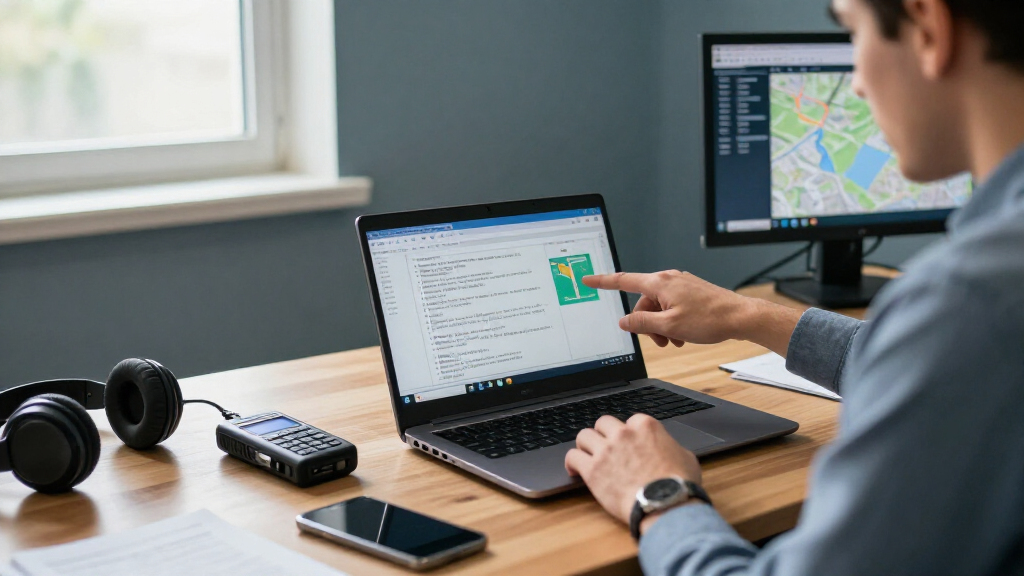
IdeaNavigator AI has outlined a proposed AI report generator for independent private investigators and small firms. The concept would turn field notes, timestamped photos and GPS data into draft chronological reports, with a ten-firm test measuring attorney assessments and time saved. No product launch or validation results are reported.
IdeaNavigator AI has proposed testing an AI report generator for independent private investigators and small firms, aimed at turning field notes, timestamped photos and GPS tracks into chronological report drafts. The proposal calls for a 10-firm validation in which attorneys review the reports and investigators measure time saved; no product launch, completed trial or admissibility results are reported.
The proposed tool would take in field observations, timestamped images and location records, then assemble them into a chronological narrative with references to supporting exhibits. It would also flag gaps in a timeline and export the draft using a firm’s report template. A human review pass is part of the proposed workflow, rather than treating generated text as a finished report.
IdeaNavigator AI identifies the intended customer as an independent investigator or small private-investigation firm. It describes a recurring workload in which surveillance notes and supporting records must be shaped into formal reports after fieldwork. The proposal says report quality can affect whether investigative work holds up in court, but offers no case data or legal review establishing how often reports are challenged.
The suggested business model is a monthly per-seat subscription, with pricing tiers tied to report volume. To test the concept, IdeaNavigator AI recommends converting recent case files from ten firms into reports, asking their attorneys to review quality related to admissibility, and recording the time saved per report. The proposal does not provide pricing, a named product, or findings from such a test.
Investigative reporting · Product proposal
Ways AI Can Support Investigative Report Writing
IdeaNavigator AI has proposed a tool that turns field records into chronological report drafts. A ten-firm pilot is suggested; no launch, completed trial, or court acceptance is reported.
01 / Proposed workflow
From case records to draft narrative
The concept organizes existing evidence into a reviewable draft, while leaving the investigator responsible for checking it.
Collect
Field records
Bring together observations, timestamped photos, and location logs.
Organize
Build chronology
Arrange events by time and flag possible gaps in the sequence.
Draft
Reference exhibits
Prepare a narrative that points readers to supporting records.
Review
Verify and export
Check facts, chronology, and references, then use the firm’s template.
02 / Where value could emerge
Practical benefits depend on review
A fluent draft alone does not show that the workflow is accurate, useful, or suitable for a particular case.
Potential gain
Less time drafting
Organizing case records could reduce after-fieldwork writing. The proposal gives no baseline for current report-writing time.
Quality check
Traceable exhibits
References can help connect claims to source records, but investigators would still need to verify labels and details.
Open question
Reliable chronology
Wrong timestamps or hidden gaps could mislead. Error rates and safeguards have not been reported.
03 / What is known
A concept and a test plan
The proposal describes a product opportunity for independent investigators and small firms. It does not establish that a product exists or that its reports meet legal standards.
Intended customer
Independent investigators & small firms
The proposed recurring service would support compiling surveillance notes and case records into formal reports. A monthly per-seat subscription with report-volume tiers is suggested; prices and terms are not given.
Validation plan
Measure time and attorney feedback
Use recent case files from ten firms to generate drafts. Ask attorneys to assess report quality in relation to admissibility, and record time saved per report. No schedule, participants, standards, or results are reported.
No launch or available software identified.
No completed pilot or measured outcomes.
No court decisions or admissibility evidence provided.
04 / Evidence to look for
What a useful pilot should show
Time saved matters only when the full checking and correction work is counted alongside report quality.
01 · Time
Net effort per report
Compare drafting time with the time spent checking facts, correcting chronology, and verifying exhibit references.
02 · Accuracy
Errors and omissions
Report timestamp mistakes, mislabeled exhibits, unsupported details, and gaps that the tool misses or flags.
03 · Review
Clear attorney criteria
Explain how reviewers assess quality and admissibility-related concerns, which can depend on case facts and legal requirements.
05 / Key questions
What the proposal does—and does not—answer
Has a tool launched?
No launch or currently available product is identified in the material.
Would reports be admissible?
That is not established. The proposal suggests attorney review but offers no pilot results or court decisions.
What would the tool produce?
A chronological draft from notes, timestamped photos, and GPS records, with exhibit references, gap flags, and template export.
How might customers pay?
A monthly per-seat subscription with tiers tied to report volume is suggested. No prices or terms are provided.
Testing Time Savings Against Legal Review
The proposal focuses on a specific administrative task, not on replacing investigators or making legal judgments. If a tool can reliably organize existing records into a readable draft, it could reduce time spent writing after surveillance and allow investigators to spend more working hours on cases. Whether that benefit is meaningful depends on the amount of editing and verification required.
The legal dimension makes accuracy more consequential than speed alone. A polished narrative could still be misleading if timestamps are wrong, an exhibit is mislabeled or a gap in the record is hidden. The suggested attorney review and gap flags address those risks as test criteria, but they do not establish that generated reports would be admissible or accepted by a court.
For small firms, the decision would also involve cost, confidentiality and compatibility with existing templates and recordkeeping. The proposed volume-based subscription is only a business model, not a disclosed price. A pilot measuring time saved alongside attorney feedback would offer more useful evidence than a demonstration of the software’s ability to produce fluent prose.
Popular right now

Bose QuietComfort Wireless Noise-Cancelling Over-Ear Headphones, Black

Roborock F25 BX Cordless Wet Dry Vacuum Mop

De'Longhi 15-Bar Pump Espresso Machine with Milk Frother & Temperature Control
As an affiliate, we earn on qualifying purchases.
From Case Records to Draft Narratives
Investigative reports commonly bring together observations recorded at different times and in different formats. In the workflow described by IdeaNavigator AI, investigators may need to combine notes, photographs and GPS logs into one account that preserves chronology and points readers to supporting exhibits. The proposal identifies this compilation as a source of unbilled work for investigators, but does not quantify how long report writing typically takes.
Large language models can be used to transform structured inputs into narrative text, which is the technical premise behind the idea. But the proposal does not identify a specific model, describe its testing, or report error rates. It should be understood as a product opportunity and validation plan, not evidence that an existing system has produced court-ready reports.
The recommended trial is deliberately narrow: use recent files from ten firms, generate reports, and have attorneys assess them while measuring time savings. That scope could reveal practical workflow problems, but the recommendation does not say how cases would be selected, what review standards attorneys would apply, or whether the test has begun.
Pilot Results and Legal Standards
No pilot results are reported, and it is unclear whether any company is building or testing the proposed product. There is no information about software availability, model choice, accuracy, security safeguards, pricing or the firms that might participate.
The legal review plan also leaves open how attorneys would judge report quality and admissibility, which can depend on the facts and legal requirements of a particular case. The proposal does not establish that AI-generated reports have been accepted in court, nor does it describe how the tool would preserve source records, show edits or prevent unsupported details from entering a draft.
Evidence Needed From a Ten-Firm Trial
The next step described by IdeaNavigator AI is a test using recent case files from ten investigation firms. Attorneys would review the resulting reports, while the firms measured time saved per report. No schedule, participating firms or launch announcement is included, so it is not clear whether that test will proceed.
A useful assessment would need to distinguish drafting speed from the time required to check facts, correct chronology and verify exhibit references. It would also need to report attorney feedback and errors clearly, rather than treating a shorter writing process as proof of legal suitability. Until those results exist, the proposal remains an unvalidated product concept for a narrowly defined investigative workflow.
Source: IdeaNavigator AI
Key Questions
Has an AI report generator for private investigators launched?
The material describes a proposed product opportunity and validation plan. It does not report a launched tool or identify a product currently available to firms.
What would the proposed tool do?
It would use field notes, timestamped photos and GPS tracks to draft a chronological report, reference exhibits, flag timeline gaps and export to a firm’s template for review.
Would AI-generated reports be admissible in court?
That is not established. The proposal recommends attorney review of report quality related to admissibility, but provides no court decisions or pilot findings.
How would the idea be tested?
IdeaNavigator AI recommends generating reports from recent files at ten firms, having their attorneys review the reports and measuring time saved per report. No completed test is reported.
How might the product charge customers?
The suggested model is a monthly per-seat subscription with tiers based on report volume. No prices or subscription terms are provided.
Source: IdeaNavigator AI