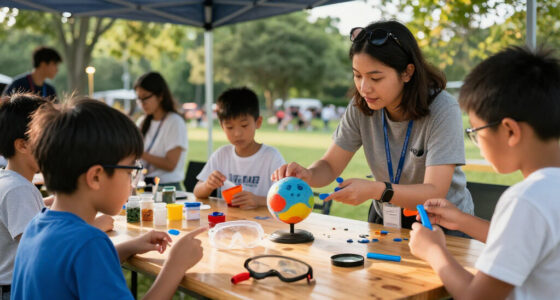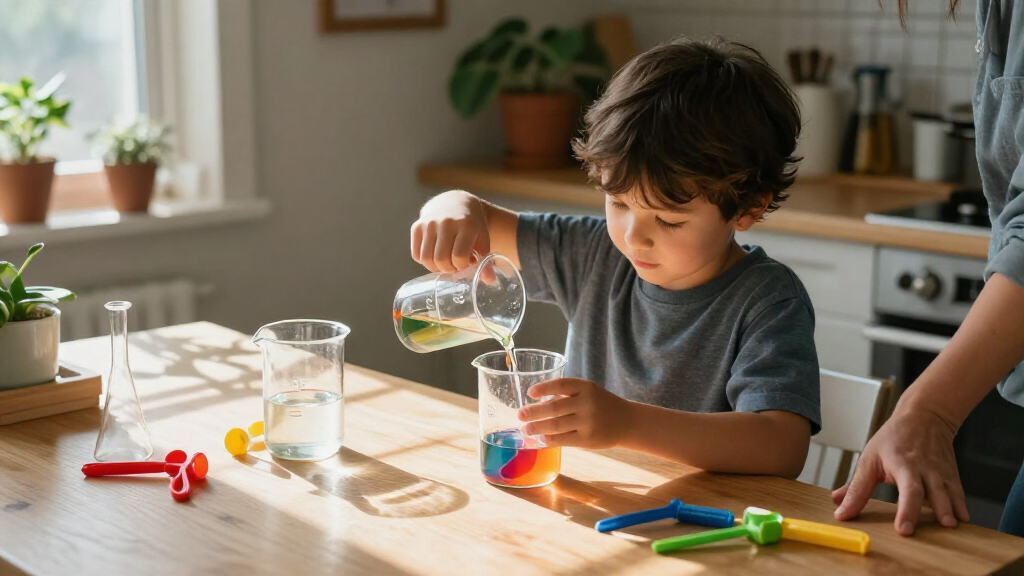

For most families, I’d start with the National Geographic Amazing Chemistry Set: its broad experiment selection makes it a strong all-around choice for school-age kids. The Doctor Jupiter My First Science Experiments Kit is a better fit for younger beginners, while the UNGLINGA 272-Experiment Science Kit suits families seeking a wide range of activities. The main tradeoff is between a focused kit that’s easier to use and a larger set that offers more variety but may need more adult organization. Age guidance, subject matter, setup, and how much support a child needs can matter more than the experiment count. Read on for the full breakdown of all 15 science experiment kits for kids.

Prime made for students and young adults
- Fast, free delivery for dorm and study essentials
- Prime Video and Amazon Music included
- Member-only deals
Key Takeaways
Age fit separates the strongest choices: Doctor Jupiter’s first-experiment kit is aimed at children ages 4+, while many National Geographic chemistry and gross-science sets are intended for ages 8 and up.
Experiment count does not tell the whole story: UNGLINGA’s 272- and 150-experiment kits promise breadth, while focused options such as the National Geographic Gross Science Kit offer a clearer subject-led experience.
Several National Geographic kits take different routes: the Amazing Chemistry Set emphasizes chemistry range, the Earth Science Kit centers on earth-focused activities, and the Science Magic Kit presents science through tricks.
Beginner-friendly kits are not interchangeable: the two listed Doctor Jupiter entries share the same product name and age guidance, so check the exact package and listing before choosing between them.
Large kits can ask more of adults: a high activity count may bring extra sorting, setup, and supervision, while a smaller, themed kit can be easier to bring out for a short activity.
| 60+ Science Experiment Kit for Kids Ages 4 and Up |  | Best Variety for Younger Kids | Brand: melican | Age range: 4 years and up | Number of experiments: 60+ | VIEW LATEST PRICE | See Our Full Breakdown |
| National Geographic Science Magic Kit for Kids, 8 Years and Up |  | Best for Science Shows and Demonstrations | Brand: Blue Marble | Age range: 8 years and up | Included experiments: 20 magic experiments | VIEW LATEST PRICE | See Our Full Breakdown |
| Doctor Jupiter My First Science Experiments Kit for Kids Ages 4+ |  | Best for Maximum Activity Variety | Brand: Doctor Jupiter | Age range: 4 years and up | Experiments: Over 100 | VIEW LATEST PRICE | See Our Full Breakdown |
| National Geographic Gross Science Kit with 45 Experiments for Kids Ages 8+ |  | Best Gross-Themed Pick for Older Kids | Brand: Blue Marble | Age range: 8 years and up | Total experiments: 45 | VIEW LATEST PRICE | See Our Full Breakdown |
| Doctor Jupiter My First Science Experiments Kit for Kids Ages 4+ |  | Best Starter Kit for Ages 4–8 | Brand: Doctor Jupiter | Age range: 4–8 years | Number of experiments: 50+ | VIEW LATEST PRICE | See Our Full Breakdown |
| UNGLINGA 150 Experiments Science Kit for Kids |  | Best for Cross-Discipline Variety | Brand: UNGLINGA | Age range: 8 years and up | Number of experiments: 150 | VIEW LATEST PRICE | See Our Full Breakdown |
| UNGLINGA 70-Experiment Chemistry Science Kit for Kids |  | Best for Guided Chemistry Activities | Brand: UNGLINGA | Age range: 8 years and up | Number of experiments: 70 | VIEW LATEST PRICE | See Our Full Breakdown |
| National Geographic Amazing Chemistry Set with 100+ Experiments for Ages 8–12 |  | Best for Stretching a Small Starter Supply | Brand: Blue Marble | Sub-brand: National Geographic | Age range: 8 years and up | VIEW LATEST PRICE | See Our Full Breakdown |
| UNGLINGA 272-Experiment Science Kit for Kids |  | Best for the Largest Activity Count | Brand: UNGLINGA | Number of experiments: 272 | Recommended age: 8 years and up | VIEW LATEST PRICE | See Our Full Breakdown |
| National Geographic Earth Science Kit with 100+ Activities for Kids | 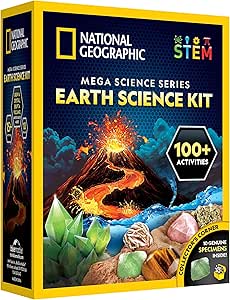 | Best for Earth Science Themes | Brand: Blue Marble | Sub-brand: National Geographic | Age range: 8 years and up | VIEW LATEST PRICE | See Our Full Breakdown |
| National Geographic Magic Chemistry Set: 10 Science Tricks for Kids Ages 8–12 |  | Best for Science-Magic Performances | Brand: Blue Marble | Age range: 8 years and up | Experiments: 10 | VIEW LATEST PRICE | See Our Full Breakdown |
| National Geographic Junior Chemistry Set with 50 Experiments |  | Best for Young Beginners | Brand: Blue Marble | Age range: 4 years and up | Experiments: 50 | VIEW LATEST PRICE | See Our Full Breakdown |
| UNGLINGA 40+ Experiments Science Kit for Kids |  | Best Compact Activity Kit | Brand: UNGLINGA | Age range: 8 years and up | Experiments: 40+ | VIEW LATEST PRICE | See Our Full Breakdown |
| Kids’ Science Kit with 80 Experiments |  | Best for Experiment Variety | Brand: Kuovei | Experiment count: 80 | Recommended age: Over 6 years | VIEW LATEST PRICE | See Our Full Breakdown |
| National Geographic Mega Science Lab: 75 Experiments for Kids Ages 8+ |  | Best Multi-Topic Kit | Brand: Blue Marble | Age range: 8 years and up | Experiment count: 75 | VIEW LATEST PRICE | See Our Full Breakdown |
| science experiment kits for kid | Brand | Age range | Included components | Model number |
|---|---|---|---|---|
| 60+ Science Experiment Kit for | melican | 4 years and up | Manual, experiment materials and tools, safety goggles | SYTZ2 |
| National Geographic Science Ma | Blue Marble | 8 years and up | Magic wand, white gloves, experiment materials, illustrated guide, bonus booklet | NGMEGAMAGIC |
| Doctor Jupiter My First Scienc | Doctor Jupiter | 4 years and up | — | DJ Junior Science |
| National Geographic Gross Scie | Blue Marble | 8 years and up | Gross Science Kit | NGMEGAGRS |
| Doctor Jupiter My First Scienc | Doctor Jupiter | 4–8 years | Food essences, cups, stirring sticks, spatula, beaker, test tube, mini volcano, tray, spray bottle, funnel, dinosaur mould, dropper, food colours, ingredients, instruction manual | DJ MFSK Starter |
| UNGLINGA 150 Experiments Scien | UNGLINGA | 8 years and up | Science experiment tools, materials, and safety goggles | — |
| UNGLINGA 70-Experiment Chemist | UNGLINGA | 8 years and up | — | HZDZKH030 |
| National Geographic Amazing Ch | Blue Marble | 8 years and up | Chemistry kit, test tubes, beakers, and pipettes | — |
| UNGLINGA 272-Experiment Scienc | UNGLINGA | — | Experiments kit | — |
| National Geographic Earth Scie | Blue Marble | 8 years and up | Science experiments and activities; full-color learning guide | — |
| National Geographic Magic Chem | Blue Marble | 8 years and up | Magic wand, gloves, full-color learning guide, experiment materials | NGSCIMAGIC |
| National Geographic Junior Che | Blue Marble | 4 years and up | Chemistry kit with test tubes, goggles, and other lab tools | — |
| UNGLINGA 40+ Experiments Scien | UNGLINGA | 8 years and up | Science experiment materials | — |
| Kids’ Science Kit with 80 Expe | Kuovei | — | Goggles, chemical materials, petri dishes, ping-pong ball, pigments, effervescent tablets, measuring cups, test tubes, gloves, droppers, straws, toothpicks, rotary needles, measuring spoons, balloons, twisting rods, rainbow candy, color-changing flower, and other items | — |
| National Geographic Mega Scien | Blue Marble | 8 years and up | Three-in-one science kit, Earth science kit, chemistry kit, science magic kit | NGMEGASCIKIT |
More Details on Our Top Picks
60+ Science Experiment Kit for Kids Ages 4 and Up
I’d choose this kit for families who want a broad set of activities for a young child without committing to one narrow theme. Its 60+ experiments range from a volcano and dinosaur egg excavation to milk animation and a lava lamp, giving parents several ways to match an activity to a child’s interests. The illustrated manual, tools, materials, and safety goggles make it more ready to start than National Geographic Gross Science Kit, whose additional activities rely on household supplies. The tradeoff is that the large experiment count does not mean independent play: parent assistance is recommended, and the available details do not specify how many experiments have dedicated materials in the box. Compared with Doctor Jupiter’s 50+ kit, this one offers more listed activities but less detail about its individual tools and components.
Pros:- More than 60 activities provide a wide range of options.
- Includes experiment materials, tools, an illustrated manual, and safety goggles.
- Familiar activities such as a volcano and lava lamp can make science approachable for young children.
- Activities are intended to build observation and critical thinking.
Cons:- Parent assistance is recommended, limiting independent use for younger children.
- The supplied details do not clarify how many experiments use included materials versus household supplies.
Best for: Families with children aged 4 and up who want varied, parent-guided experiments spanning several familiar science activities.
Not ideal for: Caregivers seeking a kit a preschooler can use independently, or buyers who want a detailed inventory of the materials assigned to each experiment.
- Brand:melican
- Age range:4 years and up
- Number of experiments:60+
- Theme:Chemistry
- Included components:Manual, experiment materials and tools, safety goggles
- Material type:Plastic
- Educational objective:Logical thinking
- Model number:SYTZ2
Our verdict“Choose this for a young child who will explore varied activities with an adult, rather than for independent experimentation.”
National Geographic Science Magic Kit for Kids, 8 Years and Up
This is the strongest fit for a child who likes performing as much as experimenting. The 20 included magic-style experiments, wand, gloves, and illustrated guide turn demonstrations into a small show, while the guide explains the science behind each trick. That presentation gives it a different purpose from Doctor Jupiter My First Science Experiments Kit, which is geared toward a much younger audience and a larger activity count. The 85+ bonus experiments extend the ideas, but they use common household items rather than materials included in the kit; buyers should not treat that booklet as 85 additional ready-to-run experiments. At age 8 and up, it also suits older children better than the age-4 kits in this roundup. I’d skip it for a child who prefers open-ended lab activities over rehearsed, audience-friendly tricks.
Pros:- Frames science experiments as magic tricks, giving demonstrations a clear performance angle.
- Illustrated guide explains the science behind the included experiments.
- Bonus booklet adds more than 85 activities using household items.
- Wand and white gloves support presentation and imaginative play.
Cons:- Only 20 experiments come with included kit materials.
- The 85+ bonus activities depend on household items.
- Designed for ages 8 and up, so it is not a fit for younger children.
Best for: Families with children aged 8 and up who enjoy performing demonstrations and want science activities that can become a show.
Not ideal for: Buyers looking for a large supply of ready-to-use experiment materials, or children who prefer lab-style exploration to magic presentations.
- Brand:Blue Marble
- Age range:8 years and up
- Included experiments:20 magic experiments
- Bonus experiments:85+ household-item experiments
- Educational objective:STEM
- Included components:Magic wand, white gloves, experiment materials, illustrated guide, bonus booklet
- Materials:Metal, paper
- Model number:NGMEGAMAGIC
Our verdict“Pick this for an older child who wants to perform science tricks, not for a younger beginner or a kit with materials for every listed activity.”
Doctor Jupiter My First Science Experiments Kit for Kids Ages 4+
Among the younger-child kits here, this is the pick for families who put activity count and a substantial tool set ahead of a tightly defined theme. It includes over 100 experiments alongside beakers, a flask, spray bottles, cups, a funnel, a tray, safety goggles, ingredients, and an instruction manual. That component detail makes it easier to see what supports the activities than with the melican 60+ kit, though a high count still does not tell parents how much setup each experiment needs. The illustrated step-by-step instructions give adults and children a clearer path through activities, while the bonus booklet adds options beyond the main manual. The tradeoff is adult involvement: some experiments may need help, especially for younger children. Compared with Doctor Jupiter’s 50+ starter kit, this version lists more activities and a broader set of lab tools.
Pros:- Over 100 experiments offer extensive activity variety.
- Includes a detailed set of lab tools, materials, safety goggles, and a tray.
- Illustrated, step-by-step instructions support guided use.
- Bonus booklet provides additional experiment ideas.
Cons:- Some activities may require adult assistance, particularly for younger children.
- The large experiment count may mean more planning and supervision for caregivers.
Best for: Families with children aged 4 and up who want a high-volume activity set with named lab tools and adult-guided instructions.
Not ideal for: Parents seeking a low-prep, independent kit for preschoolers or a smaller set with a clearly limited activity menu.
- Brand:Doctor Jupiter
- Age range:4 years and up
- Experiments:Over 100
- Included lab tools:2 beakers, conical flask, spatula, 2 stirring sticks, 2 spray bottles, 2 cups, funnel, safety goggles, tray
- Included materials:Rose and mango food essences, baking powder, chalk powder, corn starch, lemongrass and peppermint leaves, blue, yellow, and red food colors
- Instructions:Instruction manual and bonus experiment booklet
- Safety standard:ASTM F963-17
- Model number:DJ Junior Science
- Manufacturer:Metis Learning Solutions Pvt. Ltd.
Our verdict“Choose this when a young science fan needs a broad, well-equipped activity set and an adult can help guide experiments.”
National Geographic Gross Science Kit with 45 Experiments for Kids Ages 8+
For a child who finds slime, fake vomit, and other gross-out demonstrations more appealing than conventional chemistry activities, this kit makes the theme the main attraction. It provides materials for 15 experiments, including glowing worms and test-tube “vomit,” plus a booklet with 30 more activities using common household items. The illustrated instructions introduce polymers, chemical reactions, and pH science, so the silliness has a learning purpose rather than being only a novelty. Compared with the National Geographic Science Magic Kit, this option is more specifically built around gross effects and less suited to a performance of tricks. Its 45 total activities also need some context: only 15 have included materials, unlike the Doctor Jupiter 100+ kit’s more extensive listed lab setup. I’d pass if a child dislikes gross humor or if the goal is a fully supplied experiment for every activity.
Pros:- Gross effects such as glowing worms can make science activities appealing to reluctant experimenters.
- Includes materials for 15 experiments.
- Illustrated instructions introduce polymers, chemical reactions, and pH science.
- Booklet adds 30 household-item experiments.
Cons:- Only 15 of the 45 listed experiments have included materials.
- The additional 30 activities depend on common household items.
- The gross-out theme will not suit every child.
Best for: Families with children aged 8 and up who enjoy gross-out humor and want science concepts presented through messy, memorable effects.
Not ideal for: Children who dislike gross-themed activities, or buyers who want included materials for all listed experiments.
- Brand:Blue Marble
- Age range:8 years and up
- Total experiments:45
- Experiments with included materials:15
- Household-item experiments:30
- Educational objective:STEM
- Included components:Gross Science Kit
- Model number:NGMEGAGRS
- Set name:Gross Science Kit
Our verdict“Choose this for an older child who enjoys gross science effects, while recognizing that most listed activities rely on household supplies.”
Doctor Jupiter My First Science Experiments Kit for Kids Ages 4+
This is the more focused Doctor Jupiter choice for families who want a starter set for ages 4–8 rather than the 100-plus-activity assortment in the other Doctor Jupiter kit. Its 50+ experiments include approachable examples such as oobleck, volcanoes, and dinosaur squishies, with illustrated step-by-step instructions to help children follow a sequence. The included beaker, test tube, mini volcano, dinosaur mould, tray, and other tools give the activities tangible props, which can make a first experiment feel more like a small lab session. It also meets the stated ASTM F963-17 toy safety standard. The tradeoff is that some activities need adult help, and this kit has fewer listed experiments than Doctor Jupiter’s 100+ option. I’d choose it when age fit and a starter-style activity set matter more than maximum volume.
Pros:- More than 50 experiments are aimed at a clearly stated age range of 4–8.
- Illustrated, step-by-step instructions support guided activities.
- Includes distinctive tools such as a mini volcano, dinosaur mould, beaker, and test tube.
- Meets the stated ASTM F963-17 toy safety standard.
Cons:- Some experiments may require adult help with instructions or setup.
- Offers fewer listed experiments than Doctor Jupiter’s 100+ kit.
Best for: Families with children aged 4–8 who want a guided introduction to experiments such as oobleck and volcanoes, with included tools and materials.
Not ideal for: Buyers seeking the largest activity count in the roundup, or children expected to complete experiments without adult help.
- Brand:Doctor Jupiter
- Age range:4–8 years
- Number of experiments:50+
- Included components:Food essences, cups, stirring sticks, spatula, beaker, test tube, mini volcano, tray, spray bottle, funnel, dinosaur mould, dropper, food colours, ingredients, instruction manual
- Educational skills:Concentration, concept development, critical thinking, exploration, logical thinking, observation, problem-solving, and STEM
- Safety standard:ASTM F963-17
- Model number:DJ MFSK Starter
- Manufacturer:Metis Learning Solutions Pvt. Ltd.
Our verdict“Pick this as a guided first science kit for ages 4–8 if a manageable starter assortment matters more than having over 100 activities.”
UNGLINGA 150 Experiments Science Kit for Kids
The 150-experiment range gives this kit a broader science mix than UNGLINGA’s 70-Experiment Chemistry Science Kit, which centers more tightly on chemistry activities. With chemistry, physics, and Earth science represented, it suits kids who want to switch topics rather than repeat one style of experiment. The illustrated step-by-step manual and included safety goggles also give children a clearer path through activities and a more recognizable home-lab setup. The tradeoff is that the headline experiment count does not mean every activity is ready to start: some require household supplies. Its plastic tools may also be less suited to rough handling, so younger siblings may need supervision. I’d choose it for variety, not for a fully self-contained kit.
Pros:- 150 experiments span chemistry, physics, and Earth science.
- Illustrated, step-by-step instructions support children working through activities.
- Safety goggles and lab tools add a hands-on lab feel.
- Compact box measures 11.42 x 8.67 x 3.94 inches.
Cons:- Some experiments require additional common household supplies.
- Plastic tools may not hold up to rough handling.
Best for: Families with children eight and up who want a broad mix of science subjects and are comfortable supplying some household materials.
Not ideal for: Buyers seeking a kit where every experiment has all materials included, or households where younger children are likely to handle the plastic tools roughly.
- Brand:UNGLINGA
- Age range:8 years and up
- Number of experiments:150
- Science topics:Chemistry, physics, and Earth science
- Material:Plastic
- Included components:Science experiment tools, materials, and safety goggles
- Dimensions:11.42 x 8.67 x 3.94 inches
Our verdict“Choose this for a varied, multi-subject activity library, provided you’re willing to gather extra household supplies.”
UNGLINGA 70-Experiment Chemistry Science Kit for Kids
This kit favors a defined chemistry focus over the broader subject mix of the UNGLINGA 150 Experiments Science Kit. Its 70 activities include crystal growing and colorfully familiar projects such as a volcano, balloon rocket, and fruit circuit, while the illustrated guide explains both steps and science. That combination makes it a sensible pick for children who want structured introductions to experiments rather than the largest possible activity count. The stated age is eight and up, but some activities call for adult supervision, so independent use will depend on the child and the experiment. The available product details also do not specify which components are included, making it harder to know how much extra shopping or substitution may be needed. Compared with the National Geographic Amazing Chemistry Set, its listed activity count is lower, but its guide promises a substantial set of hands-on experiments.
Pros:- Offers 70 hands-on experiments with a chemistry and STEM focus.
- Illustrated guide covers experiment steps and related science.
- Activities include crystal growing, volcanoes, balloon rockets, and fruit circuits.
- Designed to introduce safe experiment practices.
Cons:- Some experiments require adult supervision or assistance.
- Included components are not specified in the available product details.
Best for: Children eight and up who want a chemistry-centered kit with illustrated instructions and an adult nearby for activities that need support.
Not ideal for: Families who want a clearly itemized materials list before buying or children seeking a broad mix of science subjects.
- Brand:UNGLINGA
- Age range:8 years and up
- Number of experiments:70
- Educational focus:STEM and chemistry
- Set name:Comprehensive Science Experiment Set
- Material type:Plastic
- Dimensions:11 x 8.66 x 3.54 inches
- Model number:HZDZKH030
Our verdict“Pick this for guided chemistry variety, but check the kit contents if you need a clear picture of what supplies are provided.”
National Geographic Amazing Chemistry Set with 100+ Experiments for Ages 8–12
The key distinction here is the split between 15 experiments with supplied materials and 85 more in the guide that use common household items. That makes the National Geographic Amazing Chemistry Set less ready-to-go across its full 100-plus activity count than the UNGLINGA 70-Experiment Chemistry Science Kit, but it can keep chemistry projects going after the included materials are used. The supplied test tubes, beakers, and pipettes give children familiar lab tools, while activities such as a color-changing solution and bouncy ball offer visible results. The main tradeoff is preparation: families must find the household materials for the bonus experiments, so the larger count takes some planning. I’d favor this for a child who enjoys chemistry and a parent willing to help source supplies, rather than someone expecting a box stocked for every listed activity.
Pros:- Includes materials for 15 hands-on chemistry experiments.
- Guide adds 85 activities using common household items.
- Test tubes, beakers, and pipettes provide useful lab-style tools.
- Compact 1.8-pound kit measures 8.78 x 3.19 x 11.93 inches.
Cons:- Materials for the 85 bonus experiments are not included.
- The full activity count depends on families sourcing supplies at home.
Best for: Families with children eight and up who want chemistry tools and are happy to gather household ingredients for extra activities.
Not ideal for: Buyers who want materials supplied for all 100-plus experiments or a kit that needs little preparation between projects.
- Brand:Blue Marble
- Sub-brand:National Geographic
- Age range:8 years and up
- Experiments:100+ total: materials for 15 experiments and a guide to 85 bonus experiments
- Theme:Chemistry
- Included components:Chemistry kit, test tubes, beakers, and pipettes
- Dimensions:8.78 x 3.19 x 11.93 inches
- Weight:1.8 pounds
Our verdict“Choose this if lab tools and a long list of household-supply experiments matter more than having every activity ready in the box.”
UNGLINGA 272-Experiment Science Kit for Kids
If your child values sheer activity volume, this UNGLINGA kit lists 272 experiments, more than the 150 in the UNGLINGA 150 Experiments Science Kit. The examples range from volcanoes and crystal growing to holographic projection and rainbow walking water, giving the lineup a mix of familiar and more unusual projects. Child-sized plastic lab tools and illustrated, step-by-step instructions help make activities approachable for children eight and up. The count alone does not tell buyers how many activities have dedicated materials in the box, however, and some experiments may need adult help. The tools are plastic, too, so they are not a match for families seeking sturdier lab equipment. Compared with the National Geographic Amazing Chemistry Set, this one promotes a much larger activity library, but provides less detail about the specific supplied components.
Pros:- Lists 272 science activities, the largest count among these five kits.
- Activity examples include volcanoes, crystals, holographic projection, and walking water.
- Child-sized tools include test tubes, a beaker, and a conical flask.
- Illustrated, step-by-step manual supports independent exploration.
Cons:- Some activities may need adult supervision or assistance.
- Lab tools are made of plastic.
- Specific included experiment materials are not detailed in the supplied product information.
Best for: Families with children eight and up who want a very large menu of activities and can provide supervision or extra supplies when needed.
Not ideal for: Buyers who prioritize clearly listed experiment materials or more durable, non-plastic lab tools.
- Brand:UNGLINGA
- Number of experiments:272
- Recommended age:8 years and up
- Material:Plastic
- Theme:Chemistry
- Included components:Experiments kit
- Dimensions:9.8 x 7.7 x 4 inches
- Manufacturer part number:HZDZKH56
Our verdict“Choose it for the broadest stated activity menu, not for a clearly itemized or all-in-one supply list.”
National Geographic Earth Science Kit with 100+ Activities for Kids
Unlike the chemistry-led UNGLINGA 70-Experiment Chemistry Science Kit, this National Geographic set keeps its activities centered on Earth science: crystal growing, volcanoes, water tornadoes, and geologic digs. Its full-color learning guide explains the science behind the projects, which helps turn a visible result into a lesson rather than a one-off activity. The listing describes 100-plus activities but also specifies more than 15 hands-on experiments, so buyers should not assume every activity is a fully supplied experiment. That makes the headline count less clear than the UNGLINGA 150 kit’s stated experiment total. At 2.6 pounds and 12 inches tall, it is also the heaviest and tallest of the five products here. I’d pick it for a child drawn to rocks and natural processes, not for broad coverage across science subjects.
Pros:- Earth science focus includes crystals, volcanoes, water tornadoes, and geologic digs.
- Full-color guide explains the science behind activities.
- Instructions are designed to support independent exploration.
- Activities can be shared with family, friends, or classmates.
Cons:- The listing says 100-plus activities but specifies more than 15 hands-on experiments, leaving the activity count unclear.
- At 2.6 pounds, it is heavier than the other kits in this batch.
- The product information does not detail materials supplied for each activity.
Best for: Children eight and up who are especially interested in geology, crystals, volcanoes, and other Earth science topics.
Not ideal for: Families seeking a clearly defined number of ready-to-run experiments or a kit covering several branches of science.
- Brand:Blue Marble
- Sub-brand:National Geographic
- Age range:8 years and up
- Activities:100+ science experiments and activities
- Educational focus:Earth science and STEM
- Listed experiments:Crystal growing, volcano experiments, water tornadoes, and geologic digs
- Included components:Science experiments and activities; full-color learning guide
- Dimensions:8.66 x 3.15 x 12 inches
- Weight:2.6 pounds
Our verdict“Choose this for a geology-minded child, while treating the 100-plus figure as activities rather than a clear count of supplied experiments.”
National Geographic Magic Chemistry Set: 10 Science Tricks for Kids Ages 8–12
Performance is the point of this compact chemistry kit: its 10 experiments are designed as tricks, from changing liquid colors to creating instant snow. The included magic wand and gloves give kids props for presenting each result, while the illustrated guide explains the science behind the effect. Compared with the broader National Geographic Mega Science Lab, this set offers a more focused route into chemistry rather than a mix of Earth science, chemistry, and magic. That focus is useful for a child who enjoys demonstrations, but 10 experiments provide less variety than the Junior Chemistry Set’s 50 activities. The age recommendation of eight and up also rules it out for younger beginners. Choose it for a child who wants to perform science tricks and explain how they work, not for a large, long-running activity collection.
Pros:- Ten chemistry activities are framed as performable magic tricks.
- Illustrated guide explains the science behind the effects.
- Wand and gloves support pretend-lab or stage presentations.
- Focused format gives science-curious performers a clear theme.
Cons:- Offers fewer activities than the Junior Chemistry Set’s 50 experiments.
- Recommended for ages 8 and up, so it is not suited to younger children.
- Its narrow chemistry-and-magic focus has less subject variety than the Mega Science Lab.
Best for: Children ages 8–12 who enjoy performing simple science demonstrations for family or friends and want an explanation of the chemistry behind them.
Not ideal for: Families seeking a high-volume kit or activities for preschoolers; it has 10 experiments and is recommended for ages 8 and up.
- Brand:Blue Marble
- Age range:8 years and up
- Experiments:10
- Educational objective:STEM
- Included components:Magic wand, gloves, full-color learning guide, experiment materials
- Model number:NGSCIMAGIC
Our verdict“Pick this set for an older child who values science tricks and presentation more than a large assortment of experiments.”
National Geographic Junior Chemistry Set with 50 Experiments
For younger children, age fit matters more than flashy complexity, and this chemistry set is designed for ages four and up. Its 50 activities and more than 20 child-safe lab tools—including test tubes and goggles—give a first-time experimenter repeated chances to practice measuring, observing, and following steps. The illustrated instructions are pitched for young learners, unlike the National Geographic Magic Chemistry Set, which targets children eight and older and builds around performance. The tradeoff is that some activities depend on household supplies such as baking soda and vinegar, so the kit is not fully self-contained. Older children may also outgrow its introductory level sooner than they would the Mega Science Lab’s broader set of topics. I’d choose it for supervised early science exploration, not as a demanding kit for experienced school-age experimenters.
Pros:- Designed for children as young as four.
- Includes materials for 50 hands-on experiments.
- More than 20 lab tools include test tubes and goggles.
- Illustrated, step-by-step instructions support young learners.
Cons:- Some activities require household items such as baking soda and vinegar.
- Introductory activities may not hold older children’s interest.
- Its chemistry focus offers less subject variety than the Mega Science Lab.
Best for: Families introducing children ages 4–7 to guided chemistry activities, especially those who want child-sized lab tools and clear steps.
Not ideal for: Older children looking for challenging experiments or families who want every activity’s materials included in the box.
- Brand:Blue Marble
- Age range:4 years and up
- Experiments:50
- Lab tools:20+
- Included components:Chemistry kit with test tubes, goggles, and other lab tools
- Educational objective:STEM
- Dimensions:11 x 4.22 x 9.64 inches
- Weight:0.72 kg
- Battery required:No
Our verdict“Choose this for a young beginner who benefits from simple chemistry steps and a substantial set of basic lab tools.”
UNGLINGA 40+ Experiments Science Kit for Kids
Small-box practicality is the main distinction here: the kit measures 8 x 5.7 x 2.7 inches and weighs 0.32 kg, while offering more than 40 activities for children ages eight and up. Experiments such as making bouncy balls and lava lamps give it a playful, hands-on mix, and the illustrated manual breaks activities into steps. Compared with Kuovei’s 80-experiment kit, UNGLINGA has fewer listed activities and a simpler description of what comes in the box; in return, its stated size and weight make it easier to store or carry. Some experiments need common household items supplied separately, so the activity count does not mean every project is ready to start immediately. This makes the most sense for families wanting a compact set for occasional experiments, rather than a broad, tool-heavy lab collection.
Pros:- More than 40 activities include bouncy-ball and lava-lamp projects.
- Compact listed dimensions and light weight suit limited storage.
- Illustrated, step-by-step manual guides children through activities.
- Activities encourage observation, creativity, and problem-solving.
Cons:- Some common household items are needed separately.
- The description lists experiment materials but does not specify a broad set of lab tools.
- Has fewer listed experiments than Kuovei’s 80-experiment kit.
Best for: Families with children ages 8 and up who want a compact, easy-to-store kit with playful activities for occasional science sessions.
Not ideal for: Buyers seeking a large collection of included tools or experiments that can all be started without gathering household supplies.
- Brand:UNGLINGA
- Age range:8 years and up
- Experiments:40+
- Included components:Science experiment materials
- Dimensions:8 x 5.7 x 2.7 inches
- Weight:0.32 kg
- Material:Plastic
- Educational objectives:Creative skills, imagination development, observation skills
Our verdict“Choose this for an older child who wants a compact collection of playful activities and can gather a few household supplies.”
Kids’ Science Kit with 80 Experiments
Activity count and tool range make this the choice for families who want many guided projects in one kit. Its 80 experiments include a rainbow fountain, volcano eruption, and balloon inflation, with tools such as goggles, test tubes, droppers, measuring cups, and gloves. That spread gives children more kinds of hands-on tasks than the UNGLINGA 40+ kit, while the National Geographic Mega Science Lab offers a clearer three-subject structure across Earth science, chemistry, and science magic. The tradeoff is that Kuovei’s description calls out chemical materials that need careful handling, making adult supervision especially relevant. Its listed dimensions of 1 x 1 x 1 inches may not represent the packaged kit, so storage planning is uncertain. This is a strong fit for families prioritizing a wide activity menu, not those seeking the clearest age or storage guidance.
Pros:- Includes materials and guidance for 80 experiments.
- Activities include a volcano, rainbow fountain, and balloon inflation.
- Supplies tools such as goggles, gloves, test tubes, droppers, and measuring cups.
- Guidance cards introduce steps and scientific principles.
Cons:- Some chemical materials require careful handling and adult oversight.
- Listed dimensions of 1 x 1 x 1 inches may not reflect the actual kit size.
- Covers a broad activity set without the clearly named subject divisions of the Mega Science Lab.
Best for: Families with children over six who want a large set of guided experiments and a range of basic lab tools for supervised activities.
Not ideal for: Caregivers seeking a kit with clear packaging dimensions or a low-supervision option, since chemical materials require careful handling.
- Brand:Kuovei
- Experiment count:80
- Recommended age:Over 6 years
- Included components:Goggles, chemical materials, petri dishes, ping-pong ball, pigments, effervescent tablets, measuring cups, test tubes, gloves, droppers, straws, toothpicks, rotary needles, measuring spoons, balloons, twisting rods, rainbow candy, color-changing flower, and other items
- Material type:Plastic
- Item weight:0.75 kg
- Item dimensions:1 x 1 x 1 inches (listed)
- Number of packs:1
Our verdict“Pick this for a supervised young scientist who values a large menu of guided experiments and varied lab tools.”
National Geographic Mega Science Lab: 75 Experiments for Kids Ages 8+
Three subjects in one set give this kit its advantage: it combines Earth science, chemistry, and science magic, with 45 hands-on experiments plus a guide to 30 more using household items. The mix of volcanoes, crystal growing, chemical reactions, and performance-style tricks offers more topic variety than the focused National Geographic Magic Chemistry Set. It also includes rock, mineral, and crystal specimens, which add a tangible Earth science component absent from the UNGLINGA 40+ kit’s described activity mix. The tradeoff is that some of the extra experiments depend on household supplies, and the age recommendation starts at eight, so it is not aimed at preschool science. Families wanting a single theme or a kit with all activity materials included may prefer a narrower option. For an older child who likes switching between types of science, the range is the point.
Pros:- Combines Earth science, chemistry, and science magic.
- Includes 45 hands-on experiments and a guide to 30 additional activities.
- Rock, mineral, and crystal specimens add a tangible Earth science element.
- Activities include volcanoes, crystal growing, chemical reactions, and science tricks.
Cons:- Some of the 30 additional activities require common household items.
- Recommended for ages 8 and up, so it is not aimed at younger beginners.
- Its broad subject mix may be less appealing to children seeking a focused chemistry set like the Magic Chemistry Set.
Best for: Families with children ages 8 and up who want one kit spanning chemistry, Earth science, and science-themed magic.
Not ideal for: Younger children, or families who prefer a single-subject kit with all materials for every activity included.
- Brand:Blue Marble
- Age range:8 years and up
- Experiment count:75
- Included kits:Earth Science, Chemistry, Science Magic
- Educational objectives:Critical thinking, observation skills, STEM
- Included components:Three-in-one science kit, Earth science kit, chemistry kit, science magic kit
- Model number:NGMEGASCIKIT
Our verdict“Choose this for an eight-and-up learner who wants variety across chemistry, Earth science, and science magic in one collection.”
How We Picked
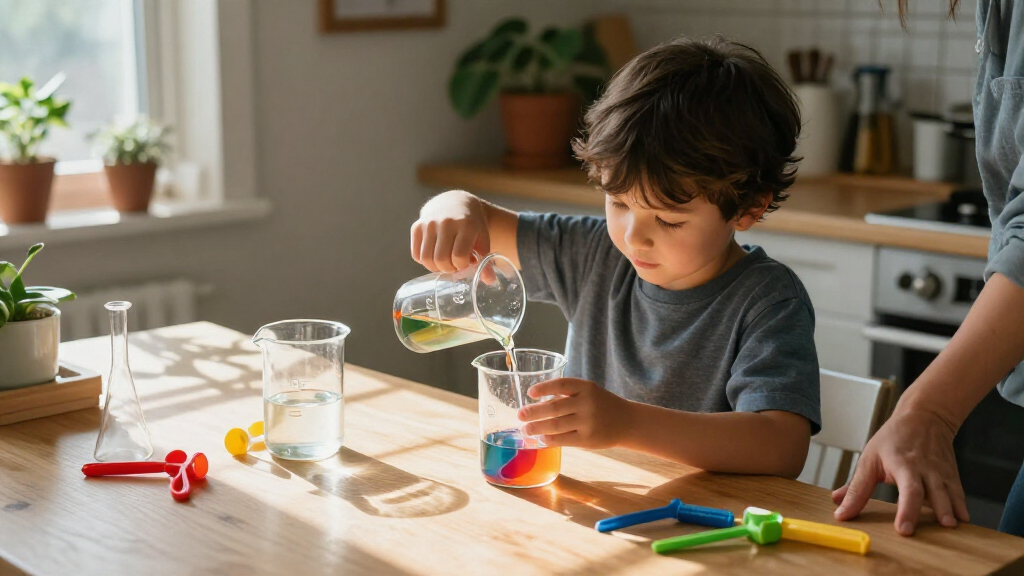
I compared these kits as hands-on science activities for children, weighing age guidance, the range and focus of experiments, clarity of the intended experience, and likely ease of setup. I also looked at whether a kit appears aimed at early learners, school-age children, or families seeking a particular subject such as chemistry, earth science, gross science, or science magic. Experiment count informed the comparison, but it did not determine the order on its own.
The ranking favors kits with a clear fit for a recognizable buyer need and a useful balance of breadth, subject focus, and age suitability. A large set can be a better pick for repeat activities, but it may be less appealing when a child needs simple, guided experiments. Since the supplied product details do not establish identical contents, materials, or supervision needs across listings, I avoid treating those details as equivalent and recommend checking the current package information before buying.
| science experiment kits for kid | Brand |
|---|---|
| 60+ Science Experiment Kit for | melican |
| National Geographic Science Ma | Blue Marble |
| Doctor Jupiter My First Scienc | Doctor Jupiter |
| National Geographic Gross Scie | Blue Marble |
| Doctor Jupiter My First Scienc | Doctor Jupiter |
| UNGLINGA 150 Experiments Scien | UNGLINGA |
| UNGLINGA 70-Experiment Chemist | UNGLINGA |
| National Geographic Amazing Ch | Blue Marble |
| UNGLINGA 272-Experiment Scienc | UNGLINGA |
| National Geographic Earth Scie | Blue Marble |
| National Geographic Magic Chem | Blue Marble |
| National Geographic Junior Che | Blue Marble |
| UNGLINGA 40+ Experiments Scien | UNGLINGA |
| Kids’ Science Kit with 80 Expe | Kuovei |
| National Geographic Mega Scien | Blue Marble |
Factors to Consider When Choosing Science Experiment Kits For Kids
Before choosing from this lineup, I’d match the kit to the way a child actually likes to learn and the amount of help an adult can provide. These broader checks can prevent a common mismatch: buying a set for its activity count when the child would do better with a simpler or more focused experience.
Match the age guidance to the child’s independence
Age labels are a starting point, not a guarantee that a child can complete every activity alone. A younger child may enjoy demonstrations and simple steps but still need an adult to measure, prepare, or explain what is happening. Older children may want more control over setup and results. Before choosing, check the listed age range and read the activity instructions for the kind of reading, fine-motor work, and patience they require. A kit that is technically age-appropriate can still frustrate a child if the adult support it assumes is unavailable.
Choose a subject the child already wants to explore
A broad science set can expose a child to several topics, while a themed kit gives them a more coherent reason to return to the activities. Chemistry, earth science, gross science, and magic-style demonstrations create different kinds of appeal, so the best fit depends on the questions a child already asks. The common mistake is picking the subject an adult finds educational rather than one the child finds intriguing. A focused theme can encourage deeper interest, but it may feel repetitive if the child wants to sample many areas. For a first kit, a clear theme can also make it easier to explain what the child will be doing.
Treat experiment counts as a clue, not a measure of value
Activity totals make large kits look like obvious long-term choices, but the number alone says little about how varied, repeatable, or involved the experiments are. Some activities may use similar methods or require materials from home, so check the package details rather than assuming every experiment is a complete, self-contained project. A smaller collection can be a better fit for a child who likes finishing one activity at a time. Larger kits may suit siblings or families who plan to spread activities across multiple sessions, provided someone can keep components organized. Consider how often the kit will actually be used, not just how many activities are listed.
Check what is supplied and what must come from home
Science kits vary in how much they provide, and the title or experiment count may not reveal which everyday materials are needed. Read the contents list and instructions for supplies, refill needs, and any steps that call for preparation before a child can begin. This check matters most when a kit is intended as a gift or when the family wants an activity ready on a specific day. Household supplies can be convenient, but they also add planning and may interrupt an experiment if something is missing. I’d favor transparent materials information over a larger activity total with unclear requirements.
Plan for supervision, cleanup, and storage
Adult involvement is part of the buying decision, especially for younger children and activities involving small parts, liquids, or messy materials. Review the instructions and product guidance to understand which steps require supervision and what cleanup might involve. A child who wants to work independently may prefer a set with straightforward directions and manageable preparation, while a family activity can support more hands-on adult participation. Also think about where the components will live between sessions; scattered pieces can make a large kit harder to use again. A little storage planning can matter more than adding another dozen activities.
Pay for fit and reuse, not just a bigger box
A more expansive kit makes sense when a child is likely to revisit experiments, explore several subjects, or share activities with siblings. A focused set may be the better choice when the child has a specific interest or when a shorter, more guided experience is the priority. Before paying more for breadth, ask whether the child enjoys following instructions, repeating a process, and keeping track of small components. If interest is uncertain, a clearly themed starter set can offer a gentler introduction than a large collection. The better purchase is the one that gets used, not necessarily the one with the longest list.
Frequently Asked Questions
How do I choose between a kit for ages 4+ and one aimed at children ages 8 and up?
Start with the child’s reading ability, patience, and comfort following steps, then compare those needs with the kit’s stated age range. Younger children often benefit from an adult working alongside them, even when the kit is marketed for their age. School-age kits may offer a more involved subject experience, but the age label does not tell you exactly how much reading or setup each activity requires. Check the instructions and supervision guidance when available. If you are unsure, choose for the child’s current independence rather than buying ahead for an older age.
Is a kit with more experiments a better choice for siblings?
Not automatically: a high activity count can offer more options, but it does not show whether experiments are easy to share or require one child to lead while another watches. For siblings, look for variety in subject and activity style, plus clear instructions that let children take turns. You should also check whether supplies are used up during experiments, since that can limit repeat sessions. A focused kit may work well if both children share the same interest, while a broader set can suit siblings with different preferences. Adult help may be needed to manage turns and keep components together.
Should I choose a chemistry kit or a general science kit?
Choose chemistry when a child is drawn to mixing, reactions, or a particular chemistry theme and is ready for the kit’s instructions and supervision needs. A general science kit can be a better introduction for children who want to sample different types of activities or have not settled on a subject. Check the actual activity descriptions rather than relying on the category name, since kits can differ in how narrowly they focus. Also look at what materials are included and what needs to be supplied at home. The right choice follows the child’s curiosity and the family’s appetite for setup.
What should I check before giving one of these kits as a gift?
Check the recipient’s age, the current package contents, and whether any household materials or adult preparation are needed. A kit that looks ready to open may still require supervision or supplies the family does not have on hand. Consider whether the child enjoys that subject; a magic-themed science set and an earth-science kit offer very different experiences from a broad experiment collection. If you do not know the family’s schedule, avoid assuming they can manage a long or messy activity right away. Clear age and materials information makes a more reliable gift choice than experiment count alone.
How can I tell whether a large kit will get used rather than sit on a shelf?
Think about whether the child regularly returns to hands-on activities and whether an adult can help with setup and storage. A large collection is more likely to earn repeat use when its subject matches an ongoing interest and the activities can be done in separate sessions. Look for clear instructions and verify whether the kit depends on additional supplies that could slow down each experiment. If the child prefers short, guided activities, a smaller themed set may be easier to bring out often. A simple plan for storing parts after each session can also make follow-up experiments more likely.
Conclusion
For a broad school-age pick, I’d choose the National Geographic Amazing Chemistry Set as the best overall option in this comparison. Families seeking broad activity variety can look at the UNGLINGA 150-Experiment or 272-Experiment Science Kit, but should check the contents and plan for organization before choosing by count alone. For beginners, the Doctor Jupiter My First Science Experiments Kit is the clearest age-focused starting point among these listings; confirm which of the two duplicated entries matches the package you want. For a premium-style, subject-led experience, the National Geographic Mega Science Lab is a strong candidate for families drawn to a larger set of activities, while the Earth Science Kit is better for a specific topic. Choose the Gross Science Kit for a child who loves messy, playful themes, or the Science Magic Kit for science presented as tricks. The right kit is the one that matches the child’s age, curiosity, and the adult support available at home.