

Students choosing science reference books face a practical tradeoff: one broad book can help with many assignments, but it may only introduce each topic; a focused reference can explain a particular subject more fully, but it covers less ground. General science encyclopedias and handbooks are designed to orient readers across fields such as biology, chemistry, physics, and Earth science. Subject-specific references concentrate on one area, such as human biology, astronomy, or chemistry.

Get school and study supplies delivered free — and shop member deals
- Fast, free delivery on millions of items
- Access to Prime Big Deal Days deals on October 6–7
- Prime Video, Amazon Music and more included

Usborne Science Encyclopedia: An In-depth Guide for Young Scientists
- ✔ Subject coverage: Broad science topics, including gravity, flight, genes, and DNA
- ✔ Format: Science encyclopedia
- ✔ Intended audience: Young scientists and curious students

The Pocket Atlas of Human Anatomy
- ✔ Subject: Human anatomy
- ✔ Format: Pocket atlas
- ✔ Illustrations: Detailed full-color anatomical illustrations
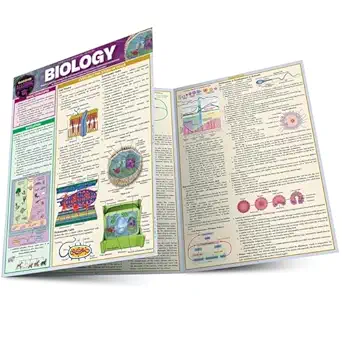
Biology QuickStudy Laminated Reference Guide
- ✔ Subject: Biology
- ✔ Format: Laminated reference guide
- ✔ Content: Concise facts and diagrams
The better choice depends on how the student will use the book. For younger students, broad school projects, or a first dependable home reference, a general science book usually offers more everyday usefulness. For advanced coursework, sustained interest, or repeated research in one discipline, a subject-specific reference is more likely to justify its narrower scope and often higher cost. The comparison below focuses on coverage, depth, accessibility, research usefulness, durability, and value.
At a Glance
| Criteria | General Science Reference Books | Subject-Specific Science Reference Books | Winner |
|---|---|---|---|
| Coverage | Surveys multiple science fields in one volume or set | Concentrates on one discipline or tightly related topic | A |
| Depth of explanation | Usually introductory; detail varies by topic | Usually offers more detail within its subject | B |
| Accessibility by age and level | Often written for a broad student audience | Ranges from beginner-friendly to advanced | Depends |
| Usefulness for research | Good for topic discovery and basic background | Better for sustained, focused assignments and study | B |
| Longevity as coursework advances | Useful across subjects, but may not meet advanced needs | Can remain useful as a student progresses in that subject | B |
| Ease of choosing and using | One source covers many common questions | Focused scope makes relevant material easier to locate | A |
| Value for money | Strong value for varied, occasional reference needs | Better value when the student will use that field often | Depends |
Usborne Science Encyclopedia: An In-depth Guide for Young Scientists
When a student’s questions move from flight to genes and DNA, a broad reference is more useful than a guide confined to one course unit. The Usborne Science Encyclopedia is our best overall choice because it brings multiple science topics into one resource and adds more than 180 video clips plus a curated list of 1,000 recommended websites. Those extra avenues can help readers move from a quick page lookup to further exploration, rather than treating the book as the end of the lesson.Compared with The Pocket Atlas of Human Anatomy, Usborne gives up subject-specific detail in favor of range: it is more suitable for a young learner whose interests are still developing, but it is not the anatomy-focused visual tool for a health-science student. Compared with QuickStudy, it offers a much larger learning landscape, while QuickStudy is easier to carry and consult for a concise biology reminder. The main drawback is also tied to its strength: the volume of information may feel overwhelming to readers who want a short answer or a carefully bounded revision sheet. The online resources and video clips may also be less useful when a student needs an offline-only reference.We would choose this for exploratory reading, home study, or a student who benefits from seeing science as connected subjects. We would skip it if the task is narrowly focused anatomy practice or fast, compact recall. It ranks first because it is the most versatile science reference in this group, not because it is the most portable or specialized.
Pros:
- Covers a wide range of key science concepts
- Includes more than 180 video clips for extending learning
- Offers a curated list of 1,000 recommended websites
- Works as an exploratory reference across multiple science interests
Cons:
- The amount of material may overwhelm readers who prefer short, focused explanations
- Its broad scope is less targeted than the anatomy atlas for health-science study
- Video and website extras are less helpful when students need an offline-only resource
Best for: Young students who want a broad introduction to science topics and enjoy following questions into video and web resources.
Not ideal for: Students seeking a compact study aid, anatomy-specific detail, or a concise last-minute review sheet.
Bottom line: For students who want one starting point across varied science topics, Usborne offers the strongest combination of breadth and routes to further learning.
“For students who want one starting point across varied science topics, Usborne offers the strongest combination of breadth and routes to further learning.”
The Pocket Atlas of Human Anatomy
For students whose science work centers on the human body, a general encyclopedia can leave too much searching between broad topics. The Pocket Atlas of Human Anatomy is the more direct tool: its full-color illustrations and quick access to structures and functional relationships make it suited to anatomy review across physical therapy, medicine, sports, and bodywork. Its compact size also makes it easier to bring to a study session than a larger, more expansive reference.That specialization is the reason to choose it—and the reason not to. Usborne is a better fit when a student wants science beyond anatomy, while this atlas concentrates on the body. QuickStudy is also compact, but it is a concise biology guide rather than a visual anatomy atlas; students who need to connect anatomical structures may find the atlas more relevant. The tradeoff is that a pocket-sized reference cannot match the depth of a large comprehensive atlas, and the small font may be difficult to read. There is no accompanying digital version or interactive feature to offset that limitation.We see this as a practical companion, not the sole source for deep anatomy learning. It makes the most sense for learners who need illustrations and quick consultation while studying a health-related subject. Students who need extensive explanations, large readable type, or broad coverage of general science should choose Usborne or a more comprehensive course resource instead.
Pros:
- Compact format is convenient for carrying to class or study sessions
- Full-color anatomical illustrations support visual review
- Addresses anatomy relevant to several health disciplines
- Durable cover is designed for frequent handling
Cons:
- Offers less depth than larger comprehensive anatomy atlases
- Small font may be challenging for some readers
- Does not include a digital version or interactive features
Best for: Anatomy learners in physical therapy, medicine, sports, or bodywork who want a portable illustrated reference.
Not ideal for: Students seeking broad science coverage, extensive atlas-level depth, large print, or digital and interactive study tools.
Bottom line: For a student whose reference needs are specifically anatomical, this atlas is a more focused and portable companion than either general science option.
“For a student whose reference needs are specifically anatomical, this atlas is a more focused and portable companion than either general science option.”
Biology QuickStudy Laminated Reference Guide
Sometimes a student does not need another chapter to read; they need a short biology reminder they can keep close at hand. The Biology QuickStudy Laminated Reference Guide is built for that task, with concise facts and diagrams on durable laminated pages. Its portability makes it straightforward to tuck into a backpack or pocket, and the wipe-resistant, sturdy format is better suited to frequent handling than a conventional book.Compared with the Usborne encyclopedia, QuickStudy is much narrower and easier to consult quickly, but it cannot provide the same breadth or extended learning paths. Compared with the anatomy atlas, it is a more general biology review aid rather than a focused map of anatomical structures. That distinction matters: the guide can help refresh familiar material, but its limited depth makes it a poor substitute for a textbook or detailed reference. A student encountering a concept for the first time may need fuller explanations elsewhere.We rank it third overall because its use case is deliberately small: fast review, portability, and durability rather than comprehensive study. That is still a useful role when it matches the student’s routine. Choose it as a supplementary prompt for recall, not as the main source for learning a biology unit or answering questions that require extended context.
Pros:
- Laminated pages resist wear during regular handling
- Concise facts and diagrams support quick review
- Portable format fits in a backpack or pocket
- Focused biology content is easy to keep accessible
Cons:
- Limited depth compared with full textbooks
- Less useful than the anatomy atlas for detailed human-structure study
- Does not offer the broad science coverage or learning extensions of Usborne
Best for: Students who already know basic biology and want a compact, durable guide for quick refreshers.
Not ideal for: Learners who need full explanations, in-depth biology coverage, or a broad reference spanning multiple sciences.
Bottom line: For brief biology refreshers on the move, QuickStudy is the most convenient choice, as long as we treat it as a supplement rather than a complete learning resource.
“For brief biology refreshers on the move, QuickStudy is the most convenient choice, as long as we treat it as a supplement rather than a complete learning resource.”
As an Amazon Associate we earn from qualifying purchases.
Key Differences
The central difference is breadth versus depth. A general science reference gives students a starting point across several disciplines, so it is a practical choice when assignments change from week to week or a student has not settled on a favorite subject. Its limitation is that a compact treatment cannot explain every concept, method, or exception in depth. A student may get a useful overview of genetics, for example, but need another source for detailed explanations of inheritance or molecular biology.
A subject-specific reference makes the opposite bet: it gives more space to one field in exchange for narrower coverage. That can mean clearer diagrams, more developed explanations, and better support for a longer research project. It is a stronger purchase when the subject recurs in class or reflects a lasting interest, but less useful when the student needs answers across several sciences. Price alone does not settle the decision: paying more for focused depth makes sense when it will be used repeatedly, while a broad reference is often better value for a household or student with varied needs.
Neither format replaces current, assignment-appropriate sources. Science knowledge changes, and reference books can vary in publication date and level. Students should check the edition, intended readership, index, illustrations, and the book’s explanation of sources before buying. The best fit is the book that matches the student’s actual questions—not simply the one with the most pages or the broadest title.
Detailed Comparison
Coverage (General Science Reference Books wins — major)
General references win by design. They bring several science fields together, which is a major advantage for students juggling different classes or projects. One book can help answer early questions about weather, cells, energy, and space without requiring a separate purchase for each subject. A subject-specific reference cannot match that range, but its narrower scope is not a flaw when the student already knows what they need to study. For a general-purpose shelf, breadth is more useful; for a clearly defined subject, the broader book may contain too little detail to finish the task.
Depth of explanation (Subject-Specific Science Reference Books wins — major)
Subject-specific references usually win, by a moderate to major margin. With more pages devoted to one discipline, they can develop key ideas rather than offer a short overview. This matters when students need to explain how a process works, compare competing concepts, or follow a topic across several related chapters. General references are better for first contact and quick orientation, but students may outgrow their explanations or need supplemental material for a demanding assignment. The actual depth still depends on the book’s stated level, so an advanced title is not automatically suitable for a younger reader.
Accessibility by age and level (moderate difference)
This is a genuine tie because intended audience matters more than format. Many general science books use short entries, familiar language, and visual explanations that suit younger students or readers who need a quick introduction. Yet general references can also be dense or encyclopedic. Subject-specific titles range from illustrated beginner guides to technical handbooks, so they can be highly accessible or far beyond a student’s current level. Check sample pages, definitions, diagrams, and reading level rather than assuming broad coverage means easy reading. Choosing a book the student can read independently is more valuable than buying one with impressive technical detail.
Usefulness for research (Subject-Specific Science Reference Books wins — moderate)
Subject-specific references have the advantage for focused research. They are more likely to sustain a project with connected explanations and discipline-specific terminology. General references work well in the early stages: a student can identify the right vocabulary, discover related topics, and decide what to investigate next. Their short treatments may not support a detailed argument on their own. The practical approach is often to use a general book for orientation and a focused reference for follow-up, while checking whether the assignment requires recent sources or primary research that a reference book cannot provide.
Longevity as coursework advances (Subject-Specific Science Reference Books wins — moderate)
Subject-specific books can last longer within the subject they cover, a moderate advantage. A detailed reference may remain useful as coursework moves from basic concepts to more demanding questions, particularly if the student continues in that field. A general reference keeps its cross-subject usefulness but may stop meeting the student’s needs once the work becomes specialized. The result depends on the student’s path: a broad book can serve several school years if assignments remain varied, while a focused book can be a better long-term companion for a committed science student. Edition age also matters, especially for rapidly developing fields.
Ease of choosing and using (General Science Reference Books wins — minor)
General references have a minor practical win for mixed needs. A student can consult the same source for questions across several subjects, and a well-organized index or contents list helps with quick lookups. A specialist book may be easier to search when the question is already within its field, because its chapters and terminology stay focused. That advantage disappears for unrelated assignments, when the student needs another book. Before buying either type, inspect the index, headings, glossary, and cross-references; a poorly organized book can waste more time than its format saves.
Value for money (moderate difference)
There is no universal winner; value follows use. A general reference is usually the safer purchase when a student needs one book for several subjects and only consults it occasionally. A subject-specific title may cost more, but that premium is justified if the student returns to it often or needs its depth for ongoing coursework. Paying extra for specialist detail does not make sense when the student only needs brief definitions or has no clear interest in that field. Compare the book’s level, edition, contents, and expected frequency of use—not just its price or page count.
General Science Reference Books: Pros and Cons
Pros:
- Covers multiple science subjects in one purchase.
- Useful for broad projects, early exploration, and quick background checks.
- Often a sensible value when a student’s needs vary.
- Can introduce connections between different areas of science.
Cons:
- Limited space for detailed explanations in each subject.
- May not be enough on its own for advanced coursework or a focused project.
- Broad coverage does not guarantee an appropriate reading level.
- Students may need additional sources for current or specialized information.
Subject-Specific Science Reference Books: Pros and Cons
Pros:
- Offers more space for explanations, diagrams, and related concepts in one field.
- Better suited to repeated study and sustained research on a subject.
- Can remain useful as coursework becomes more specialized.
- A focused structure can make relevant material easier to find.
Cons:
- Covers fewer subjects, so it may not help with unrelated assignments.
- A higher purchase cost is harder to justify if use is occasional.
- An advanced title can overwhelm a student whose foundations are still developing.
- May become less relevant if the student’s interests or classes change.
Who Should Choose What
Choose General Science Reference Books if:
- The student needs one reliable reference for assignments across several science classes.
- They are exploring different subjects and have not chosen a particular area of interest.
- The book will be used for quick definitions, background reading, and school projects rather than advanced study.
- You want the most versatile purchase for a shared home or classroom shelf.
Choose Subject-Specific Science Reference Books if:
- The student repeatedly studies one subject, such as biology, chemistry, physics, or astronomy.
- They need more than an overview for a sustained project or higher-level coursework.
- A lasting interest makes regular use of the subject-specific material likely.
- The title’s level matches the student and its extra depth addresses a real need.
Skip both if: Skip both if the assignment requires recent findings, current statistics, or original research; use up-to-date library or academic sources alongside a suitable reference book.
Value for Money
Pay more for a subject-specific reference only when its depth will get regular use. For a student who repeatedly studies one field, the added detail can save time, support better understanding, and remain useful as assignments grow more demanding. That makes a higher cost reasonable when the book’s level and edition fit the student.
For mixed subjects, occasional lookups, or a first science reference, a general book is usually the better value. It provides broader use from one purchase, though it should not be expected to replace focused research sources. If the student’s needs are uncertain, start with a good general reference and add a specialist title only when a recurring subject or assignment shows why it is needed.
Final Verdict
For most students who want one science reference book for everyday school use, choose a general science reference. Its broad coverage makes it the more versatile first purchase, especially when subjects and assignments vary. Choose a subject-specific book instead when the student has a clear, recurring need for deeper coverage in one discipline; that is when the extra cost can pay off in practical study value.
The biggest deciding factor is not which format sounds more advanced, but whether the student needs many topics at introductory depth or one topic at greater depth. If you cannot name the subject that would get regular use, start broad. If you can—and the book is written at the right level—buy focused depth.
Frequently Asked Questions
Is a general science reference enough for a school research project?
It is often enough for background reading, basic definitions, and choosing a project angle. For a detailed paper, use it as a starting point and add sources that meet the assignment’s requirements, especially if the topic needs current evidence or specialized detail.
When should a student choose a subject-specific science book?
Choose one when a student returns to the same discipline for several classes, projects, or personal study. The narrower scope makes sense when its extra explanations will be used repeatedly, not just for one quick question.
Which type is better for younger students?
Neither format wins automatically. Many broad references are designed for accessible browsing, but some are text-heavy; specialist books can also be written for beginners. Check sample pages, vocabulary, illustrations, and the book’s intended age or school level.
Should I pay more for a specialist science reference?
Pay more when the student needs its added depth and is likely to use it often. If the need is occasional or covers many unrelated subjects, a general reference is usually better value. Also check the edition date and level before paying a premium.
Fall Picks
fall essentials
As an affiliate, we earn on qualifying purchases.