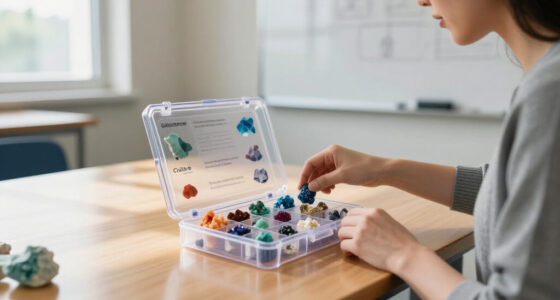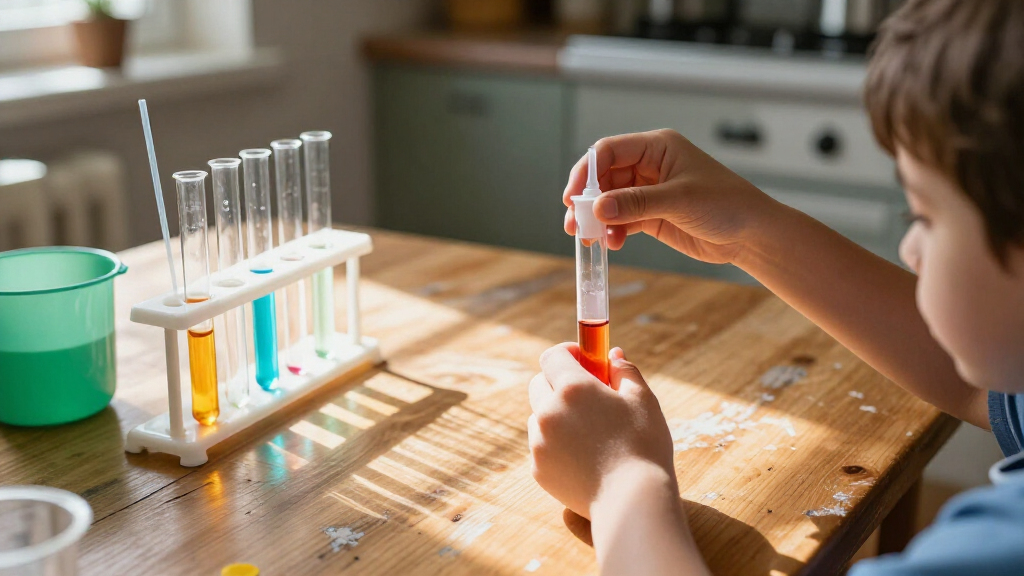

Among these chemistry sets for kids, the National Geographic Amazing Chemistry Set with 100+ Experiments is my best overall pick for families seeking a broad range of activities. The Thames & Kosmos Ooze Labs Chemistry Station suits kids drawn to hands-on reactions, while Doctor Jupiter My First Science Experiments is aimed at younger beginners. The main tradeoff is between a larger experiment count and a kit that feels focused, manageable, and age-appropriate. Adult help, household supplies, and the kind of activities a child enjoys can matter as much as the number on the box. Read on for the full comparison and picks by buyer type.

Prime made for students and young adults
- Fast, free delivery for dorm and study essentials
- Prime Video and Amazon Music included
- Member-only deals
Key Takeaways
- The National Geographic Amazing Chemistry Set leads for breadth, with 100+ experiments; a high count still means checking which activities need adult help or extra household supplies.
- Thames & Kosmos Ooze Labs Chemistry Station gives the lineup a more focused, station-based option for kids who prefer an organized setup to a very large mixed experiment collection.
- Doctor Jupiter My First Science Experiments is the age-four starting point in this group, while many other kits are aimed at ages eight and up.
- National Geographic Magic Chemistry and the Science Magic Kit put presentation and surprise at the center, a different draw from kits built around a wider range of chemistry activities.
- Experiment totals range from 8 to 272, but the best fit depends on a child’s age, interest, tolerance for setup, and willingness to repeat activities.
| National Geographic Gross Science Kit with 45 Experiments for Kids Ages 8–12 |  | Best for Gross-Themed Chemistry | Included-material experiments: 15 | Additional household-item experiments: 30 | Total listed experiments: 45 | VIEW LATEST PRICE | See Our Full Breakdown |
| National Geographic Chemistry Set with 45 Experiments for Kids Ages 8+ |  | Best for Classic Chemistry Demonstrations | Experiments in title: 45 | Conflicting component description: Mega Science Kit with 100+ easy experiments | Recommended age: 8 years and up | VIEW LATEST PRICE | See Our Full Breakdown |
| National Geographic Mega Science Lab for Kids, 75 Experiments |  | Best Multi-Topic Science Kit | Total experiments: 75 | Core experiment count: 45 | Additional household-item activities: 30 | VIEW LATEST PRICE | See Our Full Breakdown |
| Doctor Jupiter My First Science Experiments Kit for Kids Ages 4+ |  | Best for Preschool Beginners | Recommended age: 4 years and up | Number of experiments: Over 100 | Included equipment: 2 beakers, 1 conical flask, 1 spatula, 2 stirring sticks, 2 spray bottles, 2 cups, 1 funnel, 1 pair of safety goggles, and 1 tray | VIEW LATEST PRICE | See Our Full Breakdown |
| Kuovei Science Kit for Kids with 80 Experiments |  | Best for a Wide Mix of Experiment Materials | Experiments: 80 | Recommended age: Over 6 years | Manufacturer age range: 36 months–12 years | VIEW LATEST PRICE | See Our Full Breakdown |
| National Geographic Magic Chemistry Set for Kids, 10 Experiments |  | Best for Science-Magic Beginners | Brand: National Geographic | Experiments: 10 | Recommended age: 8–12 years | VIEW LATEST PRICE | See Our Full Breakdown |
| Doctor Jupiter Ultimate Science Experiments Kit for Kids Ages 8+ |  | Best for Activity Variety | Recommended age: 8+ | Included experiments: Over 135 | Bonus experiments: Over 90 using household items | VIEW LATEST PRICE | See Our Full Breakdown |
| National Geographic Science Magic Kit for Kids, 8+ |  | Best Magic-Themed Activity Library | Brand: Blue Marble | Age range: 8 years and up | Experiments with materials: 20 | VIEW LATEST PRICE | See Our Full Breakdown |
| Discovery Super Reactions Science Kit, 66 Experiments, Ages 8+ |  | Best for Guided and DIY Reactions | Experiments: 66 total: 26 guided and 40 DIY | Recommended age: 8+ | Included items: Volcano mold, tornado connector, slime powder, citric acid, baking soda, balloons, test tubes, measuring cups, and instructional manual | VIEW LATEST PRICE | See Our Full Breakdown |
| Doctor Jupiter My First Science Experiments Kit for Kids Ages 4+ |  | Best for Preschool Science Starters | Recommended age: 4+ | Experiments: 50+ | Safety standard: ASTM F963-17 | VIEW LATEST PRICE | See Our Full Breakdown |
| National Geographic Amazing Chemistry Set with 100+ Experiments for Ages 8 and Up |  | Best for Household Follow-Up Activities | Brand: Blue Marble | Sub-brand: National Geographic | Age range: 8 years and up | VIEW LATEST PRICE | See Our Full Breakdown |
| UNGLINGA Science Experiment Kit for Kids, 70 Experiments |  | Best for Varied STEM Activities | Brand: UNGLINGA | Experiments: 70 | Recommended age: 8 years and up | VIEW LATEST PRICE | See Our Full Breakdown |
| National Geographic Junior Chemistry Set, 50 Experiments |  | Best for Young Beginners | Brand: Blue Marble | Sub-brand: National Geographic | Age range: 4 years and up | VIEW LATEST PRICE | See Our Full Breakdown |
| Thames & Kosmos Ooze Labs Chemistry Station Science Experiment Kit |  | Best for a Dedicated Lab Setup | Brand: Thames & Kosmos | Experiments: Approximately 20 | Pieces: 57 | VIEW LATEST PRICE | See Our Full Breakdown |
| UNGLINGA 272-Experiment Science Kit for Kids |  | Best for Maximum Experiment Variety | Brand: UNGLINGA | Experiments: 272 | Included tools: Test tube, measuring spoon, beaker, and conical flask | VIEW LATEST PRICE | See Our Full Breakdown |
| chemistry sets for kid | Recommended age | Brand | Experiments |
|---|---|---|---|
| National Geographic Gross Scie | 8–12 years | National Geographic | — |
| National Geographic Chemistry | 8 years and up | National Geographic | — |
| National Geographic Mega Scien | 8 years and up | Blue Marble | — |
| Doctor Jupiter My First Scienc | 4 years and up | — | — |
| Kuovei Science Kit for Kids wi | Over 6 years | — | 80 |
| National Geographic Magic Chem | 8–12 years | National Geographic | 10 |
| Doctor Jupiter Ultimate Scienc | 8+ | — | — |
| National Geographic Science Ma | — | Blue Marble | — |
| Discovery Super Reactions Scie | 8+ | — | 66 total: 26 guided and 40 DIY |
| Doctor Jupiter My First Scienc | 4+ | — | 50+ |
| National Geographic Amazing Ch | — | Blue Marble | — |
| UNGLINGA Science Experiment Ki | 8 years and up | UNGLINGA | 70 |
| National Geographic Junior Che | — | Blue Marble | 50 |
| Thames & Kosmos Ooze Labs Chem | — | Thames & Kosmos | Approximately 20 |
| UNGLINGA 272-Experiment Scienc | — | UNGLINGA | 272 |
More Details on Our Top Picks
National Geographic Gross Science Kit with 45 Experiments for Kids Ages 8–12
Gross-themed activities give this kit a clear hook for kids who are curious about messy reactions and materials. Its 15 experiments with included materials introduce ideas such as polymers and pH, while 30 more activities use common household items. That split gives families a way to keep exploring after the supplied activities, though it also means parents need to gather ingredients for much of the booklet.
Compared with the National Geographic Chemistry Set with 45 Experiments, this pick leans into gross-out appeal instead of volcanoes, geysers, and a rocket launch. The illustrated instructions make activities more approachable for children ages 8–12, but the theme may put off kids who prefer conventional chemistry demonstrations. It suits a child motivated by slime and silly science more than a family seeking a broad, supplied-materials chemistry set.
Pros:- Combines 15 experiments with supplied materials and 30 household-item activities
- Introduces polymers, chemical reactions, and pH through hands-on activities
- Illustrated instructions support independent reading and following steps
Cons:- Most activities require parents to find additional household products
- The gross-out theme will not suit every child’s interests
Best for: Families with children ages 8–12 who are especially interested in gross-out experiments and can supply common household ingredients.
Not ideal for: Children who dislike gross-themed activities, or families seeking a kit where most experiments use included materials.
- Included-material experiments:15
- Additional household-item experiments:30
- Total listed experiments:45
- Recommended age:8–12 years
- Brand:National Geographic
- Topics:Polymers, chemical reactions, and pH science
- Instruction format:Illustrated booklet
- Availability designation:Amazon exclusive
Our verdict“Choose this for an older child drawn to gross science; pick the National Geographic Chemistry Set with 45 Experiments for more conventional demonstrations.”
National Geographic Chemistry Set with 45 Experiments for Kids Ages 8+
Volcano, geyser, and rocket activities give this kit the most recognizable chemistry-show format in this batch. The illustrated guide introduces basic chemistry and safe experiment practices, so it can help an 8-and-up beginner follow a demonstration and connect it to a scientific process. That familiar activity mix makes it a more focused chemistry choice than the broader National Geographic Mega Science Lab for Kids, which also includes Earth science and science magic.
There is a real information gap in the listing: the title says 45 experiments, while the component description refers to a mega kit with 100-plus easy experiments. I would not choose it based on the larger figure without confirmation. Its appeal is the stated set of hands-on chemistry activities and guided instructions; its tradeoff is uncertainty about the actual experiment count and what materials are included.
Pros:- Features familiar demonstrations including a volcano, geyser, and rocket
- Illustrated instructions support step-by-step participation
- Introduces chemistry fundamentals and safe experiment practices
Cons:- The listed experiment count conflicts between 45 and 100-plus
- The supplied details do not clearly identify the full materials list
Best for: Families seeking a chemistry-focused introduction for children age 8 or older, especially those who enjoy volcano and rocket demonstrations.
Not ideal for: Buyers who need a verified activity count or detailed confirmation of the included experiment materials.
- Experiments in title:45
- Conflicting component description:Mega Science Kit with 100+ easy experiments
- Recommended age:8 years and up
- Brand:National Geographic
- Set name:Stunning Chemistry Set
- Educational objective:STEM
- Number of packs:1
- Model number:NGMEGACHEMX
Our verdict“Choose it for classic guided chemistry demonstrations if the activity count is clarified; the Mega Science Lab offers a broader mix of science topics.”
National Geographic Mega Science Lab for Kids, 75 Experiments
Three science themes in one kit make this a useful pick for a child whose interests stretch beyond chemistry. It combines 45 activities across Earth science, chemistry, and science magic, plus 30 more using household items. The volcano, crystal-growing, and reaction activities give chemistry a place in the mix, while rock and mineral specimens add tangible materials for exploring Earth science.
Compared with the National Geographic Chemistry Set with 45 Experiments, this lab trades a narrower chemistry focus for more variety. That breadth can keep a curious child engaged across different kinds of activities, but a buyer wanting a dedicated chemistry set may find fewer chemistry-specific experiments than the total of 75 suggests. The household-item activities also call for family preparation, and its age guidance starts at 8, making it less suitable for preschoolers.
Pros:- Combines Earth science, chemistry, and science magic
- Lists 75 activities, including 30 using household items
- Includes rock, mineral, and crystal specimens
- Activities support observation and critical thinking
Cons:- Only part of the 45 core activities are chemistry-focused
- Some activities require household materials beyond the kit
- Not recommended for children younger than 8
Best for: Families with children age 8 or older who want chemistry alongside Earth science and science magic in one kit.
Not ideal for: Buyers looking for a chemistry-only set or a kit designed for children under age 8.
- Total experiments:75
- Core experiment count:45
- Additional household-item activities:30
- Recommended age:8 years and up
- Experiment categories:Earth science, chemistry, and science magic
- Included components:Earth science kit, chemistry kit, science magic kit, and experiment guide
- Educational objectives:Critical thinking, observation skills, and STEM
- Brand:Blue Marble
- Model number:NGMEGASCIKIT
Our verdict“Pick this for a child who wants variety across science topics; choose the National Geographic 45-experiment Chemistry Set for a more chemistry-centered experience.”
Doctor Jupiter My First Science Experiments Kit for Kids Ages 4+
Its age-four starting point sets it apart from the National Geographic chemistry kits in this roundup, which are aimed at children ages 8 and up. Doctor Jupiter supplies simple equipment such as beakers, a flask, stirring sticks, and a tray, along with illustrated, step-by-step instructions. Activities like Walking Water and Water Fireworks offer a gentler introduction to observing changes and following a procedure than a kit centered on older children’s chemistry demonstrations.
The listed total of over 100 experiments gives families many activity ideas, but that number does not mean every activity is chemistry-specific or uses only supplied components. Some activities use food additives and household-style ingredients, so adult involvement remains part of the experience for young children. For a family with a preschooler, its accessible age guidance matters more than having the specialized chemistry focus of older-child sets.
Pros:- Recommended from age 4, younger than the National Geographic sets
- Includes beakers, a conical flask, a funnel, and a tray
- Offers over 100 activities with illustrated step-by-step guidance
- Includes a safety-standard listing of ASTM F963-17
Cons:- Young children need adult supervision, including for activities using food additives
- The experiment total covers general science activities, not necessarily chemistry alone
- Household-style ingredients may require extra preparation
Best for: Parents introducing children ages 4–7 to simple, supervised science activities with basic lab-style tools.
Not ideal for: Families seeking an older child’s chemistry curriculum or activities intended for independent use by preschoolers.
- Recommended age:4 years and up
- Number of experiments:Over 100
- Included equipment:2 beakers, 1 conical flask, 1 spatula, 2 stirring sticks, 2 spray bottles, 2 cups, 1 funnel, 1 pair of safety goggles, and 1 tray
- Included materials:Food essences, food additives, dried leaves, and food colors
- Printed materials:Instruction manual and bonus experiment booklet
- Safety standard:ASTM F963-17
- Model:DJ Junior Science
- Manufacturer:Metis Learning Solutions Pvt. Ltd.
Our verdict“Choose this for a supervised preschool introduction to hands-on science; older children wanting more chemistry-specific activities may prefer a National Geographic chemistry set.”
Kuovei Science Kit for Kids with 80 Experiments
A broad assortment of tools and materials gives this kit a hands-on feel, with goggles, test tubes, petri dishes, measuring tools, droppers, pigments, and effervescent tablets among the listed components. Its 80 guided experiments include activities such as a rainbow fountain and volcano, giving children several ways to observe changes and reactions. For families comparing it with the more focused National Geographic Chemistry Set with 45 Experiments, Kuovei offers a larger stated activity count and a wider parts list.
The tradeoff is less certainty around age fit: one listing says over 6, while the manufacturer range says 36 months to 12 years. That discrepancy matters when selecting activities for younger children, especially since some use chemical materials and may call for adult supervision. It is a better match for families who value variety and can review the activity guidance than those seeking a clearly age-targeted chemistry set.
Pros:- Lists 80 guided experiments, including a rainbow fountain and volcano
- Includes a wide range of tools such as test tubes, petri dishes, droppers, and measuring cups
- Provides goggles and gloves among the listed components
- Step-by-step cards explain procedures and scientific principles
Cons:- Age recommendations conflict between over 6 and 36 months–12 years
- Some activities use chemical materials and may need adult supervision
- The supplied details do not specify how many activities are chemistry-focused
Best for: Families with children around age 6 and older who want many supplied tools and varied experiment materials.
Not ideal for: Caregivers who need consistent age guidance or want a clearly chemistry-focused kit with fully specified activity requirements.
- Experiments:80
- Recommended age:Over 6 years
- Manufacturer age range:36 months–12 years
- Package quantity:1 set
- Selected included components:Goggles, petri dishes, test tubes, measuring cups, droppers, and gloves
- Other included materials:Chemical materials, pigments, effervescent tablets, balloons, rainbow candy, and a color-changing flower
- Instruction format:Step-by-step cards
- Manufacturer part number:MYJ886-A
Our verdict“Choose Kuovei for a broad assortment of experiment gear, while the National Geographic Chemistry Set has clearer age guidance and a more defined chemistry focus.”
National Geographic Magic Chemistry Set for Kids, 10 Experiments
I’d choose this kit for a child who is more excited by performing a trick than following a conventional lab activity. Its 10 magic-style experiments, including a floating coin and color-changing water, give each activity a clear reveal, while the illustrated guide explains the science behind it. The wand and white gloves support the performance angle, a more focused experience than Doctor Jupiter’s Ultimate Science Experiments Kit, which offers a much larger mix of activities. That smaller scope is the tradeoff: children looking for a long sequence of varied chemistry projects may outgrow it sooner. Its ages 8–12 range also makes it less suitable for younger siblings. I rank it as a beginner pick for kids who want to present science as a simple magic show.
Pros:- Magic-trick format gives experiments an entertaining reveal.
- Includes the tools needed for the listed experiments.
- Illustrated guide connects each trick with a science explanation.
- Wand and white gloves support pretend performance.
Cons:- Ten experiments offer a smaller activity selection than Doctor Jupiter’s Ultimate Science Experiments Kit.
- The recommended age range excludes younger children.
- The magic theme may not appeal to kids who prefer open-ended lab activities.
Best for: Children ages 8–12 who enjoy performing tricks and want a first, approachable introduction to chemistry concepts.
Not ideal for: Families seeking a large collection of varied experiments or an activity set for children under 8.
- Brand:National Geographic
- Experiments:10
- Recommended age:8–12 years
- Activity style:Magic-trick science experiments
- Example activities:Floating a coin and changing water color
- Included accessories:Magic wand and white gloves
- Guide:Illustrated instructions with science explanations
Our verdict“Choose this for an 8–12-year-old who would rather perform a handful of science tricks than work through a larger experiment collection.”
Doctor Jupiter Ultimate Science Experiments Kit for Kids Ages 8+
When a child wants a kit that can keep supplying new projects, I’d put this ahead of the more focused National Geographic Magic Chemistry Set. It includes over 135 experiments, from color-changing reactions to glowing water and underwater volcanoes, plus over 90 bonus activities that use household items. That gives families a broader mix and more chances to continue after using the packaged materials. The illustrated, step-by-step guide helps children follow each activity, while separate leak-proof bottles keep included materials contained between sessions. The scale is also the main tradeoff: this is a lot of activities to sort through, and household-item projects may require extra preparation. I’d choose it for variety over a compact, themed introduction, but skip it if a short, tightly curated set is the goal.
Pros:- More than 135 included experiments offer substantial variety.
- Over 90 bonus activities extend the kit with household materials.
- Illustrated, step-by-step instructions support independent follow-along.
- Separate leak-proof bottles help contain the included materials.
Cons:- The large activity count can make choosing and organizing projects less straightforward.
- Bonus experiments depend on having household items available.
- Its broad science mix is less focused on magic-style chemistry than the National Geographic Magic Chemistry Set.
Best for: Families with children 8 and older who want a broad activity library and are happy to gather household items for extra projects.
Not ideal for: Buyers looking for a small, tightly themed chemistry set with only a few projects to organize.
- Recommended age:8+
- Included experiments:Over 135
- Bonus experiments:Over 90 using household items
- Example activities:Color-changing reactions, glowing water, and underwater volcanoes
- Instructions:Illustrated, step-by-step guide
- Chemical materials:Packaged in separate leak-proof bottles
Our verdict“Pick this for an 8+ child who wants a large, varied experiment library and doesn’t mind supplying some household materials.”
National Geographic Science Magic Kit for Kids, 8+
This is the magic-themed pick for families who want room to continue after the supplied experiments are done. The kit provides materials for 20 magic experiments and a booklet with more than 85 additional experiments, a wider runway than the 10 activities in the National Geographic Magic Chemistry Set. Its mix of tricks, chemistry activities, and hands-on STEM projects gives kids more ways to engage with science, though the bonus booklet’s project count does not mean materials for every activity are included. That distinction matters for families expecting one ready-to-run kit for every listed idea. Compared with Doctor Jupiter’s Ultimate Science Experiments Kit, this leans more strongly into magic, while offering less detail in the supplied product data about materials and instructions. I’d rank it for kids drawn to the performance theme who want an extended list of ideas.
Pros:- Includes materials for 20 magic experiments.
- Bonus booklet adds more than 85 experiment ideas.
- Combines magic tricks, chemistry activities, and hands-on STEM.
- Offers more supplied magic experiments than the 10-experiment National Geographic Magic Chemistry Set.
Cons:- The bonus activities are listed in a booklet, and included materials for them are not specified.
- Product details provide less information about instructions and material packaging than Doctor Jupiter’s Ultimate Science Experiments Kit.
- The magic theme may be less appealing to children seeking conventional chemistry projects.
Best for: Children 8 and older who like science tricks and want a bonus booklet of additional activities to explore over time.
Not ideal for: Families who want clearly specified materials and a fully supplied kit for every activity in the booklet.
- Brand:Blue Marble
- Age range:8 years and up
- Experiments with materials:20
- Bonus experiments:85+ in a booklet
- Activity types:Magic, chemistry, and hands-on STEM activities
- Set name:Mega Science Kit
- Model number:NGMEGAMAGIC
- UPC:816448027680
Our verdict“Choose this for an 8+ child who wants a magic-centered kit with extra experiment ideas and can handle sourcing materials for some activities.”
Discovery Super Reactions Science Kit, 66 Experiments, Ages 8+
I’d recommend this Discovery kit to families who want some ready-to-run chemistry activities alongside projects that use supplies from home. Of its 66 activities, 26 are guided and 40 use common household items, giving kids a clearer starting point than the National Geographic Magic Chemistry Set while leaving room to try more ideas. The supplied tools and ingredients cover projects such as a volcano, slime, and bubbling reactions; the step-by-step manual is aimed at ages 8 and up. That mix is useful, but the 40 DIY activities require families to check what they already have and prepare accordingly. Adult supervision is recommended, so it is not the most hands-off option. Compared with Doctor Jupiter’s Ultimate Science Experiments Kit, this has fewer listed activities but clearer detail about its included tools and ingredients.
Pros:- Combines 26 guided experiments with 40 household-item activities.
- Includes tools and ingredients for projects such as slime and bubbling reactions.
- Step-by-step manual supports children ages 8 and up.
- Uses hands-on activities to introduce chemistry and STEM.
Cons:- Adult supervision is recommended.
- The 40 DIY activities require common household items.
- Its guided experiment count is lower than the supplied experiment count in Doctor Jupiter’s Ultimate Science Experiments Kit.
Best for: Families with children 8 and older who want a mix of supplied reaction activities and household-item projects, with an adult nearby.
Not ideal for: Buyers seeking an activity set that requires little adult supervision or provides materials for every listed activity.
- Experiments:66 total: 26 guided and 40 DIY
- Recommended age:8+
- Included items:Volcano mold, tornado connector, slime powder, citric acid, baking soda, balloons, test tubes, measuring cups, and instructional manual
- Learning focus:Chemistry and STEM
- Example projects:Volcano, slime, and bubbling reactions
- Activity materials:Some activities use common household items
- Supervision:Adult supervision recommended
Our verdict“Choose this for an 8+ child who wants a blend of supplied chemistry projects and DIY activities with an adult available to help.”
Doctor Jupiter My First Science Experiments Kit for Kids Ages 4+
For a preschooler beginning to explore simple reactions and materials, this is the youngest-age option in this batch. It offers 50+ hands-on experiments, including oobleck and volcano activities, with illustrated, step-by-step manuals to help an adult guide the process. That makes it a better age fit than the National Geographic Magic Chemistry Set or the Discovery Super Reactions kit, both recommended for children 8 and up. Its broader science framing can introduce STEM through play, but it is not as clearly chemistry-focused as a set built around reaction experiments. Some activities may also need adult guidance, so the age recommendation should not be read as a promise of independent use. I’d choose it for younger children who need accessible activities and adult participation, rather than older kids seeking a chemistry-heavy challenge.
Pros:- Designed for children as young as 4.
- Includes more than 50 hands-on activities.
- Illustrated, step-by-step manuals help adults guide experiments.
- Meets the ASTM F963-17 toy safety standard.
Cons:- Some activities may require adult guidance.
- The broad science focus is less chemistry-specific than the Discovery Super Reactions kit.
- Older children may want more challenging chemistry activities than this early introduction provides.
Best for: Families with children ages 4 and up who want illustrated activities to explore together with an adult.
Not ideal for: Older children looking for chemistry-focused experiments they can work through independently.
- Recommended age:4+
- Experiments:50+
- Safety standard:ASTM F963-17
- Instruction format:Illustrated, step-by-step manuals
- Example activities:Oobleck, volcanoes, and dinosaur squishies
- Learning focus:STEM through hands-on exploration
- Adult guidance:Some activities may require adult guidance
Our verdict“Choose this for a child age 4 or older who is ready for simple science activities with an adult guiding the experiments.”
National Geographic Amazing Chemistry Set with 100+ Experiments for Ages 8 and Up
National Geographic Amazing Chemistry Set pairs starter supplies for 15 experiments with a guide to 85 more activities using common household items. That split makes it a better fit for families who want a kit to spark continued exploration than for buyers expecting materials for every activity. Test tubes, beakers, and pipettes give children familiar lab tools for experiments such as crystal growing and chemical reactions. Compared with the Thames & Kosmos Ooze Labs Chemistry Station, which supplies materials for approximately 20 experiments and organizes them around a lab station, this set promises a much larger activity library but relies more on supplies from home. I’d choose it for a child who enjoys repeating experiments and trying new variations; families seeking a ready-to-run activity each time may prefer a kit with more included materials.
Pros:- Provides materials for 15 chemistry experiments
- Includes 85 additional activities that use common household items
- Supplies test tubes, beakers, and pipettes for hands-on lab work
- Crystal growing and chemical reactions offer varied chemistry activities
Cons:- Materials are included for only 15 of the 100-plus activities
- The additional activities depend on household supplies
- The product details do not specify the quantities of included materials
Best for: Families with children ages 8 and up who want a chemistry starter kit and are happy to gather household supplies for additional activities.
Not ideal for: Gift buyers who want all materials included for every listed experiment, since only 15 experiments come with materials.
- Brand:Blue Marble
- Sub-brand:National Geographic
- Age range:8 years and up
- Experiments with included materials:15
- Additional activities:85 using common household items
- Included tools:Test tubes, beakers, and pipettes
- Educational objective:STEM
- Model number:NGMEGACHEMAR
Our verdict“Choose this set for an 8-and-up beginner who can move from supplied experiments to activities using household items.”
UNGLINGA Science Experiment Kit for Kids, 70 Experiments
UNGLINGA’s 70-experiment kit ranges beyond chemistry, combining crystal growing and a volcano with activities such as a balloon rocket and fruit circuits. That variety suits a child who wants to sample several areas of science, though it makes this a less focused chemistry choice than the National Geographic Junior Chemistry Set, which is built around 50 chemistry activities and lab tools. An illustrated guide explains both the activity steps and the science behind them, giving families more context than a list of experiments alone. The tradeoff is that the product details do not identify the included components, so buyers can’t tell which materials come in the box or what they’ll need from home. I’d pick it for breadth, while chemistry-focused beginners may prefer the Junior set’s clearer tool list and narrower focus.
Pros:- Offers 70 varied hands-on experiments
- Includes an illustrated guide with steps and explanations of the science
- Combines chemistry activities with rockets, circuits, and other STEM topics
- Recommended for children ages 8 and up
Cons:- Product details do not specify which components are included
- Some activities may need adult supervision
- Its broad STEM mix offers less chemistry focus than the National Geographic Junior Chemistry Set
Best for: Families with children ages 8 and up who want a mix of chemistry, physics, and other hands-on STEM activities.
Not ideal for: Buyers seeking a chemistry-focused kit with clearly listed included tools and materials.
- Brand:UNGLINGA
- Experiments:70
- Recommended age:8 years and up
- Set name:Comprehensive Science Experiment Set
- Number of packs:1
- Educational objective:STEM
- Example activities:Crystal growing, volcano, balloon rocket, and fruit circuits
- Model number:HZDZKH030
Our verdict“Choose this for an 8-and-up child who values variety across STEM more than a dedicated chemistry curriculum.”
National Geographic Junior Chemistry Set, 50 Experiments
National Geographic Junior Chemistry Set is the clearest choice here for younger children: it is listed for ages 4 and up and includes more than 20 lab tools, with illustrated, step-by-step guidance for 50 experiments. Using familiar household ingredients such as baking soda and vinegar can make the activities approachable, while tools such as test tubes and goggles give children a hands-on lab setup. Compared with the National Geographic Amazing Chemistry Set, this set has a lower stated starting age and more listed tools, while the Amazing set offers 85 bonus activities beyond its 15 supplied experiments. The tradeoff is that some ingredients still need to come from home, and the young age guidance calls for an adult to help with setup and safe use. I’d favor it for guided first experiments, not for a child seeking a self-directed kit.
Pros:- Designed for children ages 4 and up
- Includes more than 20 lab tools, including test tubes and goggles
- Illustrated, step-by-step instructions support guided activities
- Offers 50 experiments using some common household ingredients
Cons:- Some experiments require ingredients that are not included
- Younger children will likely need an adult to help with setup
- Less suited to older children looking for more advanced chemistry activities
Best for: Families introducing chemistry to a child ages 4 and up who want illustrated steps and a broad selection of child-friendly lab tools.
Not ideal for: Older children wanting advanced chemistry challenges or a kit that supplies every ingredient for its experiments.
- Brand:Blue Marble
- Sub-brand:National Geographic
- Age range:4 years and up
- Experiments:50
- Lab tools:More than 20
- Included components:Test tubes, goggles, and other lab tools
- Educational objective:STEM
- Model number:NGJRCHEMT
Our verdict“Choose this set for a young beginner who can explore chemistry with an adult and household ingredients.”
Thames & Kosmos Ooze Labs Chemistry Station Science Experiment Kit
Thames & Kosmos Ooze Labs Chemistry Station gives experiments a home base: its lab station, 57 pieces, experiment cards, and illustrated manual support approximately 20 activities in slime, fizzing reactions, chromatography, and pH testing. The included materials and organized station make this a more contained chemistry experience than the UNGLINGA Science Experiment Kit, whose 70 activities span several STEM topics but whose product details do not specify the components. Ooze Labs also describes its chemicals as non-hazardous and says the kit contains no borax, a useful detail for families comparing chemistry kits. Its narrower experiment count means less activity variety than larger collections, and the stated age range of 72 to 300 months is awkwardly broad. I’d choose it for a child who enjoys a tidy, chemistry-centered station over a sprawling activity book.
Pros:- Includes a laboratory station and 57 pieces
- Experiment cards and a full-color illustrated manual provide activity guidance
- Covers slime, fizzing reactions, chromatography, and pH tests
- Uses non-hazardous chemicals and contains no borax
Cons:- Approximately 20 experiments offer less variety than larger kits such as UNGLINGA’s 70-experiment set
- The stated age range of 72 to 300 months is unusually broad
- The product details do not list every included piece or material
Best for: Families who want a chemistry-focused kit with a dedicated station, organized materials, and a manual for guided experiments.
Not ideal for: Buyers seeking a large experiment library or a clearly stated age recommendation.
- Brand:Thames & Kosmos
- Experiments:Approximately 20
- Pieces:57
- Included setup:Laboratory station and experiment cards
- Chemicals:Non-hazardous; does not contain borax
- Manual:16-page, full-color illustrated manual
- Age range:72 to 300 months
- Educational objective:Science
Our verdict“Choose Ooze Labs for a child who wants a chemistry station and guided activities, rather than the broadest experiment collection.”
UNGLINGA 272-Experiment Science Kit for Kids
UNGLINGA’s 272-experiment kit is the biggest activity collection in this batch, with examples ranging from volcano building and crystal growing to holographic projection and walking water. That sheer breadth can keep a curious child busy across several kinds of science, while the child-sized plastic test tube, measuring spoon, beaker, and conical flask give the activities a basic lab feel. Compared with the Thames & Kosmos Ooze Labs Chemistry Station, it offers far more listed experiments but lacks the clearly described lab station, experiment cards, and non-hazardous chemical details. The guide is illustrated and step-by-step, though the product information does not specify an age recommendation, ingredients, or how many activities have all materials included. I’d choose it for variety and group activity, while families who want a tightly scoped chemistry kit should look to Ooze Labs.
Pros:- Lists 272 hands-on science experiments
- Includes test tube, measuring spoon, beaker, and conical flask
- Illustrated step-by-step instructions support guided activities
- Activities can be done with family, friends, or classmates
Cons:- The product details do not state an age recommendation
- The included ingredients and materials for experiments are not specified
- The broad science mix is less chemistry-focused than the Thames & Kosmos Ooze Labs kit
Best for: Families or group leaders seeking a large, mixed-science activity collection with basic child-sized lab tools.
Not ideal for: Buyers who need a clearly stated age range, a chemistry-only focus, or confirmation of which experiment materials are included.
- Brand:UNGLINGA
- Experiments:272
- Included tools:Test tube, measuring spoon, beaker, and conical flask
- Tool material:Plastic
- Guide:Illustrated step-by-step instructions
- Example activities:Volcano building, crystal growing, holographic projection, and walking water
- Suggested use:Activities with family, friends, or classmates
Our verdict“Choose this for a group or highly curious child who values a large range of activities and can work with an adult to check materials.”

How We Picked
I compared the 15 listed kits by age fit, chemistry focus, experiment variety, setup demands, and likely adult involvement. I gave more weight to whether a child could use the kit in a practical home setting than to experiment count alone: a compact set can be a better first purchase than a sprawling collection if it offers a clear starting point and manageable activities.
The order favors kits with a useful balance of chemistry activities and a clear audience, then distinguishes them by learning style and breadth. A magic-themed kit may be the right choice for a child who enjoys demonstrations, while a higher-count kit better suits one who wants many activities to explore. The listing information does not establish the quality of every instruction sheet, supply refill availability, or the exact adult help each activity needs, so I treat those as details to check before buying.
| chemistry sets for kid | Brand |
|---|---|
| National Geographic Gross Scie | National Geographic |
| National Geographic Chemistry | National Geographic |
| National Geographic Mega Scien | Blue Marble |
| Doctor Jupiter My First Scienc | — |
| Kuovei Science Kit for Kids wi | — |
| National Geographic Magic Chem | National Geographic |
| Doctor Jupiter Ultimate Scienc | — |
| National Geographic Science Ma | Blue Marble |
| Discovery Super Reactions Scie | — |
| Doctor Jupiter My First Scienc | — |
| National Geographic Amazing Ch | Blue Marble |
| UNGLINGA Science Experiment Ki | UNGLINGA |
| National Geographic Junior Che | Blue Marble |
| Thames & Kosmos Ooze Labs Chem | Thames & Kosmos |
| UNGLINGA 272-Experiment Scienc | UNGLINGA |
Factors to Consider When Choosing Chemistry Sets For Kids
A chemistry set works best when its activities match how a child likes to learn and how much help a caregiver can offer. I would look past the box count and think through these practical choices before deciding.
Match the age guidance to the child, not just the gift occasion
Age labels offer a starting point, but they cannot account for a child’s patience, reading comfort, or experience following multistep instructions. A younger child may enjoy watching reactions while an adult handles measuring and setup; an older beginner may want to do more independently. The Doctor Jupiter My First kits are the clearest option here for age four and up, while many of the other listed sets specify ages eight and up. Buying an older-age kit for a younger child because it looks more ambitious can turn an exciting gift into a caregiver-led activity. Check the maker’s age guidance and supervision notes for the specific kit, then decide whether its expected role fits your household.
Treat experiment count as a starting clue
A high experiment count can offer more ways to revisit the kit, but it does not tell you how different or involved each activity is. Some kits may count variations or short demonstrations alongside longer experiments, so a larger number is not automatically better value for a particular child. The 8- and 10-activity magic sets may suit a child who wants a small set of demonstrations, while the 70-, 75-, 100-plus-, and 272-experiment options point toward more extensive collections. Look for the activity list and ask whether the child would actually enjoy those types of projects. A focused kit can be a better match than a larger box that is hard to finish.
Check what the kit expects you to supply
Experiment kits often rely on some materials that are already at home, so the included-component list matters as much as the activities. Before choosing, check whether the maker identifies any extra ingredients, containers, measuring tools, or cleanup materials. A kit that depends on common household items may be easy to keep using, but it can also mean a caregiver needs to prepare before each session. Avoid assuming that a high experiment count means every activity is ready to start straight from the box. If you want a gift the child can open and use with little preparation, prioritize clear included-supplies information and straightforward instructions.
Choose between open-ended variety and a focused format
Some children enjoy moving from one kind of activity to another; others get more from a repeatable setup that gives each session a familiar shape. Broad collections such as the National Geographic Mega Science Lab or UNGLINGA’s 272-experiment kit may appeal to kids who like variety and have room to store supplies. The Ooze Labs Chemistry Station offers a more focused chemistry-station identity, which may feel easier to return to than a box of many unrelated activities. Neither format guarantees more learning: the right choice depends on whether the child is motivated by novelty or by building confidence with a style of activity. Ask how the child usually responds to long project lists before choosing the bigger assortment.
Plan for supervision and cleanup
Even a child-friendly kit can involve measuring, spills, or steps that need an adult nearby. Consider when experiments will happen, where the child can work, and whether the caregiver has time to help prepare and tidy up. A compact magic or beginner set may be easier to bring out for a short activity, while a large kit may need a dedicated storage spot and more planning. Read any safety and supervision information from the manufacturer rather than assuming that a particular age label means independent use. Clear expectations make it easier to choose a kit the family will use more than once.
Frequently Asked Questions
Which chemistry set in this roundup suits a child who is new to experiments?
The Doctor Jupiter My First Science Experiments kits are the clearest starting point in this lineup because they are marked for ages four and up. For a child closer to eight who wants chemistry-specific activities, the National Geographic Junior Chemistry Set is another age-conscious option to examine. A beginner does not need the largest experiment count; clear instructions and activities the child finds appealing matter more. Check the product’s supervision guidance and whether an adult needs to prepare materials. For younger children, expect to take an active role in the session.
Does a set with more experiments make a better gift?
Not by itself. A larger count may keep an enthusiastic child busy for longer, but the activities need to suit their interests and the household’s available time and supplies. The 272-experiment UNGLINGA kit represents the broad end of this selection, while the National Geographic Magic Chemistry Set has a much smaller, demonstration-oriented list. For a child who likes sampling many projects, a bigger collection may be appealing; for a first introduction or a short gift activity, a focused set can be less demanding. Compare the actual activity list and included materials before treating the count as a deciding factor.
Should I choose a chemistry-focused kit or a general science kit?
Choose based on whether the child is already drawn to chemical reactions or prefers variety across science activities. The chemistry-specific options, including the National Geographic Junior Chemistry Set and Thames & Kosmos Ooze Labs Chemistry Station, give the purchase a clearer chemistry identity. General science kits may span more types of projects, which can help a child whose interests are still developing. A broad kit is not necessarily a deeper chemistry experience, and a focused one may offer fewer kinds of activities. Read the activity descriptions to see which projects the child is most likely to want to try.
How much adult help should I expect to provide?
That depends on the child’s age, reading ability, the activity, and the maker’s supervision directions. For younger children, plan to help with setup, measuring, and cleanup even when the kit is labeled for their age group. Older children may manage some steps on their own, but age guidance should not be treated as a promise of unsupervised use. Before buying, check for safety notes and any activities that call for adult assistance. If you have limited time to participate, a smaller, simpler set may be easier to fit into your routine.
What should I check before choosing a chemistry kit as a present?
Start with the recipient’s age and interest, then verify what the box includes and whether activities call for materials from home. Consider where the child will work and store the kit, since a large collection can take more room than a compact set. Check whether the gift is meant for a child to use with an adult or whether the maker describes activities for more independent use. The magic-themed kits may appeal to a child who enjoys a surprising demonstration, while broader collections suit one eager to try many projects. If you are unsure, an age-appropriate beginner set is often a more practical introduction than the kit with the biggest count.
Conclusion
For the strongest all-around chemistry choice, I would start with the National Geographic Amazing Chemistry Set with 100+ Experiments, whose breadth gives curious kids plenty to explore. The UNGLINGA 272-Experiment Science Kit is my value-oriented pick for families who want a large activity collection and have room for a substantial kit. For a more focused premium-style experience, consider the Thames & Kosmos Ooze Labs Chemistry Station; for beginners age four and up, choose Doctor Jupiter My First Science Experiments. Kids who prefer demonstrations with a magic angle may be better matched to the National Geographic Magic Chemistry Set, while variety seekers can look at the Mega Science Lab or Discovery Super Reactions kit. Before ordering, check the age guidance, included supplies, and supervision needs for the specific set.
Fall Picks
fall essentials
As an affiliate, we earn on qualifying purchases.