
🔍 Read the full analysis: The AI-Driven Archive That Recreates La Citadelle's 1693 Siege Experience on ThorstenMeyerAI.com
TL;DR
An AI-powered interactive exhibit digitally reconstructs the 1693 siege of La Citadelle, providing an immersive, cinematic experience. The project combines layered SVGs, CSS, and JavaScript to simulate historical military movements without static images, as detailed in the original analysis.
An AI-driven interactive exhibit now allows users to explore the 1693 siege of La Citadelle through a dynamic, scrollable digital reconstruction. Developed using layered SVGs, CSS, and JavaScript, the project offers an immersive experience that balances historical fidelity with artistic storytelling, all orchestrated by AI logic. This development marks a significant advance in digital history visualization, blending technology and education.
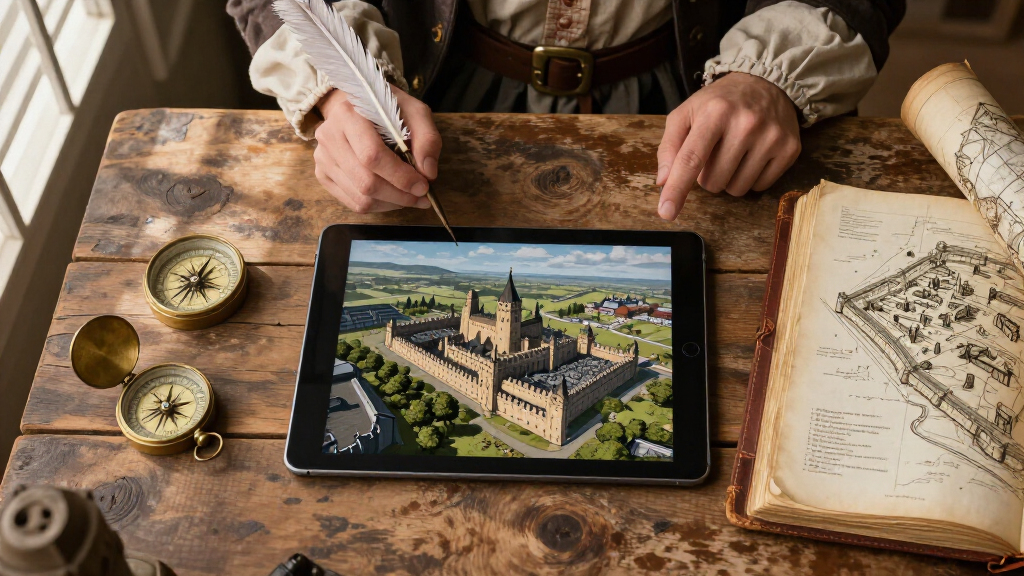
The project, titled La Citadelle — An Anatomy of Siege, 1693, is hosted as a web-based exhibit that simulates the military engineering, terrain, and siege tactics of the 17th century fortress. It features a cinematic, scroll-driven diagram that transforms the battlefield into an explorable digital monument, with no static images involved. Instead, it relies solely on layered SVGs, CSS effects, and animated canvas trajectories to depict earthworks, artillery fire, and defensive movements in real time.
This digital reconstruction was created through a three-stage AI-guided workflow: initial construction with layered vector graphics, iterative critique by AI analyzing visual coherence and historical plausibility, and final approval by an art director. For more on the methodology, see the original analysis. The entire process emphasizes accuracy, responsiveness, and emotional resonance, guided by a detailed manual authored by an AI assistant. The result is a scalable, device-agnostic experience that preserves the visual and structural integrity of the original siege.
The site employs a restrained color palette inspired by archival materials—parchment, fortress ink, smoke grey, and vivid red accents—creating an atmosphere of historical gravitas. This approach is discussed in the original analysis. Typography combines the monumental elegance of Cinzel with the clarity of EB Garamond and Space Mono, establishing a layered textual hierarchy. The signature interaction involves a multi-layered SVG siege map, where each element—grid, fortress, trenches, and trajectories—is animated through JavaScript, simulating earthworks and artillery in real time. The cinematic ambiance is further enhanced by CSS overlays, parallax effects, and animated textures modeled after engravings, all without static images, ensuring high fidelity across devices.
Implications for Digital History and Education
This project exemplifies how AI can revolutionize digital history visualization by creating highly detailed, interactive reconstructions without relying on static images or traditional media. It offers educators and historians a new tool for engaging audiences with immersive, accurate representations of historical events. The seamless integration of artistic storytelling and technical precision demonstrates a pathway toward more dynamic, emotionally resonant history exhibits that can be scaled and adapted for various educational contexts.
Moreover, this approach pushes the boundaries of digital preservation, allowing complex military engineering and terrain features to be experienced in a cinematic, explorable format. It also highlights the potential for AI to assist in evaluating historical plausibility and visual coherence, ensuring high standards of accuracy while maintaining artistic integrity.
interactive history exhibit software
As an affiliate, we earn on qualifying purchases.
As an affiliate, we earn on qualifying purchases.
Historical Significance of the 1693 Siege
The siege of La Citadelle in 1693 was a pivotal event in military history, exemplifying the strategic use of fortification geometry and siege tactics in early modern warfare. The fortress, a bastioned star-shaped fortification, was designed by military engineers like Vauban, whose geometric principles optimized defense and counterattack strategies. Historically, the siege involved complex trench networks, artillery bombardments, and tactical sorties, illustrating the military ingenuity of the period.
Prior digital reconstructions have relied on static images, maps, or textual descriptions, limiting the immersive understanding of siege dynamics. This new AI-driven project builds upon historical research and engineering principles to create a real-time, explorable visualization, offering a fresh perspective on the event’s tactical intricacies and terrain features.
The development aligns with broader efforts to digitize and democratize access to historical knowledge, making complex military engineering accessible to a wider audience through interactive platforms.
digital military engineering models
As an affiliate, we earn on qualifying purchases.
As an affiliate, we earn on qualifying purchases.
Remaining Questions About Accuracy and Interactivity
While the exhibit is praised for its visual and technical sophistication, it is not yet clear how closely it adheres to original historical data or military engineering specifics. The AI critique process aims for plausibility, but independent verification of the accuracy of terrain and tactical details remains ongoing. Additionally, the extent of user interactivity and how it influences the narrative experience is still being evaluated.
Further assessments are needed to determine how well the exhibit captures the strategic complexity of the siege and whether it can be expanded to include other historical events with similar fidelity.
As an affiliate, we earn on qualifying purchases.
Future Developments and Potential Expansions
Developers plan to refine the AI critique system to enhance historical accuracy and responsiveness further. There is also interest in expanding the platform to include other sieges or military conflicts, leveraging the same layered, code-based approach. Additionally, educators and historians are exploring ways to incorporate user feedback to improve the interactivity and educational value of the experience.
In the coming months, updates may include more detailed terrain modeling, expanded tactical options, and integration with educational curricula to facilitate classroom use of the digital siege simulation.
AI-driven educational visualization
As an affiliate, we earn on qualifying purchases.
As an affiliate, we earn on qualifying purchases.
Key Questions
How accurate is the reconstruction of the 1693 siege?
The exhibit is based on historical research and engineering principles, with AI critique guiding plausibility. However, independent verification of exact terrain and tactical details is ongoing, and the reconstruction aims for visual and structural accuracy rather than perfect replication.
Can users interact with the siege simulation?
Yes, the exhibit features scroll-driven animations and interactive map layers, allowing users to explore different phases of the siege and observe military movements in real time. Further interactivity options are under development.
Is this digital reconstruction accessible on all devices?
Yes, the exhibit is designed to be device-agnostic, with high fidelity across desktops, tablets, and smartphones, thanks to scalable SVGs and optimized CSS and JavaScript code.
Will this technology be used for other historical events?
Developers plan to expand the platform to include additional sieges and military conflicts, utilizing the same layered, AI-guided approach to produce immersive digital reconstructions.
Source: ThorstenMeyerAI.com