🔍 Read the full analysis: The Future Of Photography: 10 Best Mirrorless Cameras With AI In 2026 on ThorstenMeyerAI.com
TL;DR
In 2026, the most advanced mirrorless cameras incorporate AI for improved autofocus, scene recognition, and video capabilities. This article reviews the top 10 models, emphasizing their features, performance, and suitability for different users.
In 2026, the landscape of mirrorless cameras has been transformed by AI integration, with the top models now offering advanced autofocus, scene recognition, and intelligent image processing. The Canon EOS R6 Mark II leads as the overall best choice for versatility and high performance, while other models like the Nikon Z50 II and Sony ZV-E10 cater to specific needs such as portability and content creation. For a detailed review of top models, see the original analysis. This development marks a significant step forward in photography technology, making high-quality imaging more accessible and easier to master.
The 2026 market for mirrorless cameras is dominated by models featuring AI-driven autofocus, subject tracking, and scene optimization. The Canon EOS R6 Mark II remains the top overall pick, praised for its balanced combination of image quality, speed, and usability. Meanwhile, the Nikon Z50 II offers a compact form factor ideal for travel and beginners, and the Sony ZV-E10 is tailored for video content creators with AI-enhanced stabilization and auto framing. Other notable models include the Fujifilm X-T5 II, Panasonic Lumix GH7, and the Sony Alpha 7 IV, all integrating AI features to improve shooting accuracy and ease of use.
Manufacturers have also expanded their lens ecosystems, allowing users to upgrade and adapt their gear over time. To explore the best mirrorless camera options, see the top picks for 2026. Price points vary, with high-end models offering full-frame sensors and advanced AI capabilities, while more affordable options focus on APS-C sensors and simplified controls. The integration of AI has become a key differentiator, influencing not only autofocus and scene recognition but also post-processing and video stabilization, making these cameras suitable for a broad spectrum of users from hobbyists to professionals. Learn more about how AI is shaping these cameras in this detailed coverage.
The 10 picks
- 1
 Canon EOS R6 Mark II Mirrorless Camera RF24-105mm F4-7.1 IS STM Lens KitView on Amazon →
 - 2
 Nikon Z50 II with Two Lenses – Compact Mirrorless Camera with 20.9MP Sensor,…View on Amazon →
 - 3
 Canon EOS R50 Mirrorless Camera with 18-45mm & 55-210mm Lenses BundleView on Amazon →
 - 4
 Sony ZV-E10 APS-C Mirrorless Camera with 16-50mm LensView on Amazon →
 - 5
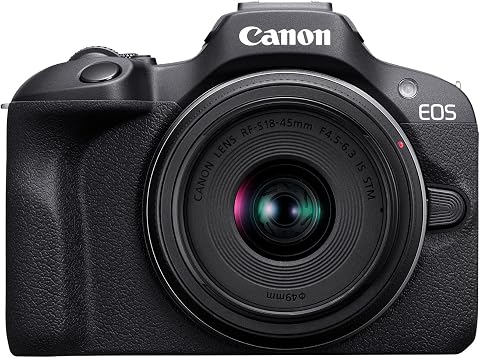 Canon EOS R100 Mirrorless Camera with RF-S18-45mm F4.5-6.3 IS STM Lens KitView on Amazon →
 - 6
 Sony Alpha a6400 Mirrorless Camera with 16-50mm LensView on Amazon →
 - 7
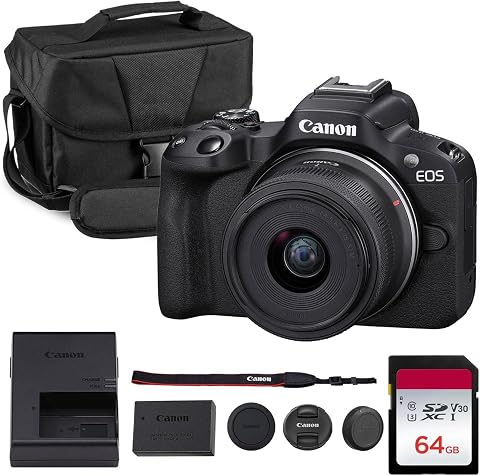 Canon EOS R50 Mirrorless Camera with 18-45mm Lens BundleView on Amazon →
 - 8
 Canon EOS R50 Mirrorless Camera RF-S18-45mm F4.5-6.3 IS STM Lens KitView on Amazon →
 - 9
 Canon EOS R100 Mirrorless Camera Kit with 18-45mm & 55-210mm Lenses, 24MP Sen…View on Amazon →
 - 10
 Canon EOS R100 Mirrorless Camera with RF-S 18-45mm Lens BundleView on Amazon →
Why AI-Enhanced Cameras Reshape Photography in 2026
The integration of AI in mirrorless cameras in 2026 significantly impacts how photographers capture images and create content. AI-driven autofocus and scene recognition improve accuracy and speed, reducing missed shots and enabling better low-light performance. For content creators, AI features like auto framing, background segmentation, and stabilization streamline production workflows. This evolution democratizes high-quality photography, making advanced features accessible to amateurs while providing professionals with tools that enhance efficiency and creative potential. As a result, AI-enabled cameras are set to redefine standards for image quality, ease of use, and versatility in the industry.
Evolution of Mirrorless Cameras and AI Integration
The development of mirrorless cameras has accelerated rapidly over the past decade, moving from manual controls to highly automated, AI-enhanced systems. In 2024, the first models with basic AI autofocus and scene detection appeared, but by 2026, these features are now standard across most high-end and mid-range models. Major brands like Canon, Nikon, Sony, and Fujifilm have invested heavily in AI research, resulting in smarter, more intuitive cameras that adapt to different shooting scenarios. The trend reflects a broader industry shift toward automation and intelligent imaging, driven by advances in machine learning and sensor technology.
Historically, mirrorless cameras have gained popularity for their compact size and versatility, but AI integration now elevates their capabilities, making them more competitive against traditional DSLR systems. The market has also seen increased consumer demand for content creation tools, prompting manufacturers to focus on AI features that support video and social media workflows. As AI continues to evolve, further innovations are expected, including real-time editing, enhanced image processing, and even more personalized shooting experiences.
Unconfirmed Aspects of AI Camera Development in 2026
While many models now feature AI capabilities, it is still unclear how widespread the adoption of fully autonomous or AI-driven post-processing will become. Some manufacturers have announced advanced AI features, but real-world performance, reliability, and user acceptance remain to be fully tested. Additionally, the long-term durability of AI algorithms and their adaptability to future hardware updates are still uncertain. Market trends suggest rapid growth, but the pace and extent of AI integration’s impact on professional workflows are still developing.
Future Directions for AI-Enabled Mirrorless Cameras
Expect ongoing enhancements in AI capabilities, including real-time scene analysis, automatic editing, and personalized shooting modes. Manufacturers are likely to introduce more seamless integration with cloud services for storage and processing, enabling smarter workflows. Firmware updates will continue to refine AI features, and new models are anticipated to incorporate even more advanced machine learning algorithms. Consumer and professional markets will also see increased emphasis on AI-assisted post-processing, making high-quality content creation more efficient and accessible than ever before. The next major milestone may include fully autonomous shooting modes that adapt dynamically to changing environments.
Key Questions
How do AI features improve mirrorless camera performance?
AI features enhance autofocus speed and accuracy, enable better scene recognition, improve image stabilization, and facilitate smarter video recording. They help cameras adapt to different environments and subjects, reducing user effort and increasing shot success rates.
Are AI-enabled cameras suitable for professional photographers?
Yes, many professional-grade models incorporate AI to streamline workflows, improve autofocus in complex scenarios, and enhance video quality. However, professionals often choose models with extensive customization options and robust build quality.
Will AI features make manual photography obsolete?
No, AI tools are designed to assist rather than replace manual control. Skilled photographers can still leverage manual settings for creative purposes, while AI provides additional support for technical accuracy and efficiency.
Is AI integration in cameras reliable and secure?
Most leading brands have implemented rigorous testing and security protocols. While AI performance is generally reliable, ongoing updates are necessary to address bugs and improve functionality as technology evolves.
What should I consider when choosing an AI-enabled mirrorless camera?
Consider your primary use—whether for stills, video, or content creation—and evaluate sensor size, autofocus performance, lens ecosystem, portability, and budget. AI features should complement your workflow and skill level.
Source: ThorstenMeyerAI.com