
The best educational science reference book for most homes is Knowledge Encyclopedia Science! 2nd Edition, because it balances striking visuals with substantive explanations across physics, chemistry, biology, and space in a format kids return to on their own. Close behind are The Usborne Science Encyclopedia, which pairs its print content with QR-linked videos and vetted websites, and A Dictionary of Science (Oxford Quick Reference), a denser text better suited to teens and adults who need precise definitions rather than pictures. The core tradeoff in this category is visual engagement versus depth: heavily illustrated encyclopedias pull in reluctant readers but outgrow quickly, while compact dictionaries and desk references last through high school and beyond but can intimidate younger readers. Age range is the second big filter — several of these books look similar on a shelf yet target audiences five or more years apart. Read on for the full ranking, including where each book wins and who should skip it.

Prime made for students and young adults
- Fast, free delivery for dorm and study essentials
- Prime Video and Amazon Music included
- Member-only deals
Key Takeaways
- Visual-first encyclopedias (Knowledge Encyclopedia Science!, The Animal Book, The Elements Book) dominated for ages 8–12, but their explanations are deliberately simplified, so they lose value by high school.
- Only two picks — A Dictionary of Science and Scientific American Science Desk Reference — genuinely serve adults and college students; most others are children’s books despite generic titles, so checking the age rating before buying matters more here than in most categories.
- The Usborne Science Encyclopedia and The Way Things Work were the only entries where the physical book is part of a larger digital ecosystem (linked video clips and websites), extending usable life well past the print edition.
- Sciencia proved the odd one out: one-volume coverage of math, physics, chemistry, biology, and astronomy in a compact format, but its woodcut-illustration style and condensed text suit motivated self-learners, not casual browsing.
- The Illustrated Elementary Science Dictionary and the Early Science Encyclopedias Physical Science volume filled the early-reader gap (ages 7–10) that the bigger, flashier encyclopedias skip over.
| Knowledge Encyclopedia Science! 2nd Edition |  | Best Overall | Format: Hardcover encyclopedia | Edition: 2nd Edition | Subject coverage: Multi-discipline: physics, chemistry, biology, earth and space science | VIEW LATEST PRICE | See Our Full Breakdown |
| The Animal Book: A Visual Animal Kingdom Encyclopedia for Kids |  | Best for Young Animal Lovers | Format: Illustrated children’s encyclopedia | Subject coverage: Zoology and animal kingdoms exclusively | Target age range: Roughly 6–11 years | VIEW LATEST PRICE | See Our Full Breakdown |
| Sciencia: Mathematics, Physics, Chemistry, Biology, and Astronomy for All |  | Best for Adults and Teens | Format: Single-volume popular science survey | Subject coverage: Mathematics, physics, chemistry, biology, astronomy | Target audience: Adults and teens | VIEW LATEST PRICE | See Our Full Breakdown |
| Illustrated Elementary Science Dictionary: An Essential Reference for Kids (Ages 7-10) |  | Best for Homework Help | Format: Illustrated dictionary/reference | Target age range: Ages 7–10 | Organization: Alphabetical definitions | VIEW LATEST PRICE | See Our Full Breakdown |
| Physical Science (Early Science Encyclopedias) | 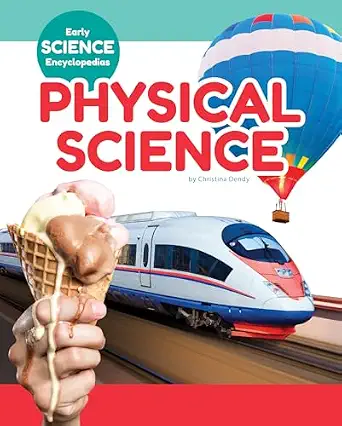 | Best for Early Learners | Format: Early learning encyclopedia | Target age range: Roughly 4–7 years | Subject coverage: Physical science fundamentals only | VIEW LATEST PRICE | See Our Full Breakdown |
| A Dictionary of Science (Oxford Quick Reference) |  | Best for Terminology | Format: Paperback | Publisher: Oxford University Press | Series: Oxford Quick Reference | VIEW LATEST PRICE | See Our Full Breakdown |
| Science Book: Everything You Need to Know About the World and How It Works |  | Best Big-Picture Overview | Format: Hardcover | Publisher: National Geographic | Content Type: Illustrated topical overview | VIEW LATEST PRICE | See Our Full Breakdown |
| The Elements Book: A Visual Periodic Table Encyclopedia for Kids |  | Best for Young Chemists | Format: Hardcover | Publisher: DK Children | Content Type: Visual encyclopedia | VIEW LATEST PRICE | See Our Full Breakdown |
| Scientific American Science Desk Reference |  | Best Desk Reference | Format: Paperback / hardcover | Publisher: Wiley (Scientific American) | Content Type: Desk reference with topical sections | VIEW LATEST PRICE | See Our Full Breakdown |
| The Way Things Work: Newly Revised Edition |  | Best for Engineering Curiosity | Format: Hardcover | Author: David Macaulay | Edition: Newly revised | VIEW LATEST PRICE | See Our Full Breakdown |
| The Usborne Science Encyclopedia: An In-depth Guide for Young Scientists |  | Best Interactive Learning Pick | Format: Print encyclopedia with digital companion resources | Topics Covered: Gravity, flight, genes, DNA, and other core science subjects | Video Clips: Over 180 | VIEW LATEST PRICE | See Our Full Breakdown |
| Encyclopedia of Science |  | Best Classic All-Rounder | Format: Single-volume print encyclopedia | Topics Covered: Key concepts, discoveries, and theories across multiple scientific disciplines | Visual Features: Detailed illustrations and diagrams | VIEW LATEST PRICE | See Our Full Breakdown |
| educational science reference book | Format | Subject coverage |
|---|---|---|
| Knowledge Encyclopedia Science | Hardcover encyclopedia | Multi-discipline: physics, chemistry, biology, earth and space science |
| The Animal Book: A Visual Anim | Illustrated children’s encyclopedia | Zoology and animal kingdoms exclusively |
| Sciencia: Mathematics | Single-volume popular science survey | Mathematics, physics, chemistry, biology, astronomy |
| Illustrated Elementary Science | Illustrated dictionary/reference | Fundamental elementary science vocabulary |
| Physical Science | Early learning encyclopedia | Physical science fundamentals only |
| A Dictionary of Science | Paperback | All major science disciplines |
| Science Book: Everything You N | Hardcover | All major science disciplines |
| The Elements Book: A Visual Pe | Hardcover | Chemistry — the periodic table and elements |
| Scientific American Science De | Paperback / hardcover | All major science disciplines |
| The Way Things Work: Newly Rev | Hardcover | Mechanics, engineering, and everyday technology |
| The Usborne Science Encycloped | Print encyclopedia with digital companion resources | — |
| Encyclopedia of Science | Single-volume print encyclopedia | — |
More Details on Our Top Picks
Knowledge Encyclopedia Science! 2nd Edition
When a family can only buy one science reference book, this is the one I’d point to first. Where the Encyclopedia of Science leans textbook-dense and Sciencia targets adults, this encyclopedia splits the difference beautifully: broad topical coverage paired with visuals that keep middle-grade readers actually turning pages. Compared with The Animal Book, which goes deep on a single domain, this volume spreads across physics, chemistry, biology, and space, so it supports homework across multiple school years rather than one unit. The tradeoff is depth — ambitious students will eventually outgrow it and need something like A Dictionary of Science for precise definitions. Still, as a single-volume home reference, nothing else in this lineup balances age range, visual appeal, and scope as well.
Pros:- Covers an unusually wide range of scientific topics in one volume
- Visual layout keeps reluctant readers engaged without dumbing down concepts
- Works across a long age span, from upper elementary through early high school
- Second edition refreshes content and imagery compared to older single-volume encyclopedias
Cons:- Individual topics get shallow treatment compared to subject-specific books
- Heavier and less portable than a dictionary-style reference like the Illustrated Elementary Science Dictionary
Best for: Families with kids aged 8–14 who want one durable reference that covers every major science subject through middle school
Not ideal for: High school or college students who need rigorous, precise definitions — they’ll find the explanations too simplified
- Format:Hardcover encyclopedia
- Edition:2nd Edition
- Subject coverage:Multi-discipline: physics, chemistry, biology, earth and space science
- Target age range:Roughly 8–14 years
- Visual style:Richly illustrated with diagrams and rendered imagery
- Reading level:Accessible to confident middle-grade readers
- Best use:Home reference and homework support
Our verdict“Buy this if you want the single most versatile science reference on the shelf for a school-age household; skip it if you need academic-grade precision.”
The Animal Book: A Visual Animal Kingdom Encyclopedia for Kids
This is the specialist’s pick in a lineup full of generalists. While Knowledge Encyclopedia Science! gives animals a chapter, this book dedicates every page to the animal kingdom, and that focus pays off in species depth and image quality that a general encyclopedia can’t match. A child who flips past the physics section of a broad reference will linger here for hours. Compared with Physical Science (Early Science Encyclopedias), it skews slightly older and rewards independent browsing. The obvious tradeoff: it’s not a science reference in the general sense — it won’t help with a chemistry worksheet or a physics question, so it works best as a companion to a broader volume rather than a replacement for one.
Pros:- Unmatched depth on the animal kingdom compared to general science encyclopedias
- Vibrant photography that sustains long independent reading sessions
- Organized for browsing — kids can dip in without reading cover to cover
- Builds vocabulary and classification skills through a topic kids already love
Cons:- Zero coverage of physics, chemistry, or earth science
- Content depth plateaus quickly for older or advanced readers
Best for: Elementary-age kids (6–11) who are obsessed with animals and want immersive browsing, not homework help
Not ideal for: Buyers seeking general science reference coverage — this covers biology’s zoology slice only
- Format:Illustrated children’s encyclopedia
- Subject coverage:Zoology and animal kingdoms exclusively
- Target age range:Roughly 6–11 years
- Visual style:Full-color photography and illustrations
- Reading approach:Browse-friendly, non-linear organization
- Best use:Interest-driven reading and animal projects
Our verdict“A superb second book for a curious child, but pair it with a general reference — on its own it leaves most of science uncovered.”
Sciencia: Mathematics, Physics, Chemistry, Biology, and Astronomy for All
Most books in this roundup are built for kids; this one is built for the grown-up who wants to finally understand science. Compared with Knowledge Encyclopedia Science!, which explains to children, Sciencia explains to adults — same five disciplines, more conceptual ambition, fewer cartoons. It’s the right choice for a returning learner, a homeschooling parent brushing up before teaching, or a teen who finds juvenile layouts condescending. Against A Dictionary of Science, it trades lookup utility for narrative understanding: you read it, you don’t consult it. That’s also its weakness — it’s a reading project, not a reference, and genuinely technical readers will find the treatments of math and physics too light to be satisfying.
Pros:- Unifies five disciplines into one coherent, readable narrative
- Respects the reader’s intelligence — no childish framing
- Compact single-volume format that’s genuinely finishable
- Strong primer for parents supporting science homework they’ve forgotten
Cons:- Not organized for quick reference or lookup
- Lacks the technical depth science professionals or STEM students require
Best for: Adults and older teens who want an engaging, unified read across the major sciences rather than a children’s encyclopedia
Not ideal for: Anyone needing quick homework answers or rigorous technical depth — it’s neither a lookup tool nor a textbook
- Format:Single-volume popular science survey
- Subject coverage:Mathematics, physics, chemistry, biology, astronomy
- Target audience:Adults and teens
- Reading approach:Continuous narrative reading, not lookup
- Visual style:Illustrated diagrams supporting conceptual explanations
- Depth level:Accessible overview, non-technical
- Best use:Self-education and conceptual refreshers
Our verdict“The clear choice for teens and adults who want science explained conversationally; wrong for anyone who needs a desk reference.”
Illustrated Elementary Science Dictionary: An Essential Reference for Kids (Ages 7-10)
Encyclopedias teach; dictionaries rescue. This is the book a second-grader grabs mid-worksheet when a word like “evaporation” stops them cold, and that job description makes it distinct from everything else here. While Knowledge Encyclopedia Science! rewards browsing, this volume is built for fast, confidence-preserving lookups with definitions a 7-year-old can actually read independently. Compared with A Dictionary of Science, the vocabulary is pitched far lower — definitions use words kids already know. The tradeoff is ceiling: by age 10 or 11, most children will have absorbed what’s here, and like Physical Science (Early Science Encyclopedias), it offers no depth beyond fundamentals. It’s a tool, not a library, and works best sitting beside a broader encyclopedia.
Pros:- Definitions written at a true 7–10 reading level, enabling independent use
- Fast alphabetical lookup beats browsing an encyclopedia when time matters
- Illustrations reduce frustration for reluctant or struggling readers
- Builds science vocabulary confidence during the critical elementary years
Cons:- Limited to basic concepts — no extended explanations or context
- Narrow age window means a short useful lifespan per child
Best for: Parents of 7–10 year olds who need an independent-friendly lookup tool for science homework and vocabulary
Not ideal for: Advanced or older students — the basic definitions will be outgrown quickly
- Format:Illustrated dictionary/reference
- Target age range:Ages 7–10
- Organization:Alphabetical definitions
- Subject coverage:Fundamental elementary science vocabulary
- Visual style:Supporting illustrations for each concept
- Reading level:Early independent reader
- Best use:Homework lookup and vocabulary support
Our verdict“An essential homework-side companion for elementary students, but pair it with a full encyclopedia for actual learning depth.”
Physical Science (Early Science Encyclopedias)
This is the entry point of the lineup — the book you hand a 5-to-7-year-old before they’re ready for Knowledge Encyclopedia Science! or even the Illustrated Elementary Science Dictionary. Its strength is narrow scope done gently: fundamental physical science ideas, simple language, and illustrations that carry the explanatory load. Compared with The Usborne Science Encyclopedia, which packs in far more content for older kids, this deliberately keeps things small and unintimidating. The flip side of that gentleness is real: an advanced 8-year-old will blow through it in a week, and the physics-only focus means it can’t serve as a general reference. Plan on reading alongside your child — it’s a shared-book experience more than an independent one.
Pros:- Language and concept load calibrated for the youngest science learners
- Illustrations make abstract physical concepts concrete without text overload
- Intimidation-free introduction that builds early curiosity
- Ideal for shared reading and guided exploration with an adult
Cons:- Covers physical science only — no life or earth science
- Requires adult guidance for the youngest readers, limiting independent use
- Content is quickly outgrown by early elementary age
Best for: Parents and caregivers introducing science to pre-readers and early readers (roughly ages 4–7)
Not ideal for: Independent readers over 8 or anyone wanting multi-subject coverage — they’ll outgrow it fast
- Format:Early learning encyclopedia
- Target age range:Roughly 4–7 years
- Subject coverage:Physical science fundamentals only
- Visual style:Illustration-led explanations with minimal text
- Reading support:Designed for adult-guided reading
- Best use:First introduction to science concepts
Our verdict“A gentle first science book for the preschool-to-first-grade set, but budget for a broader encyclopedia within a couple of years.”
A Dictionary of Science (Oxford Quick Reference)
Oxford’s science dictionary earns its place as the purest reference on this list — it does one job and does it well. Where Scientific American Science Desk Reference tries to explain whole topics, this book is built for speed: you look up a term, you get a clean definition, and you move on. That focus is exactly why it works for homework sessions and quick fact-checking, but it also means the book lacks illustrations and context. If you stumble on an unfamiliar concept rather than an unfamiliar word, The Science Book will serve you better, since it explains the ideas surrounding a term rather than just defining it. Compared with kid-focused picks like The Elements Book, the definitions here are denser and assume older readers. This pick makes the most sense for students who already understand concepts and just need precise language.
Pros:- Covers terminology across physics, chemistry, biology, and earth sciences in one compact volume
- Definitions are concise and written in plain language
- Fastest way on this list to look up a specific term
- Oxford editorial pedigree gives it authority for academic use
Cons:- Definitions only — no diagrams, photos, or contextual explanations
- Not designed for building conceptual understanding from scratch
Best for: High school and college students, educators, and writers who need fast, accurate definitions of scientific terms
Not ideal for: Visual learners and younger readers — there are no illustrations, and definitions alone won’t build conceptual understanding
- Format:Paperback
- Publisher:Oxford University Press
- Series:Oxford Quick Reference
- Content Type:Definitions and term explanations
- Subject Coverage:All major science disciplines
- Audience Level:High school and above
- Use Case:Quick term lookup and study support
Our verdict“Buy this if you need a trusted desk dictionary of scientific terms; skip it if you want explanations, visuals, or a teaching resource.”
Science Book: Everything You Need to Know About the World and How It Works
This is the broadest sweep of science in this batch, moving from particle physics to ecology without ever leaving accessible territory. Its strength is narrative: instead of the term-by-term structure of A Dictionary of Science, it strings concepts together so a reader can actually learn science from the page, not just look things up. Compared with the Scientific American Science Desk Reference, which organizes information in a more traditional desk-reference format, this book reads more like an illustrated journey through the discipline — better for cover-to-cover browsing, weaker for targeted lookup. The tradeoff is real, though: technical depth is thin. Readers who already know the fundamentals will outgrow it quickly, and the Science Desk Reference or Sciencia would stretch them further. For a curious adult or teen building a foundation, this stands out as the most rewarding starting point in the lineup.
Pros:- Spans physics, chemistry, biology, earth science, and astronomy in one volume
- Accessible writing that assumes no prior background
- Illustrated layout makes long reading sessions manageable
- Strong for building general scientific literacy
Cons:- Concepts stay at surface level without technical detail
- Weak as a targeted reference — finding one specific fact is slower than using a dictionary format
Best for: Curious teens and adults who want an engaging, illustrated tour of science rather than a formal reference
Not ideal for: Students needing precise definitions for coursework or advanced readers who want mathematical and technical rigor
- Format:Hardcover
- Publisher:National Geographic
- Content Type:Illustrated topical overview
- Subject Coverage:All major science disciplines
- Audience Level:Teen through adult
- Use Case:General reading and foundational learning
Our verdict“This is the pick for readers who want to understand how science fits together as a whole, not for anyone who needs a lookup tool.”
The Elements Book: A Visual Periodic Table Encyclopedia for Kids
Of everything in this roundup, this is the most tightly focused book: one subject, the periodic table, executed with the visual polish that DK does well. Each element gets a photographic spread and digestible facts, which makes it far more inviting for an eight-year-old than the definition-dense pages of A Dictionary of Science. Compared with the broader Knowledge Encyclopedia Science!, it trades breadth for depth — your child gets real familiarity with all 118 elements instead of a paragraph each on dozens of topics. The tradeoff cuts both ways: it’s chemistry-only, so it can’t serve as an all-purpose science reference, and the information stays basic enough that a middle schooler working on a serious project will hit its ceiling. Still, for sparking genuine curiosity about chemistry, nothing else in this batch matches it.
Pros:- Every element gets a full visual spread with photos and key facts
- Makes an abstract topic (the periodic table) concrete and fun
- Browsing-friendly format that works for independent reading
- Strong gift potential for science-curious kids
Cons:- Single-subject scope — no physics, biology, or earth science
- Stops at basic facts with no deeper chemistry concepts
Best for: Kids ages 7–12 who show curiosity about chemistry, and parents wanting a screen-free way to explore the periodic table
Not ideal for: Families wanting a general science reference — this covers only the elements, and older students will find it too basic
- Format:Hardcover
- Publisher:DK Children
- Content Type:Visual encyclopedia
- Subject Coverage:Chemistry — the periodic table and elements
- Audience Level:Ages 7–12
- Illustrations:Full-color photography throughout
- Use Case:Independent browsing and early chemistry learning
Our verdict“The right choice for a child fascinated by the elements; the wrong one for a family seeking one general science book.”
Scientific American Science Desk Reference
This one occupies the middle ground in the lineup: more explanatory than A Dictionary of Science, more structured than the narrative-driven Science Book. Organized as a true desk reference, it breaks science into digestible sections you can consult as needed — which is exactly what a student writing a paper or a teacher prepping a lesson actually wants. The Scientific American name carries real weight for accuracy, and the explanations sit at a comfortable level for high school and early college readers. The honest drawback is age: this edition predates recent scientific developments, so anything cutting-edge — exoplanet counts, gene editing, climate data — will be outdated, and there’s no multimedia component to fill the gap. Compared with The Usborne Science Encyclopedia and its linked video clips, this feels more authoritative but less modern. It makes the most sense as a reliable backbone reference rather than a primary learning tool.
Pros:- Systematic organization makes targeted lookup genuinely easy
- Explanations balance clarity with substance for high school and up
- Covers all major scientific disciplines in one volume
- Scientific American brand brings editorial credibility
Cons:- Older edition with no recent updates to fast-moving fields
- Explanations still stop short of true technical depth
- No companion digital or multimedia content
Best for: Students, teachers, and library builders who want a structured, trustworthy desk reference covering all major sciences
Not ideal for: Anyone needing current science — the aging edition means recent discoveries and data are missing entirely
- Format:Paperback / hardcover
- Publisher:Wiley (Scientific American)
- Content Type:Desk reference with topical sections
- Subject Coverage:All major science disciplines
- Audience Level:High school through adult
- Use Case:Targeted reference and study support
- Edition Status:No recent revision available
Our verdict“A solid, well-organized reference backbone for students and educators, as long as you don’t need up-to-the-minute science.”
The Way Things Work: Newly Revised Edition
David Macaulay’s classic earns its spot by doing something none of the other picks attempt: explaining mechanical and technological systems rather than scientific disciplines. Where The Science Book covers what the laws of nature are, this covers how humans harnessed them — levers, circuits, zippers, wi-fi — all through charming cutaway illustrations that a ten-year-old and a parent can enjoy equally. The newly revised edition updates the technology sections, giving it fresher content than the Scientific American Science Desk Reference. The tradeoff is scope and level: it is not a science reference in the academic sense, and advanced readers will find it too basic for serious study. It also won’t help with chemistry or biology coursework the way The Elements Book can. What it does better than anything here is make a reader feel how machines work — an entirely different, and equally valuable, kind of literacy.
Pros:- Explains mechanics and technology through memorable cutaway drawings
- Genuinely cross-generational appeal — useful and fun for kids and adults
- Newly revised edition covers modern technology like touchscreens and GPS
- Explains cause and effect in a way that builds mechanical intuition
Cons:- Too basic for advanced readers or engineering students
- Focused on machines and inventions rather than core science curricula
Best for: Families with kids ages 8–14, and adults who want to understand everyday technology through illustrations
Not ideal for: Students needing a science reference for coursework — this is about machines and inventions, not scientific disciplines
- Format:Hardcover
- Author:David Macaulay
- Edition:Newly revised
- Content Type:Illustrated explanations of machines and technology
- Subject Coverage:Mechanics, engineering, and everyday technology
- Audience Level:Ages 8 through adult
- Use Case:Browsing, curiosity-driven learning, and STEM enrichment
Our verdict“An essential companion pick for curious families — just don’t expect it to substitute for a general science reference.”
The Usborne Science Encyclopedia: An In-depth Guide for Young Scientists
Where most books in this roundup stop at the printed page, this encyclopedia extends learning beyond the book with over 180 video clips and 1,000 curated websites. That multimedia angle is what sets it apart from similarly visual options like The Animal Book or Knowledge Encyclopedia Science!, which are richer on the page but offer no digital follow-through. For a curious kid who wants to watch gravity in action rather than just read about it, this format rewards self-paced exploration and keeps a single topic alive for days instead of minutes.
The tradeoff is real, though: the web-linked model depends on internet access and assumes the links stay maintained over time, so it ages differently than a self-contained reference like the Science Book: Everything You Need to Know About the World. And while the coverage of genes, DNA, and flight is broad, the depth is pitched at an older elementary-to-middle-school reader, not the youngest audience.
Pros:- Over 180 video clips make abstract concepts like gravity and flight easier to grasp
- 1,000 recommended websites extend each topic far beyond a single reading session
- Broad coverage across physics, genetics, and biology in one volume
- Encourages independent, self-paced learning rather than passive reading
Cons:- The linked-resource model requires internet access and depends on URLs staying live over time
- Content depth is too advanced for very young children in the 5-7 range
Best for: Parents of curious kids aged roughly 9-14 who want a science reference that pairs reading with videos and safe websites for deeper exploration
Not ideal for: Households limiting screen time or wanting a fully self-contained print reference, since the multimedia component is central to the book’s value
- Format:Print encyclopedia with digital companion resources
- Topics Covered:Gravity, flight, genes, DNA, and other core science subjects
- Video Clips:Over 180
- Recommended Websites:1,000
- Target Age Range:Approximately 9-14 years
- Learning Style:Interactive, self-paced reading with multimedia extension
- Publisher:Usborne
Our verdict“This pick makes the most sense for families who want a science encyclopedia that keeps evolving through multimedia, not just sitting on a shelf.”
Encyclopedia of Science
This is the traditional single-volume science reference — broad, illustrated, and discipline-hopping from physics to biology without any digital extras. Compared with the Usborne Science Encyclopedia, it trades interactive links for a more straightforward, self-contained reading experience, which appeals to buyers who want a book that works the same way in ten years as it does today. Its detailed illustrations and diagrams do the explanatory heavy lifting, similar in spirit to Knowledge Encyclopedia Science! but without that newer title’s flashier visual redesign.
The honest drawback: without a confirmed edition or publication date, buyers risk receiving an older printing whose coverage of fast-moving fields like genetics and climate science feels dated. Compared with Sciencia, which goes deeper on fewer subjects, this spreads wide and stays shallow — a feature for browsers, a limitation for students who need depth for coursework.
Pros:- Broad coverage across multiple scientific disciplines in a single volume
- Detailed illustrations and diagrams help explain concepts visually
- Works as a self-contained reference with no internet dependence
- Accessible enough for both students and casual enthusiasts
Cons:- No clearly specified edition or publication date, so scientific currency is uncertain
- Coverage is wide but shallow compared with focused titles like Sciencia or the Oxford Dictionary of Science
Best for: Students and general science enthusiasts who want one affordable, browsable volume spanning many disciplines without needing the newest research
Not ideal for: Buyers who need current coverage of rapidly evolving fields, since the edition and publication date are not clearly specified
- Format:Single-volume print encyclopedia
- Topics Covered:Key concepts, discoveries, and theories across multiple scientific disciplines
- Visual Features:Detailed illustrations and diagrams
- Audience:Students and science enthusiasts
- Digital Resources:None — fully self-contained print reference
- Structure:Organized by scientific discipline
- Edition Information:Not specified
Our verdict“A dependable, low-friction pick for anyone who wants classic encyclopedic breadth with strong visuals and no digital strings attached.”

How We Picked
I judged each book against four buyer-centered criteria. First, age-appropriate depth: does the content actually match the stated reading level, or does it oversimplify for older kids or overwhelm younger ones? Second, browsable versus purpose-built reference use — an encyclopedia a child flips through for fun serves a different buyer than a dictionary used to look up homework terms, and mixing those jobs produces bad recommendations. Third, longevity: how many years of the book’s life before the reader outgrows it, and whether digital tie-ins or durable binding extend that window. Fourth, scope coverage across physics, chemistry, biology, earth science, and astronomy, since single-subject titles like The Animal Book and The Elements Book trade breadth for depth.
The ranking logic follows from those criteria weighted toward family use: broad-appeal, multi-year titles sit at the top, followed by specialist picks ranked within their niche, with the thinnest or most duplicative entries placed lower. Where two books overlapped heavily — as with the DK and Usborne encyclopedias — I ranked the one with stronger current science content and better long-term usefulness ahead.
Factors to Consider When Choosing Educational Science Reference Books
Before choosing a science reference book, it helps to understand what actually separates a book that gets used weekly from one that gathers dust. These are the factors that mattered most across this lineup.Match the Book to the Reader’s Actual Age, Not the Grade on the Cover
Publishers label science books optimistically, and a title marked “ages 9–12” can range from picture-heavy browsing to middle-school textbook density. The most common mistake I saw shoppers make is buying up — choosing a book a child will “grow into” — which usually backfires because the child never opens it during the years it sits on the shelf. A better approach is to buy for the reader’s current curiosity level and plan to replace the book in two to three years. In this category, the gap is extreme: the Early Science Encyclopedias volume targets early readers, while A Dictionary of Science assumes high-school-level scientific vocabulary. If a book will be shared across siblings of different ages, the mid-range encyclopedias around ages 9–13 offer the widest usable window.
Decide Between a Browser and a Lookup Tool
These twelve books split into two jobs that buyers frequently confuse. Encyclopedias like Knowledge Encyclopedia Science! and The Animal Book are designed for nonlinear browsing — a child opens to any spread, gets pulled in, and absorbs science incidentally. Dictionaries and desk references like the Oxford and Scientific American volumes are purpose-built for looking things up during homework or reading. Neither job is better, but buying a dictionary when the goal was to spark interest produces an unused book, and buying a picture encyclopedia for a student who needs precise definitions of “enthalpy” or “meiosis” produces frustration. A well-stocked home reference shelf usually includes one of each type.
Weigh Digital Tie-Ins — But Don’t Overpay for Them
Several modern science references bundle QR codes, video links, or website lists, and the quality varies enormously. The Usborne Science Encyclopedia does this well, curating over 180 video clips and vetted websites rather than dumping raw links. The risk with any digital component is link rot: publishers revise URLs periodically, but a heavily discounted older printing may point to dead pages. My advice is to treat digital extras as a bonus that extends — never replaces — the print content, since the physical pages are what survive a decade of use. If two books are otherwise comparable, the one with functioning digital support earns its premium; if it costs dramatically more, the print content alone should justify the price.
Evaluate Visual Style Against How Your Reader Learns
Science reference books lean on visuals differently, and this shapes who actually reads them. DK-style photographic layouts with labeled cutaways reward visual learners and reluctant readers, which is why The Elements Book works so brilliantly for periodic-table memorization. Sciencia’s woodcut-inspired, text-denser pages appeal to a completely different reader — one who likes sustained, quiet reading. Before buying, preview a spread or two using the publisher’s sample pages; a gorgeous book in the wrong idiom still goes unread. Also check the diagram labels: the best visual references label every part clearly enough that a child can learn from the pictures alone without an adult translating.
Consider Currency and How Fast the Content Dates
Basic physics and chemistry change slowly, but astronomy, climate science, and genetics references can date quickly — a book printed before 2015 may show outdated planet counts, old climate projections, or pre-CRISPR genetics coverage. For fast-moving fields, prefer the most recent edition available and check the copyright page, since older editions often sell at attractive prices precisely because their content has aged. The 2nd edition of Knowledge Encyclopedia Science! ranks above the original largely for this reason. A practical split: buy current for space and life sciences, but feel free to save money on used copies of math, physics, and general reference titles where the fundamentals haven’t moved.
Single-Subject Depth Versus One-Volume Breadth
Roughly a third of this lineup covers one domain — animals, the periodic table, or physical science — and these make excellent second or third purchases but weak first ones. A child with a passionate interest in one area gets far more from a dedicated volume like The Animal Book than from five general encyclopedias covering the same topic in ten pages each. The mistake to avoid is buying three specialty books before owning one solid general reference, which leaves gaps everywhere else. If budget allows one book, go broad; if the household already owns a general encyclopedia, specialty picks become the smarter next buy. Hardcover durability matters more for the specialty volumes too, since passionate readers return to them far more often.
Frequently Asked Questions
Which book in this lineup works for both a 9-year-old and a teenager?
The Usborne Science Encyclopedia handles this spread best, because its explanations start accessible but extend far enough into genes, DNA, and physics that a 14- or 15-year-old still finds it useful for school support. The Way Things Work is a second strong crossover choice, since its mechanical explanations genuinely inform adults too. The heavily visual DK encyclopedias skew younger — a motivated 8-year-old and a casual 12-year-old will both enjoy them, but a serious teen will find the depth thin. Avoid the Illustrated Elementary Science Dictionary for this scenario; it is explicitly built for ages 7–10 and will be outgrown within two years.
Is a science dictionary worth buying when definitions are free online?
For students doing sustained reading or coursework, yes — a printed dictionary like the Oxford Quick Reference removes the distraction spiral that comes with looking things up on a phone. It also guarantees consistency: definitions use agreed textbook terminology rather than whatever a search result serves, which matters when a student is building vocabulary for exams. The Oxford’s strength is precision and cross-referencing between related terms, something free sources do poorly. The tradeoff is that a dictionary alone teaches no science — it supports other reading. Buy it alongside an encyclopedia rather than instead of one.
Do I need both a general science encyclopedia and a single-subject book?
It depends on how your reader engages with science. If a child browses across topics — space one week, animals the next — a general encyclopedia covers that behavior far better, and adding specialty books just duplicates content. But when a specific fascination takes hold, as often happens with animals or the periodic table, a dedicated volume like The Elements Book goes three or four times deeper than any general encyclopedia can. The efficient sequence for most families is general reference first, specialty second, chosen to match whichever topic the child keeps returning to. Buying both types simultaneously usually means one sits unread until interests catch up.
Are the linked websites and video clips in books like the Usborne encyclopedia reliable long-term?
Mostly, but with a caveat worth understanding. Reputable publishers like Usborne maintain updated link lists on their own sites, so even if a printed QR code fails, the curated directory behind it usually lives on — check whether the book directs you to a publisher hub page rather than individual URLs. That design is exactly why Usborne’s digital component ranks above the average. Video clips date faster than the print content, though, so expect some links to point at content that has been reorganized or retired. Treat the digital layer as an enhancement worth maybe 10–15% of the price, not a core reason to buy, and the book will never disappoint.
What’s the best choice for an adult who wants to refresh their general science knowledge?
Sciencia is the most rewarding option for a motivated adult, packing mathematics, physics, chemistry, biology, and astronomy into one genuinely sophisticated volume without assuming prior coursework. Scientific American’s Science Desk Reference suits a different adult use case — quick factual lookup across disciplines — while Knowledge Encyclopedia Science! works for adults who prefer visual learning, though its explanations are written for younger readers. A Dictionary of Science pairs well with any of these for terminology support. Skip the children’s-labeled encyclopedias for this purpose; their content, however attractive, will not hold an adult’s attention for long.
Conclusion
For most families, Knowledge Encyclopedia Science! 2nd Edition is the best overall choice — current, visually magnetic, and broad enough to serve roughly ages 8 through 13. The best value pick is the Illustrated Elementary Science Dictionary for younger children or The Animal Book for the 8–12 range, both delivering outsized engagement per dollar. At the premium end, The Usborne Science Encyclopedia justifies its price with curriculum-aligned depth and a maintained digital ecosystem, while Scientific American Science Desk Reference and A Dictionary of Science are the adult-oriented premium choices. For beginners — early readers ages 7–10 — start with the Early Science Encyclopedias Physical Science volume or the elementary dictionary before graduating to the bigger encyclopedias. Specific needs round it out: The Elements Book for chemistry obsession, The Way Things Work for mechanical curiosity, and Sciencia for the self-directed teen or adult learner. Match the book to the reader in front of you, not the one you hope they’ll become, and any of these picks will earn its shelf space.
Fall Picks
fall essentials
As an affiliate, we earn on qualifying purchases.