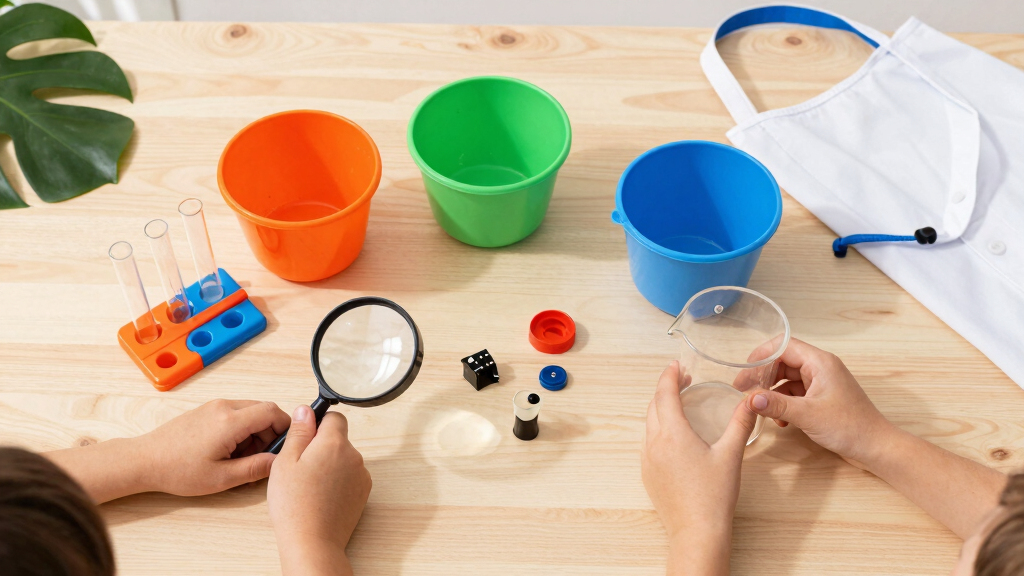

This guide helps parents and educators choose, prepare, and safely conduct science activities with educational kits for kids. It covers selecting the right kit, setting up activities, and ensuring a positive learning experience. Designed for beginners, it provides practical steps to spark children’s curiosity and build foundational science skills.

Doctor Jupiter My First Science Kit for Kids Ages 4-8
- ✔ Ages: 4-8
- ✔ Experiments: 100+
- ✔ Standards: ASTM F963-17

Dan&Darci Root Viewer Kit for Kids – Grow Your Own Plant
- ✔ Includes: transparent viewer box, soil, seeds, stickers, instruction guide
- ✔ Seeds: Spring Onion, Cilantro
- ✔ Ages: 4-8 years
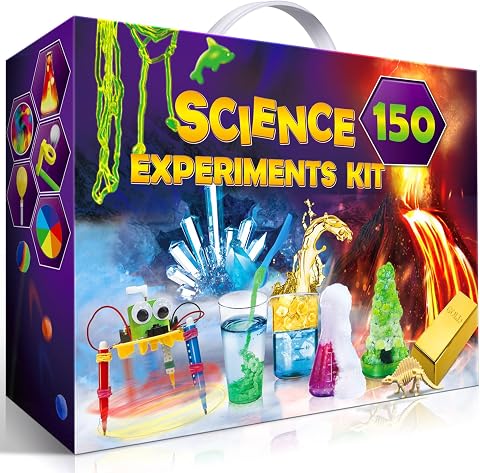
UNGILINGA 150 Experiments Science Kits for Kids
- ✔ Number of Experiments: 150
- ✔ Suitable for: Kids
- ✔ Educational Focus: Science, STEM
Difficulty: Beginner | Time: 30-60 minutes
What You’ll Need
Tools & Materials:
- Basic household safety equipment (gloves, goggles)
- Printer (optional for instructions)
- Timer or clock
Knowledge:
- Basic understanding of safety precautions
- Ability to supervise children during experiments
Check the age recommendations on the kit packaging before purchase. Prepare a clean, flat workspace free of distractions. Read the entire kit manual beforehand to familiarize yourself with the experiments.

Doctor Jupiter My First Science Kit for Kids Ages 4-5-6-7-8 | Birthday Gift Ideas for 4+ Year Old Boys & Girls | Toy Stem Kit with 100+ Experiments | Learning & Educational Projects
✅ A SCIENCE KIT THEY’LL LOVE: Help your kids foster an early love for science with our innovative...
As an affiliate, we earn on qualifying purchases.
Doctor Jupiter My First Science Kit for Kids Ages 4-8
Doctor Jupiter’s My First Science Kit stands out for its extensive collection of over 100 experiments designed to introduce children aged 4 to 8 to fundamental STEM concepts. Compared with more advanced kits, it emphasizes safety, simplicity, and fun, making it ideal for beginners. While it offers a broad range of activities, some experiments may require adult supervision or household items not included in the kit. Its user-friendly instructions and high-quality materials make it a top choice for parents seeking a safe, engaging, and educational gift for early learners.
Pros:
- Over 100 engaging experiments to foster a love for science
- Includes well-illustrated, step-by-step instructions
- Safe, high-quality materials meeting US safety standards
Cons:
- May require adult supervision for younger children
- Some experiments might need additional household items
- Limited to basic science concepts suitable for ages 4-8
Best for: Parents of children aged 4-8 seeking a safe, comprehensive, and easy-to-follow introduction to science.
Not ideal for: Children older than 8 or those looking for advanced experiments beyond basic concepts.
Bottom line: A versatile, beginner-friendly kit that effectively introduces young children to STEM basics in a safe and engaging way.
“A versatile, beginner-friendly kit that effectively introduces young children to STEM basics in a safe and engaging way.”

Dan&Darci Root Viewer Kit for Kids - Grow Your Own Plant for Boys & Girls Gifts - Science STEM Toy & Craft Growing Kits for Ages 4-8 Birthday Gifts for Boy, Girl 4, 5, 6, 7, 8, Year Old
Innovative Transparent Design: The Root Viewer offers a unique, see-through planter that reveals the fascinating underground world of...
As an affiliate, we earn on qualifying purchases.
Dan&Darci Root Viewer Kit for Kids – Grow Your Own Plant
Dan&Darci’s Root Viewer Kit offers a unique, interactive experience by allowing children to observe plant root growth through a transparent planter. Compared with typical experiment kits, it emphasizes nature observation and responsibility, making it ideal for kids interested in botany. While the full engagement of growth observation is slow and may require ongoing supervision, it provides a meaningful way to connect children with nature indoors. This kit is especially suitable for kids fascinated by plants or those who enjoy hands-on, real-time learning about growth processes.
Pros:
- Allows kids to observe root growth in real-time
- Complete kit with all necessary materials
- Encourages responsibility and engagement through growth tracking
Cons:
- Limited to small plants like herbs
- Requires supervision for proper care
- Growth process can be slow and may test patience
Best for: Parents seeking an interactive, educational gardening experience for children aged 4-8.
Not ideal for: Children more interested in chemistry or physics experiments, or those seeking rapid results.
Bottom line: Perfect for nature-loving kids and those interested in plant biology, offering a slow but rewarding hands-on gardening experience.
“Perfect for nature-loving kids and those interested in plant biology, offering a slow but rewarding hands-on gardening experience.”

UNGLINGA 150 Experiments Science Kits for Kids, S.T.E.M Educational Project Toys for Boys Girls Birthday Gifts Ideas, Volcano, Chemistry Lab Tools Scientist Set
150 EXCITING EXPERIMENTS FOR KIDS: DIY projects to get kids' minds humming, try one of these science experiments,...
As an affiliate, we earn on qualifying purchases.
UNGILINGA 150 Experiments Science Kits for Kids
UNGILINGA’s 150 Experiments Kit offers an extensive collection of activities covering earth science, chemistry, and physics. Compared with simpler kits, it aims at children who are ready for more complex, multi-topic exploration. The included lab tools, safety goggles, and detailed manuals make it suitable for at-home or classroom use. While the broad scope keeps kids engaged with varied experiments, the complexity may be overwhelming for younger children or those new to science. This kit is ideal for kids with a serious curiosity about STEM or who enjoy structured, multi-step activities.
Pros:
- Provides a wide variety of 150 experiments for deep engagement
- Includes high-quality, kid-friendly tools and safety gear
- Encourages curiosity through structured activities
Cons:
- Requires adult supervision during many experiments
- Some household items needed but not included
- May be too complex for very young or beginner children
Best for: Parents of older or more curious children seeking a wide-ranging, in-depth science experience.
Not ideal for: Younger children or beginners who may find the experiments too complex or require extensive supervision.
Bottom line: A comprehensive science kit perfect for older kids or serious STEM enthusiasts willing to handle complexity and variety.
“A comprehensive science kit perfect for older kids or serious STEM enthusiasts willing to handle complexity and variety.”
As an Amazon Associate we earn from qualifying purchases.
Before You Start
Ensure the workspace is well-ventilated and free of clutter. Gather all components of the science kit. Confirm that children understand safety rules, such as not ingesting chemicals and wearing safety gear. Supervise children at all times during activities.
Step-by-Step Instructions
Step 1: Select the appropriate science kit
Review the age range, themes, and complexity of available kits. Choose one aligned with the child’s interests and skill level. Verify that the kit includes all necessary components and instructions.
Tip:Opt for kits with clear instructions, safety features, and enough activities to maintain engagement.
Check: You have a suitable kit with all components and instructions ready for use.
Step 2: Prepare the workspace and gather materials
Set up a clean, flat surface in a well-lit area. Lay out all kit components and any additional materials needed, such as water, paper towels, or utensils.
Tip:Use protective coverings like newspaper or plastic mats to contain messes.
Check: All materials are organized, accessible, and the workspace is ready for experiments.
Step 3: Read and understand the experiment instructions
Carefully read the entire instruction manual of the kit. Familiarize yourself with each step, safety warnings, and required materials.
Tip:Highlight or note key safety precautions and sequence of steps for quick reference.
Check: You understand each experiment’s process and safety measures before starting.
Step 4: Explain safety rules and procedures to children
Discuss safety guidelines, such as wearing goggles, gloves, and washing hands afterward. Emphasize the importance of following instructions precisely.
Tip:Supervise children closely and reinforce safety throughout.
Check: Children understand and agree to follow safety rules during activities.
Step 5: Perform the experiments step-by-step
Follow the instructions precisely, demonstrating each step if necessary. Supervise children, guiding them through each stage.
Tip:Encourage children to ask questions and observe carefully during each step.
Check: Experiments are completed as described, with results matching expected outcomes.
Step 6: Discuss and record findings
Help children record observations, results, and conclusions from each experiment. Use a journal or worksheet if provided.
Tip:Ask guiding questions to reinforce understanding of scientific concepts.
Check: Findings are accurately recorded, and children can explain what they learned.
Step 7: Clean up and store materials
Wash reusable components and dispose of waste according to safety guidelines. Store the kit and materials in a safe place for future use.
Tip:Label storage containers for easy access later.
Check: Work area is clean, and all materials are properly stored.
Common Mistakes to Avoid
- Not reading the entire instruction manual before starting. — Read all instructions thoroughly to understand steps and safety precautions before beginning experiments.
- Using incomplete or damaged kits. — Check all components upon opening and verify that the kit is complete and intact before use.
- Supervising children without safety gear or precautions. — Always supervise children closely and enforce safety rules, including wearing protective equipment.
Troubleshooting
Problem: Experiments do not produce expected results.
Solution: Double-check each step for accuracy, verify measurements, and ensure materials are fresh and correctly used.
Problem: Materials are missing or damaged.
Solution: Contact the supplier for replacements or consider purchasing individual components if possible.
Problem: Children lose interest or become distracted.
Solution: Keep activities short and engaging, and relate experiments to their interests or real-world examples.
What Success Looks Like
Children successfully complete experiments, observe expected results, and can explain basic scientific principles involved. The workspace remains clean, and safety protocols are followed throughout.
Next Steps
Repeat experiments to reinforce learning or explore more advanced kits. Clean and store materials properly. Discuss findings and encourage children to ask questions about what they observed. Consider documenting experiments in a science journal for ongoing learning.
Frequently Asked Questions
Can I use any science kit for different age groups?
Choose kits appropriate for the child’s age and skill level, as recommended by the manufacturer, to ensure safety and engagement.
What safety equipment should I have on hand?
Always have goggles, gloves, and a first aid kit nearby. Follow safety instructions provided with the kit carefully.
How often should I clean up after experiments?
Clean up immediately after each experiment to prevent contamination or damage, and store reusable materials properly.
What if the experiment results differ from expectations?
Review the steps and measurements, and consider environmental factors. Differences can be part of learning and exploration.