
TL;DR
India has developed an earthquake warning system designed to provide short-term alerts, but it cannot predict earthquakes in advance. Experts emphasize its role in preparedness rather than prediction, highlighting both its benefits and limitations.
India’s earthquake warning system currently provides real-time alerts based on seismic activity but does not have the capability to predict earthquakes before they occur, according to government officials and seismologists. This system aims to enhance preparedness and reduce damage, though it cannot forecast earthquakes in advance. The distinction between early warning and prediction is critical for understanding what the system offers and its limitations.
The Indian government has established an earthquake early warning system that detects seismic activity as it occurs and issues alerts to vulnerable regions within seconds to minutes. This system, managed by the Indian Meteorological Department (IMD) and the National Centre for Seismology (NCS), uses a network of seismic sensors spread across seismically active zones.
According to officials, the system’s primary function is to provide immediate alerts after an earthquake has started, allowing people and infrastructure to take protective actions. It does not, however, have the capability to predict earthquakes days or hours in advance, which remains a scientific challenge worldwide. Experts clarify that earthquake prediction — identifying when and where an earthquake will occur before it begins — is not currently feasible with existing technology.
India’s system is modeled after similar early warning systems in Japan and Mexico, which also focus on real-time detection rather than prediction. The system has been tested in several states, including Himachal Pradesh and the northeastern region, with the aim of minimizing casualties and damage by enabling quick responses.
Scientists involved in the project stress that while early warning can save lives and reduce economic losses, it is not a predictive tool. Dr. Anil Kumar, a seismologist at the Indian Institute of Technology, explained, ‘We can detect an earthquake once it has started and send alerts, but predicting the precise time and location remains beyond current scientific capabilities.’
Why India’s Earthquake Warning System Matters for Public Safety
The system’s ability to provide real-time alerts can significantly reduce casualties and infrastructure damage during earthquakes, especially in densely populated areas. While it cannot predict earthquakes days in advance, early warnings can give people crucial seconds to evacuate or take cover, potentially saving thousands of lives. This distinction is vital for public understanding and policy planning, as it underscores the importance of preparedness alongside technological solutions.

MayDay Earthquake Alarm with Early Detection Feature
As an affiliate, we earn on qualifying purchases.
As an affiliate, we earn on qualifying purchases.
India’s Earthquake Monitoring and Warning Efforts Since 2000s
India’s seismic activity is concentrated along the Himalayan belt and the northeastern region, with several major earthquakes recorded in recent decades. The government has increased investments in seismic monitoring since the early 2000s, establishing networks of sensors and collaborating with international agencies. The recent rollout of the earthquake early warning system represents a step toward modernizing disaster response, but experts note that prediction remains a scientific challenge globally.
Historically, India has experienced devastating earthquakes, such as the 2001 Gujarat quake and the 2015 Nepal earthquake, prompting efforts to improve early detection and response. The current system builds on these efforts, focusing on real-time detection rather than forecasting future events.
“We can detect an earthquake once it has started and send alerts, but predicting the precise time and location remains beyond current scientific capabilities.”
— Dr. Anil Kumar, Seismologist at IIT

Honeywell – SC100 – Vault Seismic Vibration Sensor
Honeywell Ademco SC100
As an affiliate, we earn on qualifying purchases.
As an affiliate, we earn on qualifying purchases.
Limitations of Earthquake Prediction Technology in India
It is not yet clear whether future technological advances will enable reliable earthquake prediction in India or globally. Scientific consensus indicates that current methods cannot forecast earthquakes days or hours before they start, and the system’s reliance on real-time detection remains its core function. Ongoing research continues, but no definitive breakthroughs are imminent.
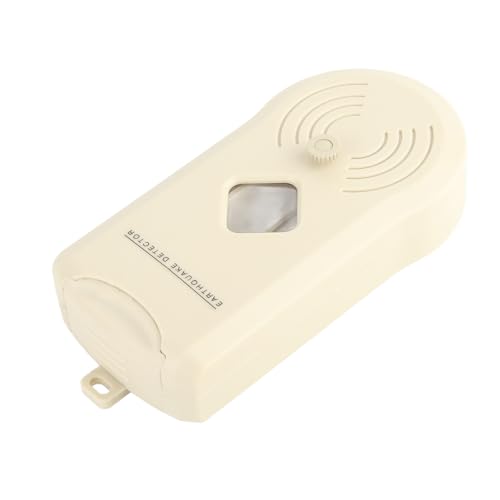
HURRISE Earthquake Detector – Get Early Warning Alerts of Impending – Adjustable Sensitivity & Easy Wall Mounting – Emergency Home Security Device
Groundbreaking Technology: The Earthquake Detector employs advanced detection technology, providing early warnings of seismic activities. This cutting-edge device…
As an affiliate, we earn on qualifying purchases.
As an affiliate, we earn on qualifying purchases.
Next Steps for India’s Earthquake Preparedness and Technology
India plans to expand its seismic sensor network and improve the speed and accuracy of alerts. Authorities will also focus on public education campaigns to ensure communities understand the system’s capabilities and limitations. Scientists will continue researching earthquake prediction, but immediate improvements are expected primarily in detection and response protocols.

DATAKOM DSD-060 Earthquake Shutdown Detector with Seismic Activity Sensor
WE DO NOT SELL THIS PRODUCT FOR USAGE IN USA AND CANADA
As an affiliate, we earn on qualifying purchases.
As an affiliate, we earn on qualifying purchases.
Key Questions
Can India’s system predict earthquakes before they happen?
No, India’s earthquake warning system detects seismic activity after it begins but cannot predict earthquakes in advance.
How much warning time does the system provide?
The system can give seconds to a few minutes of alert after seismic activity starts, depending on the location and magnitude.
Is earthquake prediction possible with current technology?
Currently, earthquake prediction remains a scientific challenge worldwide, and no reliable method exists to forecast earthquakes days or hours before they occur.
How can the public best prepare for earthquakes?
Public preparedness involves understanding safety protocols, having emergency kits ready, and knowing evacuation routes, as the warning system cannot predict earthquakes in advance.
Will the system prevent earthquake damage?
The system cannot prevent earthquakes but can reduce casualties and damage through timely alerts and preparedness measures.
Source: google-trends