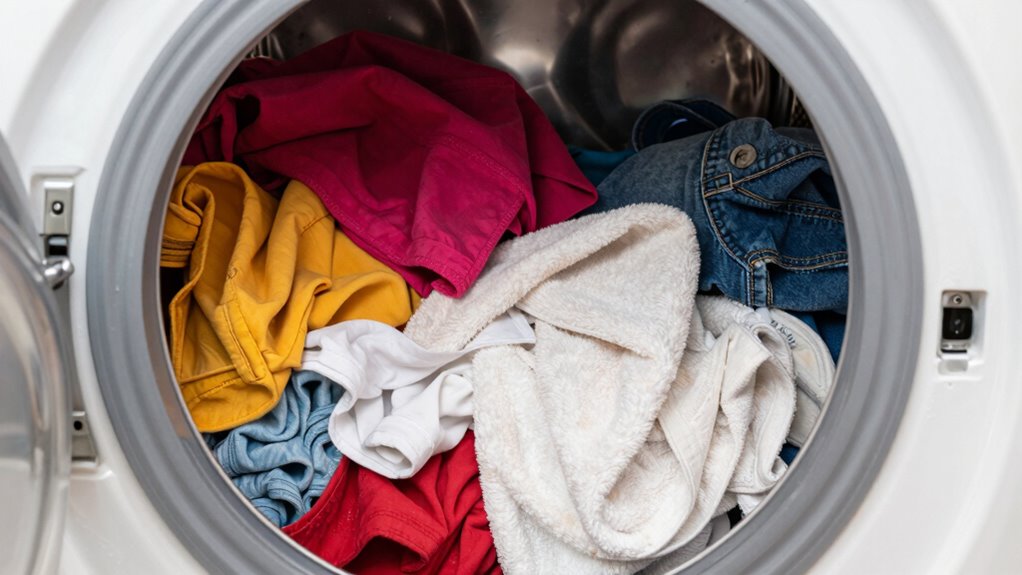

Using a washer that’s the wrong size can hurt your cleaning results and waste energy, water, and time. If your machine is too small, you’ll need multiple loads, which reduces overall efficiency. A bulky washer that’s under or overfilled also struggles to clean properly and consumes more resources. Keeping your washer properly matched to your laundry habits guarantees better results and saves money. To discover how to avoid these common traps, keep exploring this topic.

Prime made for students and young adults
- Fast, free delivery for dorm and study essentials
- Prime Video and Amazon Music included
- Member-only deals
Key Takeaways
- Overloading washers reduces cleaning effectiveness by preventing proper water and detergent circulation.
- Underfilling large machines causes uneven cleaning and inefficient removal of dirt.
- Using a washer too small for your laundry load leads to multiple cycles, increasing wear and risking incomplete cleaning.
- Incorrect capacity selection affects water and detergent distribution, compromising stain removal and overall cleanliness.
- Properly matching washer size ensures optimal cleaning performance by allowing thorough agitation and rinsing.
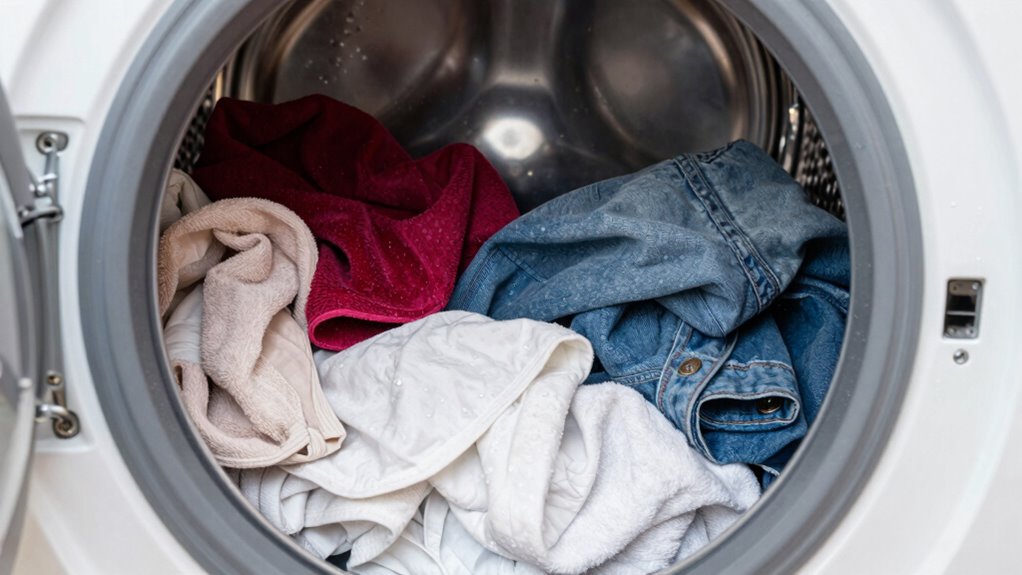
Many people underestimate how much washer capacity can influence their laundry routines, but choosing a machine that’s too small or too large can lead to frustration and inefficiency. If you pick a washer with insufficient capacity, you’ll find yourself running multiple loads for a single batch of laundry, wasting time and energy. Conversely, opting for a machine that’s overly spacious for your needs doesn’t necessarily improve your laundry experience and can even impact your utility bills. Finding the right capacity isn’t just about convenience; it directly affects energy efficiency and noise levels, which are vital for maintaining a smooth, cost-effective laundry routine.
When your washer is too small, it forces you into more frequent loads, consuming more electricity and water per item. Over time, this inefficiency adds up, increasing your utility costs. Larger machines, while seemingly more capable, often come with higher energy consumption if you load them beyond their ideal capacity or leave them underfilled. This imbalance reduces energy efficiency, as the machine works harder to wash oversized or uneven loads. Additionally, larger models tend to generate more noise because of their bigger motors and drum sizes, which can disturb your household, especially if your laundry area is near living spaces. Properly matching your washer capacity to your laundry needs can also help prevent wear and tear, extending the lifespan of your appliance and avoiding costly repairs. An improperly sized machine can also lead to water waste, as inefficient loads may require additional rinsing or re-washing. Ensuring that your machine is correctly sized can also help improve water conservation, leading to more sustainable laundry practices. A properly sized machine ensures you load it fully without overstuffing, minimizing the workload on the motor and reducing energy use. When a washer is appropriately filled to its best level, it operates more smoothly and quietly, keeping noise levels manageable. Less noise means less disturbance, making laundry chores less of a hassle, especially if you do laundry during early mornings or late nights.
Additionally, a well-matched capacity helps extend the lifespan of your washing machine. Overworking a small machine or overloading a large one accelerates wear and tear, leading to more repairs and replacements. Choosing a capacity that matches your typical laundry volume can also help optimize water usage, preventing unnecessary waste. Selecting the right size can also contribute to cost savings, as it ensures your machine runs efficiently without wasteful energy consumption. By selecting a machine that aligns with your laundry habits, you can avoid these issues and enjoy a more reliable appliance.
As an affiliate, we earn on qualifying purchases.
Frequently Asked Questions
How Do I Measure My Washer’s Capacity Accurately?
To measure your washer’s capacity accurately, use measuring tools like a tape measure or ruler to determine the drum’s interior dimensions. Then, refer to capacity charts provided by the manufacturer or online to convert those measurements into cubic feet or kilograms. Make certain to measure the drum’s diameter and depth, and double-check the chart to guarantee your calculations match the washer’s specifications for ideal loading and cleaning.
Does Overloading Affect Energy Efficiency?
Overloading your washer can decrease energy efficiency because it forces the machine to work harder and longer, increasing energy consumption. It also hampers washing performance, as clothes don’t rinse or spin properly. To save energy and get better cleaning results, avoid overloading and stick to the manufacturer’s recommended capacity. This way, your washer runs smoothly, uses less power, and your clothes come out cleaner.
Can Underloading Damage the Washer?
Yes, underloading can damage your washer. When you load it too lightly, the drum may become unbalanced during cycles, affecting detergent distribution and causing excessive vibration. Over time, this imbalance can strain the motor and suspension system, leading to wear and potential damage. To prevent this, aim for a balanced load that fills the drum adequately, ensuring proper detergent distribution and smooth operation.
What Signs Indicate My Washer Is Overloaded?
If your washer is overloaded, you’ll notice clothes don’t spin properly, leading to longer drying times. You might see detergent residue on fabrics or hear strange noises during the cycle. Overloading hampers proper cleaning and affects cycle selection, causing uneven wash results. To avoid this, check if clothes are tightly packed but still have room to move. Adjust detergent usage accordingly, and choose appropriate cycles for larger loads to guarantee effective cleaning.
Is Capacity Different for Front-Load and Top-Load Washers?
Imagine you’re trying to wash a bulky comforter in your washer drum, but it doesn’t clean well. Capacity differs for front-load and top-load washers; generally, front-loads handle larger load sizes better. For example, a front-load might comfortably wash a king-sized comforter, while a top-load could struggle or damage the drum. Always check your washer’s specifications to avoid overloading, ensuring the best cleaning results and long-term durability.
energy efficient washing machine
As an affiliate, we earn on qualifying purchases.
As an affiliate, we earn on qualifying purchases.
Conclusion
Don’t fall into the trap of overloading your washer, thinking bigger is always better. When you cram in too much, your machine struggles to clean effectively, like trying to fit a square peg in a round hole. Remember, a smaller, properly loaded load cleans better and extends your washer’s life. So, stick to the recommended capacity—it’s the key to sparkling clothes and a hassle-free laundry day. Don’t let capacity chaos turn your laundry into a sinking ship.
As an affiliate, we earn on qualifying purchases.
quiet washing machine for laundry room
As an affiliate, we earn on qualifying purchases.
As an affiliate, we earn on qualifying purchases.
Fall Picks
fall essentials
As an affiliate, we earn on qualifying purchases.