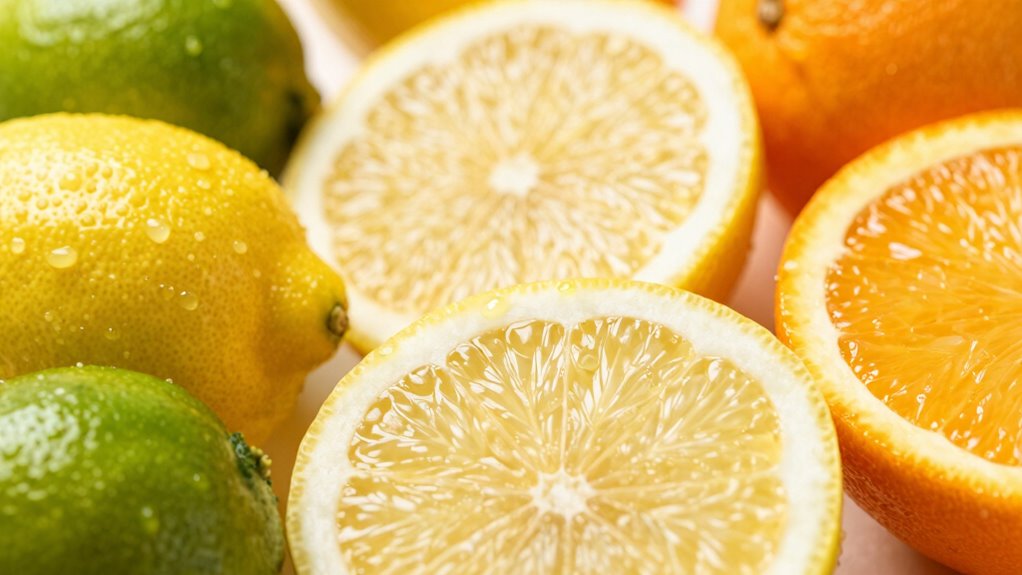
You’ll find that acidity affects food texture more because it causes molecular changes in proteins and starches, altering their structure and how they interact. These chemical shifts lead to noticeable changes in mouthfeel, firmness, or tenderness. On the other hand, flavor changes are usually subtle, reacting mainly to taste receptors’ perception of sharpness. If you’re curious about how acidity shapes food beyond just flavor, sticking with this can reveal more fascinating details.
Key Takeaways
- Acid alters molecular structures like proteins and starches, directly impacting food’s physical properties and texture.
- Texture responds more dramatically to pH shifts because it involves physical changes in food’s structure.
- Flavor perception is subtler, mainly affecting taste receptors, while texture involves tangible, structural modifications.
- Acid-induced denaturation of proteins and coagulation causes noticeable changes in mouthfeel and consistency.
- Controlling pH enables precise manipulation of ingredient interactions, significantly influencing texture outcomes.

Acidity plays a more significant role in altering texture than in shaping flavor because it directly affects the structure of food and beverages. When you add acid to a recipe, you’re influencing the pH impact on the ingredients, which can cause noticeable changes in how the final product feels and holds together. This is rooted in culinary chemistry, where the pH level determines how proteins, starches, and other molecules behave during cooking or processing. Unlike flavor, which is often more subtle and influenced by taste receptors reacting to acid’s sharpness, texture responds more dramatically to pH shifts, leading to tangible differences in mouthfeel and consistency.
Acidity mainly influences food texture by altering molecular structures and pH levels during cooking.
For example, when you use acid to tenderize meat, you’re disrupting the protein structure. The acid causes proteins to denature and unwind, making the meat softer and easier to chew. This process exemplifies how pH impact directly translates into a change in texture rather than just flavor. Similarly, in dairy-based products like yogurt or cheese, acidity influences the coagulation of milk proteins. The right level of acidity causes the proteins to curdle, forming a firm, gel-like structure. If the pH isn’t carefully controlled, the texture can become overly soft or crumbly, showcasing how culinary chemistry governs the physical properties of these foods.
In baking, acidity can alter the way starches gelatinize or how gluten develops. For instance, adding acidic ingredients like lemon juice or vinegar can strengthen or weaken dough depending on the amount, affecting its elasticity and final crumb. A lower pH can inhibit gluten formation, resulting in a softer, more tender crumb, while a higher pH might produce a chewier texture. These changes are rooted in the pH impact on molecular interactions, emphasizing how acidity affects food’s physical structure rather than just its flavor profile. Recognizing the importance of pH control in baking can help bakers achieve consistent results and desired textures. Additionally, understanding food chemistry principles can enhance your ability to manipulate ingredient interactions for optimal results.
By understanding how acidity influences food structure, you can better predict and control the way ingredients behave during cooking or processing, leading to more successful culinary outcomes. Recognizing the role of pH effects on food structure allows for more precise adjustments in recipes, especially when aiming for specific textures. Additionally, awareness of acidic conditions influence protein and starch behavior can further refine your approach to achieving ideal textures in various dishes.
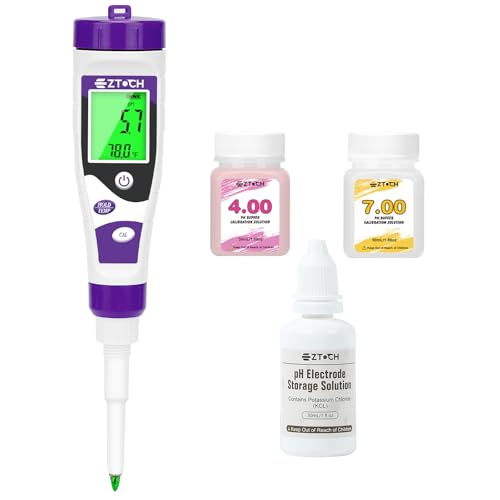
EZTOCH Food pH Meter, Digital pH Meter for Food Fermentation Canning Cooking, Smart Sourdough pH Tester for Bread Cheese Sauces, Measure pH in Water, Brewing, Meat, Sausages, Pickles, Sushi Rice
- Suitable for Canning: Tests pH of meats, fruits, vegetables
- Food Safety Testing: Checks pH of canned foods like sauces
- Sourdough pH Monitoring: Tracks yeast pH for baking success
As an affiliate, we earn on qualifying purchases.
As an affiliate, we earn on qualifying purchases.
Frequently Asked Questions
How Does Acidity Affect the Shelf Life of Foods?
You’ll find that acidity considerably affects food shelf life by altering pH balance, making it less hospitable for microbial growth. When acidity increases, the pH drops, creating an environment where bacteria and molds struggle to survive. This slows spoilage, extending shelf life. Conversely, lower acidity can speed up deterioration. So, managing acidity levels helps you preserve foods longer and maintain safety, especially in canned or fermented products.
Can Acidity Levels Be Adjusted Without Altering Flavor?
Adjusting acidity levels is like tuning a guitar; you can make small changes without noticeably affecting the sound. You can do this through pH balancing, which adjusts acidity subtly. Techniques like flavor masking help hide any slight taste differences. By carefully controlling these methods, you can modify acidity levels without markedly altering the overall flavor, allowing for a smoother, more consistent product while maintaining the desired taste profile.
What Are Common Foods That Show Texture Changes Due to Acidity?
You’ll notice foods like eggs, dairy, and fruits show texture changes due to acidity. For example, lemon juice or vinegar can cause eggs to curdle or soften dairy. In pH balancing, controlling acidity helps preserve texture, preventing unwanted separation or firmness loss. By adjusting acidity levels carefully, you maintain the desired texture while keeping flavors intact, ensuring your dishes look and feel just right.
How Does Acidity Influence Cooking Times and Methods?
You might think acidity doesn’t affect cooking times, but it does—by altering the pH balance. When you add acidic ingredients, you often need longer or different culinary techniques, like slow simmering, to tenderize or cook foods properly. Acidic environments slow down enzyme activity, so you adjust your methods accordingly. Ironically, acidity’s true power lies in changing how you approach cooking, not just flavor.
Are There Health Implications of Changing Acidity in Foods?
Changing acidity in foods can have health implications if it disrupts the acidity balance, potentially leading to health risks like digestive issues or increased tooth sensitivity. You should be mindful of excessive acidity, especially if you have conditions like acid reflux or ulcers. Maintaining a proper acidity balance helps prevent these health concerns. Always consider how altering acidity might affect your overall health and consult a healthcare professional if needed.

BSG Wine Acid Test Kit For Home Winemaking
- Wine acid testing kit: For home winemaking
- User-friendly design: Easy to use
- Complete testing set: Includes solutions, syringe, test tube, instructions
As an affiliate, we earn on qualifying purchases.
As an affiliate, we earn on qualifying purchases.
Conclusion
Understanding how acidity influences texture more than flavor helps you appreciate the delicate balance in cooking. Think of acidity as the sculptor’s chisel, shaping and transforming ingredients at a fundamental level, while flavor is the paint that adds color and character. By mastering this, you can craft dishes with perfect mouthfeel and harmony. So, next time you tweak acidity, remember you’re wielding a powerful tool—one that molds the very fabric of your culinary creations.

Portable Color Analyzer Digital Precise Colorimeter Food Texture Analyzer Colorimeter Measuring Aperture 20mm Accurate Measurement
- Measuring Aperture: 20mm for accurate surface testing
- Versatile Testing: Suitable for wet surfaces and liquids
- Precise Alignment: Double illuminating and cross locating
As an affiliate, we earn on qualifying purchases.
As an affiliate, we earn on qualifying purchases.

pH Test Strips 0-14: 200 Strips Universal Litmus Paper pH Test Strips for Liquid Testing & Water & Food and Soap Making, Get Highly Accurate Results in Seconds
- Highly Accurate pH Testing: Precise 0-14 pH measurement with ISO certification
- 200 Test Strips Included: Sufficient quantity for extensive testing needs
- Easy to Use & Read: Quick results with color chart comparison
As an affiliate, we earn on qualifying purchases.
As an affiliate, we earn on qualifying purchases.