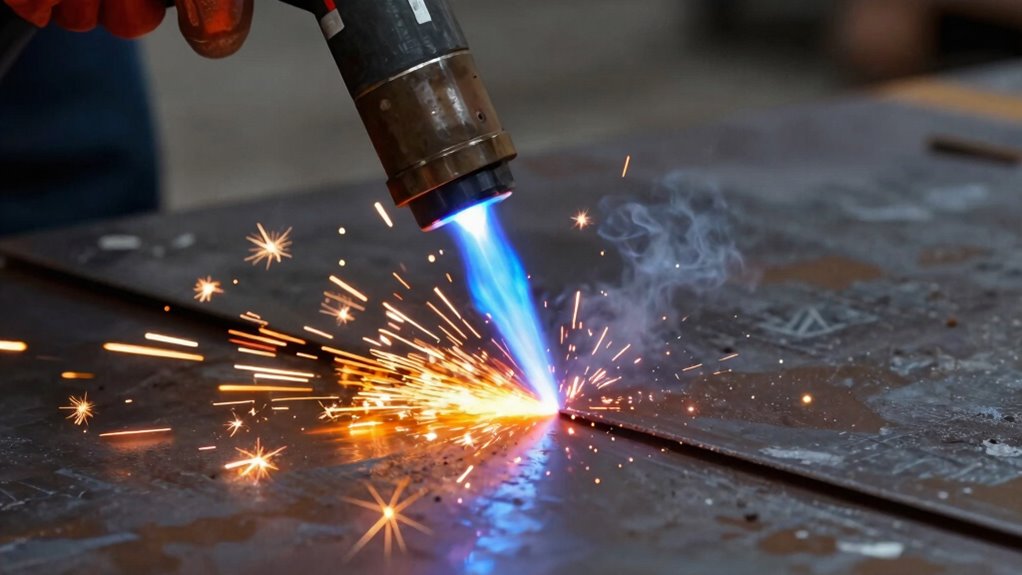
Proper air pressure is key to achieving high-quality cuts with your plasma cutter. If the pressure is too low, the arc may be unstable, causing rough edges or incomplete cuts. Too high, and you risk excessive dross, nozzle damage, or poor cut precision. Finding the right balance ensures a steady arc and smooth, clean finishes. Keeping air pressure calibrated is essential for consistent performance, and if you want to master this, there’s more to discover on fine-tuning your setup.
Key Takeaways
- Proper air pressure ensures a stable arc, leading to cleaner, more precise cuts.
- Too high air pressure can cause rough edges and increased dross formation.
- Insufficient air pressure results in incomplete cuts and poor penetration.
- Correct air pressure maintains torch stability, preventing damage and improving cut quality.
- Adjusting air pressure according to material thickness optimizes cut smoothness and efficiency.
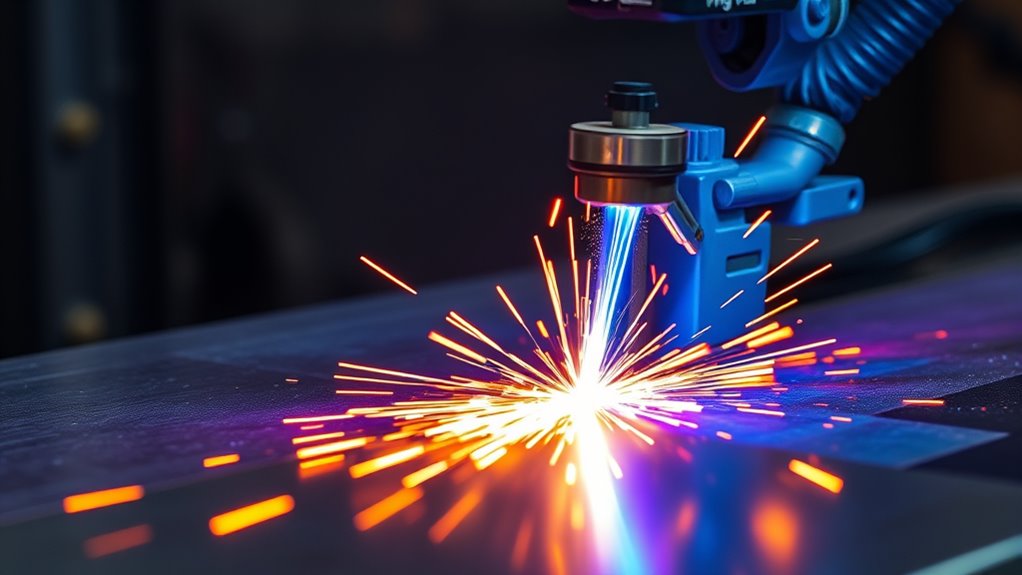
Have you ever wondered how metalworkers cut through thick materials so efficiently? The secret lies in mastering the right settings and understanding how different factors influence the quality of your cut. One essential aspect is the duty cycle, which determines how long your plasma cutter can operate continuously before needing a break. If the duty cycle is too low for your project, you’ll have to pause frequently, slowing down your work and risking inconsistent cuts. Knowing your machine’s duty cycle helps you plan your work properly, guaranteeing you don’t overheat the torch or cause premature wear. When you’re working on heavier metals, paying attention to duty cycle becomes even more critical; pushing your cutter beyond its limits can lead to poor cut quality or damage to the equipment.
Another key factor is torch height, which directly affects the cut’s precision and smoothness. Maintaining the correct torch height ensures a stable arc and consistent heat delivery. If the torch is too close to the metal, you risk creating a rough cut, excessive dross, or even damaging the torch itself. Conversely, if it’s too far away, the arc may become unstable, leading to incomplete cuts or rough edges. Proper torch height adjustment is essential for achieving a clean, precise cut, especially when working with different thicknesses of material. It’s a balancing act: too high, and you lose control; too low, and you risk damaging the workpiece or torch. Additionally, understanding arc stability can help you troubleshoot and optimize your cutting process for better results.

Breville Barista Express Espresso Machine BES870XL, Brushed Stainless Steel
The Breville Barista Express delivers third wave specialty coffee at home using the 4 keys formula and is...
As an affiliate, we earn on qualifying purchases.
Frequently Asked Questions
How Does Ambient Temperature Affect Plasma Cutting Quality?
Ambient temperature impacts plasma cutting quality by affecting plasma stability. When the temperature is too high or too low, it can cause inconsistent arcs and poor cut precision. You should monitor ambient conditions to make certain the environment stays within recommended ranges, which helps maintain stable plasma arcs. This consistency improves cut quality, reduces wastage, and prevents equipment stress. Proper environment control is essential for achieving the best results with your plasma cutter.
Can Inconsistent Air Pressure Cause Weld Imperfections?
Yes, inconsistent air pressure can cause weld imperfections. When the air pressure fluctuates, it disrupts the plasma arc, leading to uneven cuts and weld defects. Maintaining steady, ideal air pressure ensures a stable arc, which directly improves weld quality. If your air pressure isn’t consistent, expect issues like porosity, incomplete fusion, or weak welds. Always check and regulate your air supply to keep welds strong and uniform.
What Is the Ideal Air Pressure for Cutting Thick Metals?
Ever wondered how to get the best cut on thick metals? The suitable air pressure for cutting thick metals generally ranges from 70 to 90 PSI. You should make precise air pressure adjustments based on metal thickness considerations to achieve clean, precise cuts. Too much pressure can cause rough edges, while too little can result in incomplete cuts. Always test and fine-tune your settings for ideal results.
How Often Should the Air Supply Be Maintained for Optimal Results?
You should maintain your air supply regularly for excellent results. Check and replace the air filter as needed to prevent contaminants from affecting your cuts. Additionally, schedule compressor calibration every few months to guarantee consistent air pressure. Proper maintenance of your air filter and compressor keeps your plasma cutter working efficiently, reduces wear, and improves cut quality. Don’t neglect these tasks; they’re essential for superior performance.
Does Humidity Impact Plasma Cutter Performance and Cut Quality?
Humidity can impact your plasma cutter’s performance and cut quality. Moisture buildup in the air supply causes inconsistent arcs and rough cuts, so you need to keep the air dry. If the air isn’t sufficiently dry, it can lead to poor cut quality and equipment wear. Regularly use a desiccant or moisture filter to maintain air dryness, ensuring consistent performance and cleaner cuts.

Philips 5500 Series Fully Automatic Espresso Machine, LatteGo Milk System, Integrated Grinder, 20 Hot & Iced Coffee Pre-Sets, Quick Start, SilentBrew, 15-Bar Pressure, Black Chrome (EP5544/94)
20 PRESETS, ENDLESS COMBINATIONS: Hot drinks like espresso, coffee, lattes, and cappuccinos, to iced coffee, or simply hot...
As an affiliate, we earn on qualifying purchases.
Conclusion
Think of your plasma cutter as a delicate dance partner, where air pressure is the rhythm that guides each move. When you set the right pressure, your cuts glide smoothly like a well-rehearsed performance, revealing clean, precise lines. Too much or too little throws off the harmony, creating jagged edges and imperfections. Mastering this balance is like tuning an instrument—when everything aligns perfectly, your work shines with clarity and confidence.

Breville Barista Touch Espresso Machine BES880BSS, Brushed Stainless Steel
The Breville Barista Touch delivers third wave specialty coffee at home using the 4 keys formula and is...
As an affiliate, we earn on qualifying purchases.

MEGAWISE 2025 Powerful Vacuum Sealer Machine | Compact Design | One-Touch Automatic | Seal in 10-20 Seconds | Dry, Moist, Wet, and Cold Modes | With 10 Vacuum Bags & Built-in Cutter (Grey)
80kpa Suction Power - Updated vacuum sealer uses a DC motor pump with electromagnetic perm and pure copper...
As an affiliate, we earn on qualifying purchases.