Mapping technology in robot vacuums helps you plan efficient routes, avoid obstacles, and cover your space systematically. However, it doesn’t guarantee a thorough clean, since actual cleaning depends on brushes, suction power, and modes. Good mapping reduces missed spots and saves battery, but surface debris and thoroughness rely on maintenance and cleaning features. To understand how to get the best performance, explore more about how mapping and cleaning work together.
Key Takeaways
- Mapping creates a route plan but doesn’t ensure debris removal or thorough cleaning.
- Effective cleaning depends on brush quality, suction power, and cleaning modes, not just navigation.
- A detailed map helps optimize coverage but doesn’t guarantee all dirt or dust will be picked up.
- Proper maintenance of brushes and dustbins is essential for cleaning performance, regardless of mapping accuracy.
- Combining good mapping with cleaning features and upkeep results in better overall cleaning outcomes.
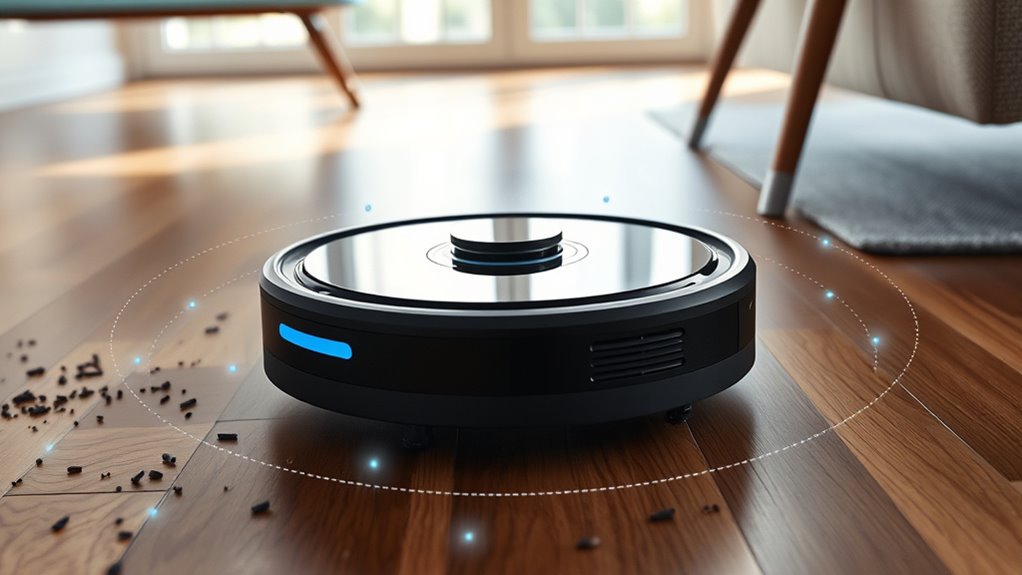
Have you ever wondered how robot vacuums can keep your floors spotless with minimal effort? The secret lies in their advanced mapping technology, which allows them to navigate your home intelligently. When you press start, your robot vacuum begins to analyze your space, creating a detailed map that guides its movements. This mapping isn’t just about knowing where furniture is; it’s about optimizing cleaning paths to maximize efficiency. By understanding your home’s layout, the vacuum can avoid obstacles, reduce missed spots, and minimize the time it takes to clean. This focus on mapping technology considerably boosts cleaning efficiency, making your daily chores easier and quicker.
However, it’s important to understand that mapping isn’t the same as cleaning. Many people assume that because a robot can draw a map of their house, it’s automatically cleaning every corner thoroughly. But that’s not always the case. Mapping helps the vacuum plan its route and avoid obstacles, but it doesn’t necessarily guarantee a deep or thorough clean. Think of it like a GPS guiding you through traffic; it knows the route but doesn’t clean the streets. Similarly, a robot vacuum’s mapping system ensures it covers the area efficiently, but the actual cleaning performance depends on the brush quality, suction power, and cleaning modes. Some models might map your home perfectly but still miss spots or leave debris behind if their cleaning components aren’t up to par.
Mapping guides the route but doesn’t guarantee a deep clean; cleaning quality depends on brushes, suction, and modes.
Furthermore, a well-mapped route can improve cleaning efficiency by reducing redundant passes and focusing on areas that need more attention. For example, some robot vacuums learn which rooms get dirtier and allocate more time to those zones. This smart approach saves battery life and guarantees a more thorough clean over time. Still, it’s essential to remember that the map alone doesn’t clean. Regular maintenance, like clearing brushes and emptying dustbins, plays a vital role in maintaining high-quality cleaning performance.
In short, while mapping technology is a game-changer for robot vacuums, it’s just one part of the puzzle. The real cleaning power comes from a combination of smart navigation and high-quality cleaning features. When you understand this distinction, you’ll better appreciate how your robot vacuum can be both efficient and effective, giving you a cleaner home without requiring your constant attention. So, next time you see your vacuum mapping your space, know that it’s working behind the scenes to keep your floors spotless, but it’s your choice of model and maintenance that truly makes the difference.
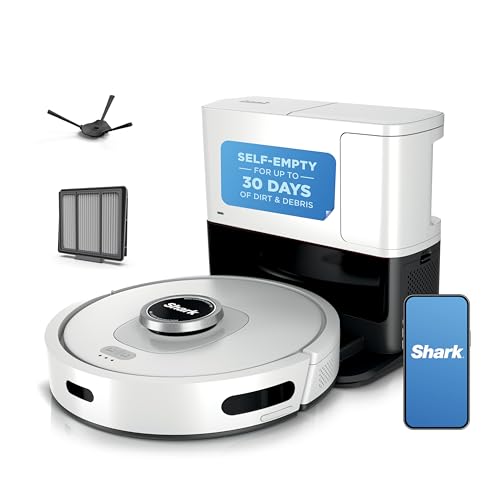
Shark Matrix Clean | Robot Vacuum Cleaner with Powerful Suction for Pet Hair, Rugs, Carpets & Hard Floors | Self-Empty Base | 60-Day Capacity | Voice Control | LiDAR Navigation | White | AV2511AE
- High Suction Power: Captures dirt, debris, and pet hair
- Matrix Clean Pattern: Ensures thorough, whole-home coverage
- Self-Emptying Base: Holds up to 60 days of debris
As an affiliate, we earn on qualifying purchases.
As an affiliate, we earn on qualifying purchases.
Frequently Asked Questions
Can Robot Vacuums Clean Carpets Better Than Hardwood Floors?
Yes, robot vacuums tend to clean carpets better than hardwood floors because they excel at deep cleaning carpets, lifting dirt and debris embedded deep within fibers. On hardwood floors, they focus more on efficiency, gliding easily and avoiding scratches. You’ll find they perform a more thorough carpet deep cleaning, while hardwood efficiency means quick, effective cleaning without much fuss. Overall, your choice depends on your flooring type and cleaning priorities.
Do Mapping Features Increase the Risk of Data Privacy Issues?
Yes, mapping features can increase your privacy concerns because your robot vacuum collects detailed data about your home layout. This data, if not properly safeguarded, could pose risks to your data security. You should regularly check your device’s privacy settings and ensure the company has strong data protection policies. Being proactive helps you minimize privacy issues while enjoying the convenience of advanced mapping features.
How Long Does a Typical Robot Vacuum Battery Last?
In the age of dial-up internet, your robot vacuum’s battery life typically lasts between 60 to 120 minutes depending on the model. Most require around 3 to 4 hours of charging time to reach full capacity. Advanced models with larger batteries can clean longer, but you should anticipate to recharge it regularly. Keep an eye on the battery indicator to make certain your vacuum is ready before starting your cleaning session.
Are Robot Vacuums Suitable for Pet Hair Removal?
Yes, robot vacuums are suitable for pet hair removal. You should look for models with strong suction power and specialized brush rolls designed for pet hair. Using vacuum attachments can help clean stairs and upholstery effectively. Regularly empty the dustbin and maintain brushes to optimize performance. With the right features, your robot vacuum can efficiently pick up pet hair and keep your home clean.
Can Robot Vacuums Be Used on Outdoor Surfaces?
They say “don’t judge a book by its cover,” but when it comes to outdoor surfaces, consider this: most robot vacuums aren’t designed for outdoor cleaning. They lack weather resistance and aren’t built to handle dirt, debris, or uneven terrain outside. While some models claim water resistance, using them outdoors can damage the device. Stick to indoor cleaning, and keep your outdoor surfaces spotless with the right tools.
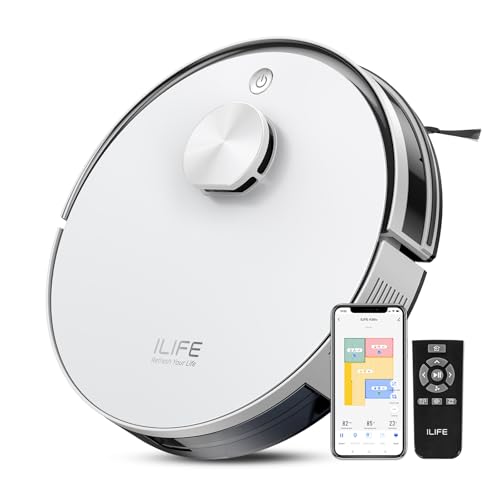
ILIFE A30s Robot Vacuum, 10000Pa Max Suction Robotic Vacuum Cleaner with LiDAR Navigation, Home Mapping, No-Go Zone, 150 Mins, 2.4G WiFi/App/Alexa/Remote Control, for Hard Floor Carpet and Pet Hair
- High Suction Power: Up to 10,000Pa for deep cleaning
- Smart Mapping & Navigation: LiDAR and SLAM for efficient coverage
- Pet-Friendly Anti-Tangle Design: Prevents tangles, ideal for pet hair
As an affiliate, we earn on qualifying purchases.
As an affiliate, we earn on qualifying purchases.
Conclusion
Remember, a robot vacuum that maps your home isn’t automatically the best at cleaning every spot. For example, a family with pets might find that their robot’s mapping overlooks pet hair in hidden corners. So, don’t rely solely on the map—combine it with manual checks or spot cleaning. Ultimately, understanding that mapping helps navigation but doesn’t guarantee thorough cleaning will help you choose the right robot for your needs.

Replacement Parts & Accessories for iRobot E, I & J Series, Combo i5, j5 Series Robot Vacuum, Dual Multi-Surface Rubber Brushes & 3 HEPA Filter & 3 Edge-Sweeping Brushes
- Compatibility: Fits iRobot E, I, J series models
- High-Quality Brushes: Soft nylon bristles for effective cleaning
- HEPA Filtration: Captures 99% of small particles
As an affiliate, we earn on qualifying purchases.
As an affiliate, we earn on qualifying purchases.

ROPVACNIC Robot Vacuum Cleaner Robot Vacuum and Mop Combo with 5200Pa Suction, Personalized Cleaning Adjustments, Self-Charging Robotic Vacuum Cleaner, Advanced Obstacle Avoidance
- 2-in-1 Mopping and Vacuuming: Integrated mopping with adjustable water tank
- Smart Control Options: Multiple cleaning modes and app control
- Voice Command Compatibility: Supports Alexa and Google Assistant
As an affiliate, we earn on qualifying purchases.
As an affiliate, we earn on qualifying purchases.