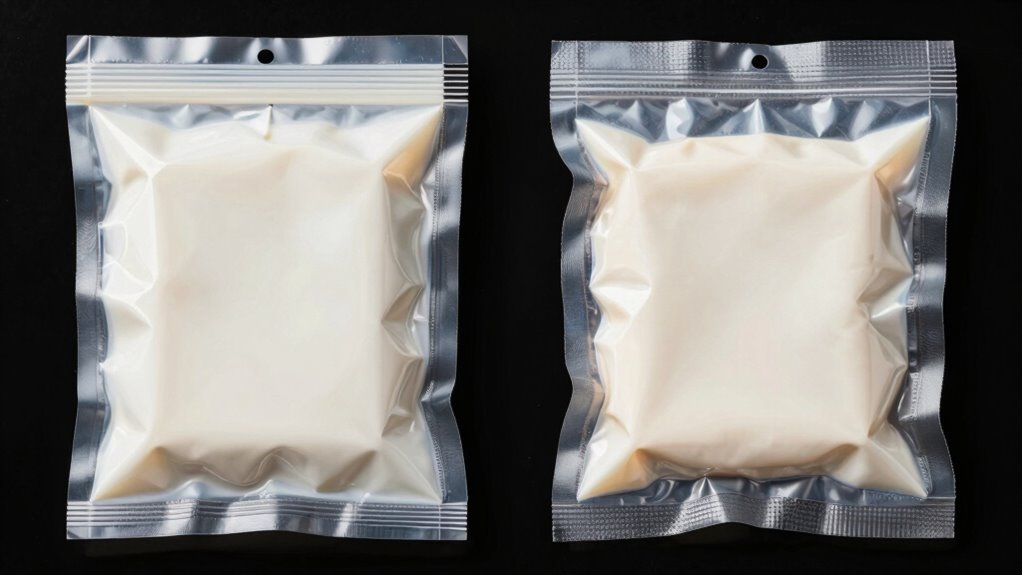

Choosing between chamber and external vacuum sealers affects your sealing speed, convenience, and overall results. Chamber models work faster because they evacuate air from the entire chamber, allowing you to seal multiple bags at once, perfect for high-volume needs. External sealers are more portable and better for small jobs but take more time and manual effort. Understanding how each mechanism influences outcomes helps you select the best option—continue to explore for more details.
Key Takeaways
- Chamber sealers offer faster sealing as entire bags are processed simultaneously inside the chamber.
- External sealers require individual bag placement, slowing down the sealing process.
- Chamber models provide higher throughput ideal for commercial use, whereas external sealers suit small-scale needs.
- Chamber sealers experience less wear and are more durable, reducing maintenance over time.
- The mechanism impacts efficiency, with chamber sealers delivering quicker, more consistent results for high-volume sealing.
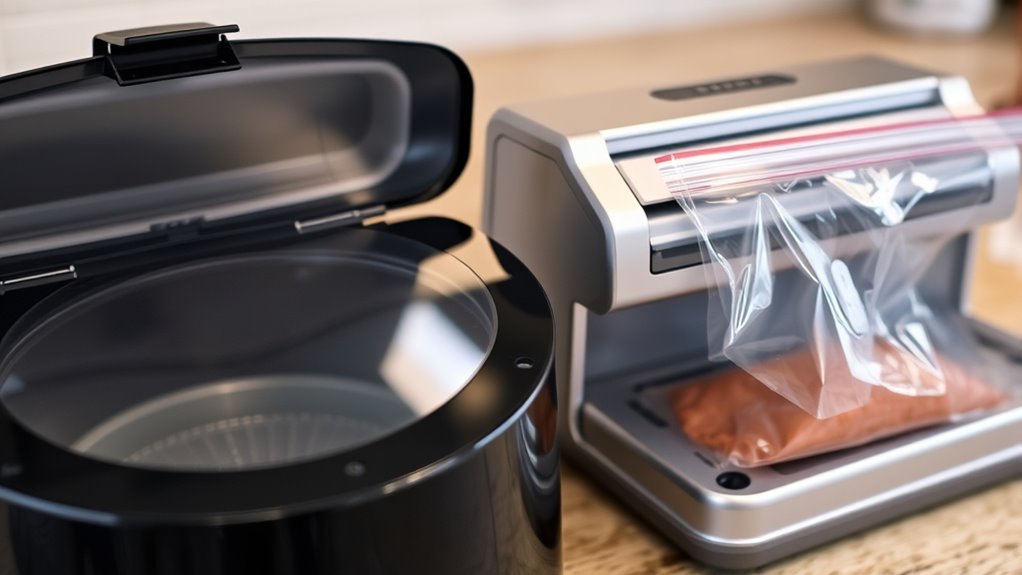
When it comes to vacuum sealing, choosing the right type of machine can make a big difference in how well your food stays fresh. One of the most important factors to contemplate is the mechanism it uses—chamber vs external vacuum sealers. These differences directly impact packing speed, machine maintenance, and overall results. Understanding how each operates helps you select the best option for your needs.
With chamber vacuum sealers, your packaging speed is often higher, especially when sealing multiple items at once. This is because the entire bag and tray are placed inside the chamber, allowing the machine to evacuate air from the entire space quickly. As a result, these machines excel in commercial settings where efficiency matters. Their design also means less frequent machine maintenance, since the sealing process is contained within the chamber, reducing wear on external parts. You’ll find that chamber sealers are more durable over time, often requiring fewer repairs and less upkeep, making them a cost-effective investment in the long run. Additionally, the energy efficiency of chamber sealers contributes to their sustainability, aligning with environmentally conscious practices.
Chamber sealers offer faster packaging and require less maintenance, ideal for commercial food preservation.
In contrast, external vacuum sealers are typically smaller and more portable, which makes them attractive for home use. However, their packaging speed is generally slower because you need to individually place each bag in the sealing area and manually operate the machine. The process involves evacuating air from outside the bag through a valve, which can be a slower process if you’re sealing many items at once. Maintenance for external sealers tends to be easier due to their simple design—fewer moving parts and less complex mechanisms mean less frequent repairs. Still, they might require more regular cleaning, especially around the sealing bar and vacuum ports, to keep performance ideal.
When choosing between the two, consider how often you plan to vacuum seal and how much time you’re willing to dedicate to maintenance. If you’re sealing large quantities of food regularly, a chamber sealer’s faster packaging speed and lower maintenance needs make it a superior choice. For occasional use or smaller quantities, an external sealer might suffice, offering convenience without the higher upfront investment. Both types have their advantages, but the mechanism they use directly influences not only how fast you can pack food but also how much effort will go into keeping your machine running smoothly. Ultimately, understanding these differences helps you make an informed decision that aligns with your food preservation goals.

VEVOR Chamber Vacuum Sealer 320W Sealing Power 12.6 Inch Sealing Length
- High Vacuum Power: Nearly removes all air for freshness
- Dual Lock Seal: Strong, seamless 10mm wide seal
- Large Chamber Capacity: Fits big and small items
As an affiliate, we earn on qualifying purchases.
As an affiliate, we earn on qualifying purchases.
Frequently Asked Questions
Which Vacuum Sealer Is More Energy-Efficient?
You’ll find that external vacuum sealers are generally more energy-efficient because they have lower energy consumption and use less power overall. They operate with simpler mechanisms, which means they typically consume less electricity during use. Chamber sealers, while more powerful, tend to use more energy due to their complex system. So, if power efficiency is your priority, an external vacuum sealer is usually the better choice.
How Do Maintenance Requirements Differ Between Chamber and External Sealers?
While the maintenance needs are generally manageable, you’ll find chamber sealers require more frequent cleaning, especially around seals and gaskets, to keep performance ideal. External sealers, on the other hand, tend to need fewer replacement parts over time due to simpler mechanisms. You should stay attentive to cleaning frequency and monitor parts like seals and motors, ensuring longevity and consistent sealing quality with less hassle.
Can Both Types Handle Liquids Equally Well?
Both chamber and external vacuum sealers can handle liquids, but they do so differently. Chamber sealers excel at liquid handling, offering consistent sealing effectiveness even with moist or liquid-rich foods. External sealers may struggle with liquids, risking leaks and poor seals. If you often package liquids, a chamber sealer provides a more reliable option, ensuring better sealing effectiveness and reducing waste or spoilage.
Are There Size Limitations for Each Type’s Operation?
You’ll find size limitations differ between a vacuum chamber and an external vacuum sealer. With a vacuum chamber, you’re limited by the chamber’s dimensions, meaning larger bags or items require a bigger chamber. An external vacuum sealer is more versatile for various sizes, but bulky or large items might be challenging to seal properly. Consider your storage needs and item sizes to choose the best option for your kitchen.
Which Sealer Offers Better Long-Term Durability?
You’ll find that chamber vacuum sealers generally offer better long-term durability because they maintain sealing integrity over time, even with frequent use. Their design reduces stress on materials, making them more compatible with various sealing bags. External sealers, while convenient, may experience wear and tear faster, affecting durability. So, if longevity and material compatibility are your priorities, a chamber sealer is your best bet for lasting performance.
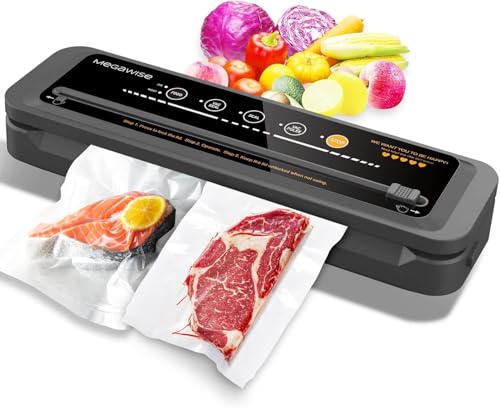
MegaWise Vacuum Sealer Machine | 80kPa Suction Power | Vac Seal Machine
- High Suction Power: 80kPa with copper DC motor pump
- Versatile Food Compatibility: Works with moist and dry foods
- Liquid Removal Mode: Removes liquids up to 10ml for moist foods
As an affiliate, we earn on qualifying purchases.
As an affiliate, we earn on qualifying purchases.
Conclusion
Choosing between chamber and external vacuum sealers is like picking the right brush for your masterpiece—you want precision and control. With chamber sealers, you get a deep, professional finish that locks in freshness like a treasure chest. External sealers are more like quick, reliable tools for everyday use. Whichever you choose, understanding how their mechanisms work helps you make the perfect seal, turning your food preservation into an artful dance of science and skill.
VEVOR Chamber Vacuum Sealer 320W Sealing Power 12.6 Inch Sealing Length
- High Vacuum Power: Nearly removes all air for freshness
- Dual Lock Seal: Strong, seamless 10mm wide seal
- Large Chamber Capacity: Fits big and small items
As an affiliate, we earn on qualifying purchases.
As an affiliate, we earn on qualifying purchases.

Vacbird Travel Vacuum Bags with Rechargeable Pump, Carry-On Space Saver
- Rechargeable Cordless Pump: 1500mAh battery, USB rechargeable
- Fast Compression: 4000Pa suction, 10-15 sec per bag
- Complete Packing in Minutes: Full set in under 3 minutes
As an affiliate, we earn on qualifying purchases.
As an affiliate, we earn on qualifying purchases.