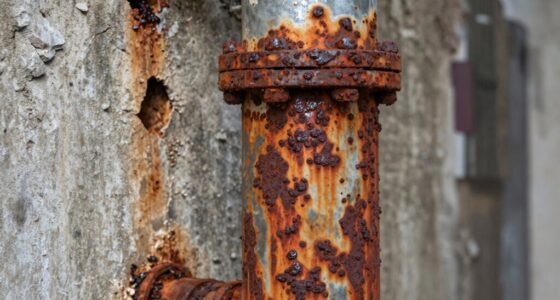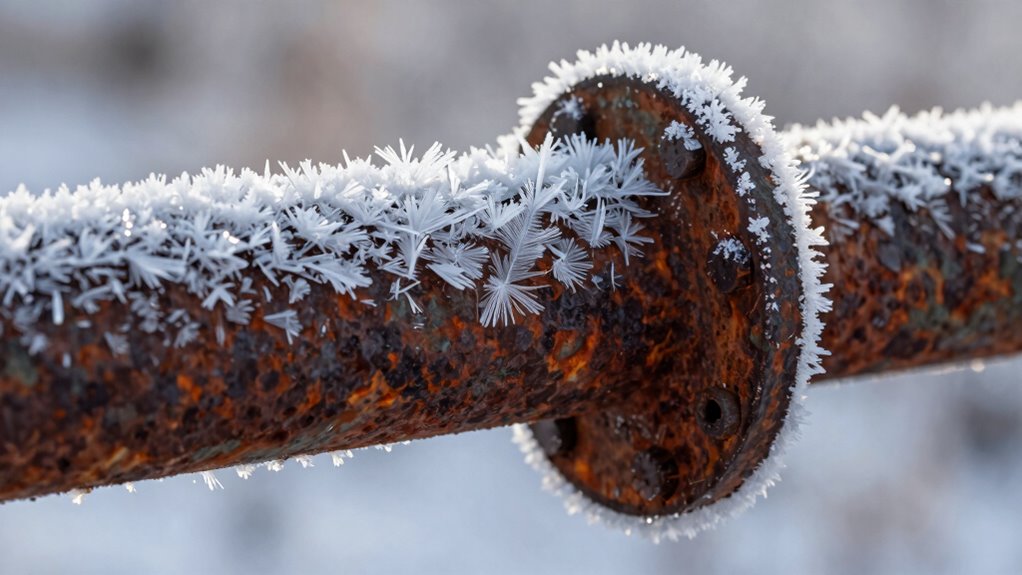

You might think freezing pipes happen mainly because of cold temperatures, but wind plays a bigger role than you realize. Wind speeds up heat loss from exposed pipes and outdoor faucets, even when temperatures aren’t extreme. It acts like a cold breeze that strips away heat, making pipes freeze faster. Protecting your plumbing from wind by insulating and covering vulnerable areas can prevent freezing. To discover more effective tips, keep exploring how wind impacts your pipes and how to stay safe.
Key Takeaways
- Wind accelerates heat loss from pipes, increasing freezing risk even if temperatures are above freezing.
- Wind chill makes outdoor conditions feel colder, causing pipes to freeze faster than expected.
- Proper insulation and windproof covers are essential to protect vulnerable pipes from wind-induced freezing.
- Calm weather can prevent pipes from freezing, even at lower temperatures, highlighting wind’s role.
- Focusing only on temperature ignores wind’s significant impact on how quickly pipes freeze.
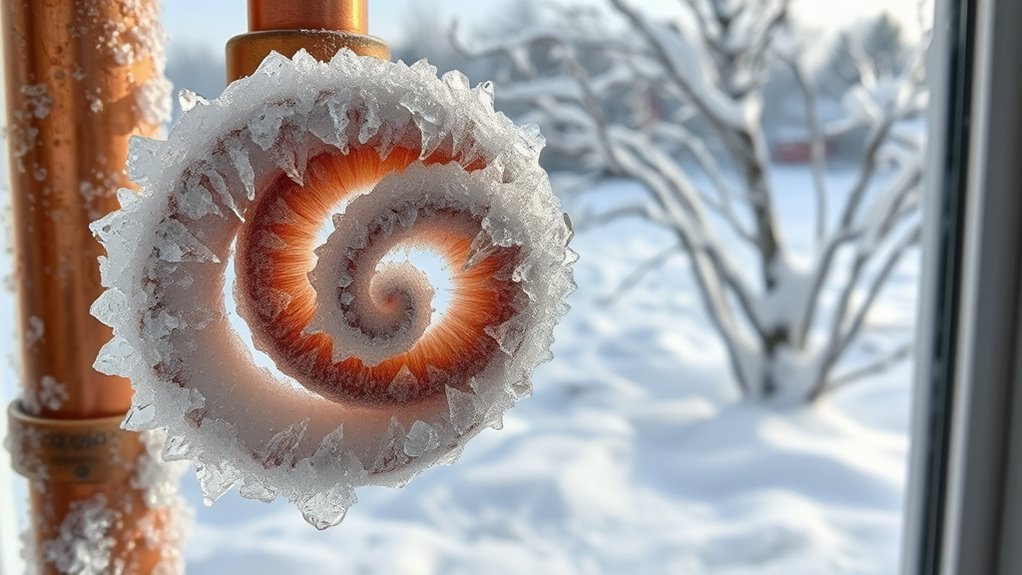
During cold weather, your pipes are especially vulnerable to freezing if you don’t take the right precautions. Many homeowners assume that freezing occurs solely because of dropping temperatures, but wind plays an important role in how quickly pipes freeze. Wind can strip away heat from your home’s exterior, making outdoor faucets and exposed pipes more susceptible to freezing even when the temperature isn’t at record lows. To protect your plumbing, start by insulating your outdoor faucets with proper covers and ensuring all exposed pipes are wrapped with pipe insulation. This barrier helps retain heat around the pipes, reducing the risk of freezing during those gusty, chilly nights.
Wind acts like a cold breeze directly on your pipes, accelerating heat loss. When wind blows across unprotected pipes, it removes the slight warmth they hold, causing the water inside to freeze faster. That’s why simply keeping the temperature above freezing isn’t enough—wind chill can make it feel much colder. You might notice that in calmer weather, your pipes stay unfrozen at slightly lower temperatures, but when the wind picks up, even a modest cold snap can turn problematic. This means that even if the forecast predicts temperatures just above freezing, strong winds can still cause your outdoor faucets and exposed pipes to freeze.
Wind accelerates heat loss from unprotected pipes, making cold weather more dangerous even when temperatures stay above freezing.
To minimize this risk, adding pipe insulation around all vulnerable areas is vital. Insulation acts as a barrier, trapping heat close to your pipes and preventing wind from stripping away that warmth. For outdoor faucets, installing faucet covers or shutting off the water supply and draining the lines can make a big difference. Don’t forget to disconnect garden hoses, which can hold water and cause the faucet to freeze if left attached. If possible, consider installing outdoor faucet covers that seal tightly and protect against wind and cold air. These simple steps help keep the temperature around your plumbing stable, reducing the chances of freezing. Additionally, proper insulation is an essential factor in maintaining a consistent temperature and preventing heat loss.
It’s also wise to check your home’s insulation, especially around areas where pipes run close to exterior walls or beneath sinks. Proper insulation keeps interior heat from escaping and warms the pipes from within. During severe cold spells or windy nights, keep interior doors open to allow warm air to circulate around pipes. When you combine wind protection through insulation and covering outdoor faucets, you greatly lower your risk of dealing with burst pipes and costly repairs. Remember, wind, not just temperature, is often the main culprit behind frozen pipes. Taking proactive steps to shield your outdoor faucets and insulate vulnerable areas can save you from a plumbing disaster when the weather turns cold.

2Pack Outdoor Faucet Covers for Winter – Pro 6.7" W x 8.3" H Outdoor Water Faucet Cover Socks for Winter Freeze Protection Pipe Insulation Reusable Waterproof Insulated Spigot backflow Cover,Black
❄【High Compatibility】– Faucet covers for winter measures 6.7" W x 8.3" H, Works well with various faucet types,…
As an affiliate, we earn on qualifying purchases.
As an affiliate, we earn on qualifying purchases.
Frequently Asked Questions
How Can I Prevent Wind-Related Pipe Damage?
To prevent wind-related pipe damage, you should insulate exposed pipes and seal any gaps that wind gusts can penetrate. Protect your home from storm surge impacts by installing storm shutters and reinforcing vulnerable areas. During high wind events, open cabinet doors to allow warm air around pipes and let faucets drip slightly to prevent freezing. These steps help minimize the risk of pipes freezing or bursting during fierce wind gusts.
Does Pipe Insulation Protect Against Wind Chill?
Yes, pipe insulation can help protect against wind chill’s impact on your pipes. Proper insulation improves insulation effectiveness, reducing heat loss caused by cold wind exposure. When you insulate your pipes, you create a barrier that minimizes the effects of wind chill, keeping the water inside from freezing. This simple step makes a noticeable difference, especially in exposed or poorly sheltered areas, and helps prevent costly pipe damage during cold, windy weather.
Are Certain Pipe Materials More Wind-Resistant?
Certain pipe materials offer better wind resistance, making them more suitable for exposed or vulnerable locations. For example, copper and PEX pipes are more durable and withstand wind chill effects better than PVC. Your choice of pipe material impacts how well your pipes resist freezing caused by wind exposure. Selecting high wind-resistant materials, combined with proper insulation, helps prevent freezing and potential damage during cold, windy weather.
How Quickly Can Wind Cause Pipes to Freeze?
Imagine wind as a thief stealing warmth from your pipes, turning their liquid inside into ice at a rapid pace. Wind chill accelerates ice formation, causing pipes to freeze in just a few hours during strong gusts. The relentless wind strips away heat, making your pipes colder than the air temperature suggests. So, if a cold front hits, expect your pipes to freeze faster than you might think, thanks to the wind’s icy touch.
What Weather Conditions Increase Wind’s Impact on Pipes?
You’ll notice wind chill and low air pressure increase wind’s impact on pipes. When wind chill drops temperatures faster, pipes freeze more easily, especially if the wind blows against your home’s exposed pipes. Low air pressure can also cause colder air to seep in, further chilling pipes. Strong, persistent winds can strip away warm air around your home, making your pipes more vulnerable to freezing despite actual temperatures.

Duck Brand Foam Pipe Covers, Pipe Insulation Foam Tubes for Hot and Cold Water Pipes, Pre Slit and Self Sealing Adhesive Edge, 0.75 in. x 1 Ft., 6 Sticks Per Package, 6 Feet Total, Black
Duck Brand insulating foam pipe stick covers are great for insulating both hot and cold water pipes
As an affiliate, we earn on qualifying purchases.
As an affiliate, we earn on qualifying purchases.
Conclusion
So, next time the wind howls and the cold bites, remember it’s not just the temperature you should fear. It’s the wind’s relentless chill that sneaks into your pipes, freezing them solid. Stay vigilant, insulate well, and keep the wind at bay. Because when the wind roars and the cold bites, it’s your pipes that suffer. Protect your home, prevent the damage, and keep the flow flowing free, no matter how fierce the wind blows.

2Pack Outdoor Faucet Covers for Winter,8.3" H x 6.7" W Hose Bib Covers for Winter Freeze Protection, Outside Spigot Cover Insulated Waterproof Water Pipe Protector (Black-2Pack)
✅「UPGRADE MAX SIZE」 HNYTLCO outdoor faucet covers for winter upgrade measures 8.3 inches x 6.7 inches. Compared with…
As an affiliate, we earn on qualifying purchases.
As an affiliate, we earn on qualifying purchases.

10 Pcs Pipe Insulation Foam Tube Self Adhesive Insulation Foam Wrap Aluminum Foil Pipe Covers for Spigot, Winter Outside Pipes, Sprinkler, Water Heater Pipes Freeze Protection (1.3 Ft x 0.8 Inch)
Package Quantity:Our kit contains 10 pieces of pipe insulation foam tubing, enough quantity and thoughtful design to meet…
As an affiliate, we earn on qualifying purchases.
As an affiliate, we earn on qualifying purchases.