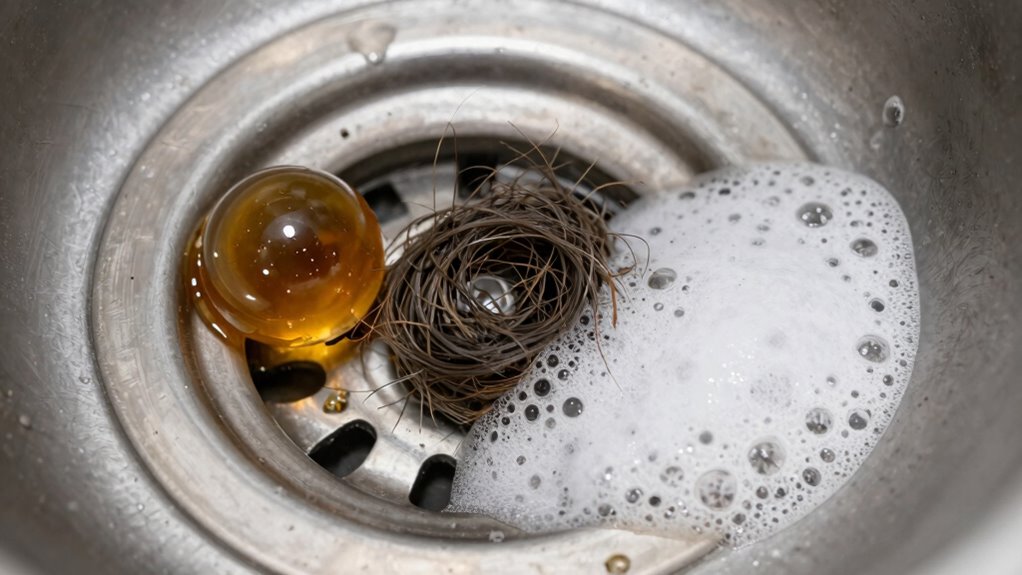

To tell if grease, hair, or soap causes your slow drain, look for clues. Grease often leaves a greasy film or smell and tends to solidify in the pipes, especially after cooking. Hair clogs are usually visible near the drain opening or form dense masses. Soap scum creates a sticky film that may be cloudy or greasy but doesn’t block completely. Spotting these signs helps you target the right fix; keep exploring to learn more tips.
Key Takeaways
- Grease buildup often causes slow drains with a greasy film or foul smell, especially in kitchen sinks.
- Hair clogs appear as visible masses near the drain opening or within the pipes, often forming dense tangles.
- Soap scum creates a sticky, cloudy film on pipe walls, slowing flow but usually without immediate visible blockage.
- Listen for drain behavior: rapid drainage suggests soap scum, while persistent slow flow hints at grease or hair issues.
- Installing drain guards and regular cleaning helps distinguish and prevent buildup from grease, hair, or soap residues.
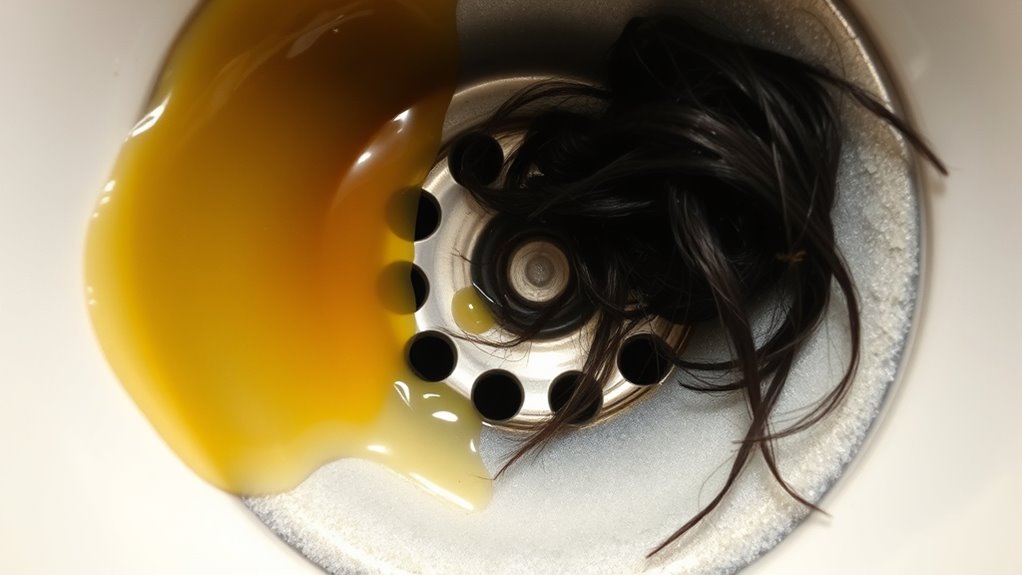
Slow drains are a common household annoyance, often caused by different types of buildup blocking your pipes. Understanding what’s behind the clog can help you choose the right approach to clear it and prevent future issues. When it comes to identifying the cause—whether grease, hair, or soap—you need to pay attention to the drain’s behavior and the type of debris that’s accumulating. Recognizing the source can save you time and effort, and applying proper clog prevention and maintenance tips can keep your drains flowing smoothly.
If your drain is slow after using the kitchen sink, grease is likely the culprit. Grease tends to solidify as it cools, creating a thick layer that sticks to the pipe walls. You might notice a greasy film or a foul smell emanating from the drain. To prevent this, avoid pouring fats and oils down the drain, especially after cooking. Regularly flushing your pipes with hot water or a mixture of baking soda and vinegar can help break down grease buildup before it becomes a problem. These simple maintenance tips can extend the life of your plumbing and reduce the need for professional intervention.
In contrast, if your bathroom drain is slow and hair is the suspected cause, you’ll notice a clump of hair near the drain opening or a visible blockage when you remove the cover. Hair tends to bind with soap scum and other debris, forming a dense mass that traps more particles, compounding the problem over time. To prevent hair from clogging your pipes, consider using a drain guard or strainer that catches hair before it goes down the drain. Regularly cleaning out these guards and removing hair buildup can markedly improve drainage and prevent clogs from forming. Routine maintenance tips like these can save you a lot of hassle and keep your plumbing system healthy.
Soap scum buildup is another common reason for slow drains, especially in showers and tubs. Over time, soap residue combines with minerals in the water, creating a sticky film that sticks to pipe walls and slows water flow. You’ll notice this buildup if the drain is slow but not completely blocked, and you might see a cloudy or greasy film around the drain opening. To prevent soap scum from forming, clean your drains regularly with gentle, non-abrasive cleaners, and consider using liquid soap instead of bar soap, which tends to produce more residue. Maintaining proper water chemistry and water flow can also help minimize soap scum accumulation. These maintenance tips help keep your drains clear and reduce the chances of slow drainage caused by soap scum.

ARCTIC EAGLE Drain Snake Hair Drain Clog Remover – 3 Pack Shower Snake Sink Unclogger Tool with Exquisite Packaging
Package Includes: 3 pack of 20" drain clog remover cleaning tools. The width of the hair cleaner is…
As an affiliate, we earn on qualifying purchases.
As an affiliate, we earn on qualifying purchases.
Frequently Asked Questions
How Can I Prevent Slow Drains Caused by Grease, Hair, or Soap?
To prevent clogs caused by grease, hair, or soap, you should practice regular drain maintenance and avoid pouring grease down the drain. Use drain screens to catch hair and soap scum, and clean them frequently. Hot water flushes can help melt away grease buildup. Additionally, periodically use a drain cleaner or a mixture of baking soda and vinegar to keep your pipes clear, reducing the chances of slow drains.
What Tools Are Best for Removing Different Types of Clogs?
You should start with a plunger, using proper plunger techniques to loosen the clog. For hair or stubborn blockages, a drain snake is your best choice—select a drain snake with the right length and coil size to effectively clear the clog. For grease or soap buildup, a combination of plunging and a flexible drain snake can work best. Always make certain you use the proper tools for each clog type to avoid damage.
When Should I Call a Professional Plumber for a Slow Drain?
You should call a professional plumber if your drain remains slow despite using basic tools, or if you notice foul odors or frequent backups. A plumber inspection can identify underlying issues like grease buildup, hair clogs, or soap residue. Don’t wait for an emergency repair—prompt professional help prevents further damage and costly repairs later. If you’re unsure, it’s better to consult a plumber now to keep your drains flowing smoothly.
Are Chemical Drain Cleaners Safe for All Plumbing Types?
Imagine pouring a chemical drain cleaner down your kitchen sink. While it might seem like a quick fix, these cleaners aren’t safe for all plumbing materials. Chemical safety varies; some contain harsh acids that can corrode old pipes or damage PVC. Always check the label and verify the product is compatible with your plumbing type. When in doubt, consult a professional to avoid costly repairs or leaks.
How Long Does It Typically Take to Clear a Stubborn Clog?
It usually takes anywhere from 30 minutes to a few hours to clear a stubborn clog, depending on its severity. During drain cleaning, you might need multiple attempts for effective clog removal. Using professional tools like a drain snake or hydro jet can speed up the process. Be patient, and avoid chemical drain cleaners that may damage your pipes. If the clog persists, consider calling a plumber for expert drain cleaning.
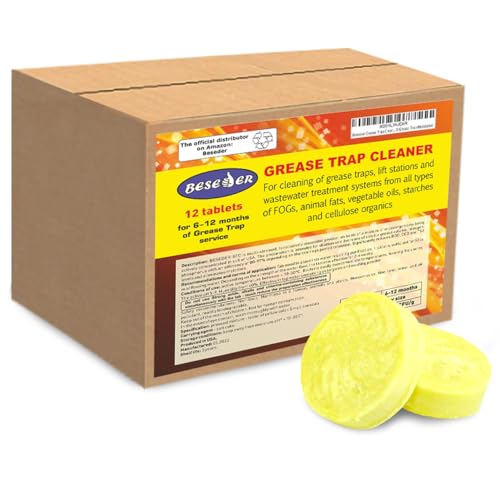
Grease Trap Cleaner (1 Count (Pack of 12))
Grease Trap Cleaner tablet
As an affiliate, we earn on qualifying purchases.
As an affiliate, we earn on qualifying purchases.
Conclusion
Now that you know the telltale signs—grease turning your drain into a sluggish river, hair forming an unbreakable chain, or soap creating a stubborn, slimy barrier—you’re practically a drain detective. Ignoring these clues might turn your pipes into a never-ending traffic jam, causing chaos in your home’s plumbing universe. So, don’t wait for disaster to strike; tackle these issues head-on before your drains stage a full-blown rebellion and trap you in a never-ending plumbing nightmare!

OXO Good Grips Silicone Sink Drain Strainer
Effectively Trap Debris: This sink strainer basket lets water drain, not kitchen scraps. Other drain plugs works too…
As an affiliate, we earn on qualifying purchases.
As an affiliate, we earn on qualifying purchases.

Drain Auger, Clog Remover with Drill Adapter, 25 Feet Flexible Plumbing Snake Use Manually or Powered for Kitchen, Bathroom and Shower Sink, Comes with Gloves (orange)
Professional: This professional plumbers snake comes complete with 25 ft Steel, more than enough for most household clog,…
As an affiliate, we earn on qualifying purchases.
As an affiliate, we earn on qualifying purchases.