
When using a sewage ejector pump, only biodegradable waste like toilet paper, as well as wastewater from sinks and tubs, should go down the drain. Avoid flushing solids, wipes, sanitary products, or paper towels, which can clog or damage the system. Never pour grease, oils, chemicals, or foreign objects into the drain, as they cause damage and blockages. To keep your system running smoothly, it’s important to follow these guidelines—there’s more to learn if you keep exploring.
Key Takeaways
- Only wastewater from toilets, sinks, and showers should go into sewage ejector pumps; avoid solid objects and non-flushable items.
- Do not pour grease, oils, chemicals, or large hair quantities down drains connected to the system.
- Flushing sanitary products, wipes, paper towels, or foreign objects can clog or damage the pump.
- Use biodegradable substances for greywater and avoid chemicals to protect septic and greywater systems.
- Regular inspection and maintenance help prevent clogs, leaks, and system failures, extending pump lifespan.
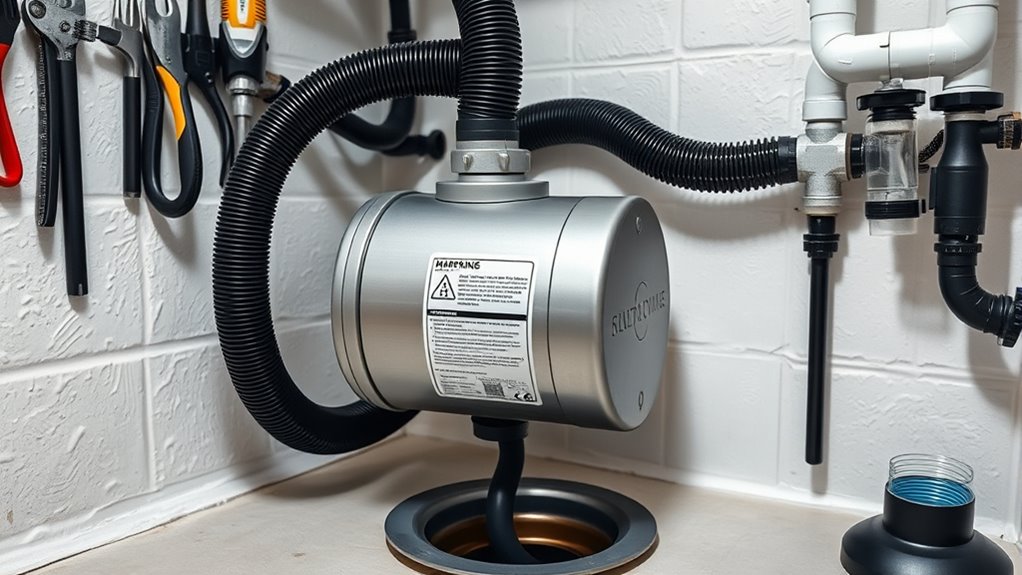
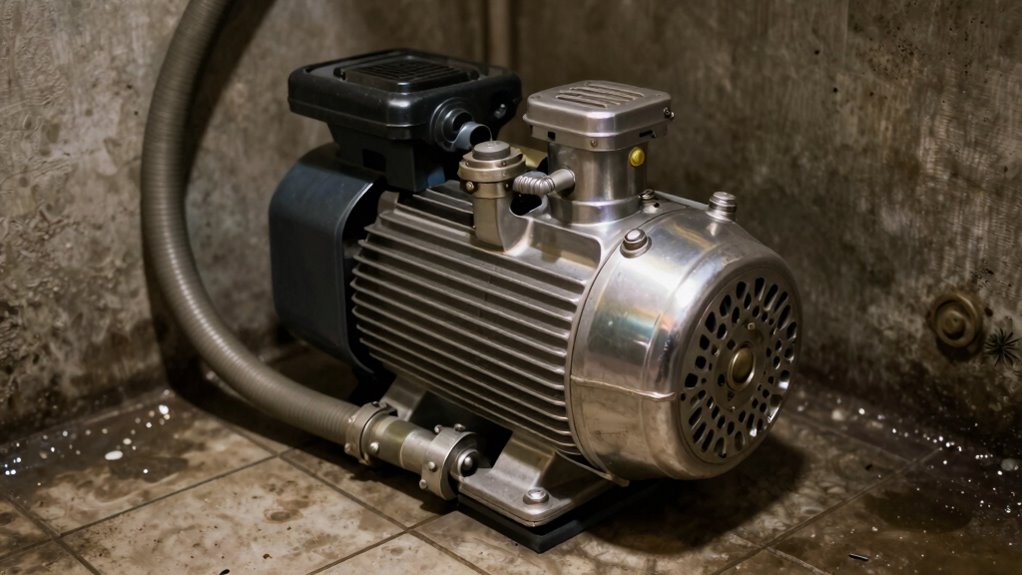
Have you ever wondered how wastewater from lower levels of your home gets to the main sewer line? It’s a good question, especially if your home has a basement bathroom or laundry area. Typically, a sewage ejector pump handles this task by lifting wastewater from below-grade fixtures and pushing it into the main sewer line. But understanding what can go down the drain and how to care for your pump can save you headaches and costly repairs.
First, it’s important to recognize that not everything should be flushed or poured into your sewage system. Solid objects like wipes, sanitary products, paper towels, or anything that doesn’t break down easily can clog your pump or damage it. Even if some items claim to be “flushable,” they often cause more harm than good. When it comes to greywater disposal—water from sinks, showers, or laundry—these are generally separate from the sewage system, but if you’re directing greywater into your septic or holding tank, you need to confirm that only appropriate substances go down those drains. Harsh chemicals, oils, or large quantities of hair can clog pipes or interfere with pump operation.
Pump maintenance is essential to keep your sewage ejector system functioning smoothly. Regular inspections can help catch problems early, such as leaks, strange noises, or sluggish operation. Make sure the float switch—the component that activates the pump—is free of debris and moves freely. Cleaning the sump basin periodically prevents buildup of sludge or solids that could impede the pump’s performance. Pump maintenance also involves ensuring your pump’s check valves are working correctly, so wastewater flows in the right direction without backflow or flooding. Additionally, understanding the system’s design principles can help troubleshoot issues and optimize performance.
Understanding what can’t go down the drain is just as important. Avoid pouring grease, cooking oils, or chemicals down sinks connected to the sewage system, as these substances can solidify or corrode components over time. Keep foreign objects out of the system altogether. Proper greywater disposal is equally significant, especially if you’re using a greywater system or septic tank; only safe, biodegradable substances should be used, and no solids or chemicals that could disrupt the biological processes.
sewage ejector pump maintenance kit
As an affiliate, we earn on qualifying purchases.
As an affiliate, we earn on qualifying purchases.
Frequently Asked Questions
Can I Install a Sewage Ejector Pump Outdoors?
You can install a sewage ejector pump outdoors, but you need to guarantee proper weather protection. Outdoor installation is possible if you choose a pump designed for harsh conditions and enclose it in a weatherproof housing. Make sure to protect it from freezing temperatures and moisture, and provide adequate drainage and ventilation. This setup helps prevent damage and ensures reliable operation, even in challenging weather conditions.
How Often Should I Perform Maintenance on My Ejector Pump?
You should perform maintenance on your ejector pump at least once a year to guarantee its longevity and peak performance. Following a regular maintenance schedule helps extend the pump lifespan and prevents unexpected failures. Check for any debris, listen for unusual noises, and inspect the float switch. Promptly address any issues you find to keep your pump running smoothly and avoid costly repairs down the line.
What Are Signs My Ejector Pump Needs Replacing?
When your pump starts making strange noises or you notice unusual odors wafting from your drains, it’s a clear sign you might need a new one. If the pump is noisier than a rock concert or if foul smells linger even after cleaning, don’t ignore it. These signs point to impending failure, so act fast. Otherwise, you risk flooding your home or facing costly repairs—trust me, your nose and wallet will thank you.
Can I Use Chemical Drain Cleaners With an Ejector Pump?
You shouldn’t use chemical drain cleaners with your ejector pump because they can damage the pump or cause drain blockages. These cleaners often contain harsh chemicals that may corrode the pump’s components or harm the sewage system. Instead, try using natural or enzyme-based solutions to clear minor clogs. Regular maintenance and professional help are safer options to keep your ejector pump functioning properly without risking damage.
Is It Possible to Upgrade to a More Powerful Sewage Pump Later?
Sometimes, your needs change just as life surprises you. Upgrading to a more powerful sewage pump is definitely feasible, but it depends on your current system’s pump capacity and available upgrade options. You’ll want to check compatibility with existing plumbing and power supply. Consulting a professional ensures a smooth upgrade, giving you confidence that your system will handle increased demands without issues.
As an affiliate, we earn on qualifying purchases.
Conclusion
Remember, your sewage ejector pump is like the gatekeeper of your home’s plumbing, quietly working behind the scenes. Keep it happy by knowing what can and can’t go down the drain—imagine tiny, hardworking allies, preventing clogs and backups. Treat your pump right, and it’ll keep your home’s underground world flowing smoothly, no matter what you toss in. With a little care, you’ll never see the mess that can happen when the wrong things slip past the gatekeeper.
As an affiliate, we earn on qualifying purchases.
As an affiliate, we earn on qualifying purchases.