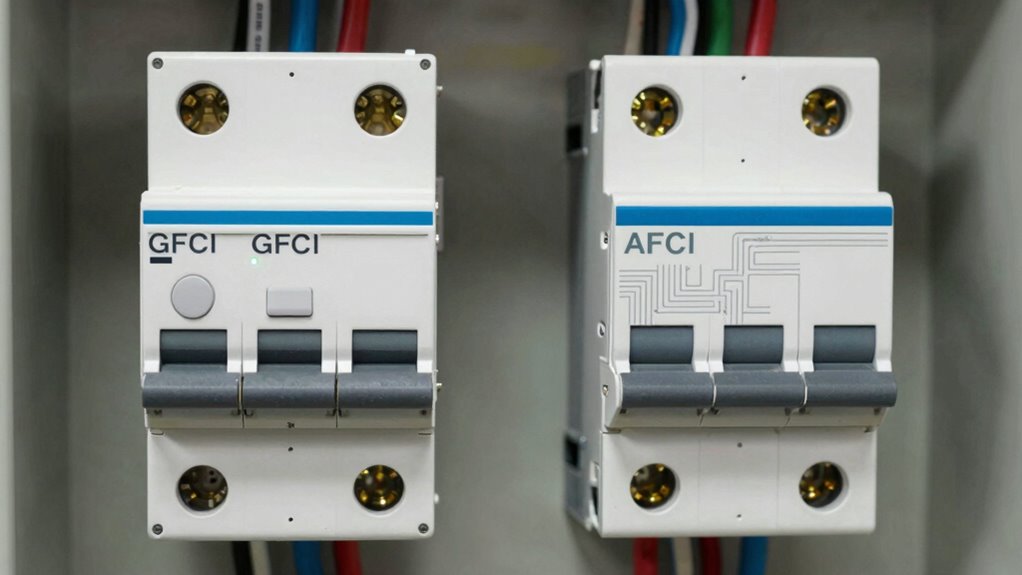

GFCI and AFCI breakers protect your home from different dangers: GFCIs prevent electric shocks by detecting ground faults caused by water or damaged wiring, while AFCIs reduce fire risks by identifying arc faults from faulty or aging wiring. GFCIs trip instantly for safety, and AFCIs protect before an electrical fire starts. Knowing their roles helps you choose the right safety devices—keep going to discover more about how these breakers work together to keep you safe.
Key Takeaways
- GFCI breakers protect against ground faults that cause electric shocks, especially in moist environments like bathrooms and kitchens.
- AFCI breakers detect arc faults, preventing electrical fires caused by damaged wiring or deteriorating circuits.
- GFCIs trip instantly on imbalance detection (4-6 milliamps), while AFCIs monitor for dangerous arcing patterns over time.
- Installing GFCIs in water-prone areas and AFCIs in living spaces provides comprehensive electrical safety.
- Both breaker types use advanced sensing technology to prevent different electrical disasters effectively.
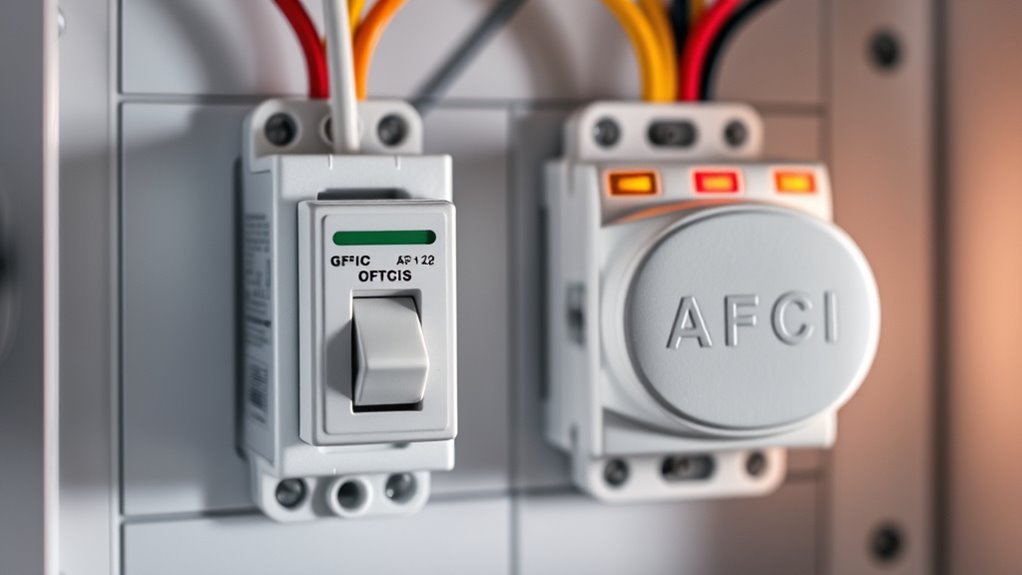
When it comes to protecting your home from electrical hazards, understanding the differences between GFCI and AFCI outlets is crucial. Both are designed to prevent fires and shocks, but they target different risks. GFCI outlets are primarily focused on detecting ground faults, which occur when electricity takes an unintended path to the ground, potentially causing shocks. These outlets monitor the flow of current between the hot and neutral wires and trip instantly if they sense any imbalance, typically as low as 4 to 6 milliamps. This quick response helps prevent severe electric shocks, especially in areas where water and electricity might come into contact, like bathrooms, kitchens, and outdoor spaces. When you use a GFCI, you’re fundamentally creating a safety net that cuts power the moment it detects a ground fault, reducing the risk of injury or electrocution. AFCI outlets, on the other hand, are designed to detect arc faults—small, unintended sparks that can occur when wiring is damaged, loose, or deteriorating over time. These arcs can generate enough heat to ignite nearby combustibles, leading to electrical fires. Arc faults are often silent and hard to detect visually, but AFCIs continuously monitor the electrical circuit for signs of arcing. When an arc fault is detected, the AFCI trips, shutting off power to prevent a fire from starting. This detection relies on sophisticated arc fault detection technology, which analyzes the electrical waveforms for patterns consistent with dangerous arcing. By doing so, AFCIs protect your home from fires caused by faulty wiring, aging circuits, or damaged cords, especially in bedrooms, living rooms, and other living spaces. Both GFCI and AFCI devices incorporate advanced sensing technology that helps identify specific electrical hazards before they escalate. While both GFCI and AFCI outlets serve critical safety functions, they work in different ways to address separate hazards. GFCIs focus on preventing shocks from ground faults, which are especially dangerous in moist environments, while AFCIs aim to prevent fires caused by arc faults, often stemming from wiring issues or wear and tear. You might find that many modern electrical panels and outlets incorporate both safety features into a single device, offering all-encompassing protection. Knowing which outlet to install where can make a significant difference in safeguarding your home. Ultimately, understanding the role of ground fault detection and arc fault detection helps you make informed decisions, ensuring your household is protected against common electrical dangers.
As an affiliate, we earn on qualifying purchases.
Frequently Asked Questions
Can GFCI and AFCI Breakers Be Used Together Safely?
Yes, you can use GFCI and AFCI breakers together safely if your electrical system supports their compatibility. Just make sure they are properly installed to maintain electrical compatibility and ensure circuit coordination. Always follow the manufacturer’s instructions and consult a licensed electrician if you’re unsure. Proper installation prevents electrical issues, enhances safety, and guarantees both types of breakers work effectively to protect your home from different hazards.
Do GFCI and AFCI Breakers Require Different Installation Procedures?
Think of installing GFCI and AFCI breakers as tuning two different instruments in an orchestra. You’ll find distinct installation differences and wiring considerations for each. GFCI breakers focus on detecting ground faults, requiring specific wiring for safety, while AFCI breakers protect against arc faults, often involving different setup steps. Always follow the manufacturer’s instructions carefully, ensuring proper wiring to maintain safety and compliance.
Are GFCI and AFCI Breakers Compatible With All Electrical Panels?
You need to check your electrical panel’s compatibility before installing GFCI or AFCI breakers, as not all panels support these types. Some panels require specific breaker models, and the installation procedures can vary depending on the panel design. Always consult your panel’s manufacturer guidelines or a licensed electrician to guarantee proper breaker installation procedures and compatibility, preventing potential electrical issues or safety hazards.
How Often Should GFCI and AFCI Breakers Be Tested?
Did you know that testing GFCI and AFCI breakers monthly can prevent up to 80% of electrical hazards? You should test these breakers monthly to verify proper functioning. Follow simple maintenance tips like pressing the test button and confirming the breaker trips, then reset it. Regular testing keeps your safety devices reliable, reduces the risk of electrical fires or shocks, and helps you stay proactive in home safety.
Do GFCI and AFCI Breakers Interfere With Each Other’s Operation?
GFCI and AFCI breakers generally don’t interfere with each other’s operation because they serve different safety functions and are designed to work within circuit compatibility standards. However, you should always check your panel’s specifications and local safety standards before installing both types. Proper installation guarantees they operate effectively without causing false trips, maintaining safety and code compliance. If unsure, consult a licensed electrician for guidance.
AFCI circuit breaker for living room
As an affiliate, we earn on qualifying purchases.
As an affiliate, we earn on qualifying purchases.
Conclusion
Understanding the difference between GFCI and AFCI breakers helps you protect your home from different hazards. Did you know that electrical fires caused by wiring issues account for nearly 70% of home fires? Installing the right breaker can prevent such disasters and save lives. By choosing the correct breaker type, you’re taking an essential step toward a safer home. Stay informed, stay protected, and make certain your electrical system keeps your family safe every day.
As an affiliate, we earn on qualifying purchases.
ground fault circuit interrupter
As an affiliate, we earn on qualifying purchases.
As an affiliate, we earn on qualifying purchases.