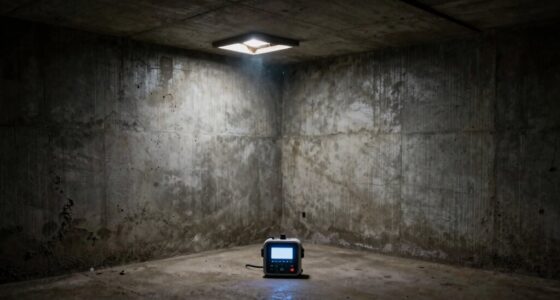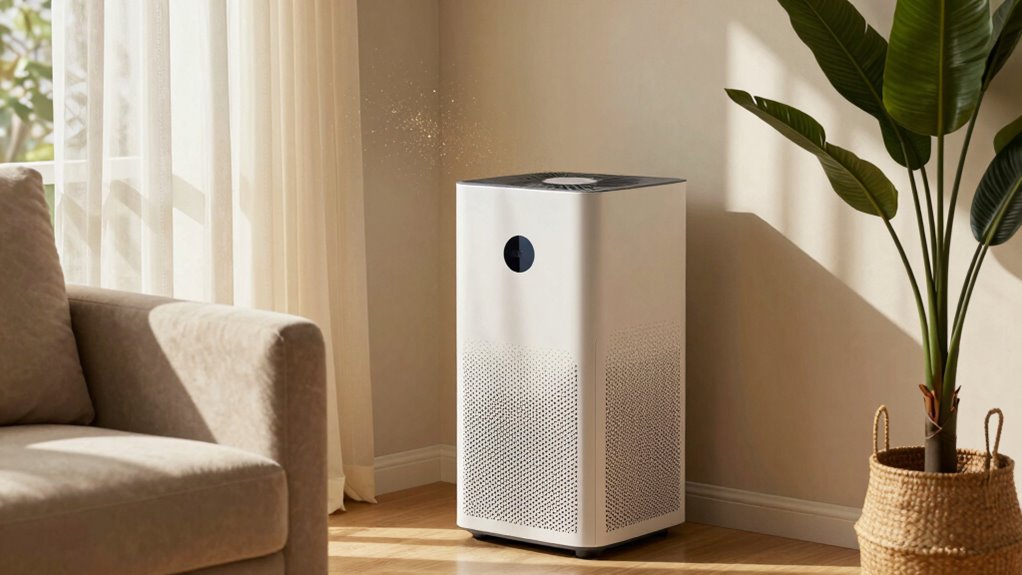
Placing your air purifier in a corner or tight space can seriously hinder its performance. Such locations block airflow, limiting the device’s ability to draw in polluted air and distribute clean air effectively. To get the best results, position it centrally in an open area, away from furniture or walls. Proper placement ensures ideal circulation and efficiency. Keep exploring how to boost your air purifier’s performance for a healthier indoor environment.
Key Takeaways
- Placing an air purifier in a corner restricts airflow, limiting its ability to effectively filter the entire room.
- Corners cause dead zones where air circulation is poor, reducing purification efficiency.
- Obstructed airflow from corner placement hampers the device’s ability to draw in dirty air and distribute clean air.
- Corner placement increases the risk of the purifier overheating or working inefficiently due to limited ventilation.
- Proper central placement ensures maximum air circulation and optimal performance of the air purifier.
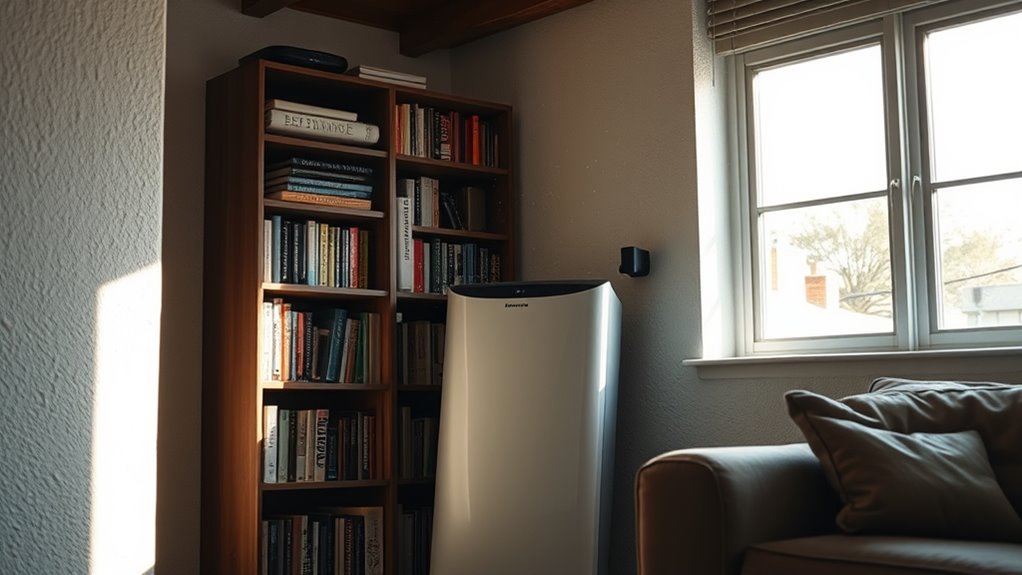
Where’s the best spot to place your air purifier for maximum effectiveness? The answer isn’t always obvious, but knowing where to position it can make a significant difference in how well it clears out pollutants. One common mistake is placing the purifier in a corner or against a wall, which can create ventilation challenges that severely limit its efficiency. When an air purifier is tucked away in a corner, the airflow around it becomes restricted, preventing it from drawing in air from the entire room. This means it’s only filtering a small portion of the air, leaving the rest still contaminated. To optimize purifier efficiency, you want to position it where air can circulate freely around it, ideally in a central location where it can access all parts of the room.
Many people underestimate how much ventilation challenges impact air purifier performance. If the purifier is placed near large furniture, curtains, or in tight spaces, the airflow gets obstructed, reducing its ability to pull in dirty air and distribute clean air effectively. Poor placement can create dead zones where air isn’t cycled through the purifier properly, making it less effective at improving indoor air quality. Conversely, placing the purifier in an open, unobstructed area allows for better air intake and exhaust, ensuring the device operates at peak efficiency. Remember, the goal is to maximize the circulation of indoor air so that your purifier can do its job without unnecessary strain. Proper air circulation is essential for maintaining healthy indoor environments and extending the lifespan of your device.
Another point to think about is avoiding placement near sources of pollution or airflow blockages, like windows that open frequently or vents that blow dust and debris into the room. These can interfere with the purifier’s ability to function efficiently, as it may constantly work against incoming pollutants or struggle to pull in sufficient air. Keep the device away from direct sunlight, heaters, or humidifiers, which can also affect its performance. By choosing a location that’s well-ventilated and free of obstructions, you allow the purifier to operate at its best, handling ventilation challenges effectively. The right placement not only boosts purifier efficiency but also extends the device’s lifespan, saving you money and effort in the long run.

Air Purifiers for Home Large Room, Cover Up to 2600 Ft² with Washable Filters, Powerful Turbo Mode, PM2.5 Air Quality Display, 22dB Sleep Mode, Air Cleaner for Pets Hair, Smoke, Odors, HAP607, White
𝐓𝐑𝐈𝐏𝐋𝐄 𝐈𝐍𝐓𝐀𝐊𝐄, 𝐖𝐇𝐎𝐋𝐄-𝐑𝐎𝐎𝐌 𝐏𝐔𝐑𝐈𝐅𝐈𝐂𝐀𝐓𝐈𝐎𝐍: Featuring a front air inlet combined with wider dual-side air inlets, this air purifier…
As an affiliate, we earn on qualifying purchases.
As an affiliate, we earn on qualifying purchases.
Frequently Asked Questions
How Does Room Size Affect Purifier Placement?
Room size directly impacts your purifier placement since larger spaces require strategic positioning to maximize efficiency. Larger rooms need you to contemplate room dimensions and airflow dynamics, ensuring the purifier isn’t placed in corners or blocked areas. For peak performance, position your purifier centrally or near sources of pollution, allowing air to circulate freely. Proper placement tailored to room size boosts purifier efficiency and maintains cleaner air throughout your space.
Can Placement Impact Energy Efficiency?
In the age of dial-up internet, proper placement does impact energy efficiency. You can optimize airflow and extend filter longevity by positioning your air purifier correctly, avoiding corners and obstructions. When placed in the right spot, it runs more efficiently, using less power and maintaining cleaner air longer. So, yes, thoughtful placement helps you save energy and keeps your air purifier functioning at peak performance.
Should Air Purifiers Be Placed Near Windows?
You should avoid placing air purifiers near windows because window proximity can disrupt airflow optimization. When placed too close, drafts or outdoor air can interfere with the purifier’s ability to effectively filter indoor air. Instead, position your purifier in a central location, away from windows, to maximize airflow and guarantee it captures airborne particles efficiently. This setup helps maintain cleaner air and improves overall performance.
How Often Should I Move My Air Purifier?
Your air purifier is your home’s health superhero, so don’t let it become lazy. You should move it every 3 to 6 months to guarantee ideal air purifier maintenance and keep air quality monitoring accurate. Regularly relocating it prevents dust buildup and stagnant zones, maintaining top performance. Keep an eye on air quality and adjust placement accordingly—this way, your purifier stays effective, and your indoor air remains fresh and clean.
Does Placement Influence Noise Levels?
Yes, placement strategies markedly influence noise disruption from your air purifier. If you place it too close to walls or in tight corners, the noise can amplify and become more disruptive. To minimize noise levels, position your purifier on a flat, open surface away from walls and in a central location. This helps reduce vibrations and sound transmission, ensuring quieter operation and more effective air purification.

Air Purifier Stand Compatible with Levoit Core 200S-P, Elevated Air Purifier Base Riser, Stable Floor Stand for Improved Airflow, Space-Saving Holder (Black)
Elevated Airflow Design: Raises your air purifier stand to improve air circulation and placement efficiency.
As an affiliate, we earn on qualifying purchases.
As an affiliate, we earn on qualifying purchases.
Conclusion
To get the most out of your air purifier, avoid placing it in the corner like a forgotten puzzle piece. Think of it as the heart of your home’s clean air; if it’s tucked away, the whole system struggles to beat strong. Position it where air flows freely, and you’ll see it work like a gust of fresh air—powerful, effective, and revitalizing your space effortlessly. Keep it central, and let it do its job like a well-oiled machine.

ECOSELF Air Purifiers for Home Large Room up to 1800 Ft², Air Purifiers for Bedroom 360° Air Intake with Smart Auto Mode, HEPA Air Purifier, Air Cleaner for Smoke PoIIen Pet Dander, HAP609
360° Air Intake for Faster Cleaning:The air purifier pulls in air from all directions more efficiently. Its 360°…
As an affiliate, we earn on qualifying purchases.
As an affiliate, we earn on qualifying purchases.

Air Purifiers for Home with H13 Quiet HEPA Filter Up to 1076 Ft² for Pet Hair, Odors, Pollen, Smoke, Compact Air Cleaner with 3 Speeds, Timer, Aroma Quiet 360°Intake Filter, White
Effortless Operation: Simplified control panel with intuitive design makes it easy to operate. No complicated setup—just one tap,…
As an affiliate, we earn on qualifying purchases.
As an affiliate, we earn on qualifying purchases.