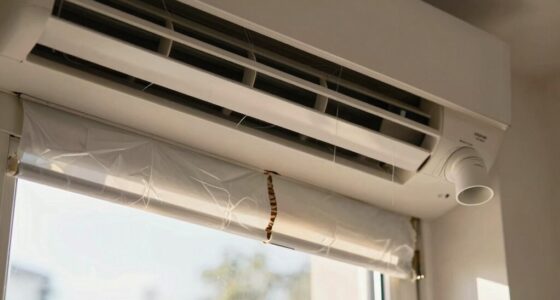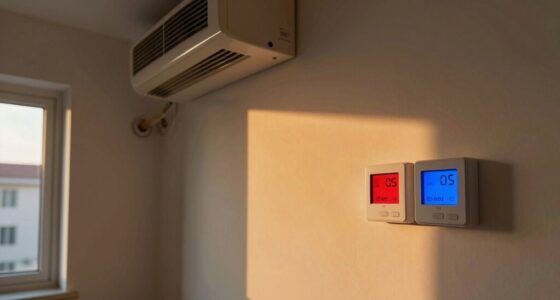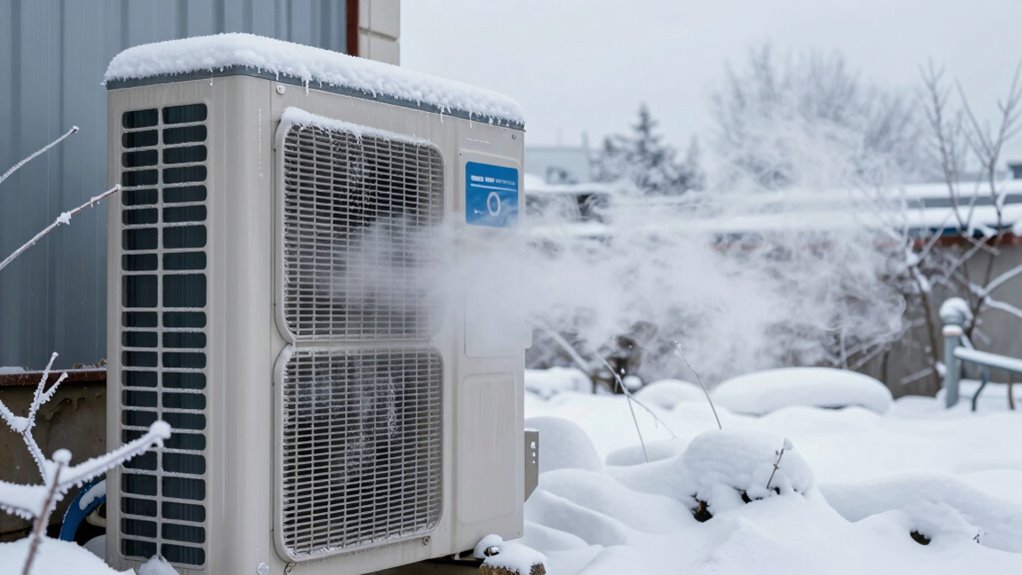

When the temperature drops below freezing, modern heat pumps still work effectively thanks to cold climate technology. They extract heat from the outside air and use advanced compressors and defrosting features to prevent icing. While efficiency might decrease a bit, they remain a reliable option for winter heating, especially when properly installed and maintained. If you want to understand how these systems keep working in harsh conditions, you’ll find more useful details ahead.
Key Takeaways
- Modern heat pumps can extract heat from outside air even below freezing temperatures using advanced refrigerant systems.
- Efficiency declines as outdoor temperatures drop, but cold climate models maintain reliable performance.
- Proper installation and regular maintenance prevent issues like refrigerant leaks and icing during cold weather.
- Technological advancements, including enhanced compressors and defrost cycles, improve winter operation.
- When paired with renewable energy sources, heat pumps remain an eco-friendly and effective heating option below freezing.
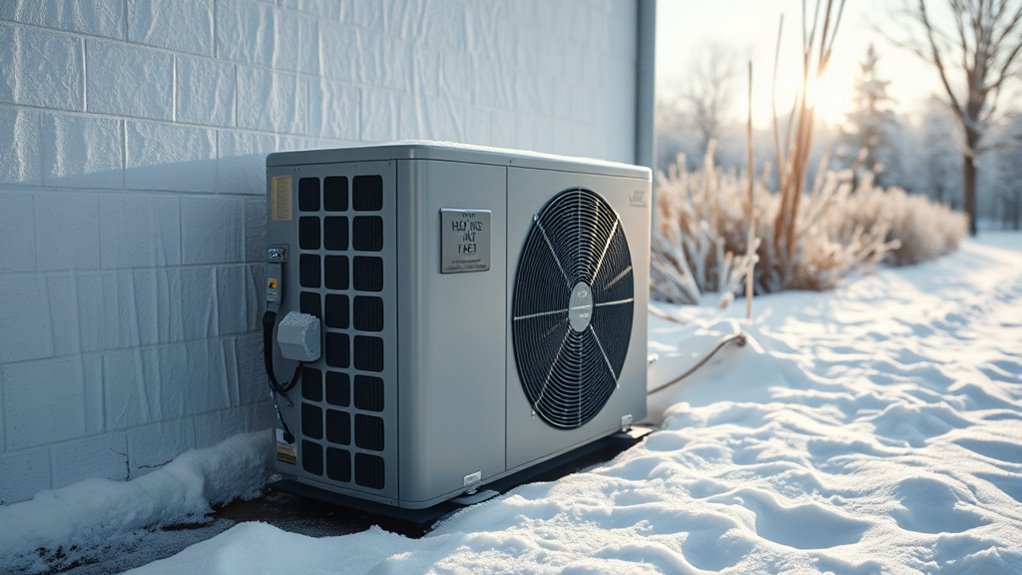
Heat pumps have become a popular choice for heating homes, even in cold weather, thanks to their efficiency and environmental benefits. They work by extracting heat from the outside air and transferring it inside to warm your home. While many worry about their performance in freezing temperatures, advances in technology have made them more dependable than ever. When temperatures drop below freezing, the heat pump’s refrigerant system still manages to draw warmth from the chilly air, although less efficiently. Modern units are equipped with advanced compressors and defrosting features that help them operate effectively even in harsh winter conditions. This means you can rely on your heat pump during cold months without needing to switch to traditional, less efficient heating methods.
Heat pumps reliably heat homes even in freezing temperatures with advanced technology and defrosting features.
As you consider the environmental impact of heating options, it’s worth noting that heat pumps support the shift toward renewable energy. Unlike traditional systems that burn fossil fuels, heat pumps use electricity, which in many regions is increasingly generated from renewable sources like wind and solar. This reduces your carbon footprint and helps combat climate change. However, it’s important to acknowledge the broader environmental context. The increased demand for electricity to power heat pumps can contribute to deforestation impact if the energy isn’t sourced sustainably. Deforestation impacts local ecosystems and releases stored carbon, undermining some of the environmental benefits of switching to renewable energy. To truly maximize the eco-friendly potential of heat pumps, you should ensure that your electricity comes from renewable sources, further reducing reliance on fossil fuels and minimizing deforestation impact.
In very cold weather, the efficiency of heat pumps can decline, but they still provide a viable alternative to oil or electric resistance heating. Many models are designed with cold climate capabilities, meaning they can operate efficiently down to temperatures well below freezing. The key is choosing a unit suited for your climate and ensuring proper installation and maintenance. Regular servicing keeps the system running smoothly and helps prevent issues caused by extreme cold, such as refrigerant leaks or icing on the outdoor coil. Despite the challenges posed by freezing temperatures, heat pumps continue to prove their worth by providing consistent, eco-conscious heating even in the coldest months. Additionally, advancements in cold climate technology have significantly improved their performance in harsh conditions.
Ultimately, your decision to use a heat pump in winter hinges on understanding its capabilities and environmental impact. With technological improvements, they perform well below freezing, supporting renewable energy use while helping reduce deforestation impact. When paired with clean energy sources, heat pumps can be an efficient, sustainable way to heat your home year-round, making them a smart choice for environmentally conscious homeowners looking for reliable winter warmth.
As an affiliate, we earn on qualifying purchases.
Frequently Asked Questions
Can Heat Pumps Operate Efficiently Below -20°F?
Heat pumps can struggle with efficiency concerns below -20°F, as their ability to extract heat from the cold air diminishes. You might notice a drop in performance and increased energy use. System durability also becomes a concern because prolonged exposure to extreme cold can cause wear and tear. To guarantee reliable heating, consider supplemental systems or models designed specifically for very low temperatures, which help maintain efficiency and extend system lifespan.
Do Cold Weather Conditions Cause More Wear and Tear?
Cold weather doesn’t necessarily cause more wear and tear, but it does increase corrosion risk and component fatigue. You might notice your heat pump working harder, leading to more stress on parts. This extra effort can accelerate deterioration over time, especially if maintenance isn’t consistent. While modern units are designed for cold climates, you should still monitor for signs of wear, ensuring longevity and efficient operation in harsh conditions.
Are There Specific Models Designed for Extremely Low Temperatures?
Yes, there are specialized models designed for cold climates. These heat pumps are built to operate efficiently even below freezing temperatures, ensuring you stay warm during harsh winters. When shopping for a heat pump, look for units labeled for cold climate use. They often feature enhanced compressors and refrigerants that perform well in low temperatures, giving you reliable heating without extra strain on the system.
How Often Should I Schedule Maintenance During Winter?
Think of your heat pump as a trusted friend braving winter’s chill—you need to check in regularly. During winter, you should schedule a maintenance schedule with seasonal inspections every 6 to 12 months, ideally before and after the coldest months. Frequent checkups guarantee your system runs smoothly through freezing temperatures, catching issues early and keeping your home cozy. Don’t wait for problems to snowball—stay proactive.
Can a Heat Pump Be Used as a Primary Heating Source in Cold Climates?
Yes, you can use a heat pump as your primary heating source in cold climates. Modern models are designed to provide reliable indoor comfort even below freezing, efficiently utilizing alternative energy sources. To guarantee peak performance, regular maintenance is key, especially during winter. With proper care, a heat pump can effectively maintain warm indoor temperatures, reducing your reliance on traditional heating methods and supporting sustainable, energy-efficient living.
As an affiliate, we earn on qualifying purchases.
Conclusion
Think of a heat pump in cold weather as a brave explorer venturing into icy territory. Though the cold challenges its journey, it still finds ways to bring warmth back to your home. Remember, even in freezing conditions, it’s resilient and resourceful—not unbreakable. Embrace its strengths and limitations, just like an explorer respects the harsh environment. With patience and understanding, you can trust your heat pump to keep you warm, no matter how cold it gets outside.
energy efficient heat pump for winter
As an affiliate, we earn on qualifying purchases.
As an affiliate, we earn on qualifying purchases.
heat pump for below freezing temperatures
As an affiliate, we earn on qualifying purchases.
As an affiliate, we earn on qualifying purchases.