
To size your sump pump correctly, you need to match the head height, flow rate, and pit size to handle heavy rainfalls and prevent flooding. Measure the vertical lift from the sump basin to your discharge point, ensuring your pump can reach that height effectively. Check that the flow rate matches your water inflow volume, and size the pit to prevent false triggers and wear. Understanding these factors helps you choose the right pump; continue to learn more.
Key Takeaways
- Measure the total head height from the sump basin to the discharge point, adding safety margin for pump capacity.
- Select a pump with sufficient flow rate (GPM) to handle peak water inflow during storms.
- Ensure the pump’s head height matches or exceeds the required vertical lift for effective water removal.
- Properly size the sump pit to accommodate the pump and float switch, minimizing false triggers and cycling.
- Position the float switch to detect rising water levels accurately, ensuring timely activation without false triggers.

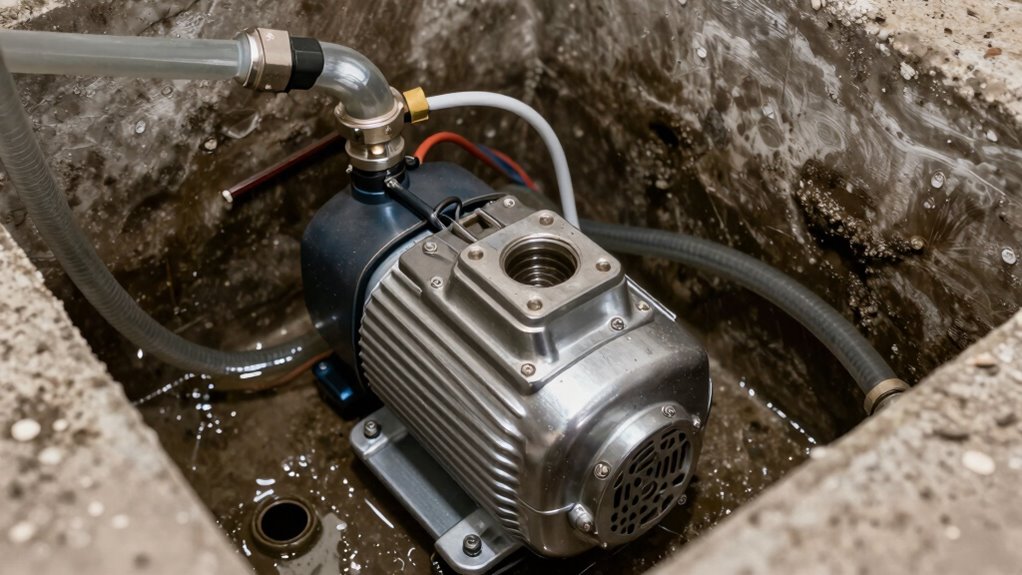
Choosing the right sump pump size is essential to protect your basement from flooding and water damage. One of the key components in this setup is the float switch, which turns the pump on and off based on water level. Ensuring the float switch functions properly means selecting a sump pump that matches your water inflow and the height it needs to lift water. If the float switch isn’t compatible with your pump or water volume, it could cause the pump to cycle improperly, risking flooding or unnecessary wear. Proper electrical wiring is equally crucial; your sump pump must be wired correctly to avoid electrical hazards and ensure reliable operation. When installing or replacing a pump, double-check that the wiring is secure and meets local electrical codes, reducing the risk of shorts or failures that could leave your basement vulnerable. Additionally, selecting a pump with the appropriate float switch compatibility ensures smooth operation and prevents false triggers. Understanding head height, or vertical lift, is critical when sizing your sump pump. Head height refers to how high the pump can push water vertically from the sump pit to the discharge point. If your home’s plumbing or yard elevation requires lifting water more than your pump’s capacity, flooding could occur. Measure the total height from the sump basin to the discharge point, then add a safety margin. The pump you choose should comfortably handle this head height, ensuring it can evacuate water efficiently during heavy rains. Flow rate, measured in gallons per minute (GPM), indicates how much water the pump can move. A pump with a higher flow rate can handle larger volumes, which is especially important if your area experiences frequent or intense storms. Be mindful of both the flow rate and the head height, as a pump with a high flow rate but insufficient head height won’t perform effectively. The pit trap, or sump basin, also influences pump sizing. If your sump pit is too small or irregularly shaped, it may restrict water flow and cause the pump to work harder or cycle more frequently. A properly sized pit allows water to collect and drain smoothly. When considering flow and head height, factor in the size of your sump pit to prevent overflow and reduce wear on the pump. Additionally, the placement of the float switch within the sump pit matters. It should be positioned where it can detect rising water levels promptly without false triggers caused by debris or fluctuating water levels. When all these elements—float switch, electrical wiring, head height, flow rate, and sump pit size—are properly matched, your sump pump can operate reliably, protecting your basement from water damage efficiently and safely.

Aquastrong Sump Pump 1 HP 4500 GPH Submersible Water Pump Thermoplastic Portable Utility Pump High Flow Water Removal for Swimming Pool Garden Pond Basement Window Wells with 10ft Long Power Cord
Efficient Sump Pump: Aquastrong sump pump with 1HP powerful motor. Draining water up to 4500GPH Per Hour( 75…
As an affiliate, we earn on qualifying purchases.
As an affiliate, we earn on qualifying purchases.
Frequently Asked Questions
How Often Should I Test My Sump Pump?
You should test your sump pump at least once every three months to guarantee it’s working properly. Follow a regular maintenance schedule that includes checking the power source, float switch, and discharge pipe. During testing, pour water into the pit to see if the pump activates smoothly. More frequent testing, especially before heavy rain seasons, can help prevent unexpected failures and protect your basement from flooding.
What Are Signs of a Failing Sump Pump?
You’ll notice alarm signs like strange noises, frequent cycling, or the pump running constantly, which indicate failure. Water pooling around your basement or a lack of response during heavy rain also signals trouble. To prevent emergencies, follow maintenance tips such as testing your pump regularly and cleaning the pit. Addressing these signs early helps guarantee your sump pump remains dependable and safeguards your home from flooding.
Can I Upgrade My Sump Pump Later?
Yes, you can upgrade your sump pump later. When doing so, consider the pump capacity to handle increased water flow and make certain it matches your needs. Check the power requirements to confirm your electrical system can support the new pump. Upgrading allows you to improve performance, especially if your household experiences more water or your current pump is failing. Just make sure to select a pump compatible with your sump basin.
Is a Battery Backup Necessary?
Yes, a battery backup is necessary because it maintains your sump pump running during power outages. Without it, your pump won’t operate if the power goes out, risking flooding and water damage. Installing a battery backup ensures continuous protection, especially in severe storms or prolonged outages. It’s a smart investment to safeguard your basement and property, giving you peace of mind knowing your sump pump will work when you need it most.
How Does Temperature Affect Sump Pump Performance?
Temperature impacts your sump pump’s performance by affecting its efficiency. Cold temperatures can cause the pump’s motor to slow down or freeze, leading to potential failure during heavy rain or flooding. Conversely, high temperatures might strain the motor, causing overheating. To guarantee reliable operation, you should monitor temperature fluctuations and consider a pump with a motor designed to handle varying conditions, maintaining ideal efficiency regardless of weather changes.

WAYNE CDU790-1/3 HP Submersible Cast Iron and Stainless Steel Sump Pump with Integrated Vertical Float Switch – Up to 4,600 Gallons Per Hour – Heavy Duty Basement Sump Pump, Black
Indoor Use Only – This 1/3 HP WAYNE basement sump pump is perfect to keep your basement dry…
As an affiliate, we earn on qualifying purchases.
As an affiliate, we earn on qualifying purchases.
Conclusion
Now that you understand how to size your sump pump based on head height, flow, and pit trap, you’re ready to make an informed choice. Remember, choosing the right pump isn’t just about specifications—it’s about safeguarding your home from water damage. So, are you prepared to prevent flooding and keep your basement dry? With the right knowledge, you can ensure your sump pump works efficiently when it matters most.

Westinghouse Sump Pump Battery Backup – 12V 75Ah Maintenance-Free AGM Sealed Lead Acid Battery for Basement Sump Pump Backup Systems
Reliable Sump Pump Backup Power – 12V 75Ah AGM battery delivers dependable emergency power during outages to help…
As an affiliate, we earn on qualifying purchases.
As an affiliate, we earn on qualifying purchases.

WAYNE CDU980E 3/4 HP Submersible Sump Pump – Cast Iron & Stainless Steel, Vertical Float Switch, 5,490 GPH, 5-Year Warranty
High-Capacity 3/4 HP Motor: Pumps up to 5,490 gallons per hour for reliable basement water removal during heavy…
As an affiliate, we earn on qualifying purchases.
As an affiliate, we earn on qualifying purchases.