
One of the most overlooked sump pump details is ensuring the discharge pipe is clear, secure, and positioned correctly away from your foundation. Many homeowners forget to check for blockages or leaks until heavy storms hit, risking backups and flooding. Regularly inspecting and maintaining the piping, testing the pump, and confirming proper connections can make all the difference. Keep these points in mind, and you’ll be surprised what you might be missing until the next big storm.

Prime made for students and young adults
- Fast, free delivery for dorm and study essentials
- Prime Video and Amazon Music included
- Member-only deals
Key Takeaways
- Discharge pipe connections often go unchecked, risking leaks or disconnections during heavy rainfall.
- The float switch’s proper operation may be overlooked until the pump fails in a storm.
- Drainage system obstructions can cause backups only evident during intense rain.
- Foundation cracks or vulnerabilities are frequently missed until water intrusion occurs.
- Regular testing of the sump pump’s function is often neglected until storm conditions expose failures.
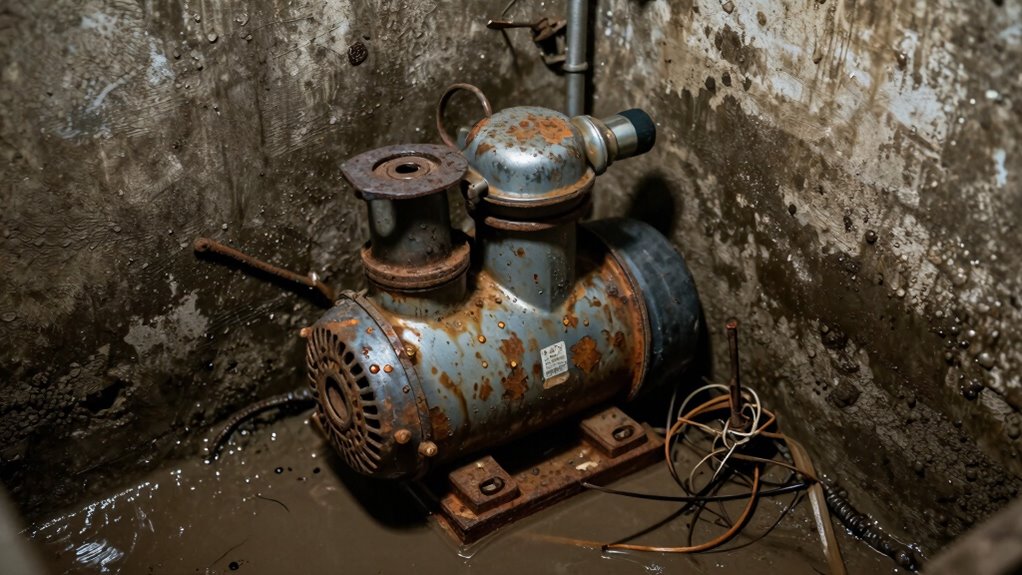
When heavy rains arrive, many homeowners realize too late that their sump pump isn’t prepared to handle the deluge. You might have relied on it during past storms, but if you haven’t checked its condition recently, you could be in for a surprise. One critical aspect often overlooked until the storm hits is the connection between your sump pump and your drainage system. If either isn’t functioning properly, water can quickly back up, leading to flooding and costly repairs.
Before heavy rain is forecasted, it’s essential to perform a foundation inspection around your home. Cracks or gaps in the foundation can allow water to seep in, overwhelming your sump pump. By inspecting your foundation, you can identify vulnerabilities that might need sealing or reinforcement, reducing the load on your sump system during a storm. Remember, a well-maintained foundation is the first line of defense against water intrusion.
Inspect your foundation before storms to prevent water seepage and reduce sump pump stress.
Equally important is your drainage system—specifically, the piping and channels that direct water away from your home’s foundation and sump pump. Over time, debris, dirt, or even tree roots can clog these pathways, impeding water flow. During a heavy rain, this can cause water to pool around your foundation or back up into your sump pit. Regularly clearing out leaves, mud, and obstructions ensures your drainage system remains unobstructed, allowing water to flow seamlessly away from your home. Installing proper drainage components can further enhance water management during storms.
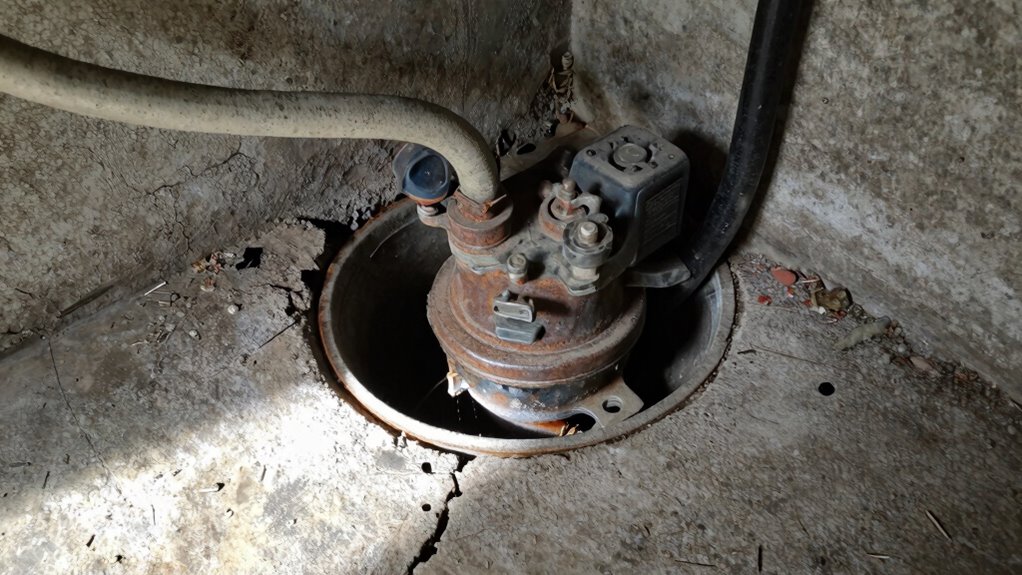
Your sump pump’s effectiveness depends on its ability to activate when needed. Testing it periodically is a simple step that can save you from disaster. Pour water into the sump pit to see if the pump kicks on and drains properly. If it doesn’t, you may need to replace the float switch or the entire unit. Also, check the discharge pipe to confirm that it’s free of leaks or blockages, and that water is being expelled far enough away from your foundation. Regularly inspecting and maintaining your drainage system helps prevent potential backups during heavy rainfall. Ensuring that your discharge piping is correctly installed and functioning properly can make all the difference during a storm.
Don’t forget to check the connection points between your sump pump and the drainage system. Loose fittings or damaged pipes can cause leaks or backups. Ensuring these connections are secure and intact is vital for a reliable system. When heavy rains arrive, you want to be confident that your sump pump and drainage system work together smoothly. Taking these proactive steps now means you won’t be caught off guard when the next storm hits. Proper maintenance and inspections are your best defense against basement flooding and water damage. Regular drainage system maintenance can prevent costly issues and keep your home safe during storms.
sump pump discharge pipe extension
As an affiliate, we earn on qualifying purchases.
As an affiliate, we earn on qualifying purchases.
Frequently Asked Questions
How Often Should I Test My Sump Pump?
You should test your sump pump monthly to make certain it’s working properly, especially if it has an emergency backup system. During testing, pour water into the sump pit to see if the pump activates and clears water efficiently. Regular testing during your sump pump installation setup helps spot potential issues early, giving you peace of mind during storms. Don’t forget to check the backup system to make sure it’s ready when needed most.
What Are Signs My Sump Pump Is Failing?
You’ll notice signs your sump pump is failing if it doesn’t activate during heavy rain, makes strange noises, or runs constantly. During a power outage, backup power becomes essential, so make sure your backup pump or battery backup is functional. Also, check that your pump installation is secure and clear of debris. Regular testing and maintenance help catch issues early, preventing flooding when storms hit unexpectedly.
Can a Sump Pump Handle Heavy, Continuous Rain?
Can your sump pump handle heavy, continuous rain? It might not if it’s not built for storm preparedness. During relentless storms, a sump pump with a backup power source is vital to prevent flooding when main power fails. While some pumps can manage heavy rain, prolonged downpours can overwhelm even the best models. Regular maintenance and installing a backup system guarantee your sump pump keeps working during the worst weather.
What Maintenance Does a Sump Pump Require?
You need to regularly test your sump pump by pouring water into the pit to guarantee it activates properly. Check that the power source is reliable, especially during storms, and consider installing a battery backup to keep it running if the main power fails. Clean the sump pit and the pump’s inlet screen monthly to prevent clogs, and replace the battery backup every few years to maintain peak performance.
How Do I Prevent Debris From Clogging the Sump Pump?
To prevent debris from clogging your sump pump, you need to focus on debris prevention and sump pump filters. Regularly clear the area around your sump pit, removing leaves and dirt before they enter. Install a sturdy sump pump filter to catch debris before it reaches the impeller. Check and clean these filters monthly, especially before storm seasons, to maintain peak function and avoid unexpected failures during heavy rains.
sump pump float switch replacement
As an affiliate, we earn on qualifying purchases.
As an affiliate, we earn on qualifying purchases.
Conclusion
Don’t delay or dismiss this vital detail. Diligently double-check your sump pump’s discharge drain, drain tile, and backup system before storms surge. Small steps save significant stress, preventing flooding frustration and water woes. By paying proper attention to this pump part, you protect your property, peace, and pocket. Prepare proactively, prevent problematic pitfalls, and power through storm season with confidence and calm. Remember, a simple step today stops a stressful spill tomorrow.
basement foundation crack repair kit
As an affiliate, we earn on qualifying purchases.
As an affiliate, we earn on qualifying purchases.
As an affiliate, we earn on qualifying purchases.
Halloween Picks
halloween
As an affiliate, we earn on qualifying purchases.