
Smart energy monitoring breaker sensors are key tools for anyone looking to gain detailed insights into their home’s power usage. The best overall pick, Emporia Vue 3, offers comprehensive real-time data and easy integration. For those prioritizing compatibility, the Refoss Smart Home Energy Monitor with open API stands out, while the SIEMENS Inhab Smart Home Energy Monitor is excellent for larger circuits. The main tradeoffs involve balancing ease of use, compatibility, and cost. Keep reading to see how these options compare and which one suits your needs best.
Listen free for 30 days with Audible
Thousands of audiobooks and originals — cancel anytime.
Start your free trialAs an affiliate, we earn on qualifying purchases.
Key Takeaways
- Top picks balance detailed real-time data with ease of setup and integration.
- Compatibility with home automation platforms like Home Assistant influences choice significantly.
- Higher-priced models typically offer broader circuit coverage and advanced features.
- Open API and local control options appeal to tech-savvy users seeking privacy and customization.
- Tradeoffs often involve complexity versus affordability—more features usually mean a steeper learning curve.
| Emporia Vue 3 Home Energy Monitor – Real-Time Electricity Usage and Power Consumption Meter |  | Best Overall | Certification: UL Listed | Supported Systems: Single phase, single-split phase, 2-wire, 3-wire, 3-phase, 4-wire Wye | Sensors: Sixteen 50A branch sensors | VIEW ON AMAZON | See Our Full Breakdown |
| Smart Circuit Breaker with Energy Monitoring, Adjustable Voltage and Current Protection (1-63 Amp) |  | Best for Custom Protection | Brand: MARSTEK | Model: HF-00095 | Current Range: 1-63 Amp | VIEW ON AMAZON | See Our Full Breakdown |
| Emporia Vue 3 Home Energy Monitor – Real-Time Electricity Usage and Power Consumption Meter |  | Best for Solar and Net Metering | Certification: UL Listed | Supported Systems: Single phase, single-split phase, 2-wire, 3-wire, 3-phase, 4-wire Wye | Sensor Compatibility: Clamp-on sensors, additional 200A sensor sold separately | VIEW ON AMAZON | See Our Full Breakdown |
| Emporia Energy Monitor with 16 Sensors + 4 Smart Plugs Bundle |  | Best for Whole-Home Automation | Sensors: 16 | Smart Plugs: 4 | Compatibility: iOS, Android, Alexa | VIEW ON AMAZON | See Our Full Breakdown |
| SIEMENS Inhab Smart Home Energy Monitor with 16-50Amp Circuit Sensors and 200Amp Main Sensors |  | Best for Advanced Load Management | Circuit Sensors: 16-50Amp | Main Sensors: 2-200Amp | Compatibility: US and Canada | VIEW ON AMAZON | See Our Full Breakdown |
| Refoss Smart Home Energy Monitor with Open API, Home Assistant, No Cloud |  | Best Overall for Local Control and Solar Optimization | Model: EM16P | Control: Local Web UI, Open API, MQTT | Compatibility: Home Assistant, OpenClaw AI | VIEW ON AMAZON | See Our Full Breakdown |
| Smart Home Energy Monitor with 16 50A Circuit Sensors, Real-Time Power and Cost Tracking, Compatible with Home Assistant |  | Best for Multi-Circuit Monitoring & Easy Installation | Sensor Count: 16 | Sensor Current: 50A | Supported Voltages: 120/240VAC, 415Y/240VAC | VIEW ON AMAZON | See Our Full Breakdown |
| WiFi Home Energy Monitor with 3 80A CT Clamps |  | Best for Monitoring High-Power Circuits & Remote Control | Supported Voltage: AC 100–240V | Number of CT Clamps: 3 | Clamp Current: 80A | VIEW ON AMAZON | See Our Full Breakdown |
| Emporia Vue 3 Home Energy Monitor |  | Best for Expandability & Solar Compatibility | Certification: UL Listed, CE Listed | Installation: Circuit panel | Connectivity: 2.4 GHz Wi-Fi | VIEW ON AMAZON | See Our Full Breakdown |
| Meross Smart Home Energy Monitor, Real-Time Power & Cost Tracking |  | Best for User-Friendly Monitoring & Cost Analysis | Certification: ETL, UL 61010 | Compatibility: Most US homes | Max Main Circuits: 200A | VIEW ON AMAZON | See Our Full Breakdown |
| Smart WiFi Circuit Breaker, Adjustable 1-63A |  | Best Overall for Home Automation and Customization | Load Current Range: 1A to 63A | App Compatibility: Smart Life app | Features: Over-current, over-voltage, over-power alarms, real-time energy monitoring, automation | VIEW ON AMAZON | See Our Full Breakdown |
| Aeotec Home Energy Meter 8 – Smart Electricity Monitor with Z-Wave Long Range |  | Best for Smart Home Integration and Long-Range Monitoring | Model: Home Energy Meter 8 | Connectivity: Z-Wave Long Range | Sensor Capacity: 2x200A Clamp-On | VIEW ON AMAZON | See Our Full Breakdown |
| eMylo 63A Single-Phase WiFi Energy Meter with LCD & Leakage Protection |  | Best for Precise Monitoring and Safety Features | Current: up to 63A | Voltage: AC 80-400V | Connectivity: 2.4GHz WiFi | VIEW ON AMAZON | See Our Full Breakdown |
| Emporia Energy Monitoring Smart Plug, WiFi Smart Outlet with Timer, App Control, and Home Energy Monitoring |  | Best for Simple Appliance Monitoring and Control | Maximum Continuous Load: 10A | Peak Load: 15A for up to 1 hour/day | WiFi Frequency: 2.4GHz only | VIEW ON AMAZON | See Our Full Breakdown |
| smart energy monitoring breaker sensor | Connectivity |
|---|---|
| Emporia Vue 3 Home Energy Moni | 2.4 GHz WiFi |
| Smart Circuit Breaker with Ene | — |
| Emporia Vue 3 Home Energy Moni | 2.4 GHz Wi-Fi |
| Emporia Energy Monitor with 16 | — |
| SIEMENS Inhab Smart Home Energ | — |
| Refoss Smart Home Energy Monit | — |
| Smart Home Energy Monitor with | WiFi 2.4GHz, MQTT |
| WiFi Home Energy Monitor with | — |
| Emporia Vue 3 Home Energy Moni | 2.4 GHz Wi-Fi |
| Meross Smart Home Energy Monit | WiFi, Open API, Web Control |
| Smart WiFi Circuit Breaker | — |
| Aeotec Home Energy Meter 8 | Z-Wave Long Range |
| eMylo 63A Single-Phase WiFi En | 2.4GHz WiFi |
| Emporia Energy Monitoring Smar | — |
More Details on Our Top Picks
Emporia Vue 3 Home Energy Monitor – Real-Time Electricity Usage and Power Consumption Meter
The Emporia Vue 3 stands out for its comprehensive support of various electrical systems and its UL certification, making it a reliable choice for homeowners seeking detailed real-time energy data. Unlike the SIEMENS Inhab, which offers advanced circuit-level management, the Vue 3 excels in supporting multiple system types with a broader sensor array, though it requires WiFi for live updates and limits data retention to 7 days at 1-minute intervals. The Vue 3’s app integration facilitates automation and cost savings, but its dependency on WiFi and additional sensors for 3-phase systems can add complexity. It’s ideal for tech-savvy homeowners who want extensive system compatibility and safety assurance, but less suited for those seeking simple plug-and-play solutions.
Pros:- UL-certified for safety and reliability
- Supports multiple electrical system types
- Real-time energy monitoring with app control
- Includes sensors for critical appliance tracking
Cons:- Requires WiFi connection for real-time data
- Limited data retention for detailed intervals
Best for: Homeowners with complex electrical setups wanting detailed, reliable energy monitoring and automation
Not ideal for: Renters or those seeking simple, portable energy monitors without extensive wiring or sensor setup
- Certification:UL Listed
- Supported Systems:Single phase, single-split phase, 2-wire, 3-wire, 3-phase, 4-wire Wye
- Sensors:Sixteen 50A branch sensors
- Connectivity:2.4 GHz WiFi
- Data Retention:7 days (1-minute data)
- Warranty:1 year
Our verdict“This monitor is best suited for homeowners who prioritize system versatility and safety, despite needing WiFi and additional sensors.”
Smart Circuit Breaker with Energy Monitoring, Adjustable Voltage and Current Protection (1-63 Amp)
The MARSTEK HF-00095 offers tailored protection with adjustable overvoltage, undervoltage, and overcurrent settings, making it a strong choice for users who want to fine-tune their electrical safety. Compared to the Emporia Vue 3, which monitors energy at the panel level, this breaker provides direct control over individual circuits, but it’s limited to a current range of 1-63A, which may not suit larger loads. Its automatic recovery feature ensures minimal downtime after disturbances, yet configuring the settings correctly requires careful review of the manual. This pick is ideal for those with specific protection needs and a preference for in-panel control, but less appropriate for users unfamiliar with electrical systems or with higher current demands.
Pros:- Customizable protection settings for voltage and current
- Automatic recovery minimizes power interruption
- User-friendly setup with clear instructions
- Integrates directly into electrical panels
Cons:- Requires review of manual for optimal setup
- Limited to 1-63A current range
Best for: Homeowners or electricians needing customizable, circuit-level protection and monitoring
Not ideal for: Users seeking a simple, plug-and-play energy monitor without in-panel installation complexity
- Brand:MARSTEK
- Model:HF-00095
- Current Range:1-63 Amp
- Default Overvoltage Trip:140V
- Default Undervoltage Trip:90V
- Default Overcurrent Trip:63A
- Recovery Time:30 seconds
Our verdict“This breaker suits those wanting precise, adjustable circuit protection with automatic recovery, though it demands careful configuration and installation.”
Emporia Vue 3 Home Energy Monitor – Real-Time Electricity Usage and Power Consumption Meter
Like the original Vue 3, this version emphasizes solar compatibility, making it well-suited for homeowners with renewable energy systems. Its ability to support solar net metering and detailed real-time data distinguishes it from simpler monitors like the Meross Smart Home Energy Monitor. However, it shares the same WiFi dependency and data retention limits, which might frustrate users needing long-term detailed logs. The Vue 3’s flexibility with various electrical configurations and app management makes it attractive for eco-conscious users aiming to optimize solar energy use, but it may be overkill for those with straightforward energy needs or limited WiFi coverage.
Pros:- Supports solar net metering and detailed energy data
- UL-certified for safety
- Supports various electrical system types
- Remote management via app
Cons:- Requires Wi-Fi for real-time updates
- Additional sensors needed for 3-phase systems
- Limited to 7 days data retention at 1-minute intervals
Best for: Homeowners with solar panels seeking detailed solar net metering and energy management
Not ideal for: Renters or users without internet access or those desiring minimal setup
- Certification:UL Listed
- Supported Systems:Single phase, single-split phase, 2-wire, 3-wire, 3-phase, 4-wire Wye
- Sensor Compatibility:Clamp-on sensors, additional 200A sensor sold separately
- Connectivity:2.4 GHz Wi-Fi
- Data Retention:7 days (1-minute data)
- Warranty:1 year
Our verdict“Ideal for solar owners wanting detailed, remote energy management, despite the need for WiFi and extra sensors for complex systems.”
Emporia Energy Monitor with 16 Sensors + 4 Smart Plugs Bundle
This bundle combines extensive home energy tracking with remote device control, making it perfect for users who want a comprehensive view and automation. The 16 sensors provide detailed insights into different circuits, while the 4 smart plugs enable remote control of appliances—an advantage over standalone monitors like the Refoss Smart Home Energy Monitor. The setup can be complex, especially for those unfamiliar with smart home ecosystems or Wi-Fi configurations. While it offers robust features for automation enthusiasts, casual users might find the multiple components overwhelming. It’s best for those wanting detailed data plus control across their entire home, even if it involves more initial effort.
Pros:- Detailed real-time energy monitoring for entire home
- Includes smart plugs for remote control and automation
- Supports solar net metering
- Compatible with Alexa, iOS, and Android
Cons:- Setup can be complex for beginners
- Requires Wi-Fi and smart device integration
Best for: Homeowners seeking comprehensive energy insight with remote control and automation features
Not ideal for: Users who prefer simple, plug-and-play devices or lack smart home integration needs
- Sensors:16
- Smart Plugs:4
- Compatibility:iOS, Android, Alexa
- Supports Solar Net Metering:Yes
Our verdict“This bundle is best for users who want broad energy management and automation, accepting a more involved setup process.”
SIEMENS Inhab Smart Home Energy Monitor with 16-50Amp Circuit Sensors and 200Amp Main Sensors
The SIEMENS Inhab offers circuit-level monitoring with support for high-current sensors, making it suitable for detailed load and demand management. Compared with the Emporia Vue 3, which is more flexible for different system types, the Inhab emphasizes load shedding, peak demand control, and advanced energy features. Its installation in electrical panels and focus on detailed circuit data make it ideal for larger homes or those wanting granular control, but it’s limited to markets in the US and Canada. The absence of detailed user interface info and higher complexity could be barriers for casual users. This product makes sense for those with sophisticated energy management needs and proper electrical infrastructure.
Pros:- Real-time circuit-level monitoring via app
- Supports load shedding and demand control
- Supports high-current sensors (16-50A, 200A main)
- Standards-compliant (UL, CE)
Cons:- Installation in electrical panels required
- Limited to US and Canada markets
- Price and compatibility details are not specified
Best for: Energy-conscious homeowners or professionals seeking detailed circuit data and demand management
Not ideal for: Users in regions outside US/Canada or those needing simple, portable solutions
- Circuit Sensors:16-50Amp
- Main Sensors:2-200Amp
- Compatibility:US and Canada
- Standards:CE, UL
Our verdict“Best for advanced energy management and load control in homes with suitable electrical infrastructure, despite regional limitations and installation complexity.”
Refoss Smart Home Energy Monitor with Open API, Home Assistant, No Cloud
The Refoss EM16P stands out for its emphasis on local control and privacy, making it ideal for solar homeowners who want detailed circuit-level insights without relying on cloud services. Compared with the Emporia Vue 3, which offers broader system compatibility and expansion, the Refoss focuses on seamless integration with Home Assistant and OpenClaw AI, enabling automation that maximizes solar self-consumption. Its ±1% accuracy and extensive data storage support long-term analysis, but the installation may challenge those unfamiliar with electrical panels. The absence of Wi-Fi means it relies solely on local networks, which could limit remote access. This pick is perfect for tech-savvy users prioritizing privacy and automation, but less suited for those seeking plug-and-play solutions.
Pros:- Local control and data privacy with no cloud dependency
- Seamless integration with Home Assistant and OpenClaw AI
- High accuracy and extensive data storage for long-term insights
- Supports solar automation to maximize self-consumption
Cons:- Installation may require technical knowledge for circuit panel setup
- Limited to specific current ranges and loads
- No built-in Wi-Fi, relies on local network connections
Best for: Solar homeowners and automation enthusiasts who prioritize privacy and long-term data control
Not ideal for: Users seeking a simple, out-of-the-box monitoring system with cloud connectivity
- Model:EM16P
- Control:Local Web UI, Open API, MQTT
- Compatibility:Home Assistant, OpenClaw AI
- Accuracy:±1%
- Current Range:200A (main), 1-60A (branch)
- Data Storage:Up to 5 years
- Certification:ETL, UL 61010
- Warranty:2 years
Our verdict“This is an excellent choice for those who want detailed, privacy-focused energy monitoring with automation capabilities at the circuit level.”
Smart Home Energy Monitor with 16 50A Circuit Sensors, Real-Time Power and Cost Tracking, Compatible with Home Assistant
This energy monitor with 16 sensors offers broad circuit coverage, making it suitable for rental properties or shared apartments where multiple circuits need oversight. Compared with the Meross Energy Monitor, which supports fewer circuits and has a simpler setup, this device provides detailed real-time power and cost data across numerous circuits, with app integration supporting privacy through LAN-only mode. Its clamp-on sensors simplify installation, but setup can become complex if you lack familiarity with MQTT or Home Assistant configurations. The device focuses on privacy and local data handling, yet its limited compatibility with high-current or three-phase systems might restrict use in some homes. Best suited for users comfortable with network configuration who want comprehensive circuit monitoring.
Pros:- Easy clamp-on sensors facilitate quick installation
- Supports real-time energy and cost tracking for multiple circuits
- Privacy-focused with LAN-only mode and MQTT support
- Ideal for rental or shared apartments with multiple circuits
Cons:- Requires technical setup of MQTT server and Home Assistant
- Limited to single-phase or basic three-phase systems
- App and cloud features may involve some configuration effort
Best for: Renters or shared living spaces needing extensive, circuit-specific energy data with privacy controls
Not ideal for: Homeowners seeking a plug-and-play solution or those with complex three-phase systems
- Sensor Count:16
- Sensor Current:50A
- Supported Voltages:120/240VAC, 415Y/240VAC
- Connectivity:WiFi 2.4GHz, MQTT
- Warranty:1 year
- Monitoring:Real-time, historical data, app access
Our verdict“This monitor suits users needing extensive circuit-level data in a privacy-conscious package, especially in multi-tenant or rental settings.”
WiFi Home Energy Monitor with 3 80A CT Clamps
The WiFi Home Energy Monitor with 3 clamps shines when tracking high-power appliances or circuits, supporting real-time data and remote control via app. Compared with the Meross Energy Monitor, it offers fewer circuits but extends maximum clamp current to 80A, making it suitable for demanding appliances like HVAC or industrial tools. Its Wi-Fi connectivity facilitates remote access, but installation requires electrical wiring, which might necessitate a qualified electrician. Temperature alerts add value but depend on external setup. This device is best for users who need to monitor specific high-load circuits and control them remotely, though it’s less suitable for complex or multi-circuit home systems.
Pros:- Supports monitoring of multiple high-current circuits
- Real-time data and remote control via app
- Supports temperature alerts for safety monitoring
Cons:- Installation may require professional wiring
- Limited to circuits with high power loads
- External setup needed for temperature alerts
Best for: Homeowners or small businesses needing detailed monitoring of high-power appliances with remote control
Not ideal for: Users seeking comprehensive multi-circuit or solar energy integration without professional wiring
- Supported Voltage:AC 100–240V
- Number of CT Clamps:3
- Clamp Current:80A
- WiFi Frequency:2.4GHz
- Temperature Alert Threshold:50°C
- Relay Current:15A
Our verdict“Ideal for users focused on high-power circuit management with remote control, but less suited for broad multi-circuit monitoring or solar integration.”
Emporia Vue 3 Home Energy Monitor
The Emporia Vue 3 offers comprehensive safety and energy management features, with UL and CE certifications supporting reliable operation. It’s designed for users who want to expand monitoring over time, supporting up to 16 sensors and solar net metering. Compared with the Refoss EM16P, which is focused on local control and automation, the Vue 3 emphasizes broad system compatibility and remote management via app. Its installation in the circuit panel requires some electrical knowledge, but its ability to support solar integration makes it compelling for renewable energy users. The main limitation is the need for Wi-Fi, which could restrict real-time data if connectivity is unstable. Best for tech-savvy homeowners aiming for detailed, expandable energy tracking, especially with solar systems.
Pros:- Supports multiple sensors for detailed monitoring
- UL and CE certified for safety and reliability
- Supports solar and net metering features
- Remote management via app
Cons:- Requires Wi-Fi connection for real-time data
- Sensors and components sold separately
- Installation may need technical knowledge
Best for: Homeowners with solar systems seeking detailed, expandable energy monitoring and remote control
Not ideal for: Users wanting a simple, plug-and-play system or those without Wi-Fi access
- Certification:UL Listed, CE Listed
- Installation:Circuit panel
- Connectivity:2.4 GHz Wi-Fi
- Sensors:Supports up to 16 sensors
- Accuracy:±2%
- Warranty:1 year
Our verdict“This system suits users wanting an expandable, solar-compatible energy monitor with remote control capabilities.”
Meross Smart Home Energy Monitor, Real-Time Power & Cost Tracking
The Meross Energy Monitor provides straightforward, real-time energy data with a focus on cost tracking, making it suitable for users who want quick insights into energy hogs. Compared with the Refoss EM16P, which offers circuit-level automation, Meross simplifies setup with clamp sensors and app control, but its limited circuit capacity and potential connectivity issues have to be considered. Its compatibility with most US systems and local data storage supports privacy, but some users report challenges with setup and connectivity. This device makes the most sense for homeowners seeking an easy-to-use, cost-focused monitoring solution without complex integrations.
Pros:- Accurate real-time power and cost data
- Easy clamp-on installation
- Supports local data storage for privacy
- Remote control via app
Cons:- Setup can be challenging for non-technical users
- Limited to single-phase or basic three-phase systems
- Some connectivity issues reported
Best for: Homeowners wanting simple, real-time energy and cost tracking with minimal setup
Not ideal for: Power users needing detailed circuit or solar system integration
- Certification:ETL, UL 61010
- Compatibility:Most US homes
- Max Main Circuits:200A
- Branch Circuits:16
- Data Storage:Up to 5 years
- Connectivity:WiFi, Open API, Web Control
Our verdict“Best suited for users wanting a straightforward, cost-effective energy monitoring solution with remote access.”
Smart WiFi Circuit Breaker, Adjustable 1-63A
This smart WiFi circuit breaker stands out for its versatility, offering adjustable load protection from 1A to 63A, which makes it suitable for a wide range of appliances and circuits. Unlike simpler monitors like the Emporia Energy Monitoring Smart Plug, it provides comprehensive automation features such as scheduling and sunrise/sunset modes, alongside real-time energy monitoring. The need for a stable WiFi connection and a potentially complex setup may pose challenges for less tech-savvy users. However, its ability to customize alarm thresholds for over-current, over-voltage, and over-power makes it invaluable for home safety and energy management.
Pros:- Adjustable load current for versatile appliance compatibility
- Real-time energy monitoring and detailed consumption reports
- Remote control and automation features for convenience and energy savings
Cons:- Requires a stable WiFi connection for optimal performance
- Setup may be complex for non-technical users
Best for: Homeowners seeking a flexible, integrated energy management solution with automation capabilities
Not ideal for: Users with limited WiFi stability or minimal technical experience, as setup may be complex
- Load Current Range:1A to 63A
- App Compatibility:Smart Life app
- Features:Over-current, over-voltage, over-power alarms, real-time energy monitoring, automation
Our verdict“This pick is ideal for those who want a customizable, all-in-one circuit breaker with energy monitoring and automation features.”
Aeotec Home Energy Meter 8 – Smart Electricity Monitor with Z-Wave Long Range
The Aeotec Home Energy Meter 8 is tailored for those who want in-depth energy insights and seamless integration with existing smart home platforms like SmartThings and HomeAssistant. Its support for two-phase power and solar surplus tracking makes it more comprehensive than basic monitors like the Emporia Vue 3, especially for homes with solar setups. The extended Z-Wave Long Range technology provides a significant advantage for larger properties or complex setups, but it does require a compatible Z-Wave hub and some technical knowledge for installation. Its high security standards with S2 and AES-128 encryption also appeal to security-conscious users.
Pros:- Real-time energy monitoring and production tracking
- Supports multiple smart home platforms like SmartThings and HomeAssistant
- Extended Z-Wave Long Range for better connectivity across larger spaces
- High security with S2 and AES-128 encryption
Cons:- Requires compatible Z-Wave hub for full functionality
- Complex installation process may require technical expertise
Best for: Tech-savvy homeowners with existing Z-Wave hubs seeking detailed energy and solar production insights
Not ideal for: Users without a Z-Wave hub or those looking for plug-and-play solutions, as installation is complex
- Model:Home Energy Meter 8
- Connectivity:Z-Wave Long Range
- Sensor Capacity:2x200A Clamp-On
- Power Support:Supports 2-Phase Power
- Security:S2, AES-128 encryption
- Range:Up to 1 mile / 1.7 km
Our verdict“Best suited for advanced users integrating energy data into a larger smart home ecosystem with long-range connectivity needs.”
eMylo 63A Single-Phase WiFi Energy Meter with LCD & Leakage Protection
The eMylo 63A energy meter is designed for those who prioritize measurement accuracy and safety, featuring high-precision voltage, current, power, and leakage monitoring. Its support for adjustable leakage and overload protection thresholds makes it suitable for critical circuits, and its compatibility with Alexa and Google Home allows for voice control and automation. Compared to the Aeotec model, it offers a straightforward setup for single-phase systems but supports only 2.4GHz WiFi, limiting connectivity options. Its annual data reset may be a drawback for users wanting long-term historical data.
Pros:- High-precision measurement with minimal error
- Remote control and voice compatibility with Alexa and Google Home
- Adjustable leakage and overload protections
Cons:- Supports only 2.4GHz WiFi networks
- Requires internet for remote features and resets data annually
Best for: Homeowners needing high-accuracy measurement and safety features for their single-phase circuits
Not ideal for: Those with multi-phase systems or seeking long-term data storage without resets, as it only supports 2.4GHz WiFi
- Current:up to 63A
- Voltage:AC 80-400V
- Connectivity:2.4GHz WiFi
- Protection:Leakage and overload
- Display:LCD
- Measurement Accuracy:1% or less error
Our verdict“Perfect for users who need precise, safe monitoring of single-phase systems with voice control integration.”
Emporia Energy Monitoring Smart Plug, WiFi Smart Outlet with Timer, App Control, and Home Energy Monitoring
The Emporia Smart Plug is ideal for users who want quick, affordable energy monitoring for individual devices, offering remote control, scheduling, and energy tracking via a straightforward app. While it excels in convenience and waste reduction, it’s limited by its maximum load of 10A, making it unsuitable for high-power appliances. Compared with the other products that focus on whole-home or circuit-level monitoring, this plug provides targeted insights for specific devices, making it a good starter or supplement for larger systems. Its reliance on 2.4GHz WiFi and limited load capacity are tradeoffs for simplicity and affordability.
Pros:- Remote control and scheduling via mobile app
- Energy monitoring to identify wasteful devices
- Compatible with Alexa and Google Home
Cons:- Limited to 10A maximum load, unsuitable for high-power devices
- Supports only 2.4GHz WiFi networks
Best for: Renters or homeowners wanting easy, device-specific energy insights without complex installation
Not ideal for: High-power appliances or whole-home monitoring, as it maxes out at 10A and is limited to 2.4GHz WiFi
- Maximum Continuous Load:10A
- Peak Load:15A for up to 1 hour/day
- WiFi Frequency:2.4GHz only
- Number of Packs:1
Our verdict“Best suited for simple, targeted energy management of household appliances with easy setup.”
How We Picked
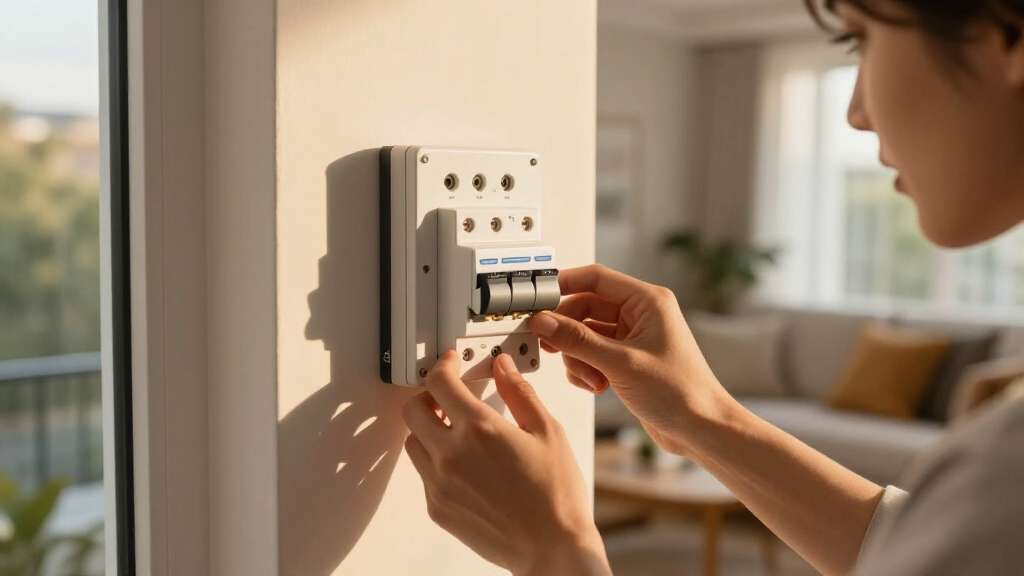
Products were selected based on their ability to accurately monitor energy consumption through breaker sensors, ease of installation, and integration with smart home systems. We prioritized models with reliable real-time data, broad circuit compatibility, and good build quality. Cost was also a factor, with a focus on offering options across different price points to suit various budgets. Our ranking emphasizes user experience, versatility, and long-term value, helping consumers find the best fit for their specific energy management needs.Factors to Consider When Choosing Smart Energy Monitoring Breaker Sensors
Choosing the right smart energy monitoring breaker sensor involves understanding several key factors. Beyond basic features, it’s important to consider compatibility with your existing smart home ecosystem, the scope of circuit coverage, and the type of data insights provided. Additional elements like local data control and ease of installation can make a significant difference in your long-term satisfaction. Here are some critical considerations to help guide your decision.Compatibility with Smart Home Ecosystems
Many energy monitors integrate with platforms like Google Home, Amazon Alexa, or Home Assistant. Ensuring your chosen device aligns with your existing setup simplifies automation and data access. Compatibility can also influence the ease of setup—some models require more technical knowledge if they support open APIs or Z-Wave/Zigbee protocols. A mismatch here can lead to frustration or limited functionality down the line.
Circuit Coverage and Scalability
Consider how many circuits or appliances you need to monitor. Some models cover only main service panels, while others support multiple sensors for individual circuits. If you plan to expand your system later, choose devices that are scalable or support additional sensors. Overlooking this can result in needing to replace equipment prematurely or missing out on detailed insights.
Data Privacy and Local Control
Some systems upload data to cloud servers, which raises privacy concerns and can depend on internet connectivity. Devices with open APIs or local control options offer more privacy and reliability, especially if you prefer to keep your energy data within your local network. Weigh your priorities—if security and independence matter, these features should influence your choice.
Ease of Installation and Maintenance
Installation complexity varies widely—some units are plug-and-play, others require professional wiring. Think about your technical comfort level and whether you want a DIY project or professional help. Regular maintenance or firmware updates can also add to the ongoing effort, so choosing a device known for stable firmware can save headaches.
Price and Long-Term Value
Price differences reflect features, circuit coverage, and build quality. While budget options may suffice for basic monitoring, investing in a more capable system often pays off through detailed insights and better integration. Consider your budget against your energy tracking goals to avoid overpaying or settling for insufficient features.
Frequently Asked Questions
Can I install a smart energy monitoring breaker myself?
Installation difficulty varies depending on the model and your electrical experience. Many devices designed for DIY installation come with detailed instructions and are suitable for those comfortable with basic wiring tasks. However, for larger or more complex systems, hiring a licensed electrician is advisable to ensure safety and compliance with local codes. Proper installation is essential for accurate readings and reliable operation.
Will a smart energy monitoring breaker work with my existing smart home system?
Compatibility depends on the specific model and your smart home setup. Many monitors support common platforms like Google Home, Amazon Alexa, or Z-Wave/Zigbee protocols. Before purchasing, verify that the device integrates seamlessly with your existing ecosystem. Compatibility issues can limit functionality or require additional hubs, so checking specifications upfront is worthwhile.
How accurate are these energy monitors?
Most high-quality models provide highly accurate readings, often within a few percentage points of actual consumption. Accuracy depends on sensor quality and installation correctness. For critical applications, look for devices with proven measurement standards and positive user reviews regarding reliability. Keep in mind that some lower-cost options might sacrifice precision for affordability.
Do these devices support monitoring individual circuits or just the main breaker?
Many models support both main and individual circuit monitoring, especially those with multiple sensors or modular designs. This capability allows for more detailed insights into specific appliances or areas. If detailed circuit-level data is important, select a device that explicitly states support for multiple sensors or expandable configurations. Overlooking this can mean missing out on granular control and analysis.
Are open API or local control options worth the extra investment?
Devices supporting open APIs or local control often provide greater privacy, customization, and reliability, especially if you prefer to avoid cloud dependencies. These features appeal to tech enthusiasts and those with specific automation needs. While they may come at a higher price or require more setup effort, the increased control and security can justify the investment for many users.
Conclusion
For general home use where ease of setup and reliable data are priorities, the Emporia Vue 3 remains the best overall choice. Budget-conscious buyers will appreciate the Refoss Smart Home Energy Monitor for its affordability and open API. Tech-savvy users seeking deep customization should consider models with open APIs or local control, like the SIEMENS Inhab. Beginners or those with simple needs might prefer plug-and-play options, while large households or energy enthusiasts should look for expandable systems with broad circuit support. Your perfect match hinges on balancing features, compatibility, and your technical comfort level.
As an affiliate, we earn on qualifying purchases.Flea & tick season Picks
flea and tick prevention