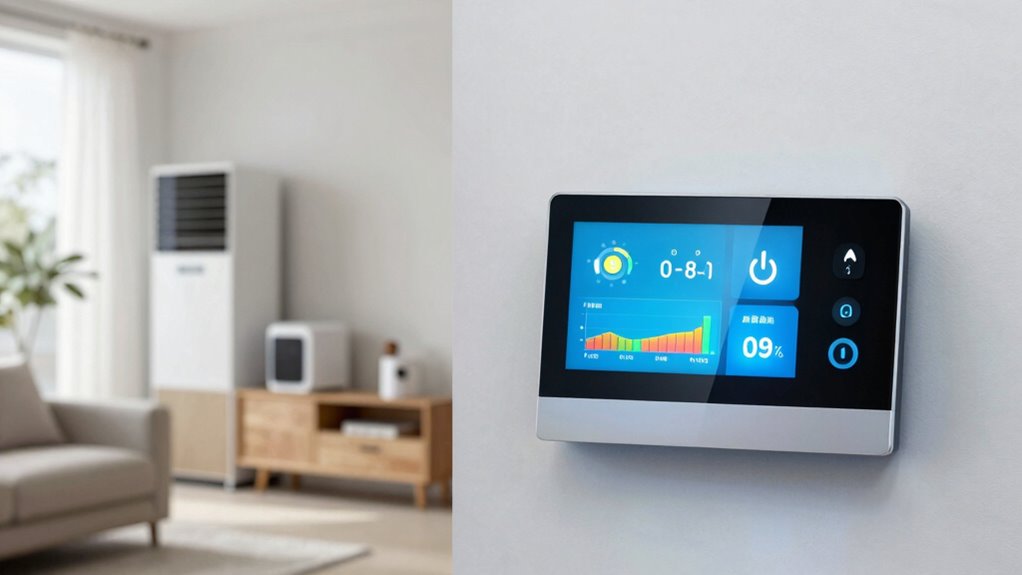

Finding the right smart electricity usage monitor can significantly reduce your energy bills and improve your home’s efficiency. The Emporia Vue 3 stands out as the best overall choice, thanks to its comprehensive real-time tracking and home integration features. For those seeking affordability, the Tapo Smart Plug Wi-Fi P115 offers reliable monitoring at a budget-friendly price. Meanwhile, the Refoss Smart Home Energy Monitor appeals to tech-savvy users who want open API access without cloud reliance. As options vary widely in complexity, features, and price, understanding key tradeoffs is essential. Continue reading for a detailed comparison to help you find the ideal monitor for your needs.
Listen free for 30 days with Audible
Thousands of audiobooks and originals — cancel anytime.
Start your free trialAs an affiliate, we earn on qualifying purchases.
Key Takeaways
- The top-performing monitors combine real-time data with easy app control, making energy management straightforward.
- Price differences often reflect features like home automation compatibility, open API access, and installation complexity.
- Simpler plug-in monitors work well for quick setup and basic tracking, but may lack advanced features for larger homes.
- More comprehensive systems like the Emporia Vue 3 excel for detailed insights but require some installation effort.
- Choosing between cloud-based and open API solutions impacts user privacy, data control, and integration flexibility.
| Tapo Smart Plug Wi-Fi, Energy Monitoring, P115 (4-Pack), 15A | 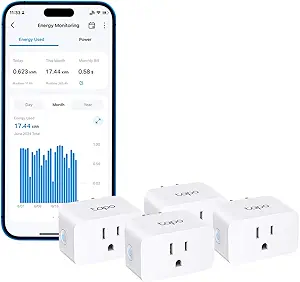 | Best Overall for Simplicity and Versatility | Number of plugs: 4 | Maximum current: 15A | Features: Energy monitoring, scheduling, auto-shutoff, voice control | VIEW ON AMAZON | See Our Full Breakdown |
| Govee Smart Plug with Energy Monitoring (2 Pack) |  | Best Value for Real-Time Monitoring and Safety | Connectivity: WiFi and Bluetooth | Supports Voice Control: Alexa and Google Assistant | Energy Monitoring: Real-time tracking of power, current, and voltage | VIEW ON AMAZON | See Our Full Breakdown |
| Tapo Smart Plug, Matter Compatible, Energy Monitoring, P110M (4-Pack), 15A |  | Best for Ecosystem Integration and Future-Proofing | Compatibility: Matter, Alexa, Apple HomeKit, Google Home, SmartThings | Number of units: 4 | Maximum current: 15A | VIEW ON AMAZON | See Our Full Breakdown |
| Meross Smart Home Energy Monitor |  | Best for Technical Users and Circuit-Level Insights | Certification: ETL, UL 61010 | Supported Systems: single-phase 2-wire, 3-phase 4-wire | Maximum Current: 200A main, 60A branch | VIEW ON AMAZON | See Our Full Breakdown |
| Smart Home Energy Monitor with 16 50A Circuit Sensors |  | Best for Multi-Circuit Monitoring in Large or Shared Homes | Sensors: 16 50A circuit sensors | Supported Voltages: Single-phase up to 240VAC, split-phase 120/240VAC, three-phase | Connectivity: WiFi, MQTT | VIEW ON AMAZON | See Our Full Breakdown |
| Refoss Smart Home Energy Monitor with Open API, Home Assistant, No Cloud |  | Best Overall for Privacy-Conscious Tech Enthusiasts | Model: EM16P | Control: Local control via Web UI, Open API, MQTT | Compatibility: Home Assistant, OpenClaw AI | VIEW ON AMAZON | See Our Full Breakdown |
| Smart Plug Outlet with Energy Monitoring, 15A, 4-Pack |  | Best Budget-Friendly for Basic Power Tracking | Power Capacity: 1800W 15A | Connectivity: 2.4GHz Wi-Fi | Number of Outlets: 4 | VIEW ON AMAZON | See Our Full Breakdown |
| Tapo Smart Plug Wi-Fi, Energy Monitoring, P115 (2-Pack), 15A |  | Best for Remote Control and Cost Savings | Number of Plugs: 2 | Maximum Current: 15A | Features: Energy Monitoring, Scheduling, Auto-Shutoff, Voice Control | VIEW ON AMAZON | See Our Full Breakdown |
| Emporia Vue 3 Home Energy Monitor – Real-Time Electricity Usage and Power Consumption Meter |  | Best for Whole-Home and Solar Monitoring Enthusiasts | Certification: UL Listed | Supported Systems: Single phase, 3-phase, Wye systems | Sensors: Sixteen 50A branch sensors | VIEW ON AMAZON | See Our Full Breakdown |
| Eyedro Smart Home Energy Monitor 200A WiFi/Ethernet |  | Best for Whole-Home and Solar Monitoring with Flexible Connectivity | Sensor Quantity: 2 x 200A sensors | Connectivity: WiFi 2.4 GHz, Ethernet | Power Source: AC | VIEW ON AMAZON | See Our Full Breakdown |
| Emporia Vue 3 Home Energy Monitor – Real-Time Electricity Usage and Power Consumption Meter |  | Best Overall | Certification: UL Listed | Supported Systems: Single phase, single-split phase, 2-wire, 3-wire, 3-phase, 4-wire Wye | Sensor Type: Clamp-on sensors | VIEW ON AMAZON | See Our Full Breakdown |
| Emporia Energy Monitoring Smart Plug, WiFi Smart Outlet with Timer, App Control, and Energy Monitoring – 4 Pack |  | Best for Remote Appliance Control | Maximum Continuous Load: 10A | Peak Load: 15A for up to 1 hour/day | WiFi Frequency: 2.4GHz only | VIEW ON AMAZON | See Our Full Breakdown |
| Govee Smart Plug with Energy Monitoring (4 Pack) |  | Best for Voice Control and Safety | Connectivity: WiFi and Bluetooth | Supports Voice Control: Alexa and Google Assistant | Energy Monitoring: Real-time power, current, voltage | VIEW ON AMAZON | See Our Full Breakdown |
| Upgraded Watt Power Meter Plug Home Electrical Usage Monitor with Backlight and Overload Protection |  | Best for Detailed Parameter Monitoring | Monitoring Parameters: W, kWh, volts, amps, hertz, power factor, cost, min/max power | Display Size: 2.36 inch x 1.85 inch | Backlight Options: 10 min, 1 hr, 4 hrs, 8 hrs, always on | VIEW ON AMAZON | See Our Full Breakdown |
| smart electricity usage monitor | Connectivity |
|---|---|
| Tapo Smart Plug Wi-Fi | — |
| Govee Smart Plug with Energy M | WiFi and Bluetooth |
| Tapo Smart Plug | — |
| Meross Smart Home Energy Monit | — |
| Smart Home Energy Monitor with | WiFi, MQTT |
| Refoss Smart Home Energy Monit | — |
| Smart Plug Outlet with Energy | 2.4GHz Wi-Fi |
| Tapo Smart Plug Wi-Fi | — |
| Emporia Vue 3 Home Energy Moni | 2.4 GHz Wi-Fi |
| Eyedro Smart Home Energy Monit | WiFi 2.4 GHz, Ethernet |
| Emporia Vue 3 Home Energy Moni | 2.4 GHz WiFi |
| Emporia Energy Monitoring Smar | — |
| Govee Smart Plug with Energy M | WiFi and Bluetooth |
| Upgraded Watt Power Meter Plug | — |
More Details on Our Top Picks
Tapo Smart Plug Wi-Fi, Energy Monitoring, P115 (4-Pack), 15A
This Tapo P115 stands out for its straightforward design and ease of use, making it a reliable choice for those new to energy monitoring. Its visual charts simplify understanding power consumption, and voice control support adds convenience. Compared to the Govee Smart Plug, it lacks Bluetooth connectivity, but its seamless Wi-Fi integration offers broader remote control. The absence of compatibility beyond Alexa and Google Assistant limits integration options for advanced smart home setups. Its 15A capacity suits most household devices, yet it can’t handle heavy-duty appliances. Overall, this pick makes the most sense for users seeking an uncomplicated, all-in-one energy management solution without complex setup.
Pros:- Simple visual energy tracking with clear charts
- Supports voice commands via Alexa and Google Assistant
- Programmable scheduling for cost management
Cons:- Requires Wi-Fi for remote operation, limiting offline use
- Limited to 15A, unsuitable for high-power devices
Best for: Homeowners who want an easy, plug-and-play energy monitor with voice control and scheduling.
Not ideal for: Tech-savvy users needing advanced integrations or higher current capacity for large appliances.
- Number of plugs:4
- Maximum current:15A
- Features:Energy monitoring, scheduling, auto-shutoff, voice control
Our verdict“This is ideal for users seeking a straightforward smart plug with reliable energy monitoring without complex features.”
Govee Smart Plug with Energy Monitoring (2 Pack)
This Govee smart plug excels at providing real-time energy data through both WiFi and Bluetooth, making it flexible for various setups. Its compatibility with Alexa and Google Assistant ensures easy voice control, and its fire-resistant materials add a layer of safety. Compared with the Tapo P115, it offers Bluetooth support, which can improve local control when Wi-Fi is unreliable. However, it doesn’t support 5G Wi-Fi, potentially limiting connectivity speed and stability. Its 15A limit fits most household appliances but isn’t suitable for large power tools. This pick makes the most sense for those who prioritize safety, real-time data, and multi-platform control in a compact pack.
Pros:- Real-time energy monitoring helps reduce waste
- Dual WiFi and Bluetooth connectivity for flexibility
- Supports voice commands with major assistants
- Made of fire-resistant materials for safety
Cons:- Limited to 120V outlets, not suitable for all regions
- Requires app setup for advanced scheduling
Best for: Families or individuals wanting real-time energy insights with added safety features and multi-platform voice control.
Not ideal for: Users needing support for 5G Wi-Fi or high-current devices over 15A.
- Connectivity:WiFi and Bluetooth
- Supports Voice Control:Alexa and Google Assistant
- Energy Monitoring:Real-time tracking of power, current, and voltage
- Max Current:15A
Our verdict“Best suited for safety-conscious households seeking real-time energy data and multi-platform voice control at a good price point.”
Tapo Smart Plug, Matter Compatible, Energy Monitoring, P110M (4-Pack), 15A
This Tapo P110M stands out for its Matter compatibility, ensuring seamless integration across major smart home platforms like Alexa, Apple HomeKit, Google Home, and Samsung SmartThings. Its detailed energy monitoring and scheduling features help users track and manage power consumption precisely, with overcharge prevention adding an extra layer of protection. Compared to the Govee or the basic Tapo P115, it offers broader ecosystem support, making it ideal for those already invested in multiple smart home systems. Its 15A capacity limits its use with high-power appliances, but for typical household devices, it offers reliable control and data. This device makes the most sense for users wanting future-proof, multi-platform compatibility and detailed energy insights.
Pros:- Compatible with major smart home ecosystems including Apple HomeKit
- Provides detailed energy monitoring and cost insights
- Supports scheduling and overcharge protection
- Future-proof with Matter standard support
Cons:- Requires a stable Wi-Fi connection for remote control
- Limited to 15A, not suitable for heavy-duty devices
Best for: Smart home enthusiasts who want reliable, multi-platform energy monitoring integrated into a larger ecosystem.
Not ideal for: Users needing support for high-current, heavy-duty appliances or those with unstable Wi-Fi connections.
- Compatibility:Matter, Alexa, Apple HomeKit, Google Home, SmartThings
- Number of units:4
- Maximum current:15A
Our verdict“Ideal for users seeking ecosystem flexibility and detailed power management within a comprehensive smart home setup.”
Meross Smart Home Energy Monitor
The Meross Energy Monitor appeals most to technically inclined users who want high-accuracy, circuit-level data, and local data storage. Its support for various electrical configurations and integration with Home Assistant makes it highly customizable for automation and energy analysis. Compared with plug-based options like the Govee or Tapo, it offers more granular insights, ideal for detailed energy audits or solar management. Despite its advanced features, installation can be challenging for novices, and its US-only compatibility limits international use. It’s best suited for those comfortable with technical setup who need in-depth, privacy-focused energy data at the circuit level.
Pros:- Highly accurate, detailed real-time energy data
- Supports circuit-level monitoring for precise insights
- Integrates with Home Assistant for automation
- Stores data locally, ensuring privacy
Cons:- Requires technical setup and wiring knowledge
- Limited to US electrical systems
- Installation can be challenging for novices
Best for: Home automation enthusiasts and energy auditors seeking precise, circuit-level data and local storage.
Not ideal for: Casual users or those unfamiliar with electrical systems, due to complex setup requirements.
- Certification:ETL, UL 61010
- Supported Systems:single-phase 2-wire, 3-phase 4-wire
- Maximum Current:200A main, 60A branch
- Data Storage:up to 5 years
Our verdict“Best suited for advanced users who need detailed, circuit-specific energy data and have technical expertise to install and configure it.”
Smart Home Energy Monitor with 16 50A Circuit Sensors
This device offers extensive circuit coverage with 16 sensors, making it ideal for larger homes, rental units, or shared apartments where monitoring multiple circuits separately provides valuable insights. Its easy clamp-on installation simplifies setup, and support for MQTT and LAN ensures privacy and offline operation. Compared with plug-based monitors like the Govee or Tapo, it provides a more comprehensive view of energy flow across many circuits. However, configuring MQTT requires some technical knowledge, and its accuracy is limited to about 1%, which might be insufficient for very precise energy management. This monitor is best for users who prioritize broad circuit coverage and privacy over ultra-fine measurement.
Pros:- Supports up to 16 circuits for detailed monitoring
- Easy clamp-on installation
- Supports MQTT for privacy and offline data collection
- Ideal for rental properties and shared living
Cons:- Requires MQTT setup, which can be complex
- Limited accuracy (~1%), not suitable for precise measurements
Best for: Property managers, landlords, or tech-savvy homeowners needing detailed, multi-circuit energy data in large or shared residences.
Not ideal for: Users seeking quick setup or high-precision measurements with minimal configuration effort.
- Sensors:16 50A circuit sensors
- Supported Voltages:Single-phase up to 240VAC, split-phase 120/240VAC, three-phase
- Connectivity:WiFi, MQTT
- Monitoring:Real-time power and cost
Our verdict“Excellent for large-scale or multi-tenant energy monitoring where broad circuit coverage and privacy are priorities, despite some technical setup needed.”
Refoss Smart Home Energy Monitor with Open API, Home Assistant, No Cloud
This pick stands out for those who prioritize data privacy and local control while maintaining detailed energy insights. Unlike cloud-dependent options like the Eyedro, the Refoss EM16P operates entirely without relying on external servers, making it ideal for solar-powered homes seeking automation with minimal privacy concerns. Its high accuracy and long data retention are paired with seamless integration into Home Assistant, supporting advanced automation. However, installation can be complex for users without electrical experience, and it doesn’t include built-in Wi-Fi, relying instead on physical sensors and wired connections. Compared to simpler plug-in monitors, this offers comprehensive circuit-level data but requires more technical setup.
Pros:- Ensures data privacy with local control and no reliance on cloud servers
- Seamless integration with Home Assistant and AI automation tools
- High measurement accuracy and extensive data storage capabilities
- Supports solar energy automation to optimize self-consumption
Cons:- Installation may require electrical knowledge and wiring skills
- Limited to circuits within specified amperage ranges, not suitable for all setups
- No built-in Wi-Fi, requiring physical sensors and wired connections
Best for: Homeowners with existing smart home systems who want detailed, privacy-focused energy monitoring and automation.
Not ideal for: Renters or DIYers uncomfortable with electrical wiring or those seeking plug-and-play solutions with minimal setup.
- Model:EM16P
- Control:Local control via Web UI, Open API, MQTT
- Compatibility:Home Assistant, OpenClaw AI
- Accuracy:±1% (200A: 2–200A; 60A: 1–60A), ±2% at low current
- Data Storage:Up to 5 years
- Sensors Supported:2 main circuit sensors (2–200A each), 16 branch sensors (1–60A each)
- Standards:ETL certified, UL 61010 compliant
- Warranty:2 years
Our verdict“Ideal for tech-savvy homeowners seeking privacy-focused, detailed energy data and automation integration.”
Smart Plug Outlet with Energy Monitoring, 15A, 4-Pack
This option makes the most sense for users seeking simple, affordable energy monitoring in multiple outlets. Compared with the Emporia Vue 3, which provides whole-home data, this pack focuses on individual devices, making it ideal for tracking specific appliances. Its real-time energy monitoring and scheduling features are straightforward but lack the depth of circuit-level insights. The 2.4GHz Wi-Fi connection is reliable for most homes, yet it doesn’t support hubless voice control directly, relying instead on app or voice assistants like Alexa and Google. Its compact design helps save outlet space, but it only handles loads up to 15A, limiting heavy-duty device use.
Pros:- Affordable multi-pack provides good value for multiple devices
- Real-time energy data helps identify high-consuming appliances
- Compatible with Alexa and Google Assistant for voice control
- Supports scheduling and group control for convenience
Cons:- Requires 2.4GHz Wi-Fi network, no hub needed
- Limited to 15A maximum load, unsuitable for heavy-duty appliances
- No local control or advanced automation features
Best for: Small households or individuals needing to monitor and control multiple devices affordably and easily.
Not ideal for: Homes with high-power appliances exceeding 15A, or those wanting detailed whole-house energy analysis.
- Power Capacity:1800W 15A
- Connectivity:2.4GHz Wi-Fi
- Number of Outlets:4
- Certification:FCC
- Materials:Fire-resistant
Our verdict“Great for budget-conscious users who want simple, remote energy monitoring for multiple smaller devices.”
Tapo Smart Plug Wi-Fi, Energy Monitoring, P115 (2-Pack), 15A
This pick is suited for users who want detailed energy stats with the convenience of scheduling and voice control. Compared to the Govee Smart Plug, which focuses on basic monitoring, the Tapo P115 offers richer features like auto-shutoff and detailed cost estimates, helping users save on energy bills. Its support for Alexa and Google Assistant makes remote control simple, but it requires a Wi-Fi connection at all times, and it maxes out at 15A, limiting heavy-duty device use. Its app-based interface is user-friendly, but it lacks the local control or automation integration possible with more advanced systems like the Refoss.
Pros:- Provides detailed energy consumption data and cost estimates
- Supports voice control via Alexa and Google Assistant
- Includes scheduling and auto-shutoff for safety and efficiency
- Compact design easily fits in standard outlets
Cons:- Requires Wi-Fi connection for remote features
- Limited to 15A maximum load, not suitable for large appliances
- No local control or advanced automation capabilities
Best for: Homeowners looking for easy-to-use, detailed energy insights combined with voice control and scheduling.
Not ideal for: Users needing circuit-level monitoring or those with high-power appliances over 15A.
- Number of Plugs:2
- Maximum Current:15A
- Features:Energy Monitoring, Scheduling, Auto-Shutoff, Voice Control
Our verdict“Perfect for users seeking detailed energy data and remote control in a simple plug-in device.”
Emporia Vue 3 Home Energy Monitor – Real-Time Electricity Usage and Power Consumption Meter
This model makes the most sense for users wanting detailed, circuit-level data for entire homes or solar setups. Compared to the plug-in options like the Govee, the Emporia Vue 3 installs directly into the main panel, offering comprehensive real-time insights. Its multiple sensors support critical load monitoring and compatibility with solar net metering makes it ideal for energy-conscious households. However, installation can be complex, requiring electrical expertise, and its data retention is limited to 7 days for minute data. It’s a strong choice for those who want safety-certified, detailed analytics but aren’t seeking a simple plug-and-play setup.
Pros:- UL-certified for safety and reliability
- Supports detailed real-time monitoring and automation
- Multiple sensors for critical load tracking
- Compatible with solar and net metering systems
Cons:- Requires professional installation and wiring skills
- Limited data retention for minute data (7 days)
- Does not include built-in Wi-Fi—additional setup needed
Best for: Homeowners with solar panels or complex electrical systems who want detailed, whole-home energy insights.
Not ideal for: Renters or users uncomfortable with electrical panel installation, or those seeking quick setup without wiring.
- Certification:UL Listed
- Supported Systems:Single phase, 3-phase, Wye systems
- Sensors:Sixteen 50A branch sensors
- Connectivity:2.4 GHz Wi-Fi
- Data Retention:7 days for minute data
- Warranty:1 year
Our verdict“Ideal for energy-savvy homeowners managing solar and complex electrical systems who need detailed data.”
Eyedro Smart Home Energy Monitor 200A WiFi/Ethernet
This product suits users who want flexible setup options for entire-home or solar energy monitoring. Compared with the Refoss which emphasizes local control, the Eyedro provides both WiFi and Ethernet connectivity, offering more deployment options. Its sensors support high current loads, making it suitable for larger homes or solar systems. While it provides real-time data and helps identify wasteful appliances, its customer rating is moderate, and setup can be complex for some users. The device is best for those who prioritize versatile connectivity and comprehensive whole-home insights over plug-and-play simplicity.
Pros:- Supports real-time energy monitoring for home and solar systems
- Flexible connectivity via WiFi and Ethernet
- Includes sensors and accessories for straightforward installation
- Helps identify energy waste and reduce utility bills
Cons:- Customer ratings are moderate, indicating mixed user experiences
- Setup and configuration can be complex for non-technical users
- Requires two devices for comprehensive net metering setup
Best for: Homeowners seeking flexible, whole-home energy monitoring with options for wired or wireless setup.
Not ideal for: Users looking for quick, straightforward plug-in solutions or those with minimal technical setup experience.
- Sensor Quantity:2 x 200A sensors
- Connectivity:WiFi 2.4 GHz, Ethernet
- Power Source:AC
- Included Components:Sensor module, power adapter, Ethernet cable
Our verdict“Best suited for users who want flexible, whole-home energy monitoring with multiple connectivity options.”
Emporia Vue 3 Home Energy Monitor – Real-Time Electricity Usage and Power Consumption Meter
The Emporia Vue 3 stands out as the most comprehensive home energy monitoring solution, thanks to its UL certification and support for a wide range of electrical systems. Compared with the Emporia Vue 3 (B0C7B1LKDW), this model offers similar core features but emphasizes safety and reliability, making it ideal for users with complex or solar-integrated setups. It provides real-time data and supports remote management, although it relies on WiFi connection and may require additional sensors for three-phase systems, which can increase setup complexity and cost. The data retention limits mean you need to keep the app open for detailed minute-by-minute tracking. This pick makes the most sense for homeowners seeking a highly reliable, adaptable system that can handle diverse electrical configurations and solar integration.
Pros:- UL-certified for safety and reliability
- Supports various electrical system configurations
- Provides detailed real-time energy data
- Remote management and automation capabilities
Cons:- Requires a WiFi connection for data access
- Additional sensors needed for some 3-phase systems
- Minute data retention is limited when app is inactive
Best for: Homeowners with solar panels or complex electrical systems who want detailed, real-time insights and reliable safety certifications
Not ideal for: Renters or users with simple electrical setups, since the installation is more involved and the system is designed for permanent wiring
- Certification:UL Listed
- Supported Systems:Single phase, single-split phase, 2-wire, 3-wire, 3-phase, 4-wire Wye
- Sensor Type:Clamp-on sensors
- Connectivity:2.4 GHz WiFi
- Data Retention:Minute data 7 days, hourly data indefinite
- Warranty:1 year
Our verdict“This is an excellent choice for energy-conscious homeowners who want a robust, versatile home energy monitoring system.”
Emporia Energy Monitoring Smart Plug, WiFi Smart Outlet with Timer, App Control, and Energy Monitoring – 4 Pack
The Emporia Energy Monitoring Smart Plug makes it simple to control appliances remotely and schedule their operation, making it ideal for users who want to cut energy waste without installing complex hardware. Compared to the Govee Smart Plug with Energy Monitoring (B0CKM8CF7N), it offers comparable app-based control and energy tracking, but is limited to 120V and a maximum load of 10A, which restricts high-power devices. Its compatibility with Alexa and Google Home enhances convenience, yet it does not support 5GHz WiFi networks, potentially limiting connectivity in some homes. The four-pack setup offers good value for controlling multiple devices simultaneously but may fall short for high-power appliances or larger homes needing more robust automation.
Pros:- Remote control and scheduling via a mobile app
- Energy monitoring to track device efficiency
- Compatible with Alexa and Google Assistant
- Includes four smart plugs for multiple devices
Cons:- Limited to 120V outlets
- Maximum continuous load of 10A may be insufficient for some appliances
- Does not support 5GHz WiFi networks
Best for: Users seeking straightforward remote control and scheduling for multiple small appliances or electronic devices
Not ideal for: Homeowners with high-power appliances or advanced automation needs, due to its limited load capacity and WiFi support
- Maximum Continuous Load:10A
- Peak Load:15A for up to 1 hour/day
- WiFi Frequency:2.4GHz only
- Number of Plugs:4
Our verdict“This smart plug pack is best suited for users who want simple remote control and basic energy monitoring for small devices.”
Govee Smart Plug with Energy Monitoring (4 Pack)
The Govee Smart Plug (B0CKM8CF7N) offers versatile energy monitoring with real-time tracking, remote control, and voice command support via Alexa and Google Assistant. Compared with the Emporia Smart Plug (B0CLVRZ2QL), Govee’s plugs feature dual WiFi and Bluetooth connectivity, providing more flexible control options. The fire-resistant build enhances safety, and the four-pack is ideal for managing multiple devices. However, they are limited to 120V and do not support 5GHz networks, which could affect connectivity in homes with 5GHz WiFi routers. Additionally, setup requires app configuration, and scheduling features are dependent on app functionality. This product works well for tech-savvy users wanting convenient voice commands and safety features in a multi-device setup.
Pros:- Real-time energy monitoring for cost savings
- Supports voice commands via Alexa and Google Assistant
- Fire-resistant materials for added safety
- Dual WiFi and Bluetooth connectivity for flexible control
Cons:- Limited to 120V outlets
- Does not support 5GHz WiFi networks
- Requires app setup for scheduling and control
Best for: Tech-savvy homeowners seeking flexible, voice-controlled energy management for multiple small appliances
Not ideal for: Users with high-power or 240V appliances, as these plugs are limited to 120V and 15A
- Connectivity:WiFi and Bluetooth
- Supports Voice Control:Alexa and Google Assistant
- Energy Monitoring:Real-time power, current, voltage
- Power Rating:15A 120V
Our verdict“Ideal for smart home enthusiasts wanting voice-controlled, multi-device energy monitoring with safety features.”
Upgraded Watt Power Meter Plug Home Electrical Usage Monitor with Backlight and Overload Protection
The Upgraded Watt Power Meter Plug provides comprehensive electrical parameters, including power, voltage, current, and power factor, making it useful for detailed energy analysis. Compared with the simpler Govee smart plugs, this model’s large backlit display and overload protection are standout features for users prioritizing clarity and safety. However, the default overload limit of 3680W may require manual adjustment for high-power appliances, and the buttons can become unresponsive during overload warnings—potentially frustrating during frequent usage. Its memory function is helpful for tracking long-term energy trends, but setup for backlight duration can be cumbersome. This device suits users who want granular control and clear visual feedback on energy consumption.
Pros:- Comprehensive monitoring of electrical parameters
- Large, easy-to-read backlit display
- Overload protection to prevent damage
- Memory function records last data after power loss
Cons:- Default overload may need adjusting for high-power appliances
- Buttons can be unresponsive during overload warnings
- Manual setup required for backlight duration
Best for: Homeowners or renters wanting detailed energy parameters and a large display for easy reading
Not ideal for: Users seeking smart automation or remote control, as this device lacks connectivity features
- Monitoring Parameters:W, kWh, volts, amps, hertz, power factor, cost, min/max power
- Display Size:2.36 inch x 1.85 inch
- Backlight Options:10 min, 1 hr, 4 hrs, 8 hrs, always on
- Overload Protection:Yes, default 3680W, adjustable
- Memory Function:Yes
Our verdict“This power meter is ideal for detailed energy monitoring indoors, especially for those who prefer visual data over remote control features.”

How We Picked
Our evaluation focused on core factors that matter most to consumers: accuracy of energy measurement, ease of use, build quality, integration options, and value for money. We compared both plug-in devices and whole-home systems, considering their setup complexity and scalability. Devices with reliable app interfaces, real-time updates, and strong compatibility with popular smart home platforms ranked higher. We also prioritized products that offer transparency in data handling, whether via open APIs or cloud services. By balancing these criteria, our ranking highlights monitors suited for various user needs—from casual homeowners to tech enthusiasts.Factors to Consider When Choosing Smart Electricity Usage Monitor
Choosing the right smart electricity usage monitor involves more than just reading specs. You should consider how the device integrates with your existing setup, whether it provides real-time data, and if it scales for your home size. Think about ease of installation; some monitors require electrical work, while others are simply plug-in devices. Price is also a factor, especially when balancing features against your budget. Additionally, consider data privacy—do you prefer cloud access or open API options? The right choice depends on your technical comfort level and energy goals.Type of Monitoring System
Deciding between a plug-in energy monitor and a complete home system is key. Plug-in monitors, like smart plugs, are easy to set up and ideal for monitoring specific appliances or outlets. Whole-home systems, such as the Emporia Vue 3, provide comprehensive data across your entire electrical system but require more installation effort. Your choice depends on whether you want quick insights or detailed, whole-house energy analysis. Remember, larger homes benefit from more advanced systems, while smaller setups can often suffice with simple plugs.
Compatibility & Integration
Check whether the monitor works with your existing smart home ecosystem—whether that’s Alexa, Google Home, or Apple HomeKit. Compatibility enhances automation and control, making energy management seamless. Some monitors, like the Govee or Tapo models, integrate easily via Wi-Fi, while others need Zigbee or Z-Wave hubs. If you already have a smart home system, choose a monitor that plays well within that environment to maximize functionality. Conversely, avoid models that require complex setups if you prefer straightforward operation.
Data Privacy & API Access
Deciding between cloud-connected devices and those with open API access impacts your data security and customization options. Cloud-based monitors offer real-time updates and remote control but may raise privacy concerns. Devices with open APIs, like the Refoss model, allow more control over data and integration with custom dashboards or home automation platforms. Consider your comfort level with cloud services and whether you want the ability to customize or expand your setup in the future.
Ease of Installation & Use
Ease of setup varies significantly—plug-in models are typically straightforward, while whole-home monitors might need professional installation. Think about your technical skills; if you’re comfortable with wiring, a system like the Emporia Vue 3 can offer detailed insights. For most users, choosing a plug-and-play device with a user-friendly app makes energy monitoring accessible without hassle. Also, look for features like clear displays, simple controls, and reliable app updates to ensure ongoing ease of use.
Price & Long-Term Value
Price points in this category range from budget-friendly plugs to premium whole-home systems. Cheaper options often provide basic monitoring but may lack advanced features like automation or detailed analytics. Investing more usually delivers better integration, data granularity, and future-proofing. Consider whether the added features align with your energy goals or if a basic device suffices. Remember, a higher initial investment can lead to greater savings over time through better energy management.
Frequently Asked Questions
Can a smart electricity usage monitor help reduce my energy bills?
Yes, a smart monitor provides real-time data on your energy consumption, allowing you to identify high-usage appliances and habits. By understanding when and where your electricity is used most, you can make informed decisions to reduce waste, such as unplugging devices or adjusting thermostats. Some systems even automate certain actions, like turning off idle devices, which can further lower your bills. Over time, this data-driven approach can lead to noticeable savings and more efficient energy use.
Do I need professional installation for a whole-home energy monitor?
Most whole-home monitors, like the Emporia Vue 3, do require some electrical work, including wiring sensors or connecting to your main circuit panel. If you have electrical experience, you might manage installation yourself, but many users prefer to hire a professional to ensure safety and accuracy. Plug-in monitors, on the other hand, are designed for simple setup—just plug into an outlet and connect via Wi-Fi. Your choice depends on your technical skills and the level of monitoring detail you desire.
Are open API energy monitors more secure than cloud-based ones?
Open API monitors typically store data locally or allow you to control data sharing, potentially reducing exposure to external breaches. Cloud-based systems offer convenience, remote access, and automatic updates but depend on third-party servers, which can introduce privacy risks. If data security is a priority, models with open APIs and local storage provide more control. However, weigh this against the benefits of cloud connectivity, such as real-time updates and seamless integration with other smart devices.
How do I choose between a simple plug-in monitor and a comprehensive home system?
Simple plug-in monitors are ideal for monitoring individual appliances or outlets, offering quick setup and straightforward insights. Whole-home systems, like the Emporia Vue 3, provide detailed, aggregate data about your entire electrical usage, which is useful for extensive energy management but involves more installation effort. Your decision depends on your goals—if you want basic control and monitoring, a plug-in device might be enough. For a full picture and advanced automation, investing in a comprehensive system makes more sense.
What features should I prioritize if I want to automate my energy savings?
Automation requires compatibility with your existing smart home ecosystem, so look for monitors that integrate with platforms like Alexa, Google, or Apple HomeKit. Features such as scheduling, remote control, and real-time alerts enhance automation capabilities. Open API access can also enable custom automation scripts if you’re technically inclined. Prioritize devices that offer reliable app controls and clear data visualization to make automation effective and easy to manage.
Conclusion
For general users seeking a reliable, all-around solution, the Emporia Vue 3 remains the best overall choice thanks to its comprehensive data and integration capabilities. Budget-conscious buyers should consider the Tapo Smart Plug Wi-Fi P115 for straightforward, effective monitoring without breaking the bank. Tech enthusiasts or those with specific privacy concerns might prefer the Refoss Smart Home Energy Monitor for its open API and local control. Beginners will benefit from simple plug-in options, while homeowners wanting detailed insights should look at more advanced systems. Ultimately, your choice depends on your technical comfort and energy goals—matching the right monitor to your needs will maximize your savings and control.
As an affiliate, we earn on qualifying purchases.NFL season / tailgating Picks
team gear