
The best educational science reference apps should make scientific information easier to find, understand, or apply, yet several products here are guides and workbooks rather than downloadable apps. I rank 110 Amazing Apps for Education as the best overall because its broad app-discovery focus most closely matches the search, while Tech-Savvy Science offers better guidance for homeschooling families. The Science Behind Everyday Technology is the stronger beginner choice for explaining familiar tools, but it teaches concepts rather than helping readers select software. The main tradeoffs are app breadth versus science depth, quick reference versus guided activities, and independent learning versus adult-led instruction. Continue reading for the full ranking logic, format warnings, and buyer-specific recommendations.

Prime made for students and young adults
- Fast, free delivery for dorm and study essentials
- Prime Video and Amazon Music included
- Member-only deals
Key Takeaways
- 110 Amazing Apps for Education ranks first because it offers the lineup’s broadest route to discovering educational software, even though its science focus may be less concentrated than that of the subject-specific books.
- Tech-Savvy Science is the strongest homeschool choice because it connects apps with parent-led science instruction rather than presenting technology as a stand-alone resource.
- Mark Twain Meteorology Science Workbook offers the clearest subject focus, making it a better value for weather study than a broad app directory, but it is a workbook rather than an app reference.
- The Science Behind Everyday Technology provides the easiest conceptual entry point by tying science to phones, GPS, internet systems, and apps, while Supercharged serves students who want to build projects.
- Applying the Science of Reading has the narrowest fit for this roundup: it suits literacy educators seeking research-based instructional guidance, not buyers seeking natural-science apps.
| Tech-Savvy Science: A Parent’s Guide to Homeschooling with Apps | 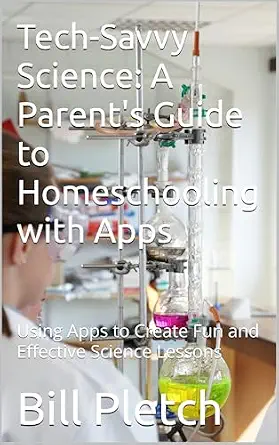 | Best Overall | Resource type: Parent guide | Primary subject: Homeschool science | Technology focus: Educational apps | VIEW LATEST PRICE | See Our Full Breakdown |
| 110 Amazing Apps for Education |  | Best Broad App Directory | Resource type: Professional education book | Listed app count: 110 | Subject scope: General education | VIEW LATEST PRICE | See Our Full Breakdown |
| Mark Twain Meteorology Science Workbook for Middle School |  | Best Screen-Free Science Companion | Resource type: Student workbook | Subject: Meteorology | Core topics: Atmosphere and weather | VIEW LATEST PRICE | See Our Full Breakdown |
| Supercharged: The Student: How to Use AI to Build Your Future, Launch Apps, Create Games, Build Robots, Start Businesses & Become AI-Ready for the Future |  | Best for AI Project Inspiration | Resource type: Student technology guide | Primary topic: Artificial intelligence | Project areas: Apps, games, robots, and businesses | VIEW LATEST PRICE | See Our Full Breakdown |
| Applying the Science of Reading (Quick Reference Guide) |  | Best Literacy Research Cheat Sheet | Resource type: Quick reference guide | Subject: Science of reading | Primary audience: Educators and literacy specialists | VIEW LATEST PRICE | See Our Full Breakdown |
| The Science Behind Everyday Technology: What Your Phone, Internet, GPS, and Apps Are Really Doing |  | Best for Everyday Tech Literacy | Product type: Educational technology reference book | Primary subject: Science behind everyday digital technology | Technology coverage: Smartphones, internet, GPS, and apps | VIEW LATEST PRICE | See Our Full Breakdown |
| educational science reference app | Resource type | Primary audience | Primary use |
|---|---|---|---|
| Tech-Savvy Science: A Parent’s | Parent guide | Homeschooling parents | Planning technology-supported science activities |
| 110 Amazing Apps for Education | Professional education book | Educators | Educational app discovery |
| Mark Twain Meteorology Science | Student workbook | — | — |
| Supercharged: The Student: How | Student technology guide | Students | — |
| Applying the Science of Readin | Quick reference guide | Educators and literacy specialists | Reading-instruction strategy reference |
| The Science Behind Everyday Te | — | — | — |
More Details on Our Top Picks
Tech-Savvy Science: A Parent’s Guide to Homeschooling with Apps
I place Tech-Savvy Science first because it most directly connects app selection with science teaching. Its parent-focused strategies turn digital tools into structured homeschool activities, giving buyers more guidance than the broad directory in 110 Amazing Apps for Education. That narrower scope makes it easier to apply when planning lessons, especially for parents who need help linking screen time to learning goals. The tradeoff is limited product detail: the supplied information names no specific apps, platforms, age bands, or sample activities. It may help parents build a method, but it cannot serve as a compatibility guide or ready-made curriculum. I see it as the strongest science-app planning resource here, provided buyers are willing to research and select the actual software separately.
Pros:- Directly links educational apps with homeschool science instruction
- Offers parent-oriented strategies rather than a general technology overview
- Helps turn app use into purposeful lesson activities
- More closely matches the roundup topic than the broader education guides
Cons:- No named apps or platform requirements are supplied
- No specific age range or science curriculum coverage is stated
- Buyers must conduct separate research before choosing software
Best for: Homeschooling parents who want a repeatable method for incorporating educational apps into science lessons
Not ideal for: Parents seeking a ready-made science curriculum or a verified list of apps with platform and age compatibility
- Resource type:Parent guide
- Primary subject:Homeschool science
- Technology focus:Educational apps
- Primary audience:Homeschooling parents
- Primary use:Planning technology-supported science activities
- Named app compatibility:Not provided
Our verdict“I recommend this first to homeschool parents who need science-app planning guidance, but not to buyers expecting a complete curriculum or app directory.”
110 Amazing Apps for Education
I rank 110 Amazing Apps for Education second because its stated collection of 110 options gives educators the widest discovery pool in this group. Compared with Tech-Savvy Science, it covers education more broadly and appears better suited to generating ideas across subjects. That breadth is useful for teachers building a digital toolkit, but it weakens the book’s fit as a science-specific reference. The supplied description also lacks app summaries, platform compatibility, pricing, and age guidance, so buyers may need substantial follow-up research before adopting anything. Its main advantage is selection volume, not depth or implementation support. I would choose it for early-stage browsing, while parents who already know they need app-based science lessons will get a clearer teaching framework from Tech-Savvy Science.
Pros:- Collects 110 educational app options in one resource
- Supports broad app discovery across teaching contexts
- Designed as a professional resource for educators
- Offers a larger selection pool than the topic-specific guides
Cons:- Not focused solely on science education
- No detailed app descriptions are supplied
- Compatibility, pricing, and supported platforms are not identified
Best for: Teachers and education coordinators who want a large starting list of digital learning tools across multiple subjects
Not ideal for: Science educators who need evaluated apps, platform compatibility, pricing, or lesson-level implementation guidance
- Resource type:Professional education book
- Listed app count:110
- Subject scope:General education
- Primary audience:Educators
- Primary use:Educational app discovery
- Compatibility information:Not provided
Our verdict“I recommend this as a broad app-discovery starting point for educators who can independently evaluate each option.”
Mark Twain Meteorology Science Workbook for Middle School
I place the Mark Twain Meteorology Science Workbook third because it supplies the most focused science practice, even though it is a workbook rather than an app reference. Its inquiry-based weather investigations can balance the screen-led activities proposed in Tech-Savvy Science, giving middle school learners a way to observe and apply atmosphere concepts away from a device. Compared with The Science Behind Everyday Technology, its scope is narrower but its activity format appears more classroom-ready. Buyers should recognize the limits: the supplied data does not state the page count, physical size, exact topic sequence, or whether an answer key is included. It also offers no app recommendations or digital integrations. I favor it as a hands-on supplement, not as the main answer for buyers specifically seeking educational science software.
Pros:- Focuses on atmosphere and weather for middle school learners
- Uses inquiry investigations to connect concepts with activities
- Suitable for classroom and homeschool settings
- Provides an offline counterbalance to app-based lessons
Cons:- It is not an app or an app-selection reference
- No answer key is confirmed in the supplied information
- Page count, dimensions, and detailed content coverage are unavailable
Best for: Middle school teachers and homeschool families who want hands-on weather investigations alongside digital science resources
Not ideal for: Buyers seeking an app directory, interactive software, or a fully documented workbook with confirmed answer support
- Resource type:Student workbook
- Subject:Meteorology
- Core topics:Atmosphere and weather
- Education level:Middle school
- Learning approach:Inquiry investigations
- Supported settings:Classroom and homeschool
- Answer key:Not specified
Our verdict“I recommend this as an offline meteorology companion for middle school students, not as a substitute for a science-app guide.”
Supercharged: The Student: How to Use AI to Build Your Future, Launch Apps, Create Games, Build Robots, Start Businesses & Become AI-Ready for the Future
I rank Supercharged: The Student fourth because it shifts the buyer from referencing science concepts to creating technology projects. Its coverage of apps, games, robots, and businesses offers broader creative ambition than the lesson-planning focus of Tech-Savvy Science. Students who already understand basic digital tools may find that project range motivating, particularly if they want to connect AI with entrepreneurship. Yet the supplied description does not confirm coding languages, supported AI platforms, hardware requirements, or step-by-step technical depth. Compared with 110 Amazing Apps for Education, this book is more creation-oriented but less useful for choosing existing learning apps. I see it as an idea generator for confident learners, while complete beginners or readers wanting a factual science reference may find its scope too advanced and insufficiently specific.
Pros:- Connects AI with several project types, including apps and robotics
- Encourages creative and entrepreneurial thinking
- Aims to prepare students for emerging technology opportunities
- More project-oriented than the educator app directory
Cons:- Detailed technical instructions are not confirmed
- No supported AI platforms, coding languages, or hardware are specified
- Its broad project scope may overwhelm complete beginners
Best for: Technology-curious students with some digital confidence who want ideas for AI-assisted apps, games, robotics, and business projects
Not ideal for: Complete beginners who need step-by-step coding instruction or educators seeking a science reference app directory
- Resource type:Student technology guide
- Primary topic:Artificial intelligence
- Project areas:Apps, games, robots, and businesses
- Primary audience:Students
- Learning emphasis:Project creation and future readiness
- Coding languages:Not specified
- Hardware requirements:Not specified
Our verdict“I recommend this to digitally confident students seeking AI project ideas, but not to beginners needing a guided technical course.”
Applying the Science of Reading (Quick Reference Guide)
I place Applying the Science of Reading fifth because it is a concise professional reference, but its subject is reading instruction rather than natural science or educational apps. For literacy specialists, that narrow focus may be a strength: it distills research-based teaching ideas into a quick-reference format that should be easier to consult than the broader 110 Amazing Apps for Education. Compared with Mark Twain Meteorology Science Workbook, however, it offers neither student investigations nor middle school science content. The supplied information also identifies no added resources, app links, examples, or detailed section coverage. I would treat it as an adjacent educator resource, not a central recommendation for this roundup. Buyers should choose it only when “science” means the research behind reading instruction, rather than a tool for teaching scientific subjects.
Pros:- Condenses reading-instruction research into a quick-reference format
- Targets educators and literacy specialists
- Better suited to rapid consultation than a broad app directory
- Maintains a focused professional-development purpose
Cons:- Does not address natural science education
- No app recommendations or digital features are described
- Detailed coverage and supplementary resources are not supplied
Best for: Teachers and literacy specialists who want a concise desk reference on research-based reading instruction
Not ideal for: Buyers seeking natural science content, student activities, educational app recommendations, or digital reference tools
- Resource type:Quick reference guide
- Subject:Science of reading
- Primary audience:Educators and literacy specialists
- Primary use:Reading-instruction strategy reference
- Content emphasis:Research-based teaching practices
- Additional resources:None specified
Our verdict“I recommend this only to literacy educators seeking a brief research guide, since it has limited relevance to science-reference apps.”
The Science Behind Everyday Technology: What Your Phone, Internet, GPS, and Apps Are Really Doing
I rank The Science Behind Everyday Technology as the strongest choice for readers who want to understand the systems behind familiar digital tools, rather than learn how to select or build apps. Its coverage of smartphones, internet connectivity, GPS, and apps connects scientific concepts with devices readers encounter daily. Compared with 110 Amazing Apps for Education, this is less useful for finding classroom software but better at explaining what happens beneath the interface. It also takes a broader, more accessible approach than Supercharged: The Student, which focuses on creating projects with AI. The tradeoff is limited technical depth: readers seeking specifications, advanced engineering detail, exercises, or direct app recommendations may find it too general. I see it as a conceptual reference, not a practical app directory or technical manual.
Pros:- Explains complex technology concepts in accessible language
- Connects scientific principles to phones, GPS, internet services, and apps
- Builds digital literacy without requiring an engineering background
- Offers broader technology coverage than app-focused education guides
Cons:- Provides less help choosing educational apps than 110 Amazing Apps for Education
- Lacks detailed technical specifications and advanced engineering depth
- No price or customer-rating information is supplied for value comparison
Best for: Curious students, parents, and general readers who want plain-language explanations of the science behind everyday digital technology
Not ideal for: Teachers seeking a classroom app directory or advanced readers who need engineering specifications, technical exercises, and detailed implementation guidance
- Product type:Educational technology reference book
- Primary subject:Science behind everyday digital technology
- Technology coverage:Smartphones, internet, GPS, and apps
- Learning focus:How common technologies work and affect daily life
- Audience level:General readers interested in modern technology
- Technical depth:Conceptual explanations; detailed specifications not provided
- ASIN:B0GXWX8294
Our verdict“I recommend this to readers who want an approachable explanation of how everyday technology works, but not to buyers seeking an app directory or advanced technical manual.”
How We Picked
I ranked these products by direct relevance to educational science reference apps, clarity of audience, subject depth, ease of consultation, and ability to turn information into useful learning. Products that help readers find or use apps received more weight than books that merely mention apps or technology. I also examined whether each option supports quick fact-finding, structured study, or project creation, since those purposes are not interchangeable. The order reflects buyer usefulness within this exact category, not a claim that every title is a downloadable application.
I gave the top positions to resources with broad utility and a clear connection between science learning and digital tools. Narrow workbooks and conceptual explainers rank lower because they serve fewer buyers, although they can outperform the leaders for a matching assignment. I treated learner age, required adult involvement, update sensitivity, and scope as meaningful tradeoffs. My premium designation refers to depth of planning support, not a verified price bracket, while value reflects how efficiently a focused resource can meet one defined learning need.
| educational science reference app | Resource type | Primary audience | Primary use |
|---|---|---|---|
| Tech-Savvy Science: A Parent’s | Parent guide | Homeschooling parents | Planning technology-supported science activities |
| 110 Amazing Apps for Education | Professional education book | Educators | Educational app discovery |
| Mark Twain Meteorology Science | Student workbook | — | — |
| Supercharged: The Student: How | Student technology guide | Students | — |
| Applying the Science of Readin | Quick reference guide | Educators and literacy specialists | Reading-instruction strategy reference |
| The Science Behind Everyday Te | — | — | — |
Factors to Consider When Choosing Educational Science Reference Apps
I would begin by deciding whether I need an actual downloadable app, a guide that recommends apps, or a printed learning resource that discusses technology. That format decision removes much of the ambiguity in this lineup. From there, the right choice depends on subject scope, learner independence, reference speed, and how quickly the material may age.
Verify Whether the Product Is an App, Guide, or Workbook
A title containing the word apps does not prove that the product is downloadable software. It may be a directory, teaching guide, project book, or explanation of how applications work. I would check the product format, supported platform, publisher description, and delivery method before paying. A guide can be useful when I want curated recommendations or lesson planning, but it will not provide interactive simulations by itself. A workbook may offer stronger practice than an app directory, yet it lacks automatic feedback and searchable content. Confirming the format early prevents the most common mismatch in this particular roundup.
Match the Scope to the Learning Goal
Broad app directories work best when I am still comparing tools across subjects, ages, or teaching styles. A focused meteorology workbook makes more sense when the goal is mastering one science unit rather than discovering software. Technology explainers support conceptual understanding, while AI project books are aimed at making, coding, and experimentation. I would define the desired outcome as lookup, practice, explanation, or creation before comparing prices. Buying the broadest resource can waste time if only one unit is needed. Conversely, a narrow title may become poor value when several learners or subjects must be supported.
Check How Quickly the Material Can Age
Printed app recommendations can become outdated when software disappears, changes its subscription model, or drops support for a device. I would check the publication date and confirm that highlighted apps still exist on the relevant platform. Scientific principles usually age more slowly, giving a meteorology workbook or technology explainer a longer practical shelf life. AI guidance faces greater update risk because tools, interfaces, and school policies change quickly. A newer edition may justify a higher price when the product relies on specific apps or current workflows, but recency matters less for stable foundational concepts.
Choose Between Fast Reference and Guided Practice
A quick-reference guide is built for targeted answers, while a workbook expects the learner to progress through explanations and exercises. I would choose reference-first material when a teacher or parent already has a curriculum and needs fast instructional support. Guided activities are better when the resource must supply practice, pacing, and a visible learning sequence. App directories sit between those formats: they help locate tools but may leave lesson design to the buyer. Searchability matters for frequent lookup, whereas sequenced exercises matter more for skill building. Paying for both formats only makes sense when they fill separate roles rather than covering the same material.
Account for Age and Adult Support
Middle school learners may work independently with a clearly structured workbook but need supervision when creating AI projects, accounts, or public-facing content. Homeschool guides often place the parent in the role of planner, filter, and discussion partner. I would ask who will select the apps, explain difficult ideas, monitor progress, and handle privacy settings. A product with ambitious projects can become frustrating when the learner lacks technical foundations or adult help. Familiar subjects such as phones and GPS provide a gentler starting point for hesitant learners. The best resource is the one whose support demands match the time and confidence available at home or school.
Calculate Value Beyond the Cover Price
The purchase price may be only one part of the cost. Recommended apps can require subscriptions, compatible devices, internet access, classroom accounts, or extra project materials. I would total those expenses before treating a low-cost guide as the best-value option. A focused workbook may deliver better value when it supplies a complete short unit without additional software. A broad directory earns its price when several recommendations remain useful across learners and subjects. The strongest value comes from high use frequency and a close goal match, not simply the largest number of topics.
Frequently Asked Questions
Are All Six Products Downloadable Educational Science Apps?
No. This lineup includes app directories, instructional guides, workbooks, and technology books, so buyers should not assume every title is interactive software. 110 Amazing Apps for Education and Tech-Savvy Science are the closest matches for finding or teaching with apps. The meteorology and reading titles are focused instructional resources, while the remaining books explain technology or guide project creation. I would verify the listed format and platform before purchase if immediate app access is the main goal.
Which Option Is Best for a Homeschooling Family?
Tech-Savvy Science is my homeschool pick because its stated purpose connects parent-led science education with app use. It should suit a family that wants help weaving digital resources into lessons rather than handing a learner an isolated reference tool. 110 Amazing Apps for Education offers broader discovery, but parents may need to do more filtering and lesson design. Families studying weather as a dedicated unit may get faster results from the Mark Twain Meteorology workbook. I would base the choice on whether the parent needs curriculum-planning guidance or ready-made subject practice.
Which Resource Makes the Most Sense for Middle School Science?
The Mark Twain Meteorology Science Workbook for Middle School is the clearest age-and-subject match for a conventional middle school lesson. Its focused scope should make progress easier to track than with a broad list of apps. The Science Behind Everyday Technology may appeal more to learners who ask how phones, GPS, and internet systems work, although its suitability depends on the reading level. A motivated student interested in building projects may prefer Supercharged: The Student. I would choose by learning objective rather than assuming the most technology-focused title provides the strongest science instruction.
Can an AI Project Book Replace a Science Reference App?
Usually not, because the two resources answer different needs. Supercharged: The Student is oriented toward creating apps, games, robots, and business projects, making it a project-launching resource rather than a quick science lookup tool. It may build problem-solving and technical confidence, but it is unlikely to replace subject-specific explanations or verified reference data. I would pair it with a dependable science source when projects require accurate background knowledge. Choose it alone only when making with AI matters more than curriculum coverage.
Is Applying the Science of Reading Relevant to a Science-App Search?
Only for a narrow buyer group. Applying the Science of Reading addresses evidence-informed literacy instruction, despite having science in its title. It can help teachers seeking a quick reading-instruction reference, but it does not fill the same role as a natural-science app, meteorology workbook, or technology explainer. I rank it lower because its subject alignment with this search is weak, not because literacy guidance lacks educational value. Buyers seeking biology, chemistry, physics, earth science, or interactive simulations should skip it.
Conclusion
For the broadest match to this roundup, I recommend 110 Amazing Apps for Education as the best overall; it gives buyers the widest starting point for discovering educational software. Mark Twain Meteorology Science Workbook is my best-value choice for a defined middle school weather unit, while Tech-Savvy Science is the premium-style pick for parents who want deeper planning support around homeschooling with apps. Beginners who learn well through familiar examples should start with The Science Behind Everyday Technology, and student makers should choose Supercharged: The Student for AI-driven projects. Literacy educators have a specific reason to buy Applying the Science of Reading, but natural-science learners should pass on it. The final decision rests on whether I need app discovery, parent guidance, focused practice, conceptual explanation, or project creation.
Fall Picks
fall essentials
As an affiliate, we earn on qualifying purchases.