For a flexible first choice, I’d start with the National Geographic Mega Science Lab, which pairs a broad range of experiments with an elementary-age focus. The UNGLINGA 150-Experiment Science Kit stands out for variety, while the National Geographic Kids Microscope Kit is a better match for children drawn to close-up observation. Choosing among science kits for elementary students means balancing guided activities against open-ended exploration, broad experiment counts against deeper focus, and the child’s interests against setup and adult help. A larger kit is not automatically the better fit if its activities feel repetitive or require supplies you do not have. Read on for the full breakdown and recommendations by learner type.

Prime made for students and young adults
- Fast, free delivery for dorm and study essentials
- Prime Video and Amazon Music included
- Member-only deals
Key Takeaways
- The National Geographic Mega Science Lab is the strongest all-around starting point: it offers breadth without tying the experience to one narrow topic.
- Experiment counts signal variety, not depth: the UNGLINGA 150-Experiment Kit and National Geographic Amazing Chemistry Set cover many activities, but a focused kit may better hold a child’s interest.
- Subject-specific kits can make the science easier to grasp: the microscope, circuit, solar, and wind-powered options center on observation or building rather than a wide mix of demonstrations.
- Hands-on construction and guided experiments serve different learners: STEM challenge and vehicle kits lean toward making and problem-solving, while chemistry, volcano, and science magic kits offer more directed activities.
- Adult involvement and cleanup are part of the decision: chemistry-style experiments and multi-part builds can need more setup than magnifying, sorting, or observation activities.
| EUDAX Electricity and Magnetism Experiment Kit |  | Best for Electricity and Magnetism | Brand: EUDAX | Number of items: 79 | Contents: 56 electricity items, 21 magnetism items, 2 repair tools, color manual, storage bag | VIEW LATEST PRICE | See Our Full Breakdown |
| National Geographic Kids Microscope Kit, 400x Magnification |  | Best for Close-Up Observation | Brand: Blue Marble | Maximum magnification: 400x | Light source: LED, above and below | VIEW LATEST PRICE | See Our Full Breakdown |
| National Geographic Mega Science Lab with 75 Experiments for Kids 8-12 |  | Best for Broad Science Variety | Brand: Blue Marble | Age range: 8 years and up | Number of experiments: 75 | VIEW LATEST PRICE | See Our Full Breakdown |
| STEM Science Kit – 5 Set Wind Powered Cars for Kids |  | Best for Group Engineering Projects | Brand: BeAndge | Age range: 8–13 years | Number of packs: 5 | VIEW LATEST PRICE | See Our Full Breakdown |
| UNGLINGA 70-Experiment Science Kit for Kids |  | Best for Guided Variety | Brand: UNGLINGA | Number of experiments: 70 | Recommended age: 8 years and up | VIEW LATEST PRICE | See Our Full Breakdown |
| UNGLINGA 150-Experiment Science Kit for Kids | 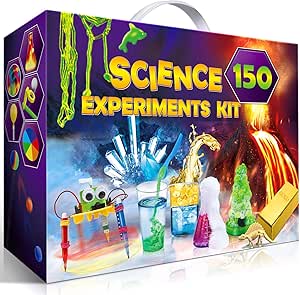 | Best for Broad Topic Variety | Brand: UNGLINGA | Experiment count: 150 | Recommended age: 8 years and up | VIEW LATEST PRICE | See Our Full Breakdown |
| Teacher Created Resources Up-Close Science Magnifying Glasses & Tweezers Activity Set |  | Best for Early Observation | Age range: 3+ | Magnifying glasses: 4 | Magnification: 3X | VIEW LATEST PRICE | See Our Full Breakdown |
| Carson Dellosa STEM Challenges Hands-On Science Kit |  | Best for Classroom and Homeschool Planning | Brand: Carson Dellosa Education | Age range: Ages 7–10 | Grade range: Grades 2–5 | VIEW LATEST PRICE | See Our Full Breakdown |
| National Geographic Ultimate Volcano Science Kit for Kids Ages 8-12 |  | Best for Geology Projects | Brand: Blue Marble | Recommended age: 8 years and up | Model number: NGVOLCANOULT | VIEW LATEST PRICE | See Our Full Breakdown |
| WESAYEE 8-Pack Solar-Powered STEM Fan Kits for Kids |  | Best for Group Engineering Builds | Brand: WESAYEE | Number of kits: 8 | Power source: Solar | VIEW LATEST PRICE | See Our Full Breakdown |
| National Geographic Junior Chemistry Set with 50 Experiments for Kids |  | Best for Early Elementary Beginners | Brand: Blue Marble | Age range: 4 years and up | Experiment count: 50 | VIEW LATEST PRICE | See Our Full Breakdown |
| National Geographic Amazing Chemistry Set with 100+ Experiments Ages 8-12 |  | Best for Chemistry Variety | Brand: Blue Marble | Age range: 8 years and up | Experiment count: 100+ experiments, plus a guide with 85 bonus projects | VIEW LATEST PRICE | See Our Full Breakdown |
| GadgetGlee STEM Electric Circuit Fan Kits for Kids, 8-Pack |  | Best for Classrooms and Groups | Brand: GadgetGlee | Quantity: 8 kits | Age range: 8–12 years | VIEW LATEST PRICE | See Our Full Breakdown |
| National Geographic Mega Crystal Growing Kit for Kids |  | Best for Patient, Display-Minded Learners | Brand: National Geographic | Recommended age: 8 years and up | Crystal colors: Blue, red, purple, green, yellow, and glow-in-the-dark | VIEW LATEST PRICE | See Our Full Breakdown |
| National Geographic Science Magic Kit with 100+ Experiments for Kids Ages 8–12 |  | Best for Science-Sharing and Performance | Brand: National Geographic | Developer: Blue Marble | Recommended age: 8–12 years | VIEW LATEST PRICE | See Our Full Breakdown |
| science kits for elementary student | Brand | Recommended age | Model number | Dimensions |
|---|---|---|---|---|
| EUDAX Electricity and Magnetis | EUDAX | 8–18 years | EUDAX-FC-80PCS | — |
| National Geographic Kids Micro | Blue Marble | 6+ | NGMICROST | 11 x 6.7 x 12 in |
| National Geographic Mega Scien | Blue Marble | — | NGMEGASCIKIT | — |
| STEM Science Kit | BeAndge | — | BA1020 | 5.66 x 8.42 x 2.04 in |
| UNGLINGA 70-Experiment Science | UNGLINGA | 8 years and up | HZDZKH030 | 11 x 8.66 x 3.54 in |
| UNGLINGA 150-Experiment Scienc | UNGLINGA | 8 years and up | — | 11.42 x 8.67 x 3.94 inches |
| Teacher Created Resources Up-C | — | — | — | — |
| Carson Dellosa STEM Challenges | Carson Dellosa Education | — | 140350 | — |
| National Geographic Ultimate V | Blue Marble | 8 years and up | NGVOLCANOULT | — |
| WESAYEE 8-Pack Solar-Powered S | WESAYEE | 8 years and up | BA1019 | — |
| National Geographic Junior Che | Blue Marble | — | — | 11 × 4.22 × 9.64 inches |
| National Geographic Amazing Ch | Blue Marble | — | — | 8.78 × 3.19 × 11.93 inches |
| GadgetGlee STEM Electric Circu | GadgetGlee | — | — | 6.57 × 5.55 × 2.56 inches |
| National Geographic Mega Cryst | National Geographic | 8 years and up | — | 7.87 × 4.92 × 9.84 inches |
| National Geographic Science Ma | National Geographic | 8–12 years | — | — |
More Details on Our Top Picks
EUDAX Electricity and Magnetism Experiment Kit
Electricity and magnetism are the focus here, with parts for circuits, electromagnets, an electric bell, and a hand-crank generator. That gives elementary students several ways to connect an abstract topic to visible or moving results. Compared with the National Geographic Kids Microscope Kit, which centers on observing prepared specimens, this set asks children to assemble and investigate how components work together. Its 79 listed items, color manual, and storage bag support a range of projects and help keep parts together between sessions. The tradeoff is that its recommended age range begins at eight, while the suggested grade levels are 9–11, so younger elementary students may need close adult guidance. It also requires three AA batteries, which are not included, and the kit’s specific electrical focus offers less topic variety than a broad experiment set.
Pros:- Includes materials for circuits, electromagnets, an electric bell, and a hand-crank generator.
- 79 listed items provide parts for multiple electricity and magnetism projects.
- Color manual supports guided experiments.
- Storage bag provides a place to keep small components together.
Cons:- Three AA batteries are required but not included.
- The suggested grade levels of 9–11 may place some projects beyond younger elementary students without adult help.
- Its narrow focus offers less subject variety than the National Geographic Mega Science Lab.
Best for: Families with elementary students around age eight and up who want guided, hands-on projects about circuits, magnets, and simple electrical devices.
Not ideal for: Younger children looking for mostly independent activities, or families who want one kit covering several branches of science.
- Brand:EUDAX
- Number of items:79
- Contents:56 electricity items, 21 magnetism items, 2 repair tools, color manual, storage bag
- Recommended age:8–18 years
- Suggested grade levels:9–11
- Battery requirement:3 AA batteries, not included
- Item weight:1.43 kg
- Model number:EUDAX-FC-80PCS
Our verdict“Choose this kit for an elementary student ready to explore how circuits and magnets work, rather than for broad, multi-topic science activities.”
National Geographic Kids Microscope Kit, 400x Magnification
For children who would rather inspect a specimen than build a device, this 400x microscope kit offers a clear alternative to the EUDAX Electricity and Magnetism Experiment Kit. Its prepared slides provide a ready starting point, while blank slides, rocks and minerals, a pipette, tweezers, and a specimen dish invite children to set up observations of their own. LED lights above and below help illuminate different kinds of samples, and large focus knobs and an adjustable platform are designed to make basic operation more approachable for young users. The included guide adds activity ideas, though this remains a microscope-centered kit rather than a broad collection of experiments like the National Geographic Mega Science Lab. The plastic enclosure and battery-powered design are practical tradeoffs: batteries are needed, and this is not a metal-bodied classroom instrument.
Pros:- Offers up to 400x magnification with LED lighting above and below.
- Includes prepared slides, blank slides, and rock and mineral specimens.
- Large focus knobs and an adjustable platform support beginner use.
- Pipette, tweezers, specimen dish, and a learning guide add hands-on activity options.
Cons:- Requires batteries for operation.
- The plastic enclosure may not suit buyers seeking a more substantial instrument.
- Its observation focus is narrower than the National Geographic Mega Science Lab’s mix of science topics.
Best for: Families with children age six and up who enjoy examining plants, rocks, and other specimens and want an accessible first microscope activity set.
Not ideal for: Buyers seeking a wide mix of experiment types or a microscope that does not rely on batteries.
- Brand:Blue Marble
- Maximum magnification:400x
- Light source:LED, above and below
- Power source:Battery powered
- Recommended age:6+
- Dimensions:11 x 6.7 x 12 in
- Weight:1.8 lb
- Included items:6 prepared plant slides, 6 rocks and minerals, 6 blank slides, pipette, specimen dish, tweezers, lab guide, merit badge stickers
- Model number:NGMICROST
Our verdict“Pick this kit for a young learner drawn to close-up observation, not for a child who wants a broad rotation of experiments.”
National Geographic Mega Science Lab with 75 Experiments for Kids 8-12
The main strength of the Mega Science Lab is range: its 45 core activities and bonus guide with 30 household-item projects span Earth science, chemistry, and science magic. That makes it a stronger fit for families unsure which subject will hold a child’s attention than the more specialized EUDAX Electricity and Magnetism Experiment Kit or the microscope-focused National Geographic kit. The included Earth science, chemistry, and magic components give the set several different activity styles, while rock, mineral, and crystal specimens add tangible materials to explore. The variety comes with a management cost: 75 activities and multiple components can feel like a lot for younger elementary students without adult help. Some chemistry projects also call for careful handling. Compared with the UNGLINGA 70-Experiment Science Kit, this one spreads its activities across more named subject areas, but the breadth may mean more setup and supervision.
Pros:- Combines Earth science, chemistry, and science-magic activities.
- Includes 45 core experiments plus 30 additional projects using household items.
- Real rock, mineral, and crystal specimens add hands-on materials.
- Broad subject mix makes it easier to try different kinds of science activities.
Cons:- The many components and activities may overwhelm younger children without adult supervision.
- Some chemistry reactions require careful handling and safety precautions.
- Its broad assortment may involve more setup than the focused National Geographic Kids Microscope Kit.
Best for: Families with children age eight and up who want to sample Earth science, chemistry, and science-magic activities in one kit.
Not ideal for: Younger elementary students who need simple, independent activities, or households seeking a single-subject kit with minimal adult oversight.
- Brand:Blue Marble
- Age range:8 years and up
- Number of experiments:75
- Core experiments:45
- Bonus projects:30 additional projects using household items
- Included components:Earth Science Kit, Chemistry Kit, Science Magic Kit
- Educational objectives:Critical thinking, observation skills, STEM
- Model number:NGMEGASCIKIT
Our verdict“Choose this set when subject variety matters more than a simple, tightly focused activity path.”
STEM Science Kit – 5 Set Wind Powered Cars for Kids
Five buildable cars make this the most group-oriented option in this batch. Each kit includes accessories, instructions, and a screwdriver, giving children a concrete assembly project and a chance to explore how a wind-powered design moves. That makes it distinct from the National Geographic Mega Science Lab, which offers many activity types, and the UNGLINGA 70-Experiment Science Kit, which moves between separate demonstrations. Here, the learning is narrower but more focused on building and problem-solving. A five-pack can work well for a classroom, siblings, or a science activity with friends; it is less appealing for one child who only needs a single project. The product description also says AA batteries are required, but the listed product details do not specify the number. Buyers should check the instructions before starting, since the batteries are not included.
Pros:- Five kits provide multiple build projects for groups or siblings.
- Includes accessories, detailed instructions, and a screwdriver for assembly.
- Focuses on hands-on construction and problem-solving rather than demonstrations alone.
- Plastic components are described as non-toxic and eco-friendly.
Cons:- The five-pack may be more than a single child needs.
- AA batteries are required but not included; the number is not specified in the supplied details.
- Offers a narrower range of science topics than the National Geographic Mega Science Lab.
Best for: Teachers, group leaders, or families with several children who want a shared build-and-assemble activity for ages eight and up.
Not ideal for: A single child who wants a wide range of experiments, or buyers who want a one-project kit without a five-pack quantity.
- Brand:BeAndge
- Age range:8–13 years
- Number of packs:5
- Number of items:5
- Material:Plastic
- Dimensions:5.66 x 8.42 x 2.04 in
- Battery requirement:AA batteries required, not included; quantity not specified
- Model number:BA1020
Our verdict“Choose this five-pack for a group that can build together, and skip it if one child needs a varied set of experiments.”
UNGLINGA 70-Experiment Science Kit for Kids
The 70-experiment lineup brings together familiar, hands-on activities such as growing crystals, erupting a volcano, launching a balloon rocket, and making fruit circuits. An illustrated guide explains both the steps and the science behind them, so children get more than a sequence of instructions. Compared with the EUDAX Electricity and Magnetism Experiment Kit, this set moves across more kinds of activities rather than concentrating on circuits and magnetic projects. It is also a simpler alternative to the National Geographic Mega Science Lab’s named mix of Earth science, chemistry, and science magic, though both offer broad activity counts. The tradeoff is that a large list does not guarantee every project will suit every child, and some experiments need adult supervision. The supplied details do not specify how many or which materials are included, so families should be prepared to check the guide for any household supplies needed.
Pros:- Offers 70 activities across several hands-on science themes.
- Illustrated guide explains the steps and the science behind each experiment.
- Activities include crystal growing, a volcano, a balloon rocket, and fruit circuits.
- Introduces basic chemistry and safe scientific practices.
Cons:- Some experiments require adult supervision.
- The supplied product details do not list the included components or identify which activities need household supplies.
- The activity count may be less useful to children seeking a focused subject path like the EUDAX electricity kit.
Best for: Families with children age eight and up who want a guided mix of recognizable science activities, including crystals, a volcano, and simple circuits.
Not ideal for: Children who need fully independent projects, or buyers who want a clearly itemized component list before choosing a kit.
- Brand:UNGLINGA
- Number of experiments:70
- Recommended age:8 years and up
- Set name:Comprehensive Science Experiment Set
- Material:Plastic
- Dimensions:11 x 8.66 x 3.54 in
- Model number:HZDZKH030
Our verdict“Pick this kit for a child who wants varied, illustrated activities and has an adult available for experiments that need supervision.”
UNGLINGA 150-Experiment Science Kit for Kids
I’d choose this kit for an elementary student who wants to try several branches of science rather than focus on one project type. Its 150 experiments span chemistry, physics, earth science, and surface tension, giving it a wider subject mix than the volcano-focused National Geographic Ultimate Volcano Science Kit. The illustrated, step-by-step manual can help children follow activities with less guesswork, while included tools and materials provide a starting point for hands-on work. Some projects use household supplies, which can make the kit easier to extend but means it isn’t fully self-contained. Compared with Carson Dellosa’s card-based STEM Challenges, this set offers many more listed experiments and physical tools, but it takes more planning to gather extras and manage different activities.
Pros:- Lists 150 experiments across multiple science topics
- Includes an illustrated, step-by-step manual
- Provides tools and materials for hands-on activities
- Some projects use common household items, making it possible to continue with supplies at home
Cons:- Some activities require household items that are not included
- The broad experiment range may require adult help to select and prepare suitable activities
Best for: Families with an elementary-age child who wants to sample several science subjects and can get help gathering household materials
Not ideal for: Buyers seeking a fully self-contained kit or a single, tightly focused project that needs little setup
- Brand:UNGLINGA
- Experiment count:150
- Recommended age:8 years and up
- Set name:150 Experiments
- Included components:Science experiment tools and materials
- Educational objective:Creative skills
- Material:Plastic
- Dimensions:11.42 x 8.67 x 3.94 inches
Our verdict“Choose this kit for broad science exploration if you’re comfortable sourcing a few household supplies along the way.”
Teacher Created Resources Up-Close Science Magnifying Glasses & Tweezers Activity Set
For younger elementary learners, this set makes observation the activity rather than a small part of a larger experiment. Four 3X magnifying glasses, four tweezers, and five double-sided activity cards invite children to inspect and handle objects, with simple prompts to guide their attention. The shared tools and bright stand suit classroom stations or a small group at home. Compared with the Carson Dellosa STEM Challenges cards, this is far more hands-on with specimens and close looking, but it covers fewer kinds of science tasks and offers less depth for older students. Its age range of 3+ makes it a better fit for early learners than the UNGLINGA 150-Experiment kit, which is recommended for ages 8 and up. The tradeoff is that groups larger than four may need to share equipment.
Pros:- Four kid-sized magnifying glasses and tweezers support hands-on observation
- Five double-sided cards provide simple activity guidance
- Storage stand keeps tools organized and accessible
- Age range begins at 3+, making it suitable for early learners
Cons:- Four magnifying glasses may not cover a larger group at once
- Activities focus on basic observation rather than more advanced science concepts
Best for: Preschool and early elementary teachers or caregivers setting up a small-group observation station
Not ideal for: Older elementary students seeking advanced experiments, or large classrooms that need a separate magnifier for every child
- Age range:3+
- Magnifying glasses:4
- Magnification:3X
- Lens diameter:3 inches
- Tweezers:4
- Activity cards:5 double-sided cards
- Assembled storage stand:8 x 2-3/4 x 4-3/4 inches
- Item weight:0.41 kg
Our verdict“Pick this for young children learning to observe and handle objects, not for students ready for multi-step experiments.”
Carson Dellosa STEM Challenges Hands-On Science Kit
I’d favor this card set when the goal is to fit science activities into lessons, centers, or short homeschool sessions. The 30 full-color challenge cards cover life, physical, earth, and space science, and each includes materials, hints, and an explanation—useful scaffolding for adults leading a project or children working more independently. A divider keeps the cards sorted, unlike the loose range of tools and activities in the UNGLINGA 150-Experiment kit. That larger kit offers far more experiments and physical equipment; Carson Dellosa is easier to store and schedule, but its card count limits repeat variety. Some challenges need household materials, so the set is a guide to activities rather than a complete supply box. Its grades 2–5 focus makes it more age-targeted than the magnifier set for very young learners.
Pros:- Thirty full-color cards cover life, physical, earth, and space science
- Materials lists, hints, and explanations support guided activities
- Divider helps keep cards organized for classroom centers
- Designed for grades 2–5 and supports problem-solving
Cons:- Some activities require household materials that are not included
- Thirty cards offer less activity variety than larger experiment kits
Best for: Grades 2–5 teachers and homeschool families who want organized, short activities across several science subjects
Not ideal for: Buyers who want included experiment equipment or a large supply of activities without sourcing extra materials
- Brand:Carson Dellosa Education
- Age range:Ages 7–10
- Grade range:Grades 2–5
- Activity cards:30 full-color cards
- Included components:33 pieces: 30 cards and 1 divider
- Educational objectives:Critical thinking and problem-solving
- Item weight:16 ounces
- Model number:140350
Our verdict“Choose this card set for organized, curriculum-friendly science sessions if you’re willing to supply some materials.”
National Geographic Ultimate Volcano Science Kit for Kids Ages 8-12
This is the pick I’d make when a child wants a memorable, focused geology project rather than a sampler of unrelated experiments. The reusable volcano mold, paints, brushes, and real volcanic rocks give the activity a building and display element that the card-based Carson Dellosa STEM Challenges set doesn’t offer. Eruption powder and pop crystals add repeatable eruption effects, while the full-color guide connects the project to geology and chemistry. Compared with the UNGLINGA 150-Experiment kit, this one has a narrower subject range but a more cohesive path from making the volcano to exploring how eruptions work. The main tradeoff is mess: loose powder can make cleanup part of the project, and the kit’s focus may be limiting for a child who wants a different experiment each session.
Pros:- Reusable mold supports repeated volcano builds
- Includes real volcanic rocks and a full-color learning guide
- Paints and brushes add a creative construction component
- Eruption powder and pop crystals provide repeatable eruption effects
Cons:- Powder-based experiments can be messy
- The volcano-centered content offers less subject variety than multi-topic kits
Best for: Ages 8–12 students preparing a volcano-themed science fair project or looking for a guided geology activity
Not ideal for: Families wanting a wide-ranging experiment collection or an activity with minimal cleanup
- Brand:Blue Marble
- Recommended age:8 years and up
- Model number:NGVOLCANOULT
- Item dimensions:7.25 x 2.65 x 10 inches
- Mold:Reusable volcano mold
- Included creative supplies:Paints and brushes
- Learning materials:Full-color learning guide
- Additional components:Volcanic rocks, eruption powder, and pop crystals
Our verdict“Choose this for a focused, build-and-erupt geology project if you have space for cleanup.”
WESAYEE 8-Pack Solar-Powered STEM Fan Kits for Kids
When several children need their own build, I’d rank this set ahead of single-project kits: it includes eight solar-powered fan kits with individual manuals, making it practical for a classroom, club, or party activity. Tool-free assembly and included double-sided tape lower the barrier to getting started, while the build introduces basic circuits and construction. Compared with the National Geographic Ultimate Volcano Science Kit, the focus here is engineering rather than geology, and the eight separate builds are better suited to simultaneous group work. The tradeoff is that the science lesson is narrower than a multi-topic set such as the UNGLINGA 150-Experiment kit. The description also doesn’t say whether the fans operate without direct sunlight, so buyers should plan around access to bright conditions rather than assume flexible indoor use.
Pros:- Eight kits support simultaneous individual builds
- Tool-free assembly and included tape suit beginner builders
- Individual manuals provide guidance for each kit
- Introduces basic circuits and engineering concepts
Cons:- The description does not specify whether the fans work without direct sunlight
- Focuses on one type of solar-powered build rather than a range of science subjects
Best for: Teachers, club leaders, and families organizing a hands-on build for up to eight children ages 8 and up
Not ideal for: Buyers seeking a broad experiment curriculum or a solar activity that can be counted on to work away from direct sunlight
- Brand:WESAYEE
- Number of kits:8
- Power source:Solar
- Recommended age:8 years and up
- Assembly:Tool-free; double-sided tape included
- Included manuals:Individual manuals for each kit
- Model number:BA1019
- Material note:Non-toxic plastics stated to meet US toy safety standards
Our verdict“Pick this for a group engineering activity when you can provide suitable light for the solar fans.”
National Geographic Junior Chemistry Set with 50 Experiments for Kids
For younger elementary students, this set makes chemistry feel approachable without starting with a long list of specialized supplies. It is aimed at ages 4 and up and includes more than 20 child-safe tools, plus illustrated, step-by-step directions for 50 experiments. That structure can help an adult guide a child through activities before they are ready to work independently. Compared with the National Geographic Amazing Chemistry Set, this kit is better aligned with younger beginners, while the older-child set offers a much larger experiment count and more advanced scope. The tradeoff is that many Junior experiments call for common household items not included, so the kit is not fully self-contained. I’d choose it for guided first experiments, not for families seeking a complete chemistry supply box.
Pros:- 50 experiments give young learners a range of hands-on activities.
- More than 20 child-safe tools provide a simple starting lab setup.
- Illustrated step-by-step directions suit children who are still building reading skills.
- Designed for ages 4 and up, younger than the other National Geographic chemistry set in this group.
Cons:- Many activities require household materials that are not included.
- Its introductory age range and scope may feel limited to older elementary students.
- Adult guidance is likely needed for young children to follow the activities.
Best for: Families with preschool or early elementary children who want illustrated, adult-guided chemistry activities and reusable lab tools.
Not ideal for: Buyers seeking mostly self-contained experiments or a kit for older children ready for a broader, more advanced chemistry program.
- Brand:Blue Marble
- Age range:4 years and up
- Experiment count:50
- Tools:Over 20 child-safe tools
- Included components:Chemistry kit with test tubes, goggles, and other lab tools
- Dimensions:11 × 4.22 × 9.64 inches
- Weight:0.72 kg
- Power:No batteries required
Our verdict“Choose this for a younger child’s first guided chemistry activities, provided you are comfortable supplying some materials from home.”
National Geographic Amazing Chemistry Set with 100+ Experiments Ages 8-12
This is the chemistry pick for elementary students who want a sequence of projects rather than a handful of demonstrations. The set includes tools such as test tubes, beakers, and pipettes, over 100 experiments, and a bonus guide with 85 more activities using household items. Crystal growing, color-changing solutions, and a bouncy ball give the projects a wider mix than the National Geographic Junior Chemistry Set, which is more age-accessible but offers fewer experiments. That breadth makes this better suited to an older child who likes returning to a kit over time. The tradeoffs are a higher need for adult supervision around chemicals or small parts and the fact that bonus projects rely on supplies from home. I’d favor it over the Science Magic Kit for children specifically interested in chemistry tools and reactions.
Pros:- More than 100 experiments, with an additional guide of 85 household-material projects.
- Includes test tubes, beakers, and pipettes for hands-on lab-style play.
- Projects span crystals, color changes, and other reactions rather than one narrow activity.
- Its age guidance suits older elementary students better than the Junior Chemistry Set.
Cons:- Some activities may need adult supervision because of chemicals or small parts.
- The bonus projects require common household materials that are not part of the kit.
- The large activity count may be less useful for children who prefer a focused, single-topic kit.
Best for: Ages 8 and up who want repeated chemistry projects, real lab-style tools, and an adult available to supervise.
Not ideal for: Younger children or families wanting activities that need little supervision and few additional household supplies.
- Brand:Blue Marble
- Age range:8 years and up
- Experiment count:100+ experiments, plus a guide with 85 bonus projects
- Included tools:Test tubes, beakers, and pipettes
- Featured activities:Crystal growing, color-changing solutions, glowing test tubes, and a bouncy ball
- Dimensions:8.78 × 3.19 × 11.93 inches
- Weight:1.8 pounds
- Packs:1
Our verdict“Pick this for an older elementary student who wants a substantial chemistry activity collection and can work with adult oversight.”
GadgetGlee STEM Electric Circuit Fan Kits for Kids, 8-Pack
Unlike the chemistry-heavy National Geographic sets, this option gives children a concrete engineering task: assemble a small fan and explore a basic circuit. Its defining advantage is quantity—eight individually packed projects make it practical for a classroom, club, or household with several children, without asking them to share one central build. Each kit includes a motor, fan blade, battery holder, base, and assembly instructions for ages 8–12. Compared with the WESAYEE solar-powered fan kits listed elsewhere in the roundup, GadgetGlee uses AA batteries rather than solar power; that can make the activity less dependent on light, but batteries are not included. It also covers a narrower slice of science than a multi-topic experiment set. I’d choose it when building and assembling matters more than having a large variety of experiments.
Pros:- Eight individually packed builds suit group activities without requiring children to share one project.
- Motor, fan blade, battery holder, and base support a hands-on introduction to circuits.
- Step-by-step instructions give children a guided assembly task.
- Battery-powered design does not depend on sunlight like the WESAYEE solar fan kits.
Cons:- AA batteries are required but not included.
- The kit focuses on one fan-and-circuit project rather than covering multiple science topics.
- Its plastic components and small build may offer less open-ended exploration than a construction-focused challenge kit.
Best for: Teachers, club leaders, and families who need eight age-appropriate circuit builds for children ages 8–12.
Not ideal for: Buyers seeking chemistry, earth science, or a broad experiment collection, or anyone who needs a kit with batteries included.
- Brand:GadgetGlee
- Quantity:8 kits
- Age range:8–12 years
- Included components:130 DC motor, 50 RPM; plastic fan blade; battery holder; green base
- Batteries:AA batteries required; not included
- Material:Plastic
- Dimensions:6.57 × 5.55 × 2.56 inches
- Weight:0.29 kg
Our verdict“Choose this for a group that needs multiple guided circuit builds, and plan to supply the AA batteries separately.”
National Geographic Mega Crystal Growing Kit for Kids
This kit is a focused choice for children curious about minerals, crystal formation, and watching a project develop over several days. It grows six colored crystals, including a glow-in-the-dark variety, using two silicone chambers; the included guide and four real gemstone specimens add material for comparing the grown crystals with natural examples. Compared with the National Geographic Amazing Chemistry Set, which offers many different experiments, this kit trades breadth for a more sustained, topic-specific activity. That makes it a better fit for a child willing to wait 3–4 days for results than for someone who wants a new experiment each afternoon. A USB-powered display presents up to five crystals, so one of the six grown pieces has no dedicated display slot. I’d choose it for a patient learner who enjoys keeping and showing finished projects.
Pros:- Six crystal colors, including a glow-in-the-dark crystal, give the project a clear visual goal.
- Two silicone growing chambers support the included crystal activity.
- Four real gemstone specimens give children natural examples to examine alongside their crystals.
- USB-powered light-up display adds a way to showcase finished growth.
Cons:- Crystal growth takes about 3–4 days, so results are not immediate.
- The display holds five crystals while the kit grows six.
- Its focus on crystal growing offers less activity variety than a large chemistry experiment set.
Best for: Ages 8 and up who enjoy minerals, multi-day projects, and displaying finished science activities.
Not ideal for: Children who want immediate results or families looking for a broad kit with many different experiment types.
- Brand:National Geographic
- Recommended age:8 years and up
- Crystal colors:Blue, red, purple, green, yellow, and glow-in-the-dark
- Growing chambers:2 silicone chambers
- Growth time:3–4 days
- Display:USB-powered light-up stand displays up to 5 crystals
- Gemstone specimens:Rose quartz, fluorite, blue calcite, and quartz geode
- Dimensions:7.87 × 4.92 × 9.84 inches
- Weight:1.49 kg
Our verdict“Pick this for a child who will enjoy waiting for crystals to grow and displaying them, rather than rotating through many kinds of experiments.”
National Geographic Science Magic Kit with 100+ Experiments for Kids Ages 8–12
This kit gives science-curious children a playful route into activities they can present as magic, making it a different proposition from the lab-focused National Geographic Amazing Chemistry Set. Both offer more than 100 experiments, but the Science Magic Kit’s stated appeal is imaginative, creative play, while the chemistry set names lab tools and specific reaction projects. That distinction matters: choose this one if the child likes surprising an audience and enjoys framing activities as tricks; choose the chemistry set if they want test tubes, beakers, and a clearly chemistry-centered experience. The product information gives an age range of 8–12 and an experiment count, but does not list the included components or name individual activities. I’d treat that as a less transparent choice for buyers who need to know exactly what materials and projects they are getting.
Pros:- More than 100 experiments offer a substantial activity count.
- The science-magic framing can suit children who enjoy performing or sharing demonstrations.
- Designed for ages 8–12, an elementary-school age range.
- Developed by Blue Marble, according to the product information.
Cons:- The provided product details do not identify included components or specific experiments.
- Its broad science-magic positioning is less subject-specific than the chemistry and crystal kits.
- The available information does not specify material needs or supervision guidance.
Best for: Ages 8–12 who enjoy imaginative science activities and sharing demonstrations with family or friends.
Not ideal for: Buyers who want a clearly listed tool set, named experiments, or a focused subject such as chemistry or crystal growing.
- Brand:National Geographic
- Developer:Blue Marble
- Recommended age:8–12 years
- Experiment count:100+
- Activity style:Science magic and creative play
Our verdict“Choose this for an 8–12-year-old who values creative, shareable science activities more than a clearly specified lab kit.”

How We Picked
I compared the kits by how well they fit elementary learners: whether activities are understandable for children, how directly the kit supports hands-on learning, and whether the subject matter is likely to sustain interest beyond a single session. I also weighed the type of experience each offers, from observing specimens and growing crystals to assembling circuits, testing wind power, and following chemistry demonstrations. A large experiment count earned attention only when it appeared to offer meaningful variety rather than serving as the sole measure of value.
The ranking favors kits with a useful balance of accessibility, range, and repeat engagement. Broad kits rise when they can serve several interests; focused kits rank well for children with a clear subject preference, but sit lower for families seeking an all-purpose set. I also considered likely adult support, setup, storage, and whether a kit’s specialized materials limit follow-up activities. Because age, reading ability, and supervision needs vary, the best choice depends on the child as much as the kit.
Factors to Consider When Choosing Science Kits For Elementary Students
Before choosing a kit, I’d match the activity style to the child and the household routine, not just the advertised number of experiments. These factors can help narrow the field before comparing individual sets.
Match the Activity to How the Child Likes to Learn
Some children want to follow a sequence and see a clear result; others prefer building, adjusting, and trying again. A child who enjoys careful observation may stay engaged longer with magnification or specimen work, while a hands-on problem solver may prefer a circuit or vehicle challenge. A common mistake is choosing the subject an adult finds educational rather than the activity the child will actually repeat. Think about whether the child likes reading instructions, handling small parts, mixing materials, or making things move. If you are unsure, a broad kit can sample several styles, but a focused kit may be more rewarding when the child already has a strong interest.
Treat Age Guidance as a Starting Point
Age labels cannot account for differences in reading fluency, patience, fine-motor control, or confidence with instructions. A younger elementary student may enjoy a kit with a simpler activity flow and an adult nearby, while an older child may want more room to make choices and repeat tests. Check whether the child can handle the small pieces and follow the printed steps without frustration. Do not assume that a kit marked for older children is unsuitable; it may work well as a shared activity with an adult. The reverse also applies: a high experiment count does not guarantee that every activity will feel challenging to an older elementary student.
Look Past the Experiment Count
Counts can make kits look easy to compare, but an activity may be a small variation on a previous experiment rather than a new concept. Ask whether the set changes materials, skills, or scientific ideas across its activities. A smaller focused kit can offer a more coherent learning path, while a larger collection may be better for a child who likes sampling different subjects. Check whether activities can be repeated with included materials or household supplies; repeatability matters when a child wants to test a different setup. Choose variety for exploration and focus for sustained interest, rather than assuming more listed experiments always means more useful play.
Plan for Adult Help, Setup, and Cleanup
Science activities vary in how much preparation they ask of a caregiver. Mixing materials, arranging small components, or managing a multi-step build can make a kit a shared project rather than independent play. That may be a benefit for family time, but it can be a poor fit when the goal is a quick activity the child can start alone. Consider where experiments will happen, how spills or loose parts will be managed, and whether components need to be stored between sessions. Read the activity instructions before gifting when possible, especially if the child will use the kit without close supervision. A simpler kit used often can suit a household better than a more involved set that stays in its box.
Choose Between a Standalone Kit and a Learning Path
A single-subject kit can give a child a clear introduction to one idea, but it may not provide a natural next step once the activities are finished. A broad set is more likely to expose a child to several branches of science, though its topics may receive less sustained attention. If the child already has a favorite subject, a focused kit can be a satisfying starting point for books, museum visits, or later projects. If the aim is to discover what interests them, breadth is usually more useful than depth at first. Before buying, think about what you hope the kit will lead to, not only what happens during the first activity.
Check What the Kit Requires Beyond Its Box
Some kits rely on included tools or materials, while others may call for everyday items, batteries, or a suitable workspace. That difference affects how quickly a child can begin and how often activities can be repeated. Read the materials list and activity instructions for anything the kit does not supply, and check whether consumable components limit future use. Parents sometimes focus on the main experiment and overlook the small practical requirements that determine whether it gets started. If convenience matters, favor activities with clear preparation needs and easy storage. If you are happy to gather extra materials, a kit that uses common household items can extend the play beyond its initial activities.
Frequently Asked Questions
Which type of science kit is easiest for an elementary student to use independently?
Look for a kit with short, clearly ordered steps, manageable parts, and activities that do not call for much preparation. Independence also depends on the child’s reading ability and comfort handling materials, so age labels alone are not enough. Observation-based activities can be easier to start than projects with several assembly steps or mixtures to prepare. For a first kit, review a sample activity with the child before leaving them to work alone. Keep an adult available if instructions, small components, or cleanup call for help.
Should I choose a broad experiment kit or a focused chemistry or physics kit?
Choose a broad kit when the child is still discovering what interests them or likes switching between activity types. A focused kit makes more sense when they already ask questions about a particular subject and will enjoy repeating related experiments. Broad sets can introduce more topics, but they may not spend as much time on any one idea. Focused sets can offer a clearer theme, though interest may fade if the child’s enthusiasm changes. The best choice depends on whether you want exploration across subjects or a deeper start in one area.
Are kits with more experiments always a better value for a family?
No; a listed activity count does not show how distinct, repeatable, or engaging the experiments are. Some children benefit from many short options, while others get more from a smaller set they can repeat and modify. Check whether activities use varied skills and concepts, and whether materials last for more than one session. Also think about how much adult setup each activity asks for: unused activities do not add much practical value. A kit that fits the child’s interests and family routine may be the better buy even with fewer activities.
How much adult supervision should I expect with a science kit?
It varies by activity, the child’s age, and how comfortably they follow instructions. Builds with small components and experiments involving mixing or multiple steps may work best as shared projects, while simpler observation activities can be easier to manage with less help. Before the child starts, read the instructions and identify any preparation, safety directions, or cleanup needs. Do not assume that a kit is fully independent just because it is marketed to children. If independent use is a priority, choose activities suited to the child’s current skills and check in as needed.
What should I check before buying a kit as a gift?
Start with the child’s age, interests, and experience with reading instructions or handling small parts. Then check what is included, whether activities require household materials, and how much adult help the kit may need. If the child already owns a microscope, circuit set, or similar equipment, a different subject may add more variety. Consider where the kit will be used and whether its components can be stored neatly between sessions. When you cannot ask the family directly, a broad kit can be a safer choice than a highly specialized one, provided its activities suit the child’s age and abilities.
Conclusion
For most families, I’d choose the National Geographic Mega Science Lab as the best overall because its broad activity mix can suit children still exploring different branches of science. The UNGLINGA 70-Experiment Science Kit is my best value-style pick for families who want a varied entry point without choosing the largest activity collection. For a child who is new to science kits, the National Geographic Junior Chemistry Set is the best beginner fit among the subject-focused options, while the National Geographic Amazing Chemistry Set is the best premium-style choice for an older elementary learner seeking more chemistry activities. For specific interests, choose the Microscope Kit for close observation, the Solar-Powered Fan or Wind-Powered Cars for energy and building, or the Crystal Growing Kit for a longer-running project. I’d let the child’s preferred way of learning decide between a broad sampler and a focused kit.
Halloween Picks
halloween
As an affiliate, we earn on qualifying purchases.