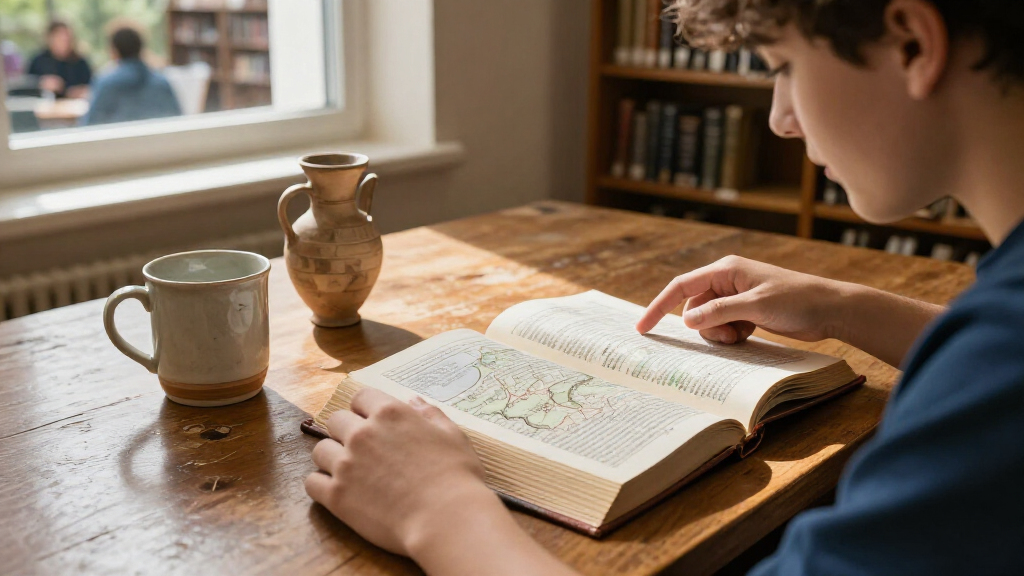

Choosing the right material for studying the ancient world depends heavily on the student’s age and learning style. The History of the Ancient World: From the Earliest Accounts to the Fall of Rome stands out as the best overall pick for older students who need a rigorous, narrative-driven foundation. For younger learners, History Alive! The Ancient World offers an engaging, hands-on curriculum that makes complex civilizations accessible through active participation. Meanwhile, Eyewitness Ancient Rome provides a visually rich introduction for those who struggle with dense text. The main tradeoff you will face is between academic depth and engagement level; a comprehensive textbook may bore a beginner, while an activity book may lack the scholarly nuance required for advanced study. Read on to see how these fourteen options compare across different educational needs.

Prime made for students and young adults
- Fast, free delivery for dorm and study essentials
- Prime Video and Amazon Music included
- Member-only deals
Key Takeaways
- Curriculum-based books like History Alive! offer structured lesson plans, whereas standalone texts require the student to create their own study schedule.
- Visual aids are not just decoration; in books like Eyewitness Ancient Rome, images serve as primary data sources for understanding architecture and daily life.
- Narrative history books prioritize chronological flow and cause-and-effect relationships, making them superior for developing critical thinking skills over rote memorization.
- Activity-based books often sacrifice historical accuracy for fun, making them better supplements than primary sources for serious academic work.
- Grade-level distinctions are blurry in history; a strong reader in third grade can benefit from middle-school texts if the content is presented clearly.
| Ancient History-Based Writing Lessons: Student Book |  | Best for Writing Practice | Format: Student book | Subject: Writing lessons based on ancient history | Audience: Students | VIEW LATEST PRICE | See Our Full Breakdown |
| Eyewitness Ancient Rome: Discover One of History’s Greatest Civilizations |  | Best Visual Introduction to Rome | Format: Book | Series: Eyewitness | Topic: Ancient Rome | VIEW LATEST PRICE | See Our Full Breakdown |
| The History of the Ancient World: From the Earliest Accounts to the Fall of Rome |  | Best Broad Historical Survey | Format: Book | Topic: Ancient world history | Coverage begins: Earliest accounts | VIEW LATEST PRICE | See Our Full Breakdown |
| National Geographic Kids Everything Ancient Egypt |  | Best for Younger Egypt Students | Format: Book | Topic: Ancient Egypt | Audience: Kids | VIEW LATEST PRICE | See Our Full Breakdown |
| History Alive! The Ancient World (2017 Edition) |  | Best for Classroom Textbook Use | Format: Book | Topic: The ancient world | Edition: 2017 | VIEW LATEST PRICE | See Our Full Breakdown |
| Civilizations of Ancient History for Kids: Mesopotamia, Egypt, China, the Maya, Greece, Rome, and the Indus Valley |  | Best for Broad Civilization Coverage | Format: Book | Audience: Kids | Subject: Ancient history | VIEW LATEST PRICE | See Our Full Breakdown |
| History Alive! The Ancient World Interactive Student Notebook |  | Best for Structured Student Work | Product type: Interactive student notebook | Subject: The ancient world | Associated title: History Alive! The Ancient World | VIEW LATEST PRICE | See Our Full Breakdown |
| Hands-On History: Ancient Civilizations Activities |  | Best for Classroom Activities | Resource type: Teacher resource | Subject: Social studies | Topic: Ancient civilizations | VIEW LATEST PRICE | See Our Full Breakdown |
| Ancient Egypt (DK Ancient Histories) |  | Best for an Egypt-Focused Unit | Series: DK Ancient Histories | Subject: Ancient Egypt | Format: Book | VIEW LATEST PRICE | See Our Full Breakdown |
| History Pockets: Ancient Civilizations, Grades 1–3 |  | Best for Early-Elementary Learners | Resource title: History Pockets: Ancient Civilizations | Grade level: 1–3 | Subject: Ancient civilizations | VIEW LATEST PRICE | See Our Full Breakdown |
| National Geographic World History: Ancient Civilizations, California Student Edition |  | Best for Standards-Aligned Classroom Use | Publisher: Cengage Learning | ISBN-13: 978-1337110795 | Edition: California Student Edition | VIEW LATEST PRICE | See Our Full Breakdown |
| Ancient Greece: From Prehistoric to Hellenistic Times |  | Best for Advanced Academic Depth | Author: Thomas R. Martin | Publisher: Yale University Press | ISBN-13: 978-0300160052 | VIEW LATEST PRICE | See Our Full Breakdown |
| Ancient World History Word Search Puzzle Book |  | Best for Low-Effort Engagement | Puzzle Count: 55 | Topic: Ancient civilizations, leaders, and events | Format: Paperback | VIEW LATEST PRICE | See Our Full Breakdown |
| The Story of the World: History for the Classical Child, Volume 1: Ancient Times |  | Best for Narrative-Based Learning | Volume: 1 | Period Covered: Earliest nomads to last Roman Emperor | Edition: Revised | VIEW LATEST PRICE | See Our Full Breakdown |
| ancient history books for student | Format | Subject | ISBN-13 |
|---|---|---|---|
| Ancient History-Based Writing | Student book | Writing lessons based on ancient history | 9781623413448 |
| Eyewitness Ancient Rome: Disco | Book | — | 9780744056376 |
| The History of the Ancient Wor | Book | — | — |
| National Geographic Kids Every | Book | — | 9781426308401 |
| History Alive! The Ancient Wor | Book | — | 9781583712174 |
| Civilizations of Ancient Histo | Book | Ancient history | — |
| History Alive! The Ancient Wor | — | The ancient world | — |
| Hands-On History: Ancient Civi | — | Social studies | — |
| Ancient Egypt | Book | Ancient Egypt | — |
| History Pockets: Ancient Civil | — | Ancient civilizations | — |
| National Geographic World Hist | Hardcover | Ancient Civilizations | 978-1337110795 |
| Ancient Greece: From Prehistor | Paperback | — | 978-0300160052 |
| Ancient World History Word Sea | Paperback | — | — |
| The Story of the World: Histor | Paperback | — | 978-1933339009 |
More Details on Our Top Picks
Ancient History-Based Writing Lessons: Student Book
Ancient History-Based Writing Lessons: Student Book is the most skills-focused choice in this group: its stated purpose is to pair writing lessons with ancient history. That makes it a better fit for students who need structured writing practice alongside history than Eyewitness Ancient Rome, which focuses on one civilization, or The History of the Ancient World, a broad historical narrative. The tradeoff is that the available product information does not specify its periods, lesson format, or level of detail, so I would not choose it as a stand-alone history text. It also may suit writing assignments more than independent browsing. I rank it for students whose main need is writing with an ancient-history theme, not for readers seeking a richly illustrated survey.
Pros:- Connects writing instruction with an ancient-history subject
- Student-book format is aimed at direct learner use
- Can complement a separate history text or class unit
Cons:- The available information does not identify which ancient periods or civilizations it covers
- No lesson sequence, writing level, or activity details are provided
- Its writing focus may not satisfy students seeking history reading alone
Best for: Students whose homeschool or classroom plan needs writing lessons tied to ancient history.
Not ideal for: Readers looking for a detailed, stand-alone account of ancient civilizations, since the available description focuses on writing lessons.
- Format:Student book
- Subject:Writing lessons based on ancient history
- Audience:Students
- Coverage:Ancient history (specific civilizations not stated)
- Lesson focus:Writing
- ISBN-13:9781623413448
Our verdict“Choose this when writing practice is the priority and pair it with a separate history book for fuller coverage.”
Eyewitness Ancient Rome: Discover One of History’s Greatest Civilizations
Eyewitness Ancient Rome keeps its scope on one civilization, making it a focused visual introduction rather than a survey of the whole ancient world. Compared with National Geographic Kids Everything Ancient Egypt, which centers on Egypt and includes activities, this title is specifically about Rome; it is the more relevant pick for students studying Roman history, but the provided details do not confirm activity content or a particular reading level. Its narrow coverage is also a clear limitation: students seeking a connected account from early civilizations through Rome should look instead at The History of the Ancient World. I would choose this as a subject companion or entry point, not as the only ancient-history book in a course.
Pros:- Concentrates on ancient Rome rather than dividing attention across many civilizations
- Eyewitness guide format signals a visual-guide approach
- Useful as a focused supplement for a Roman history unit
Cons:- Does not cover the wider ancient world in the scope described
- The available description gives no detail on reading level or activity features
- May need to be paired with a broader history text for course coverage
Best for: Students beginning a unit on ancient Rome who want a focused guide to that civilization.
Not ideal for: Students needing broad coverage across multiple ancient civilizations or a confirmed workbook-style set of activities.
- Format:Book
- Series:Eyewitness
- Topic:Ancient Rome
- Content type:Guide to Roman civilization
- Audience:Not specified
- ISBN-13:9780744056376
Our verdict“Pick this for a Rome-focused unit, but choose a broad ancient-world survey if you need coverage beyond Rome.”
The History of the Ancient World: From the Earliest Accounts to the Fall of Rome
The History of the Ancient World: From the Earliest Accounts to the Fall of Rome has the broadest stated chronological reach among these five picks, spanning early written accounts through Rome’s fall. That makes it a stronger choice for students who want a continuous historical narrative than Eyewitness Ancient Rome, whose scope is limited to Rome, or National Geographic Kids Everything Ancient Egypt, which concentrates on Egypt and adds activities. The tradeoff is that the supplied description says little about reading level, illustrations, or classroom supports, so younger students may need guidance and visual learners may prefer a more image-led book. I rank it highest for breadth, but its survey approach may be less convenient when a student needs a short, targeted resource for one civilization.
Pros:- Covers a long historical span through the fall of Rome
- Offers a broader scope than the Rome- and Egypt-specific books in this group
- Narrative history format can connect events across periods
Cons:- The available description does not identify its intended reading level
- No visual or activity features are specified
- Its wide scope may offer less focused support for a single-civilization assignment
Best for: Older students seeking a single narrative that spans ancient history from early accounts through the fall of Rome.
Not ideal for: Younger readers or students who need a highly visual, activity-based guide to one civilization.
- Format:Book
- Topic:Ancient world history
- Coverage begins:Earliest accounts
- Coverage ends:Fall of Rome
- Content type:Historical narrative
- Audience:Not specified
- ASIN:B00D1YRUL4
Our verdict“Choose this for broad chronological coverage, while younger students or unit-specific learners may prefer a more focused guide.”
National Geographic Kids Everything Ancient Egypt
National Geographic Kids Everything Ancient Egypt is the clearest choice here for younger readers studying one civilization: its description combines facts, photos, and activities, giving students more than a straight reading assignment. Compared with Eyewitness Ancient Rome, it has a similarly focused subject but is explicitly described as a children’s guide with activities. That makes it more approachable for a child who benefits from visual material and hands-on prompts. The compromise is its narrow focus on Egypt; students looking across several civilizations will need a wider resource such as The History of the Ancient World. I would use it for an Egypt unit or exploratory reading, rather than as a complete ancient-history course text.
Pros:- Designed for young readers
- Includes photos to support visual learning
- Combines factual content with activities
- Focuses clearly on ancient Egypt
Cons:- Covers Egypt rather than the ancient world as a whole
- Activity-led presentation may not provide the depth needed for advanced study
- A separate text is needed for comparisons with other civilizations
Best for: Elementary-age students studying ancient Egypt who respond well to photos, short facts, and activities.
Not ideal for: Students who need a broad survey of multiple ancient civilizations or a more sustained historical narrative.
- Format:Book
- Topic:Ancient Egypt
- Audience:Kids
- Content:Facts, photos, and activities
- Series:National Geographic Kids
- ISBN-13:9781426308401
Our verdict“Choose this for an engaging, child-oriented Egypt unit, not for broad ancient-world coverage.”
History Alive! The Ancient World (2017 Edition)
History Alive! The Ancient World (2017 Edition) is the most classroom-oriented option by its title and edition labeling, making it a plausible fit for students following a structured ancient-world course. Compared with Ancient History-Based Writing Lessons: Student Book, it is positioned as a history text rather than a writing resource; compared with The History of the Ancient World, the supplied details do not establish its exact coverage or narrative approach. That uncertainty matters: the edition year is known, but the product information provided does not confirm specific topics, activities, or whether it matches a current class syllabus. I would favor it when a teacher or course names this edition, and avoid choosing it solely for a particular feature that has not been specified.
Pros:- Identified as an ancient-world history title
- Edition information can help students match a course requirement
- Classroom-textbook positioning distinguishes it from the writing-focused student book
Cons:- The available details do not specify covered civilizations or historical periods
- No activity, illustration, or teaching-feature information is provided
- The 2017 edition may not match a course using a different edition
Best for: Students whose class or homeschool curriculum specifically calls for the 2017 edition of History Alive! The Ancient World.
Not ideal for: Independent buyers who need confirmed topic coverage, lesson features, or a clearly described reading format before choosing.
- Format:Book
- Topic:The ancient world
- Edition:2017
- Title series:History Alive!
- Audience:Students (specific level not stated)
- ISBN-13:9781583712174
Our verdict“Select this when a course specifies the 2017 edition; otherwise, choose a book with more clearly described coverage.”
Civilizations of Ancient History for Kids: Mesopotamia, Egypt, China, the Maya, Greece, Rome, and the Indus Valley
I’d choose this book when a student needs a wide-angle introduction to several ancient societies rather than a focused course on one region. Its named coverage spans Mesopotamia, Egypt, China, the Maya, Greece, Rome, and the Indus Valley, giving readers a starting point for comparing civilizations across the world. That breadth sets it apart from Ancient Egypt (DK Ancient Histories), which centers on one civilization and may suit a focused unit better. The tradeoff is that the available description doesn’t specify the depth, illustrations, activities, or reading level beyond its child audience. Students seeking detailed evidence or a structured workbook may need a companion resource. I’d treat it as a survey-style entry point, not a stand-alone substitute for a course text.
Pros:- Names seven ancient civilizations, supporting broad introductory comparisons.
- Includes regions across Asia, Africa, Europe, and the Americas.
- Its child-focused framing is suited to younger readers beginning the subject.
Cons:- The description gives no detail about chapter depth, sources, illustrations, or activities.
- A broad survey may offer less focus on any one civilization than Ancient Egypt (DK Ancient Histories).
Best for: Children beginning a unit on ancient civilizations who want an introduction spanning several regions.
Not ideal for: Students writing detailed research papers on one civilization, since the available information does not establish the depth of coverage or citations.
- Format:Book
- Audience:Kids
- Subject:Ancient history
- Civilizations named:Mesopotamia, Egypt, China, the Maya, Greece, Rome, and the Indus Valley
- ASIN:B0GYS6S8VW
- Reading level details:Not provided
Our verdict“Choose this for a child’s first broad survey of ancient civilizations, but pair it with a focused source for deeper study.”
History Alive! The Ancient World Interactive Student Notebook
I’d put this notebook on the list for students who learn by organizing and responding to material, rather than only reading about the ancient world. Its interactive notebook format signals a student-facing companion, which gives it a different job from Hands-On History: Ancient Civilizations Activities: the latter is described as a teacher resource built around games and simulations, while this title is specifically a student notebook. That distinction can help families and teachers choose between individual written work and classroom-led activities. The limitation is that the supplied details don’t explain its prompts, layout, or whether it requires the associated History Alive! material. I’d verify compatibility before using it as a stand-alone book; without that context, the notebook may not provide the full historical instruction a student needs.
Pros:- Designed as a student notebook rather than a teacher-only planning resource.
- Its interactive format supports active engagement with ancient-world material.
- Clearly associated with History Alive! The Ancient World, giving it a defined classroom context.
Cons:- The description does not specify activities, chapter structure, or included content.
- It may depend on the related History Alive! material, though compatibility details are not provided.
Best for: Students using the History Alive! Ancient World program who need a notebook for organizing and completing course-related work.
Not ideal for: Independent learners seeking a self-contained narrative history, since the available description identifies a notebook but does not confirm that it teaches the subject on its own.
- Product type:Interactive student notebook
- Subject:The ancient world
- Associated title:History Alive! The Ancient World
- Intended user:Students
- ASIN:1583712186
- Activity details:Not provided
Our verdict“Pick this notebook when it matches a student’s History Alive! course, not as a confirmed stand-alone history text.”
Hands-On History: Ancient Civilizations Activities
This is the clearest fit in the group for teachers who want students to learn through games and simulations instead of relying only on reading. It is identified as a social studies teacher resource, so I’d view it as a way to build classroom participation around ancient civilizations, not as a student textbook. Compared with History Alive! The Ancient World Interactive Student Notebook, this resource puts the emphasis on group activities rather than individual notebook work. That makes it more useful for a teacher planning an active lesson, but less direct for a student studying independently. The description doesn’t name the activities, required materials, age range, or civilizations covered, so lesson fit is hard to judge from the available information. I’d select it for its activity-led approach while keeping a separate historical text on hand.
Pros:- Uses games and simulations to make learning active.
- Designed for social studies classroom use.
- Focuses on ancient civilizations rather than general classroom activities.
Cons:- It is a teacher resource, so it may not work as an independent student book.
- The available details do not identify specific activities, materials, or civilization coverage.
Best for: Social studies teachers planning classroom lessons where students explore ancient civilizations through games and simulations.
Not ideal for: Students or families seeking a self-guided history book, since this is described as a teacher resource and its activities are intended for classroom learning.
- Resource type:Teacher resource
- Subject:Social studies
- Topic:Ancient civilizations
- Activity types:Games and simulations
- Intended setting:Classroom
- ASIN:1425803695
Our verdict“Choose this to add active classroom work to an ancient history unit, and pair it with a text for direct reading.”
Ancient Egypt (DK Ancient Histories)
I’d choose this title when a student’s assignment centers on ancient Egypt, rather than a survey of multiple civilizations. Its place in the DK Ancient Histories series gives it a clear subject focus, while Civilizations of Ancient History for Kids names a broader set of societies that may be more useful for introductory comparison. The narrower scope can help keep a focused unit manageable, but it also means this book won’t, on the information provided, cover Greece, Rome, or other civilizations in the roundup. The description doesn’t specify its reading level, illustrations, chronology, or supporting materials, so I can’t judge how well it fits a particular grade or research task. I’d use it as a single-topic resource and check the edition details before assigning it for specific coursework.
Pros:- Has a clearly defined focus on ancient Egypt.
- Belongs to the DK Ancient Histories series.
- A focused subject may suit assignments centered on one civilization.
Cons:- Does not serve as a broad survey of ancient civilizations.
- The provided description gives no detail about reading level, illustrations, or study aids.
Best for: Students completing an Egypt-centered ancient history unit who want a book devoted to that civilization.
Not ideal for: Students seeking a broad comparison across ancient societies, since this title focuses on Egypt.
- Series:DK Ancient Histories
- Subject:Ancient Egypt
- Format:Book
- ASIN:0593961668
- Reading level:Not provided
- Additional features:Not provided
Our verdict“Select this for Egypt-specific study, but choose a multi-civilization survey if the student needs wider coverage.”
History Pockets: Ancient Civilizations, Grades 1–3
For younger students, the strongest reason to pick this resource is its stated fit for grades 1–3. That specific audience makes it a more age-targeted choice than History Alive! The Ancient World Interactive Student Notebook, whose supplied details don’t identify a grade range. The title signals a resource focused on ancient civilizations, but the description doesn’t explain what the “pockets” contain, which societies appear, or how much reading and independent work is involved. I’d treat it as a potential elementary learning resource, not assume it functions like a narrative history book. Its grade range is helpful for matching learners, yet older students or those needing detailed historical explanations may outgrow its intended level. The limited product information also makes it harder to judge classroom preparation needs before choosing it.
Pros:- States a specific intended range of grades 1–3.
- Focuses on ancient civilizations for elementary learners.
- Its resource format may suit guided school or home learning.
Cons:- The description does not explain the activities, contents, or civilizations included.
- Its stated grade range makes it a poor match for older students needing more depth.
Best for: Teachers and families introducing ancient civilizations to children in grades 1–3.
Not ideal for: Middle- and high-school students who need detailed historical explanations or advanced independent reading.
- Resource title:History Pockets: Ancient Civilizations
- Grade level:1–3
- Subject:Ancient civilizations
- Intended audience:Elementary students
- ASIN:1557999007
- Activity details:Not provided
Our verdict“Choose this for an elementary introduction to ancient civilizations, but seek a more detailed text for older students.”
National Geographic World History: Ancient Civilizations, California Student Edition
This textbook is strictly aligned with California state standards, making it indispensable for educators in that specific jurisdiction. Unlike the History Alive! The Ancient World series, which leans heavily into dramatic reenactments and interactive notebooks, this edition prioritizes linear narrative and rigorous assessment. It provides a structured framework that ensures students meet specific learning objectives without deviation. However, this rigidity means it lacks the flexibility found in broader survey texts like The History of the Ancient World. Teachers seeking a single, authoritative source for test prep will find this reliable, but those looking to inspire curiosity through storytelling may find the tone overly academic and dry for independent reading.
Pros:- Strictly aligned with California history standards
- Includes robust assessment tools for teachers
- Integrates National Geographic visual assets
- Structured for sequential classroom instruction
Cons:- Limited geographic relevance outside California
- Dense text can discourage reluctant readers
- Lacks the interactive elements of activity-based books
Best for: California high school teachers who need a curriculum that strictly adheres to state standards and standardized testing requirements.
Not ideal for: Parents or independent learners outside California who find state-mandated textbooks too rigid and less engaging than narrative-driven alternatives.
- Publisher:Cengage Learning
- ISBN-13:978-1337110795
- Edition:California Student Edition
- Subject:Ancient Civilizations
- Format:Hardcover
- Target Audience:High School Students
- Alignment:California State Standards
Our verdict“This is the definitive choice for California educators needing compliance-focused instructional material.”
Ancient Greece: From Prehistoric to Hellenistic Times
Thomas R. Martin’s text offers a sophisticated archaeological perspective that elevates it above general survey books. While The Story of the World: History for the Classical Child simplifies narratives for young minds, this volume demands critical engagement with primary sources and scholarly debate. It excels in connecting material culture to social history, providing a nuanced view of Greek life that simple timelines cannot match. The tradeoff is accessibility; the dense prose and academic citations can overwhelm students new to historical analysis. It serves as a bridge between introductory textbooks and university-level scholarship, making it ideal for AP students or undergraduates who need more than just names and dates.
Pros:- Integrates archaeological evidence with historical narrative
- Provides nuanced analysis of social and political structures
- Highly respected in academic circles
- Covers the full Hellenistic period thoroughly
Cons:- Dense prose may intimidate novice readers
- Fewer visual aids compared to illustrated encyclopedias
- Assumes prior historical literacy
Best for: AP History students and undergraduates who need a rigorous, archaeologically grounded analysis of Greek society.
Not ideal for: Beginners or younger students who may struggle with the dense academic language and lack of simplified narrative structures.
- Author:Thomas R. Martin
- Publisher:Yale University Press
- ISBN-13:978-0300160052
- Publication Date:2013
- Format:Paperback
- Language:English
- Series:Yale Nota Bene
Our verdict“Choose this for its scholarly depth and archaeological rigor, but only if the reader can handle academic density.”
Ancient World History Word Search Puzzle Book
This activity book serves a niche purpose: reinforcing terminology through play. Unlike Hands-On History: Ancient Civilizations Activities, which requires crafting and physical interaction, this word search offers a passive, low-prep learning tool. It is excellent for quick review sessions or keeping students occupied during transitions. However, its educational value is limited to vocabulary recognition rather than conceptual understanding. The lack of detailed historical context within the puzzles means it cannot replace a textbook or narrative source. It works best as a supplementary tool to solidify names and dates memorized from more substantive texts like Civilizations of Ancient History for Kids.
Pros:- No preparation required for educators
- Reinforces spelling of historical names and terms
- Portable and easy to distribute
- Engaging for reluctant readers as a game
Cons:- Provides no historical context or narrative
- Limited educational depth beyond vocabulary
- Difficulty level is not specified
Best for: Teachers or parents needing a quick, no-prep activity to reinforce historical vocabulary and terms.
Not ideal for: Students seeking to understand historical causes, effects, or narratives, as puzzles offer no explanatory content.
- Puzzle Count:55
- Topic:Ancient civilizations, leaders, and events
- Format:Paperback
- Target Audience:Students and Adults
- Activity Type:Word Search
- Language:English
- Dimensions:Standard Letter Size
Our verdict“A useful supplementary tool for vocabulary retention, but insufficient as a standalone learning resource.”
The Story of the World: History for the Classical Child, Volume 1: Ancient Times
Susan Wise Bauer’s approach transforms history into a compelling storybook, a stark contrast to the fragmented approach of History Pockets: Ancient Civilizations. This volume weaves a continuous chronological narrative from nomadic tribes to the fall of Rome, helping young minds grasp cause and effect. The language is accessible yet respectful of the child’s intelligence, avoiding oversimplification. While it lacks the primary source analysis of Ancient Greece: From Prehistoric to Hellenistic Times, it builds the foundational mental framework necessary for deeper study later. It is less effective as a reference tool due to its narrative flow, but superior for instilling a love of history and chronological understanding in elementary students.
Pros:- Engaging narrative style maintains student interest
- Covers a vast timeline in a cohesive manner
- Complements the series’ activity books well
- Accessible language for elementary ages
Cons:- Not suitable as a quick reference guide
- Limited depth on complex political structures
- Requires companion books for full curriculum
Best for: Elementary school families and homeschoolers who want to teach history as a continuous, engaging story.
Not ideal for: Students preparing for standardized tests or those who need quick access to specific dates and facts in a reference format.
- Volume:1
- Period Covered:Earliest nomads to last Roman Emperor
- Edition:Revised
- Publisher:Classical Academic Press
- ISBN-13:978-1933339009
- Format:Paperback
- Series:The Story of the World
Our verdict“The ideal entry point for young learners to build a chronological understanding of the ancient world.”
How We Picked
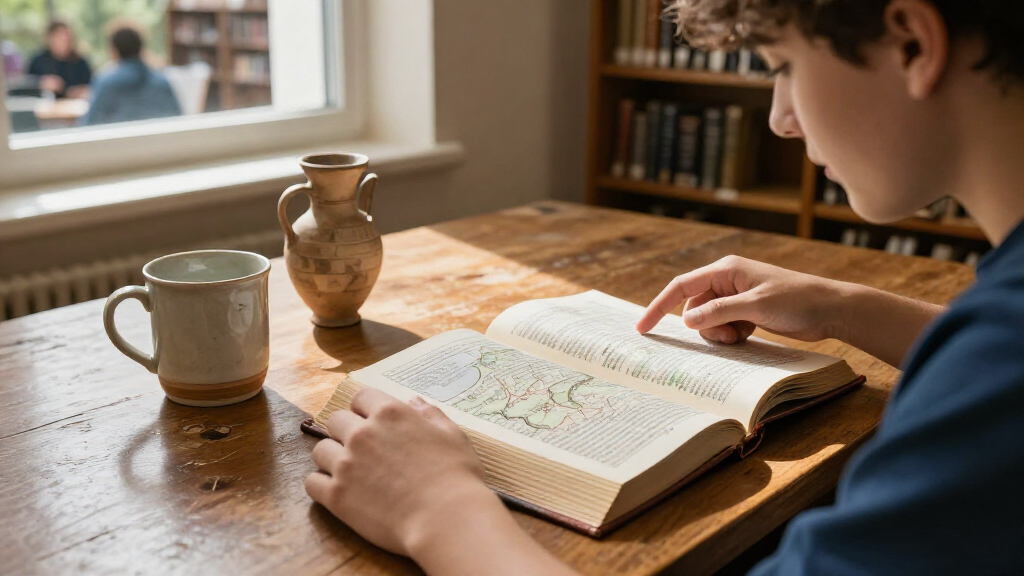
I evaluated these books based on their pedagogical approach, clarity of information, and suitability for different age groups. My primary criterion was how well each book balances historical accuracy with engagement. For younger students, I looked for interactive elements and visual support. For older students, I prioritized narrative coherence and source material depth. I also considered the ease of use for parents or teachers acting as instructors, particularly for homeschoolers who need clear lesson structures.
| ancient history books for student | Format | Subject |
|---|---|---|
| Ancient History-Based Writing | Student book | Writing lessons based on ancient history |
| Eyewitness Ancient Rome: Disco | Book | — |
| The History of the Ancient Wor | Book | — |
| National Geographic Kids Every | Book | — |
| History Alive! The Ancient Wor | Book | — |
| Civilizations of Ancient Histo | Book | Ancient history |
| History Alive! The Ancient Wor | — | The ancient world |
| Hands-On History: Ancient Civi | — | Social studies |
| Ancient Egypt | Book | Ancient Egypt |
| History Pockets: Ancient Civil | — | Ancient civilizations |
| National Geographic World Hist | Hardcover | Ancient Civilizations |
| Ancient Greece: From Prehistor | Paperback | — |
| Ancient World History Word Sea | Paperback | — |
| The Story of the World: Histor | Paperback | — |
Factors to Consider When Choosing Ancient History Books For Students
Selecting the correct resource requires matching the book’s methodology to the student’s current cognitive level and learning preferences.Narrative Depth vs. Visual Support
Some books rely on dense paragraphs to explain historical causality, while others use maps, diagrams, and photographs to convey information. Narrative-heavy books like The History of the Ancient World are better for students who need to understand the ‘why’ behind events. Conversely, visual-centric books like Eyewitness Ancient Rome help students grasp the scale and aesthetics of civilizations quickly. A common mistake is buying a narrative text for a visual learner, leading to frustration and disengagement. Assess whether your student struggles more with reading comprehension or with conceptualizing abstract historical timelines.
Curriculum Structure vs. Standalone Reference
Books like History Alive! come with built-in lesson plans, activities, and assessment tools, functioning as a complete course. Standalone books like The Story of the World or Ancient Greece are excellent references but require the educator to design the learning path. If you are a homeschool parent without a background in history education, a structured curriculum reduces the planning burden significantly. However, if you are looking for a supplementary library addition, a standalone reference offers more flexibility. Decide if you need a turnkey solution or a flexible resource to complement an existing syllabus.
Age Appropriateness and Reading Level
Publisher age labels can be misleading. A book labeled for ‘Grades 1-3’ might be too simplistic for a strong reader, while a ‘high school’ text might be too dry for a motivated middle schooler. I looked for books that offer layered complexity, where the main text is accessible but sidebars or footnotes provide deeper context. For example, National Geographic Kids books are accessible but may lack the nuance needed for standardized tests in later grades. Always preview the first chapter to gauge if the vocabulary and sentence structure match your student’s current reading proficiency.
Active Learning vs. Passive Reading
Passive reading often leads to low retention. Books that include interactive components, such as the History Alive! Interactive Student Notebook or Hands-On History, force the student to engage with the material actively. This method is particularly effective for kinesthetic learners who need to ‘do’ to understand. However, active learning books can sometimes feel like busywork if the activities do not reinforce core concepts. Look for activities that require synthesis or analysis, such as comparing civilizations, rather than just coloring or matching.
Scope and Chronological Coverage
Some books cover the entire ancient world, while others focus on a single civilization like Rome or Egypt. Broad overviews help students see global connections and simultaneous developments, which is vital for understanding world history. Specialized texts allow for a deeper dive into culture, politics, and daily life. A common error is starting with a single civilization book and missing the broader context of trade routes and warfare that connected these regions. Consider starting with a broad overview before moving to specialized deep dives.
Frequently Asked Questions
Are textbooks better than narrative history books for high school students?
For high school students, narrative history books often provide a better understanding of historical causality and human motivation. Textbooks can fragment information into isolated facts, which makes it hard to see the big picture. A narrative like The History of the Ancient World connects events across regions, helping students develop critical thinking skills. However, textbooks are superior for quick reference and finding specific dates or definitions. A balanced approach uses a narrative for understanding and a textbook for fact-checking.
How do I know if a book is too advanced for my middle schooler?
Check the sentence structure and vocabulary density in the first few pages. If your student has to stop every few sentences to look up words, the book is likely too advanced. Look for books that define terms in context rather than relying on a glossary at the back. Additionally, see if the book assumes prior knowledge; if it jumps into complex political analysis without explaining basic concepts like ‘city-state’ or ’empire,’ it may be frustrating. Previewing a chapter together is the best way to gauge suitability.
Do I need a separate workbook if I buy a curriculum book?
It depends on the curriculum book’s design. Some, like History Alive!, include the student workbook as part of the core package, making a separate purchase unnecessary. Others, like The Story of the World, offer optional activity guides that provide additional depth but are not required for the main narrative. If the book lacks built-in exercises or discussion questions, a separate workbook can help reinforce learning. Check the publisher’s description to see if the ‘student edition’ includes activities or if they are sold separately.
Are visual-heavy books like DK Eyewitness good enough for exams?
Visual-heavy books are excellent for engagement and understanding context, but they often lack the detailed chronological precision required for many standardized exams. They excel at explaining what things looked like and how people lived, but may gloss over why political events unfolded. Use these books as supplements to a more text-heavy resource. They are perfect for visualizing a battle or a city layout, but you should pair them with a narrative or textbook to ensure you have the factual depth needed for testing.
Can these books be used for classroom instruction as well as homeschooling?
Many of these books are designed with classroom utility in mind, particularly the curriculum-based options like History Alive!. They often include teacher guides, assessment rubrics, and group activities that work well in a school setting. Standalone narrative books can also be used in classrooms as read-alouds or discussion starters. However, activity books like Hands-On History are often easier to manage in a small group or home setting due to the need for specific materials. Consider the class size and available resources when choosing between these formats.
Conclusion
For most students seeking a serious, engaging introduction to the ancient world, The History of the Ancient World: From the Earliest Accounts to the Fall of Rome is the best overall choice due to its narrative clarity and scope. If you need a structured, hands-on curriculum for younger students or homeschoolers, History Alive! The Ancient World is the best value and most practical option. For visual learners or those who struggle with dense text, Eyewitness Ancient Rome offers the best accessible entry point. Beginners should start with the broad, story-driven approach of The Story of the World: Volume 1 to build a foundation before moving to specialized texts. Choose based on whether your student needs a complete course, a visual supplement, or a rigorous academic text.
As an affiliate, we earn on qualifying purchases.Halloween Picks
halloween