📊 Full opportunity report: Rethinking Operations For Phone-Free Events on IdeaNavigator AI — validation score, market gap, and execution plan.

Prime made for students and young adults
- Fast, free delivery for dorm and study essentials
- Prime Video and Amazon Music included
- Member-only deals
TL;DR
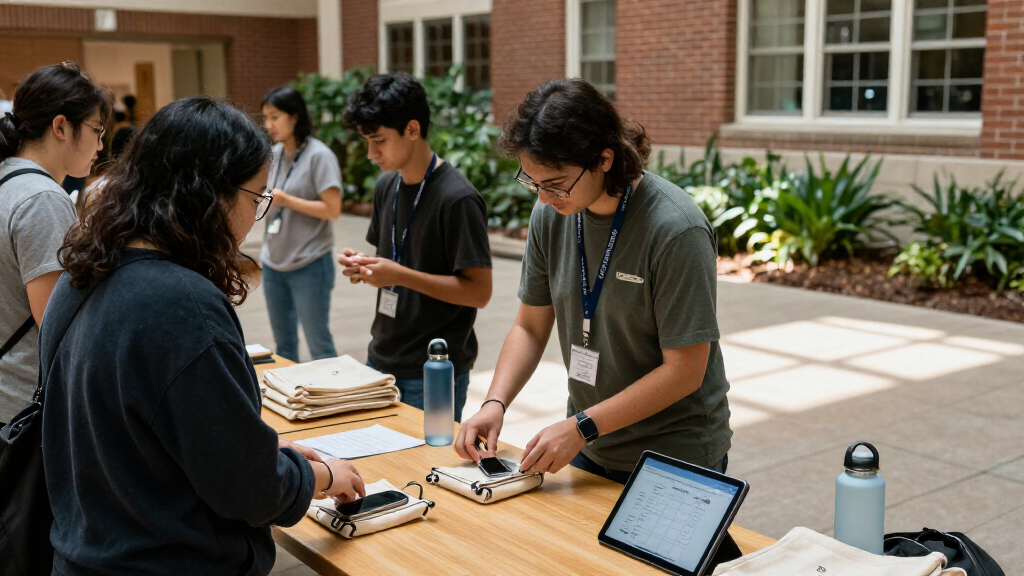
IdeaNavigator AI proposes testing an operations tool for phone-free shows, comedy clubs, schools and courts that use lockable phone pouches. The proposed pilot would measure exception-handling time and incident-log completeness at five venues and three schools; no pilot results or product launch are reported.
IdeaNavigator AI has proposed testing an operations tool for phone-free events and institutions that use lockable phone pouches, targeting check-in, medical exceptions, pouch inventory and emergency access. The proposal recommends a pilot at five venues and three schools, but does not report that the product has been built, deployed or evaluated.
According to IdeaNavigator AI’s proposal, the intended users are operators of phone-free shows, comedy clubs, schools and courts using pouch systems. The proposal describes current operations as reliant on pouches and improvised procedures, with challenges that can include lost-pouch incidents, handling requests for exceptions and queues when phones need to be unlocked for emergencies.
The proposal’s suggested minimum product would combine check-in flows and an exception registry for circumstances such as medical needs or on-call responsibilities. It would also track pouch inventory, provide express emergency-unlock stations that log reasons for access, and produce post-event operations reports. IdeaNavigator AI says the software should work alongside different pouch systems rather than depend on one hardware provider.
For validation, IdeaNavigator AI proposes a pilot involving five venues and three schools. Operators would compare the time taken to handle exceptions and the completeness of incident logs with their current improvised process. The proposal suggests per-event or per-site subscriptions; it provides no pricing, customer-demand evidence or operational results.
Reducing Friction at Phone-Free Events
Phone restrictions depend not only on the policy but also on how staff manage exceptions, emergencies and the return of devices. If check-in and unlocking procedures are slow, queues and staff workload can affect the experience the restrictions are meant to support. IdeaNavigator AI’s proposal argues that a dedicated operations system could give teams a consistent way to record exceptions and track pouches, if a pilot shows it works in practice.
The proposal also identifies a potential need across several types of organizations, from entertainment venues to schools and courts. Their rules and emergency procedures may differ, so a tool that works across settings would need adaptable workflows. As IdeaNavigator AI presents it, however, the breadth of the proposed market is an opportunity to test, not evidence of demand.
As an affiliate, we earn on qualifying purchases.
Pouch Policies Need Staff Workflows
IdeaNavigator AI’s proposal describes phone-free policies as spreading across schools, comedy tours and courtrooms, alongside live events. It provides no dates, adoption figures or list of specific policies, so the scale and pace of that spread cannot be independently gauged from the details given.
Lockable pouches are the hardware component of the approach described, while the proposed tool would address the administrative tasks around them. The proposal’s stated aim is to support operations without replacing pouch systems. Its suggested focus on a narrow first workflow—serving operators already using pouches—would make it possible to test whether organized records and inventory tracking improve on informal procedures before expanding the product or market.
event check-in management software
As an affiliate, we earn on qualifying purchases.
As an affiliate, we earn on qualifying purchases.
Pilot Results and Product Status
IdeaNavigator AI reports no completed pilot, product release or customer commitment. Its proposal does not identify participating venues or schools, a development team, a launch schedule or a price. It also provides no baseline figures for exception-handling time or incident-log completeness, and no expected threshold for what would count as an improvement.
Other practical questions remain open: how emergency access would be authorized, how sensitive exception information would be protected, and whether staff could use the system with different pouch hardware and local policies. These are design and deployment questions, not demonstrated shortcomings of an existing product. The proposed test would need to establish whether the tool reduces operational friction without adding new burdens.
emergency unlock stations for phone pouches
As an affiliate, we earn on qualifying purchases.
As an affiliate, we earn on qualifying purchases.
Testing the Proposed Workflow
IdeaNavigator AI proposes a pilot at five venues and three schools, comparing exception-handling time and incident-log completeness against each site’s existing process. No timetable or participating organizations are named in the proposal. Until a pilot is announced and its results are shared, the idea remains an early product concept rather than a validated operations system.
If testing proceeds, useful reporting would include the measurement period, baseline procedures, differences among participating sites and any effects on check-in or re-entry queues. Those details would help operators judge whether the proposed workflow is practical across settings and whether per-event or per-site subscriptions fit how customers manage phone-free policies.
Source: IdeaNavigator AI proposal
incident logging system for venues
As an affiliate, we earn on qualifying purchases.
As an affiliate, we earn on qualifying purchases.
Key Questions
What is the proposed phone-free venue tool?
IdeaNavigator AI proposes an operations system for organizations using lockable phone pouches, with features for check-in, exceptions, inventory, emergency unlocks and post-event reports.
Has the tool been launched or tested?
IdeaNavigator AI’s proposal describes a possible pilot but reports no product launch or completed test.
Who would the pilot involve?
The proposal says a pilot would cover five venues and three schools. It identifies no participants or schedule.
How would the pilot measure results?
According to the proposal, it would compare exception-handling time and incident-log completeness with each site’s current improvised process. No baseline numbers or success thresholds are given.
How might the product make money?
IdeaNavigator AI’s proposal suggests per-event or per-site subscription pricing, but gives no prices or evidence of customer demand.
Source: IdeaNavigator AI
Fall Picks
fall essentials
As an affiliate, we earn on qualifying purchases.