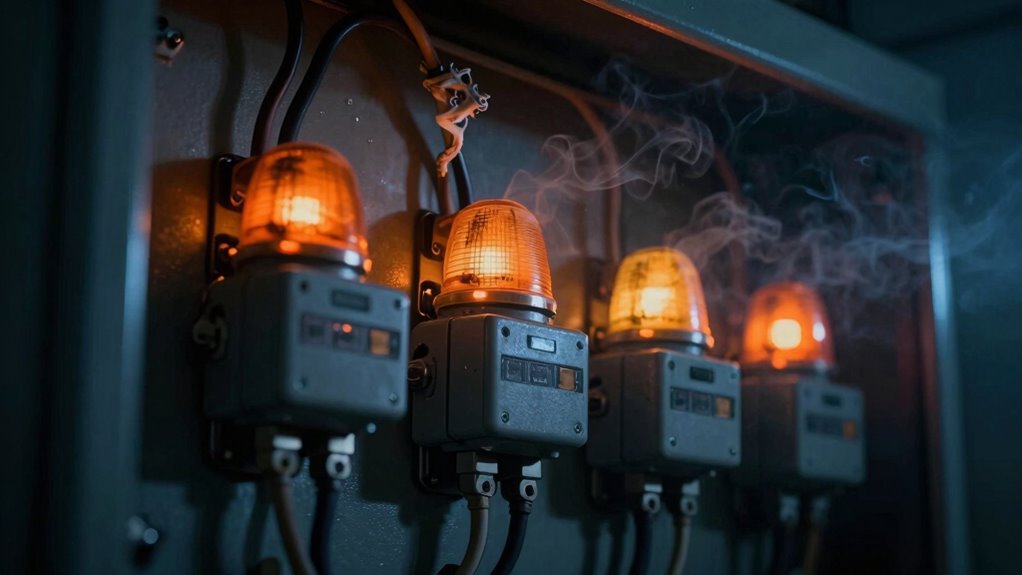

If you notice a burning plastic or rubber smell near outlets, switches, or appliances, don’t ignore it. This odor often signals overheating, frayed wiring, or a potential fire hazard. Ignoring it can lead to serious damage or even a house fire. Acting quickly by unplugging devices and turning off the circuit breaker is essential. Keep yourself safe—find out more about the warning signs and how to respond effectively if these odors appear.
Key Takeaways
- A persistent burning plastic or rubber smell indicates overheated wiring or melting insulation, which can cause fires.
- Burning electrical odors near outlets or appliances suggest wiring overloads or malfunctioning devices needing immediate attention.
- Sharp chemical or ozone-like smells signal arcing or faulty wiring that pose serious fire and electrocution risks.
- Ignoring electrical odors can lead to wiring damage, system failure, or dangerous electrical fires.
- Act promptly by unplugging devices, turning off circuits, ventilating, and calling a professional electrician if odors persist.

First Alert SMI100-AC, Hardwire Interconnect Smoke Alarm with Battery Backup, 1-Pack
First Alert's Precision Detection advanced sensing technology complies with new industry standards to reduce cooking nuisance alarms and…
As an affiliate, we earn on qualifying purchases.
As an affiliate, we earn on qualifying purchases.
What Causes Electrical Smells in Your Home
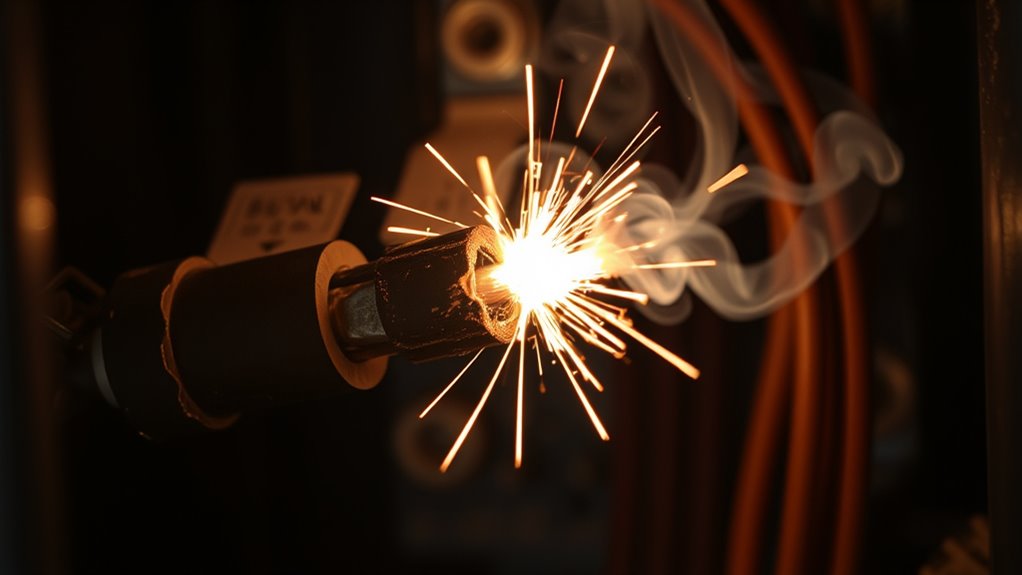
Electrical smells in your home often indicate a problem with your wiring or appliances. One common cause is circuit overloads, which happen when too many devices draw power through a single circuit, causing overheating and the burning smell. Wiring deterioration is another culprit; over time, wires can become frayed or damaged, exposing conductive material that heats up and emits a burnt odor. These issues can lead to serious hazards if left unaddressed. You might notice the smell intensify when using certain appliances or electrical outlets. It’s essential to act quickly and identify the source of the odor. Ignoring these signs can increase the risk of electrical fires or damage to your home’s electrical system. Regular inspections can help catch problems early before they escalate, especially since electrical system components can deteriorate over time and contribute to such odors.

Mini Circuit Breaker, DC/AC Manual ON/Off Toggle Reset Switch Safety Circuit Breaker 15A 20A 25A 30A, Black (25A)
Function: Circuit Breaker can provide overload , short circuit for DC/AC circuit or equipment.
As an affiliate, we earn on qualifying purchases.
As an affiliate, we earn on qualifying purchases.
Recognizing Different Electrical Odors and Their Meanings

You need to pay attention to specific electrical odors to identify potential hazards. A burning plastic smell may signal overheating, while a hot wire indicator often means a loose or damaged connection. An ozone or chemical odor can indicate arcing or faulty wiring that requires immediate attention. Recognizing emerging trends in nanotechnology can also aid in understanding how advanced materials may influence electrical safety measures.
Burning Plastic Smell
A burning plastic smell is a clear warning sign that something wiring-related is overheating or melting. This distinct electrical scent often indicates an electrical component or wiring insulation is burning or deteriorating. When you notice a plastic smell, it’s vital to act immediately, as this odor suggests potential fire hazards. The scent may be faint or strong, but either way, it shouldn’t be ignored. Typically, this smell originates near outlets, switches, circuit breakers, or appliances. Ignoring it can lead to wiring damage, electrical shorts, or even fires. Always turn off the power source if you detect a burning plastic smell, and have a professional inspect the source. Recognizing this specific odor can help prevent serious electrical failures and guarantee your safety. Electrical safety awareness is essential for preventing electrical fires and ensuring prompt response to hazards.
Hot Wire Indicators
When you notice a distinct smell coming from your electrical system, it’s a strong sign that something is overheating or malfunctioning. Hot wire indicators often include a burning or sizzling odor, which signals that wiring or components are getting too hot. Faulty wiring can cause these odors by creating electrical resistance, leading to overheating. If you detect a strong, persistent smell like burnt rubber or metal, it’s vital to act immediately. These odors indicate that hot wires are present or that wiring connections are compromised. Ignoring these signs increases the risk of electrical fires or damage. Regularly inspecting outlets, switches, and wiring can help you catch faulty wiring early. Remember, a warning smell is never normal—take prompt action to prevent potential hazards.
Ozone or Chemical Odor
An ozone or chemical odor emanating from your electrical system can be a clear warning sign of internal issues. Ozone emission often produces a sharp, chlorine-like smell, indicating that electrical components may be overheating or arcing. Similarly, a chemical residue smell suggests that plastic or insulation components are burning or degrading. These odors are usually accompanied by a faint, chemical-like scent that doesn’t dissipate quickly. Ignoring this warning can lead to serious damage or fire hazards. If you notice these odors, turn off the affected circuit immediately and have a qualified electrician inspect your system. Addressing ozone emission or chemical residue early can prevent costly repairs and ensure your safety. Don’t underestimate the significance of these electrical odors—they’re your system’s way of signaling danger. Recognizing electrical odors promptly is essential for preventing potential fire risks and ensuring overall safety.

Klein Tools RT250 GFCI Outlet Tester with LCD Display, Electric Voltage Tester for Standard 3-Wire 120V Electrical Receptacles
CLEAR LCD READOUT: GFCI Receptacle Tester features a large backlit LCD readout for easy voltage reading and clear…
As an affiliate, we earn on qualifying purchases.
As an affiliate, we earn on qualifying purchases.
Why Ignoring Burning Electrical Smells Is Risky

Ignoring a burning electrical smell can quickly lead to a fire, putting you and your home at serious risk. It can also cause damage to your electrical system, leading to expensive repairs down the line. Addressing the smell promptly saves you money and keeps everyone safe. Additionally, smart home technology can help monitor for electrical issues and alert you to potential hazards early on.
Fire Hazard Increase
Burning electrical smells are a clear warning sign that something is seriously wrong with your wiring or electronic devices. Ignoring this odor considerably increases your risk of a fire hazard. When electrical components overheat or short circuit, they can ignite nearby materials, leading to a potentially devastating fire. Proper electrical maintenance and prompt action are essential to prevent escalation. Here’s why:
| Risk Level | Cause | Action Needed |
|---|---|---|
| High | Overloaded circuits | Reduce load, upgrade wiring |
| Moderate | Faulty appliances | Replace or repair |
| Critical | Damaged insulation | Professional inspection |
| Severe | Loose connections | Tighten or replace |
| Urgent | Burning smell persists | Call fire safety experts immediately |
Being aware of vetted safety guidelines can help you respond appropriately to electrical issues before they escalate into emergencies.
Electrical System Damage
When electrical components overheat or short circuit, the damage doesn’t stop at the surface; it can quickly weaken your entire electrical system. A ground fault, where electricity takes an unintended path, can cause serious damage if left unchecked. Similarly, a circuit overload forces too much current through wires, leading to overheating and potential failure. Ignoring a burning electrical smell might seem harmless, but it’s a sign that your system is compromised. Over time, these issues can degrade wiring, damage circuit breakers, and reduce your system’s reliability. This ongoing stress can also lead to insulation deterioration, increasing the risk of electrical fires. Addressing electrical smells promptly helps prevent long-term damage and ensures your electrical system stays safe and functional.
Costly Emergency Repairs
Failure to address a burning electrical smell can lead to sudden and costly emergency repairs. Ignoring signs of electrical issues compromises electrical safety and makes circuit troubleshooting more urgent and complex. Imagine waking up to electrical fires caused by overheated wiring, or your entire system shutting down unexpectedly due to a short circuit. Or picture the damage escalating, destroying walls, appliances, and even risking personal injury. These scenarios highlight how small problems, left unchecked, turn into major expenses. You might need to replace entire wiring, upgrade your panel, or handle extensive fire damage. Taking immediate action prevents these costly repairs and keeps your home safe. Always prioritize addressing electrical smells early to avoid these preventable emergencies. Proper deep-sky imaging practices emphasize early detection and troubleshooting, which can be applied to electrical safety by catching issues before they escalate.

GH192 Thermal Imaging Camera 240X240 Super IR Resolution with 2MP Visual Camera and Fusion Imaging, 25Hz Handheld Thermal Imager with Alarm for Mechanical Maintenance Home HVAC Electrical Inspection
Dual Light Fusion Imaging: GH192 240×240 Thermal Imager is equipped with a 2MP visible light camera and an…
As an affiliate, we earn on qualifying purchases.
As an affiliate, we earn on qualifying purchases.
How Electrical Smells Signal Overloaded Circuits
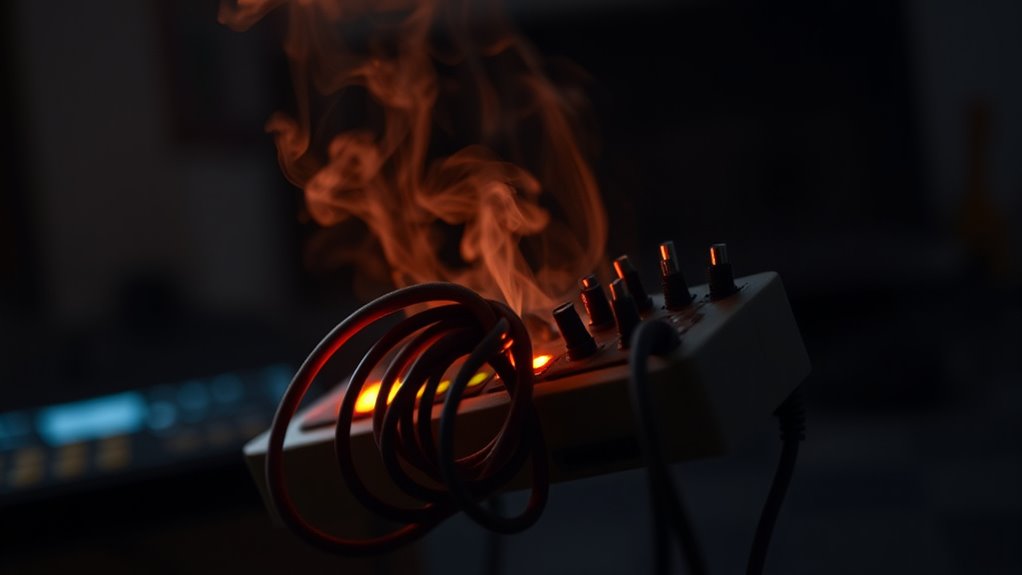
Electrical smells often serve as warning signs of overloaded circuits, especially when you notice a persistent, strange odor near outlets or appliances. When circuits become overloaded, wires heat up excessively, leading to the release of particular smells that indicate an issue. Smell detection is vital here; a burning or hot odor signals that your circuit is struggling to handle the electrical load. Ignoring these smells can cause wiring damage or even fires. If you notice a persistent odor, turn off the affected circuit immediately and avoid using the outlet or appliance. Overloaded circuits strain your electrical system and increase the risk of damage. Recognizing these smells early allows you to prevent bigger problems and maintain a safe home environment. Additionally, circuit overheating can sometimes lead to damage that affects your entire electrical system, highlighting the importance of prompt action.
What Burning Plastic or Rubber Smells Tell You
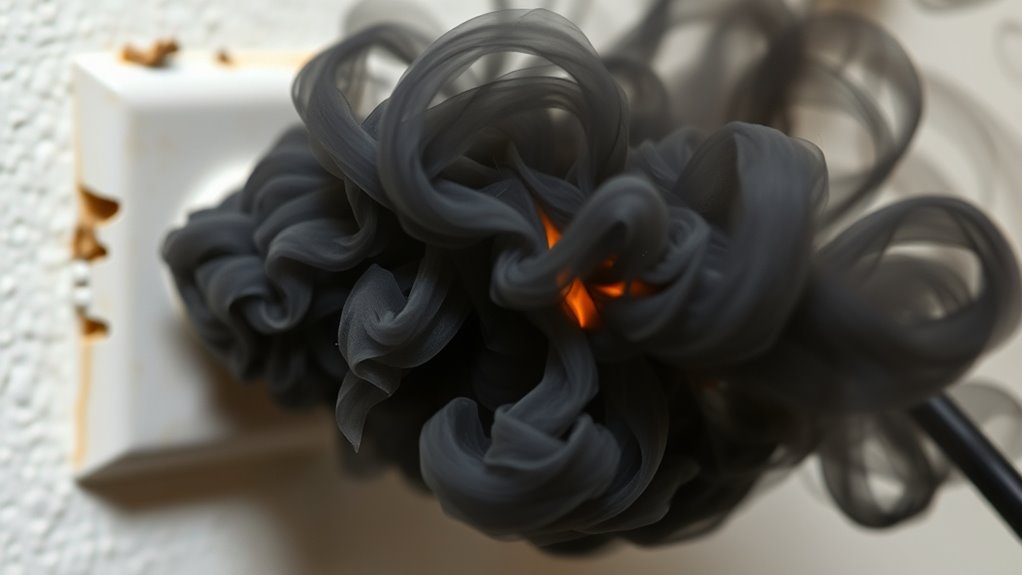
A burning plastic or rubber smell is a clear warning that something in your electrical system is overheating or melting. You might notice this odor near outlets, switches, or appliances. If you detect it, take immediate action to ensure safety. Visualize the scenario:
- Melting insulation on wires, dripping onto hot surfaces
- Overheated plastic components inside an appliance, emitting fumes
- Burning rubber on a power cord, causing a thick, acrid smell
This odor signals a potential fire hazard. Avoid DIY maintenance attempts if you’re unsure, and prioritize appliance safety. Turn off affected devices, unplug power sources, and ventilate the area. Recognizing this smell early can prevent serious damage or injury, so don’t ignore it—act swiftly to protect yourself and your home. Additionally, understanding ceiling fan safety can help prevent electrical issues from escalating.
Why Electrical Odors Near Appliances Are Dangerous
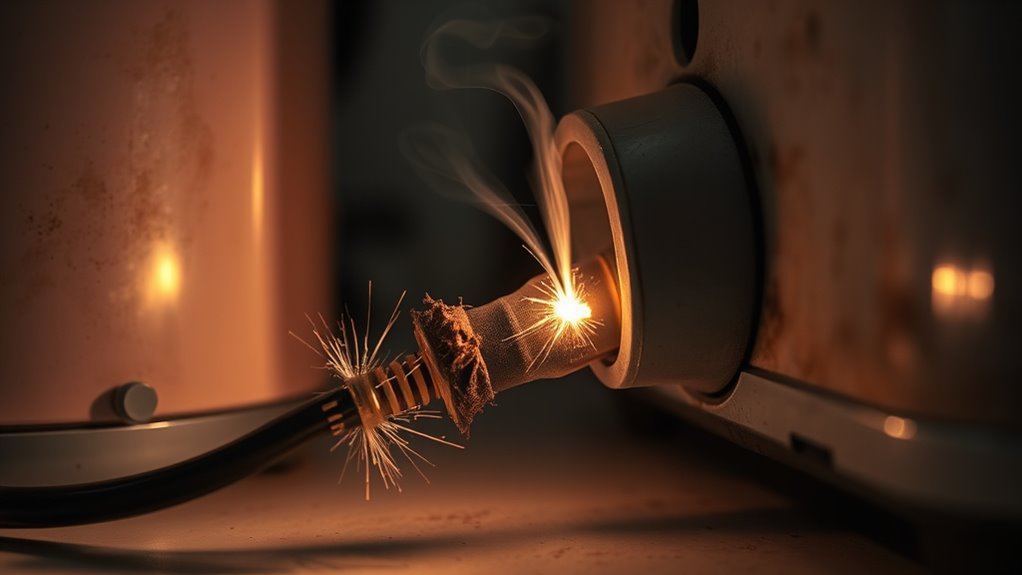
Noticing strange odors near your appliances can be a warning sign of underlying electrical issues that need immediate attention. These smells often indicate problems like circuit overload or grounding issues, both of which pose serious risks. A circuit overload occurs when too many devices draw power through a single circuit, causing overheating and possibly melting wiring insulation. Grounding issues happen when electrical currents aren’t properly grounded, increasing the risk of sparks, shocks, or fires. Ignoring these odors can lead to electrical fires or damage to your appliances. The smell is a clear sign that something isn’t right behind the scenes. You should never dismiss these warnings, as addressing them promptly can prevent dangerous failures and safeguard your home and loved ones.
What To Do Immediately When You Smell Electrical Odors

If you detect a burning or chemical smell coming from your appliances or outlets, act immediately to protect yourself and your home. Prioritize electrical safety by staying calm and following these steps:
- Unplug the affected device or appliance to stop the source of the odor and prevent further damage.
- Turn off the circuit breaker for the outlet or area to cut power completely, reducing the risk of electrical fire.
- Ventilate the space by opening windows and doors to clear out any lingering fumes and improve odor detection.
Don’t ignore electrical odors—they’re often an early warning sign of trouble. Taking swift action can prevent serious hazards and keep your home safe.
When to Call an Electrician for Electrical Smell Issues
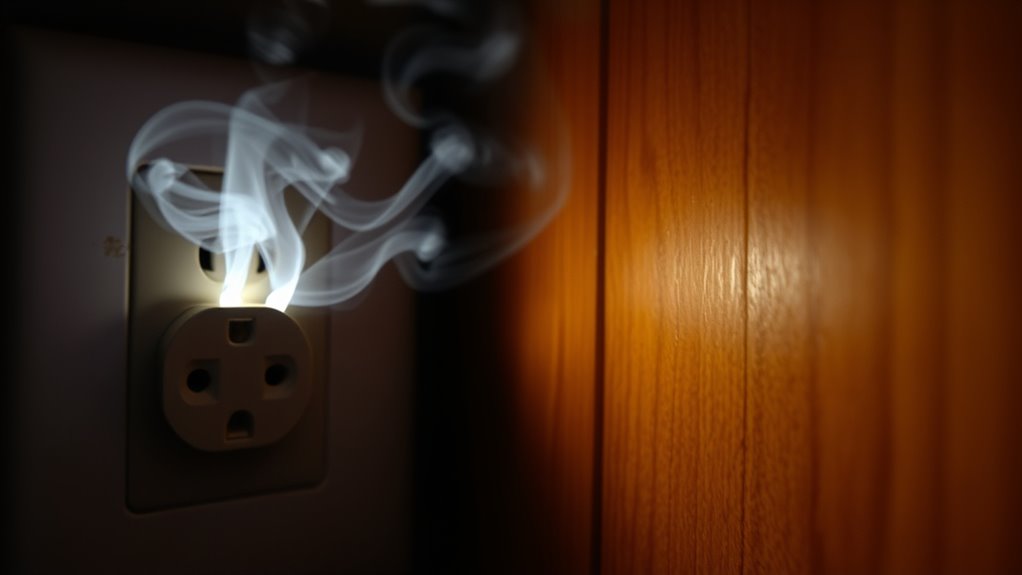
You should call an electrician immediately when electrical smells persist after unplugging devices or turning off circuits, indicating an underlying wiring issue or appliance problem that you can’t resolve yourself. Relying on DIY tips or believing electrical myths, like assuming a smell is harmless or fixing it with a simple reset, can be dangerous. Persistent odors often signal wiring overheating, damaged insulation, or faulty connections that require professional inspection. Don’t ignore these warning signs, as delaying expert help increases the risk of fire or electrical failure. If you notice the smell remains or worsens, even after taking basic precautions, it’s time to call a licensed electrician. Safety always comes first—trust the pros to diagnose and fix electrical issues safely and effectively.
How to Prevent Electrical Odors and Keep Wiring Safe
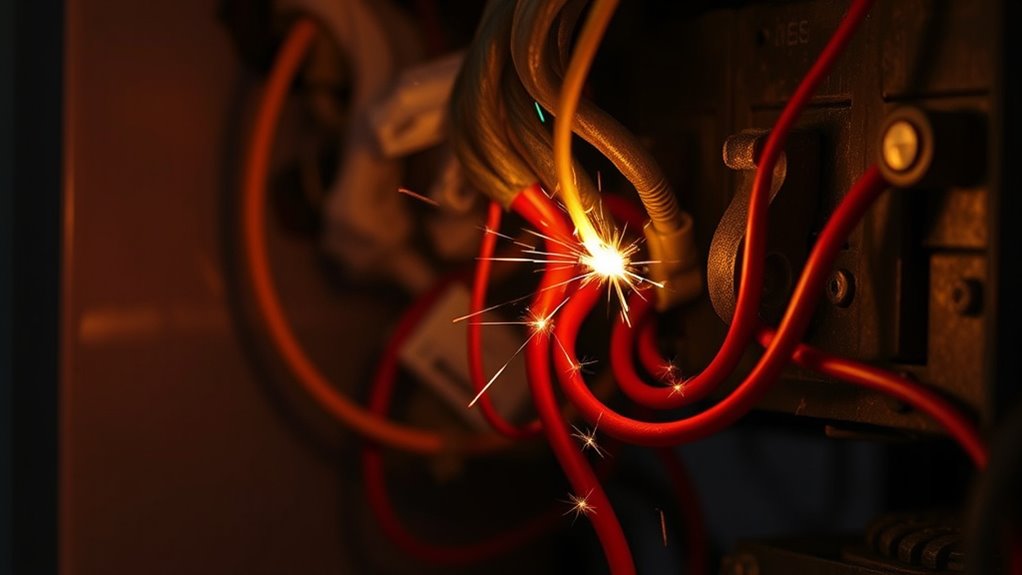
To prevent electrical odors and keep your wiring safe, regular maintenance and mindful usage are essential. Start by scheduling routine electrical maintenance to identify early signs of wear or damage. Consider wiring upgrades if your system is outdated or overloaded. To maintain safety:
Regular maintenance and upgrades are key to preventing electrical odors and ensuring wiring safety.
- Inspect outlets and switches for scorch marks or loose connections.
- Replace frayed or damaged wiring immediately.
- Upgrade older wiring systems to meet current safety standards.
These steps help prevent overheating and reduce the risk of electrical odors. Proper maintenance guarantees your wiring is functioning efficiently, while upgrades modernize your system, minimizing hazards. Staying vigilant and proactive can save you from costly repairs and potential fires, keeping your home safe and odor-free.
Frequently Asked Questions
Can Electrical Smells Indicate a Fire Hazard?
Yes, electrical smells can indicate a fire hazard. When you notice a burning odor, it often means electrical insulation is melting or circuit overheating is occurring. These signs suggest that wires or components are under stress and could ignite if not addressed promptly. You should turn off the power immediately and call a professional to inspect your electrical system, preventing potential fires and ensuring your safety.
How Often Should I Check for Electrical Odors in My Home?
You should check for electrical odors during regular home maintenance, ideally once a month. Make it a habit to perform quick odor detection around your outlets, switches, and appliances. If you notice a strange smell, don’t ignore it—investigate immediately. Regular checks help catch potential hazards early, preventing fires or damage. Staying vigilant with odor detection keeps your home safe and guarantees you address electrical issues before they become serious problems.
Are Electrical Smells Common in New Constructions?
Electrical smells can be common in new constructions, especially if wiring issues or insulation degradation occur during installation. You might notice a faint odor if the wiring isn’t properly insulated or if components are overheating. It’s important to stay alert for persistent or strong smells, as they could signal dangerous wiring problems. Regular inspections and prompt professional assessments help guarantee your new home remains safe from electrical hazards.
Can Pet Fur Cause Electrical Odors?
Pet fur buildup and dust accumulation can cause electrical odors, much like a thick blanket smothers a fire. When pet fur gathers around electrical outlets or wiring, it can create a layer that traps heat and leads to a burning smell. Regularly cleaning and inspecting your electrical systems helps prevent this and keeps your home safe. Don’t ignore the smell—it’s a sign you need to address potential hazards.
What Are the Long-Term Risks of Ignoring Electrical Smells?
Ignoring electrical smells can lead to serious long-term risks like electrical fires and damage to your wiring. Regular electrical maintenance helps detect odors early, preventing costly repairs and safety hazards. If you notice an unusual smell, don’t delay—trust your sense of odor detection and get a professional to inspect your system. Prompt action protects your home and loved ones from potential fire risks and electrical failures down the line.
Conclusion
If you notice any electrical smell, don’t ignore it—think of it as your home’s warning bell, much like the ancient sirens warning sailors. Act quickly to prevent a disaster, whether by unplugging devices or calling an electrician. Remember, keeping your wiring in check today saves you from a fiery mess tomorrow. Stay vigilant, and don’t let your home turn into an uncharted island of hazards. Better safe than sorry, as the old adage goes!