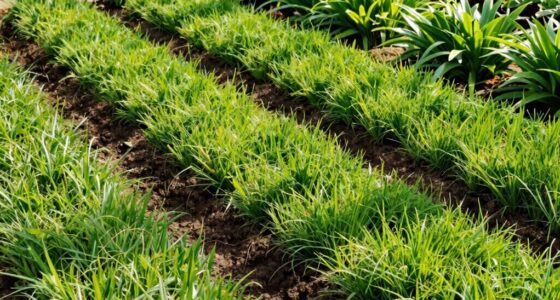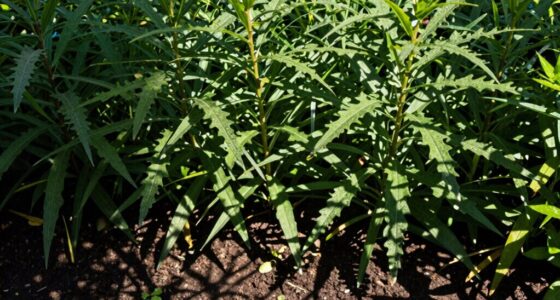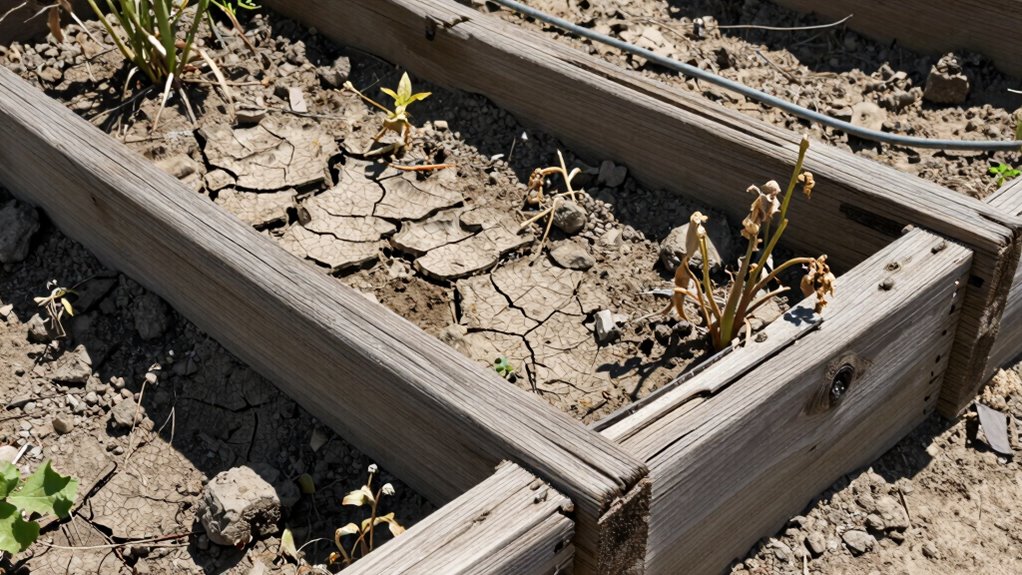

Raised beds dry out faster because their soil is more exposed to sun, wind, and evaporation. The increased surface area accelerates moisture loss, especially in hot or windy weather. Without proper amendments or mulch, your soil can quickly become too dry, stressing plants and reducing growth. Learning about soil improvements and watering techniques can help you keep moisture in your beds longer—if you’re curious, there’s more to discover to help you maintain healthy, hydrated soil.
Key Takeaways
- Raised beds have increased exposure to sun and wind, accelerating moisture evaporation.
- Lack of organic matter reduces soil’s moisture retention capacity.
- Shallow soil layers dry out quickly without proper mulch or cover.
- Improper watering practices, like shallow or frequent watering, lead to faster drying.
- Poor soil structure and drainage decrease water retention efficiency.
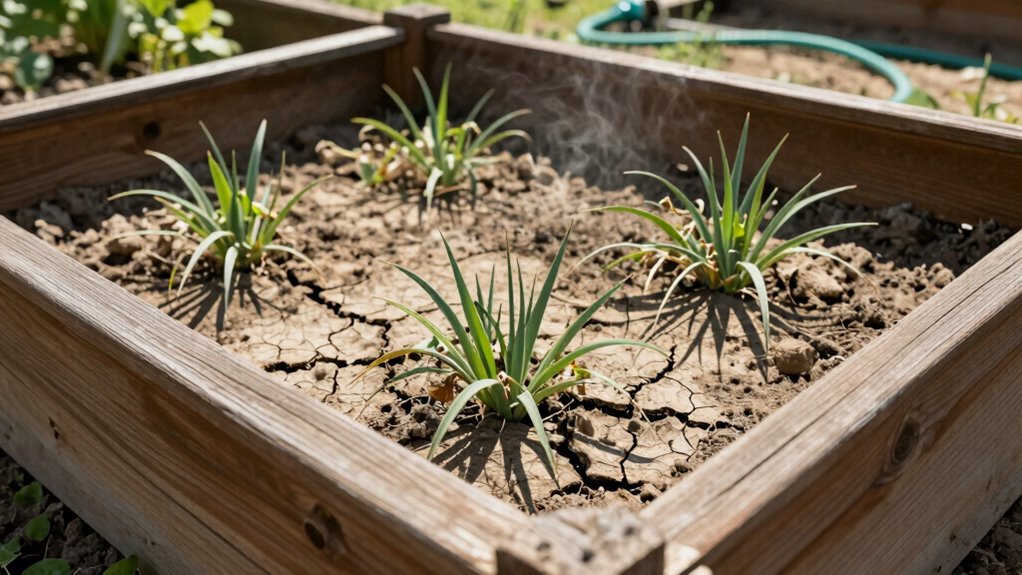
Raised beds tend to dry out more quickly than traditional in-ground gardens, especially during hot or windy weather. This happens because the soil in raised beds is often more exposed to the sun and wind, which speeds up moisture loss. When your plants need consistent watering, this rapid drying can be frustrating and may threaten their health if not managed properly. To combat this, you should consider implementing effective strategies to retain moisture and improve soil conditions.
Raised beds dry out faster, especially in hot or windy weather, requiring proactive moisture retention strategies.
One way to help your raised beds retain water is through the use of soil amendments. Incorporating organic matter such as compost, aged manure, or coconut coir can considerably boost the soil’s ability to hold moisture. These amendments improve soil structure, increasing its water-holding capacity and reducing evaporation. Adding a layer of mulch on top of your soil also helps lock in moisture, keeping the soil cooler and more stable during hot spells. Mulch acts as a barrier, reducing direct sunlight exposure and wind impact, which are primary culprits in quick soil drying.
Companion planting is another technique that can help mitigate moisture loss. By planting certain crops together, you can create microclimates that shield the soil and plant roots from harsh conditions. For example, taller plants or dense companion crops can provide shade for more delicate vegetables, decreasing surface evaporation. Herbs like basil or marigolds can also serve as natural windbreaks, further reducing the drying effect of wind. These combinations not only help retain moisture but also improve pest control and plant health, making your raised bed more resilient overall. Additionally, understanding the importance of soil health** can greatly influence moisture retention and plant vitality. Healthy soil with proper soil drainage** and aeration supports robust root systems that efficiently absorb water and nutrients.
You should also pay attention to watering practices, ensuring you water deeply and less frequently rather than shallow, frequent watering. Deep watering encourages plants to develop stronger roots that can access moisture more effectively, reducing their vulnerability to dry spells. To support this, consider installing drip irrigation or soaker hoses that deliver consistent, slow moisture directly to the soil, minimizing waste and evaporation. Furthermore, soil aeration can improve water absorption and drainage, contributing to healthier root systems.
Lastly, understanding the importance of soil health is key. Healthy soil with proper drainage and aeration helps roots grow stronger and absorb water more efficiently. Regularly testing your soil and adjusting with appropriate soil amendments ensures your raised beds stay moist longer and support healthy plant growth. By combining these practices—soil amendments, companion planting, proper watering, and soil health—you can help your raised beds hold onto moisture better, even in the face of challenging weather conditions.
raised bed soil moisture retention amendments
As an affiliate, we earn on qualifying purchases.
As an affiliate, we earn on qualifying purchases.
Frequently Asked Questions
How Does Soil Type Affect Bed Drying Rates?
Soil type profoundly impacts bed drying rates. Sandy soils drain quickly because they have low soil compaction and hold less organic matter, allowing water to escape easily. In contrast, clay soils retain moisture longer due to high soil compaction and more organic matter, which slows evaporation. Understanding these differences helps you manage watering better, ensuring your raised beds stay appropriately moist without drying out too fast.
Can Plant Selection Influence Watering Frequency?
Yes, plant selection influences your watering needs. Choosing a diverse range of plants with different root depths helps maintain soil moisture, reducing watering frequency. Deep-rooted plants access water stored deeper in the soil, while shallow-rooted ones need more frequent watering. By planting a variety, you create a balanced ecosystem that retains moisture longer, which can decrease how often you need to water your raised beds.
What Role Does Mulch Play in Moisture Retention?
Mulch plays a vital role in moisture retention by acting as a barrier that reduces evaporation from your raised beds. Organic mulches like straw, wood chips, or compost layering help keep the soil moist longer. When you apply a thick layer of mulch, it insulates the soil, slows down water loss, and maintains consistent moisture levels, which is especially important in raised beds that tend to dry out faster than ground soil.
Do Local Climate Conditions Impact Drying Speed?
Yes, local climate conditions considerably impact how quickly your raised beds dry out. Microclimate variations, like wind, sun exposure, and humidity, influence soil moisture levels. If your area experiences hot, dry weather or strong winds, your raised bed will lose moisture faster. To counter this, consider adding mulch, shading, or water-absorbing materials, which help maintain consistent soil moisture levels despite changing climate conditions.
How Can I Improve Water Retention in My Raised Beds?
Don’t let your raised beds turn into deserts—boost water retention by refining your irrigation techniques and adding soil amendments. Use drip or soaker hoses to deliver water evenly and consistently. Mix compost, coconut coir, or aged manure into your soil to improve its moisture-holding capacity. These simple tricks help your plants thrive, ensuring they don’t dry out faster than you’d like, even on hot days.
garden mulch for moisture retention
As an affiliate, we earn on qualifying purchases.
As an affiliate, we earn on qualifying purchases.
Conclusion
Knowing that raised beds can dry out up to 50% faster than traditional gardens helps you stay proactive. To keep your plants thriving, consider adding mulch or installing soaker hoses to maintain consistent moisture. Remember, your garden’s success depends on understanding these subtle challenges. With proper care, you can turn your raised bed into a lush, thriving oasis — even in the driest months. Stay vigilant, and your plants will thank you for it.
drip irrigation system for raised beds
As an affiliate, we earn on qualifying purchases.
As an affiliate, we earn on qualifying purchases.
companion planting for moisture conservation
As an affiliate, we earn on qualifying purchases.
As an affiliate, we earn on qualifying purchases.