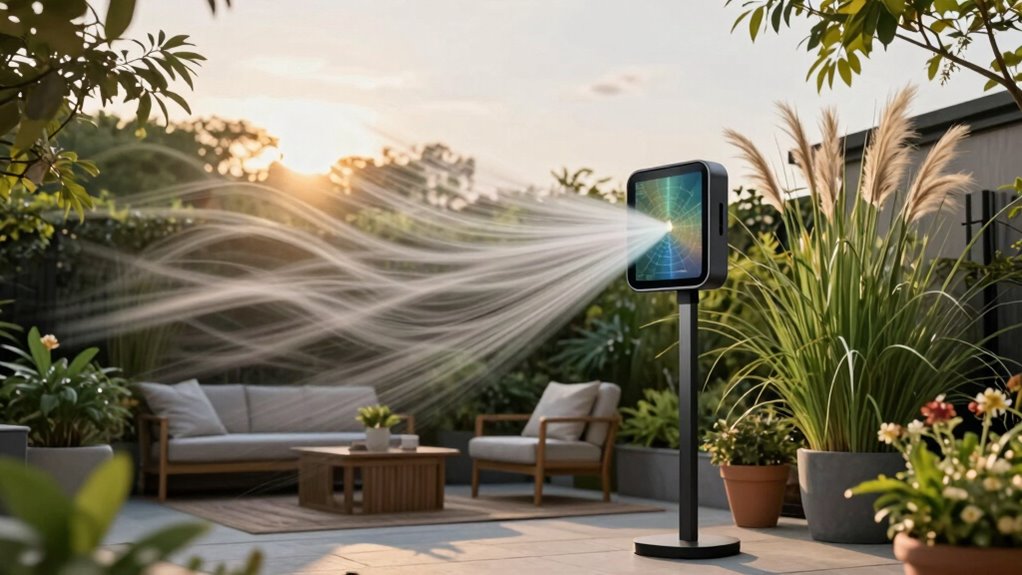

By studying your local wind map, you can identify prevailing wind directions and microclimate zones in your backyard. Use arrows to see wind patterns, and note areas with calmer or gusty air. Position plants, furniture, and structures like windbreaks accordingly to block or redirect breezes. Strategically placing natural barriers and understanding seasonal changes help create a cozy, comfortable outdoor space year-round. Keep exploring, and you’ll discover even more ways to optimize your backyard’s microclimate.
Key Takeaways
- Use wind maps to identify prevailing wind directions and strength for optimal placement of furniture and plants.
- Incorporate natural or artificial windbreaks based on wind map insights to reduce gusts and improve comfort.
- Strategically position seating areas in sheltered microclimates identified through wind map analysis.
- Adjust landscape features like trees and hedges to redirect or block unwanted airflow, enhancing microclimate stability.
- Combine real-time weather data with wind maps to adapt outdoor arrangements seasonally for consistent comfort.
Understanding Your Local Wind Patterns

To effectively improve your backyard comfort, you need to understand how wind moves through your area. Microclimate zones play a big role in shaping local wind patterns, creating pockets of warmer or cooler air. Recognizing these zones helps you predict where wind might be stronger or calmer. Additionally, be aware of wind tunnel effects—narrow spaces between structures that amplify wind speed. These effects can make certain areas feel much windier than others, impacting your comfort and outdoor activities. By observing how wind interacts with your landscape, you can identify natural barriers or openings that alter airflow. Understanding these patterns allows you to make smarter decisions when placing furniture, plants, or windbreaks, ultimately creating a more pleasant and protected backyard environment. Free Floating can also influence wind direction and speed, further affecting outdoor comfort. Paying attention to local wind patterns helps you optimize your landscape for better airflow management, especially when considering Microclimate zones that naturally modify wind behavior. Additionally, considering the surrounding landscape can help you better predict and adapt to changing wind conditions. Incorporating natural barriers like shrubs or fences can further redirect or block undesirable airflow, enhancing your outdoor experience.
How to Read a Wind Map Effectively

Understanding how to read a wind map effectively begins with recognizing that the arrows and symbols represent the direction and strength of wind in your area. To interpret these correctly:
Reading wind maps involves understanding arrows and symbols indicating wind direction and strength.
- Examine arrow length and thickness to gauge wind speed.
- Note the arrow direction for prevailing wind patterns.
- Look for symbols indicating gusts or turbulence zones.
- Use the map to identify microclimate analysis points, considering local features that influence wind flow.
- Incorporate insights from innovative European cloud servers to access real-time weather data and enhance prediction accuracy.
- Recognizing how wind flow dynamics vary across different terrains can help you better anticipate airflow behavior in your backyard.
- Understanding topographical influences can further refine your wind predictions, allowing for more precise outdoor space planning.
By understanding local topography and its impact on wind patterns, you can make more informed decisions about outdoor space management. This insight helps you optimize your backyard setup. Wind tunnel testing data can refine your understanding of airflow, especially in complex terrains. By mastering this, you’ll better anticipate wind behavior, making your outdoor space more comfortable and protected from harsh gusts. Effective reading of wind maps allows for smarter decisions about plant placement and furniture arrangement, enhancing your overall outdoor experience.
Choosing the Best Locations for Plants and Furniture

To create a comfortable backyard, you need to contemplate wind flow and how it moves across your space. Position plants and furniture where they’ll benefit from natural breezes while avoiding strong gusts. Also, plan for sunlight and shade to keep your outdoor areas inviting throughout the day. Being mindful of wind patterns can help you design a more enjoyable and relaxing outdoor environment. Considering long-term investments can also provide insights into long-term planning for your outdoor investments and enhancements. Using a vacuum cleaner to keep outdoor areas tidy can further enhance the overall comfort and cleanliness of your backyard space. Paying attention to indoor air quality principles can help you create a healthier outdoor environment by reducing dust and allergens.
Wind Flow Optimization
Choosing the right locations for plants and furniture can considerably improve your backyard’s comfort by managing wind flow effectively. Start with a microclimate analysis to identify wind patterns and existing airflow. Then, consider wind tunnel testing to simulate how different arrangements influence wind speed and direction. To optimize, focus on:
- Positioning taller plants or structures to block prevailing winds to reduce wind speeds, which can help create a more comfortable outdoor environment.
- Placing seating areas in naturally sheltered spots.
- Using windbreaks strategically to reduce gusts.
- Aligning furniture to take advantage of gentle breezes while avoiding direct exposure.
- Incorporating wind-resistant wood types, such as oak or cedar, into your outdoor structures to enhance durability and stability against wind forces. Additionally, understanding microclimates can help you better predict and utilize wind patterns for optimal placement. Recognizing local support breakfast options can also provide helpful inspiration for outdoor dining setups that take advantage of or shield from the wind.
Sunlight and Shade
Selecting the right spots for your plants and furniture depends heavily on sunlight and shade patterns throughout the day. Understanding these patterns helps you maximize comfort and plant growth. Observe how sunlight moves across your yard, considering wind energy’s influence on shade placement. Use weather forecasting to predict cloudy days and adjust accordingly. For ideal placement, consider how shade provides relief from heat during the hottest hours. The table below shows perfect spots based on sunlight and shade needs:
| Area | Best Use | Sunlight/Shade Pattern |
|---|---|---|
| South Side | Sun-loving plants | Full sun, minimal shade |
| North Side | Shade-loving plants | Mostly shaded, cooler spots |
| Under Trees | Lounge and resting spots | Dappled shade, breezy areas |
| Open lawn | Events and gatherings | Sun exposure, wind considerations |
Additionally, understanding microclimates within your yard can help you choose the most suitable locations for different plants and outdoor furniture. Incorporating knowledge of auditory processing can also aid in designing outdoor spaces that foster better communication and relaxation, especially in noisy environments. Moreover, considering wind energy patterns can influence the placement of outdoor furniture to enhance comfort and reduce wind-related discomfort. Recognizing how wind and weather patterns fluctuate can further improve your outdoor space planning to adapt to seasonal changes effectively. Being aware of local climate variations can help you select plants and furniture that thrive year-round.
Using Natural Barriers to Redirect Breezes

Using natural barriers like plants and structures to guide breezes away from seating areas can significantly improve your backyard comfort. Properly placing trees or shrubs creates windbreaks that redirect airflow effectively. When building these barriers, consider their size and placement to maximize their impact on wind patterns. Incorporating landscape design principles can help you plan effective wind barriers tailored to your space. Additionally, understanding local climatic conditions can enhance the effectiveness of your wind management strategies.
Strategic Plant Placement
Strategic plant placement can considerably influence backyard breezes by acting as natural barriers that redirect airflow. By understanding microclimate zones and wind speed variations, you can position plants to create desirable wind patterns. Consider these tactics:
- Plant taller trees on the windward side to block strong gusts and reduce wind speed.
- Use dense shrubs or hedges as windbreaks to redirect breezes around specific areas.
- Incorporate open spaces within plantings to allow gentle breezes to pass through, cooling your yard.
- Position plants to create microclimate zones with varied wind exposure, enhancing comfort and protection.
This approach helps you fine-tune airflow, making your backyard more comfortable and energy-efficient while leveraging natural plant barriers effectively.
Building Windbreaks Effectively
Building effective windbreaks involves using natural barriers like trees, shrubs, and hedges to redirect and slow down prevailing breezes. Proper placement can markedly modify your microclimate, creating a more comfortable backyard. When well-designed, windbreaks disrupt wind tunnel effects that can intensify gusts and cause discomfort. By strategically positioning these barriers, you can deflect strong winds away from seating areas and entrances, reducing chill factors and preventing soil erosion. Remember, the goal is to break up airflow without completely blocking breezes that bring fresh air and pollinators. Consider the height, density, and orientation of your plantings to optimize wind reduction. This approach allows you to harness natural elements for microclimate modification, making your outdoor space more inviting and resilient against harsh winds.
Practical Tips for Applying Wind Map Insights

To effectively apply wind map insights in your backyard, start by identifying the prevailing wind directions during different seasons. This helps you understand how wind interacts with your microclimate zones, allowing for targeted adjustments. Use wind speed indicators, like flags or lightweight ribbons, to gauge wind intensity in various areas. Then, follow these practical tips:
- Position seating and patios in sheltered microclimate zones away from strong prevailing winds.
- Plant windbreaks, such as shrubs or trees, strategically to reduce wind impact.
- Install adjustable screens or curtains for flexible wind control.
- Analyze seasonal wind patterns to adapt your arrangements, ensuring comfort year-round.
Applying these strategies helps you optimize wind flow, creating a more comfortable backyard environment tailored to your microclimate zones.
Enhancing Your Backyard Comfort Year-Round

Creating a comfortable backyard environment year-round requires adapting your space to changing seasons and weather conditions. Installing a wind turbine can generate clean energy, reducing your carbon footprint and improving air quality. During colder months, strategic windbreaks can block harsh winds, while in summer, shade structures keep your space cool. Consider planting trees or installing pergolas to enhance comfort and protect against wind. Here’s a quick overview:
| Season | Tip |
|---|---|
| Winter | Use windbreaks and wind turbines for warmth |
| Summer | Add shade structures and improve air quality |
| Year-round | Optimize airflow with wind map insights |
Frequently Asked Questions
How Often Should I Update My Wind Map for Accuracy?
You should update your wind map at least every six months to guarantee accurate wind speed data. Weather conditions change, impacting map accuracy, so more frequent updates might be necessary if you experience significant shifts in local wind patterns. Regular updates help you better understand wind flow, making your backyard more comfortable and safe. Keep an eye on local weather reports and adjust your map update schedule accordingly for ideal results.
Can Wind Maps Predict Sudden Weather Changes?
You can’t rely on wind maps to predict sudden weather changes, as wind flow patterns are only part of the forecasting puzzle. While they offer valuable insights into general wind trends, rapid shifts in weather often depend on other factors like temperature and pressure systems. Keep an eye on real-time weather updates and radar, as these tools better forecast abrupt changes, helping you prepare for unexpected conditions.
Are There Affordable Tools to Create My Own Wind Map?
Yes, you can create your own wind map using DIY mapping and cost-effective tools. You might consider using a simple anemometer to measure wind speed at different points in your yard, then plot the data on a map with free or inexpensive software like Google Maps or Canva. This approach helps you understand wind patterns without breaking the bank, making your backyard more comfortable and informed.
How Do Seasonal Changes Affect Local Wind Patterns?
Imagine you’re living in the age of Sherlock Holmes, unraveling mysteries—seasonal changes markedly impact your local wind patterns. You’ll notice microclimate variations and urban wind effects shift throughout the year, influenced by temperature differences and foliage. During summer, breezes may cool your yard, while winter winds can intensify. Understanding these seasonal shifts helps you plan better windbreaks and enjoy outdoor spaces comfortably year-round.
Can Wind Map Tricks Improve Outdoor Heating Efficiency?
Yes, wind map tricks can improve outdoor heating efficiency by helping you understand wind flow and airflow patterns. By observing these patterns, you can position heaters or create windbreaks to shield your space from chill-inducing breezes. Adjusting furniture placement based on wind flow guarantees better heat retention, making your outdoor area more comfortable. This strategic approach maximizes warmth while minimizing energy waste, giving you a cozy backyard regardless of the wind.
Conclusion
So, next time you think a gentle breeze is just a nuisance, remember—you’ve got the power to steer it. By understanding those wind maps, you might just turn your backyard into the ultimate comfort zone. Ironically, what once seemed like an uncontrollable force now becomes your secret weapon for perfect outdoor days. Who knew that a simple map could make your outdoor space feel like a five-star retreat? Happy breezing!