When blending nut butter, applying gentle heat can help it soften and flow smoothly, but too much heat causes oils to separate and the mixture to seize or become greasy. Natural oils tend to rise and float on top, and inadequate blending leaves them unevenly incorporated, resulting in a gritty texture. To get a silky, uniform spread, you need to manage heat carefully and blend longer. Keep going, and you’ll discover how to prevent your nut butter from seizing up altogether.
Key Takeaways
- Excessive heat causes nut oils to separate, leading to a seized or greasy texture.
- Proper blending and gentle warming help reincorporate oils for a smooth, uniform consistency.
- Overheating during blending accelerates oil separation and can cause the mixture to seize.
- Long, slow blending allows oils to fully integrate, preventing separation and maintaining smoothness.
- Monitoring temperature ensures the nut butter is warmed just enough to improve flow without seizing.
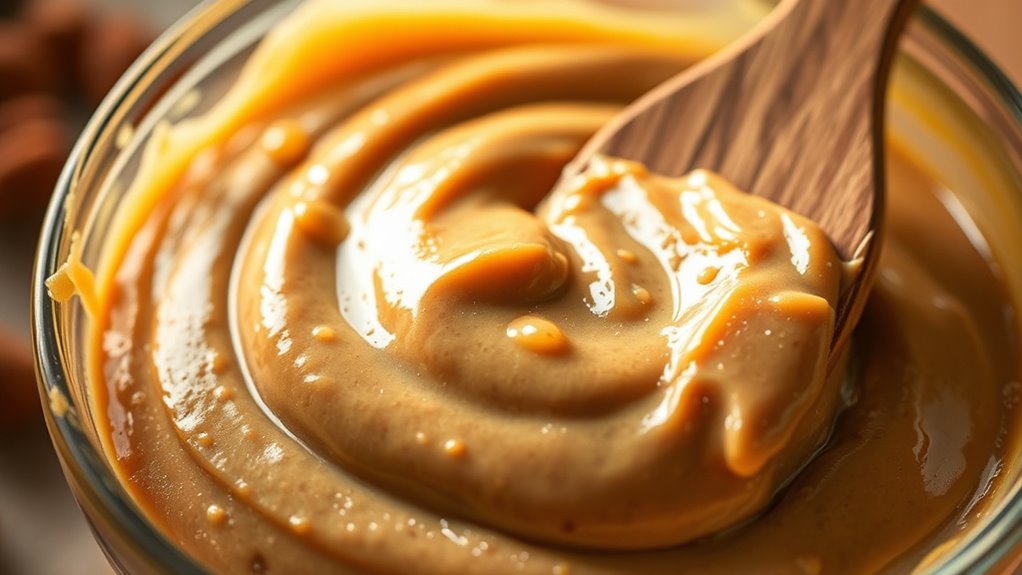
Nut butter blending is a simple way to customize your favorite spreads and create unique flavor combinations. Whether you’re adding spices, sweeteners, or mixing different nuts, understanding how heat, oils, and other factors affect your mixture can make a big difference in the final product. One of the most common issues you’ll encounter when blending nut butters is achieving a smooth, consistent texture. If your nut butter feels gritty or uneven, it’s often due to inconsistent texture or separation of oils. These oils tend to rise to the top over time, creating a layer of oil that can make blending more difficult and result in an uneven spread. To maintain a good texture consistency, you need to blend long enough to incorporate these oils back into the nut paste, creating a homogenous mixture.
Heat plays a significant role in this process. When you warm your nut butter slightly, it becomes more fluid, making it easier to blend and helping to achieve a uniform texture. However, applying too much heat can cause the oils to separate more quickly, making your nut butter prone to seizing or becoming greasy. This is especially true if you use high heat or overheat during the blending process. The key is to warm the nut butter gently—just enough to soften it without melting it completely. This way, the oils stay integrated, and the texture remains smooth and creamy. If you notice oil separation during blending, it’s a sign you might have overheated or not blended long enough. To counter this, keep the heat low, and blend for an extended period, allowing the oils to reincorporate evenly.
Gently warm nut butter to improve blending without causing oil separation or greasiness.
Oils are essential for the richness and smoothness of nut butters, but they can be tricky to manage when blending. When you blend, the natural oils in nuts can separate and float to the top, especially if the nut butter sits for a while. This separation isn’t necessarily a flaw—it’s natural—but it does require a bit of effort to fix. Stirring or blending again helps reincorporate these oils, restoring your spread’s creamy consistency. If your nut butter seizes or becomes grainy, it’s often because of uneven heat or insufficient blending time, which prevents the oils from blending smoothly with the solids. To avoid this, blend gradually, keep the temperature moderate, and give your mixture time to come together properly.
In essence, mastering nut butter blending involves understanding how heat, oils, and texture interact. Gentle warming and patience during blending can prevent oil separation and ensure a consistent, velvety finish. When you pay attention to these details, your homemade nut butters will not only taste better but also have a desirable, uniform texture that’s perfect for spreading, baking, or snacking.
Frequently Asked Questions
Can I Add Milk or Water to Smooth Out Nut Butter?
Yes, you can add a small amount of milk or water to smooth out nut butter. This liquid addition helps with texture adjustment, making it easier to spread or blend. Start with a teaspoon and stir well, adding more if needed. Be careful not to add too much at once, as it can thin out the nut butter excessively. This method keeps your nut butter creamy and manageable.
What’s the Best Way to Store Homemade Blended Nut Butters?
You should store your homemade nut butter in airtight storage containers to keep it fresh. Refrigeration tips include placing it in a glass jar or plastic container with a tight lid, which helps prevent spoilage and oil separation. Keep it in the fridge to prolong shelf life, but remember that chilled nut butter can become firmer. Stir before use for smoothness, and always use a clean spoon to avoid contamination.
Does Roasting Nuts Beforehand Affect the Blending Process?
Roasting nuts beforehand considerably impacts the blending process by enhancing their flavor and making them easier to process. The roasting impact helps break down the nuts’ cell walls, resulting in smoother, creamier nut butter. Additionally, roasting boosts flavor, giving your nut butter a richer, toasted taste. Just be mindful not to over-roast, as it can cause oil separation or seizing during blending. Overall, roasting elevates both texture and flavor.
How Long Does Homemade Nut Butter Stay Fresh?
Homemade nut butter stays fresh for about 2 to 3 weeks if stored properly. To maximize shelf life, keep it in an airtight container in the refrigerator, which helps with homemade nut preservation. You can extend its freshness slightly by adding a natural preservative like a small amount of salt or honey. Always check for signs of spoilage, like off smells or mold, before using.
Are There Health Benefits to Blending Different Types of Nuts?
Mixing different nuts creates a symphony of nutritional synergy, offering you a broader spectrum of vitamins, minerals, and healthy fats. This variety can boost your overall health and keep your diet balanced. However, be mindful of allergy considerations, as some nuts may trigger sensitivities. By blending nuts thoughtfully, you reveal more health benefits, turning your snack into a powerhouse of nourishment without risking unwanted allergic reactions.
Conclusion
Think of nut butter blending like tending a delicate garden. When you add heat or oils too quickly, it’s like overwatering delicate flowers—they seize and struggle to flourish. But with patience and gentle care, your mixture becomes smooth and vibrant, just like a thriving garden in full bloom. By understanding these secrets, you guarantee your nut butters stay lush and perfect, turning your kitchen into a blooming paradise of creamy, delicious spreads.