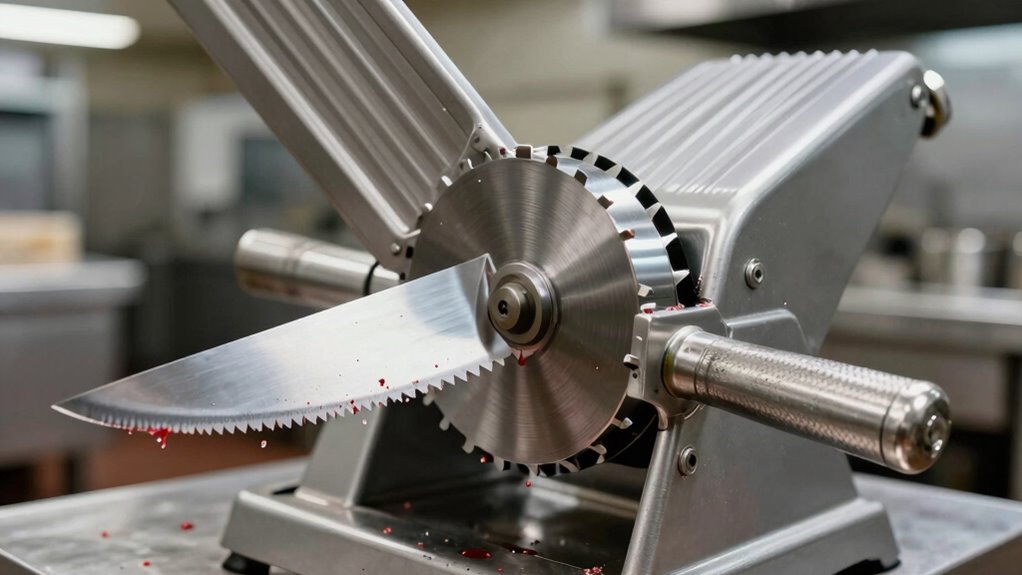
Many people underestimate the danger of dull, misaligned blades on meat slicers, which can cause serious cuts if mishandled. Dull blades require more force, increasing the risk of slips or accidents. Proper maintenance, safety features, and careful handling are essential to prevent injuries. Always disconnect the slicer before cleaning or adjusting, and wear cut-resistant gloves for protection. To keep you safe, here’s what you need to know to avoid common hazards.
Key Takeaways
- Dull blades increase cutting force, raising the risk of slips and deep cuts during meat slicing.
- Many underestimate the danger of blade contact, especially during cleaning or adjustments without disconnecting power.
- Improper handling or failure to use safety guards can lead to severe injuries from accidental blade contact.
- Overlooking regular maintenance and safety checks can cause unexpected blade failure and injuries.
- Failing to wear protective gloves or ignoring safety features significantly increases the cut hazard risk.
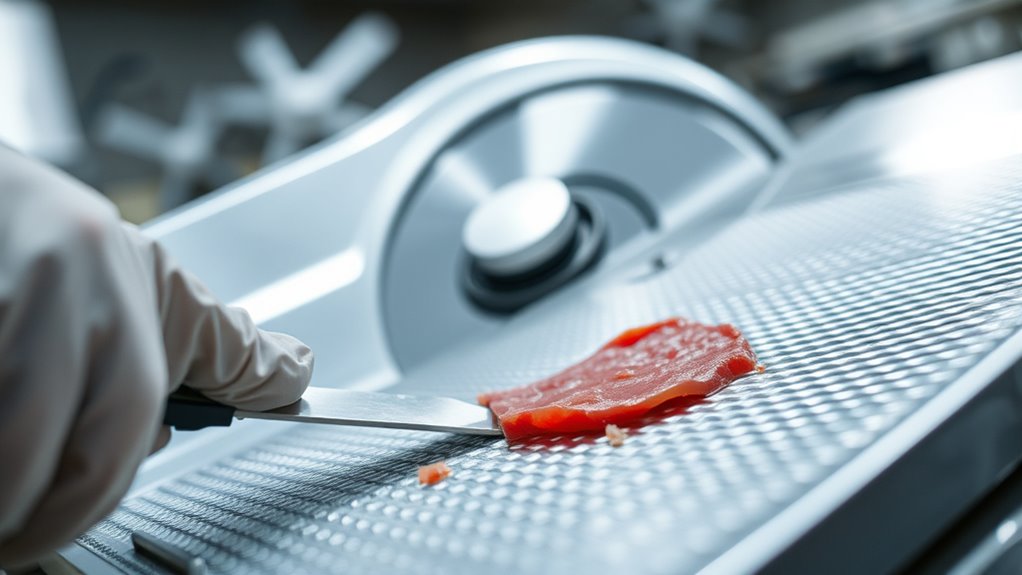
Have you ever considered how important it is to prioritize safety when using a meat slicer? Many people underestimate the risks involved, especially when it comes to the blade and electrical components. Proper blade maintenance is crucial not only for extending the life of your slicer but also for ensuring safe operation. A dull or poorly maintained blade can slip unexpectedly, increasing the chance of cuts or severe injuries. Always inspect your blade before each use, and sharpen or replace it as needed. Clean the blade carefully after use, making sure to remove any residue that could cause it to become dull or sticky. When handling the blade for maintenance, wear cut-resistant gloves to protect your hands from accidental cuts. Never attempt to clean or adjust the blade while the slicer is plugged in; always disconnect the power first. Keeping the blade sharp and well-maintained minimizes the effort needed to cut and reduces the risk of mishaps. Additionally, understanding the safety features incorporated into your equipment can greatly enhance your protection. Electrical hazards are another significant concern that often gets overlooked. Since meat slicers operate on electricity, it’s vital to handle cords and plugs with care. Always ensure the power cord is in good condition—no frays, cuts, or exposed wires. Avoid using the slicer in wet or damp environments, as water increases the risk of electrical shock. When plugging in or unplugging the machine, do so with dry hands and hold the plug firmly, avoiding pulling on the cord. Regularly inspect the power cord and plug for damage, and replace them if necessary. Remember, faulty wiring or damaged cords can cause electrical shorts or shocks, which can be severe. If you notice any electrical issues, stop using the slicer immediately and have it serviced by a qualified technician. Additionally, always follow the manufacturer’s safety instructions regarding electrical safety and blade care. Keep the area around the slicer clear of clutter to prevent accidental trips or falls that could cause injuries or damage to the machine. Use safety features like guards and emergency stop switches, and never disable or bypass them. Properly maintaining the blade and being vigilant about electrical safety are simple steps that dramatically reduce your risk of injury. Prioritizing these safety measures helps ensure that your slicing tasks are efficient and, most importantly, safe. Remember, a little caution goes a long way in preventing accidents and keeping your workspace safe and secure.
Frequently Asked Questions
How Often Should Meat Slicers Be Cleaned and Sanitized?
You should clean and sanitize your meat slicer after every use to prevent contamination. Follow a strict cleaning schedule, ensuring all parts, including blades and surfaces, are thoroughly washed with warm, soapy water. Use proper sanitation tips, like disinfectants approved for food contact surfaces, to keep your slicer safe. Regular cleaning not only maintains hygiene but also prolongs your equipment’s lifespan, reducing the risk of cut hazards and ensuring safe operation.
Are There Specific Safety Features to Look for When Buying a Meat Slicer?
When buying a meat slicer, look for safety features like blade guards to prevent accidental cuts and safety switches that stop the machine instantly. These features protect you during operation and cleaning. Make sure the slicer has a sturdy construction and easy-to-access safety controls. Prioritizing these safety features helps reduce the risk of injury and keeps your slicing tasks safe and efficient.
What Should I Do if I Accidentally Cut Myself?
Oh, the irony of slicing meat and ending up with a cut! If you accidentally cut yourself, stop what you’re doing and apply first aid steps immediately. Clean the wound with water, stop the bleeding with gentle pressure, and cover it with a sterile bandage. Remember, proper wound care prevents infection and speeds healing. Don’t ignore it—your safety’s worth more than a rushed, risky move.
Can Children Use Meat Slicers Safely?
Children should not use meat slicers unsupervised. You need to guarantee proper child supervision at all times and provide thorough slicer training before allowing them to handle the equipment. Even with training, it’s best to keep slicers out of reach for young kids, as the risk of injury is high. Always prioritize safety, and never assume kids can operate a slicer without close, attentive supervision.
What Are the Legal Safety Standards for Commercial Meat Slicers?
You must guarantee your commercial meat slicers meet regulatory compliance and have proper safety certifications, such as NSF or ETL marks. These standards verify that the equipment adheres to safety and sanitation requirements, reducing cut hazards. By choosing slicers with certified safety features, you protect your staff and customers, minimize legal risks, and maintain quality standards. Always verify certifications before purchasing or operating commercial meat slicers to ensure safety and compliance.
Conclusion
Remember, a meat slicer is like a sharp, unseen predator waiting to strike. As you reach for that perfect slice, stay alert—your fingers are the vulnerable prey. Keep your hands clear, use the safety guard, and never rush. Picture the blade’s gleam as a cutting wind—powerful and unforgiving if mishandled. Stay vigilant, and you’ll keep yourself safe from the hidden danger lurking behind every slice, turning your kitchen into a secure sanctuary.