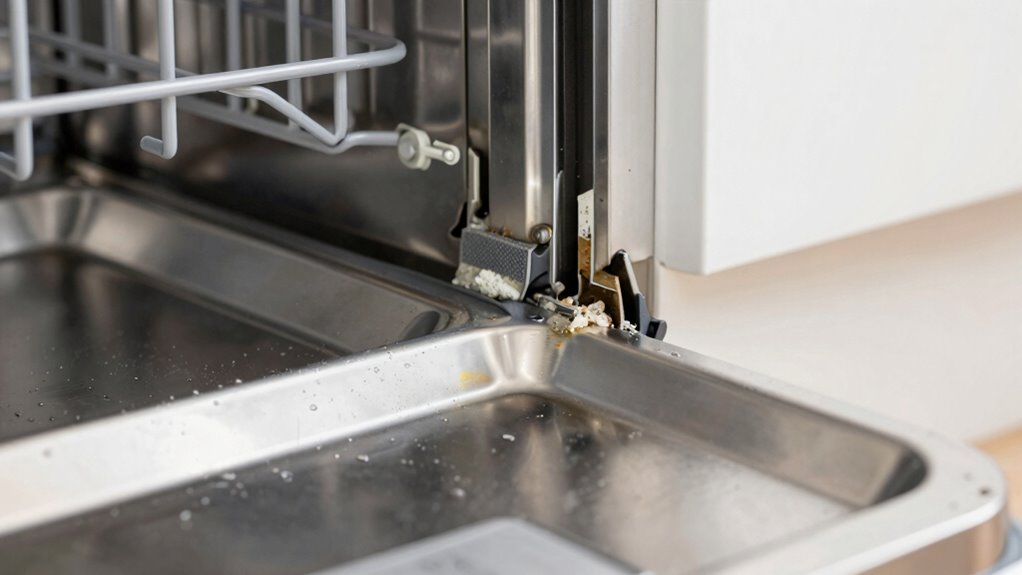

Smells often start in one spot because your dishwasher’s cycle didn’t fully clean or rinse that area, leaving behind food residue and mold growth. Using the wrong cycle length or temperature can leave residues behind, especially if the cycle is too short or low-temp. Regularly cleaning filters and running longer, hotter cycles helps eliminate odors and prevent buildup. If you want to discover more tips to keep your dishwasher fresh everywhere, keep exploring.
Key Takeaways
- Short, low-temp cycles may not fully remove residues, leading to localized odors.
- Inadequate cycle duration prevents deep cleaning, allowing mold or bacteria to develop in one spot.
- Using improper detergent or insufficient detergent can cause buildup and smell accumulation in specific areas.
- Obstructed spray arms or filters hinder proper cleaning, resulting in lingering odors in one location.
- Regularly running high-temperature, extended cycles helps eliminate trapped food particles and odor-causing bacteria.
Many dishwashers come with multiple cleaning cycles designed to handle different levels of dirt and odors. When you’re trying to eliminate smells, understanding how these cycles work can make a big difference. One key factor is detergent efficacy. Different cycles are optimized for various cleaning needs, and using the right cycle can guarantee your detergent works its best. For lightly soiled dishes, a shorter cycle with a lower temperature might suffice, allowing the detergent to do its job without overdoing it. However, for stubborn grime or lingering odors, a longer cycle with higher water temperature often improves detergent efficacy by better breaking down residues and killing bacteria that cause smells.
Cycle duration plays a vital role here. Short cycles are convenient but may not give the detergent enough time to fully dissolve and interact with dirt and odors. Longer cycles, although more time-consuming, provide extended wash times that help detergents penetrate deeper into dishes and remove trapped food particles and grease that contribute to bad smells. If you notice odors starting in one spot, it’s often because the cycle didn’t run long enough or at a high enough temperature for that area. This can cause residue to build up in certain parts of the dishwasher, creating a breeding ground for bacteria and mold, which are common sources of unpleasant odors. Cycle duration also influences how well detergents can activate and clean effectively, emphasizing the importance of selecting the appropriate cycle for your needs.
Choosing the right cycle isn’t just about convenience; it’s about making sure your dishwasher’s cleaning power is maximized. For instance, if you’re dealing with a specific spot that smells, running a cycle designed for heavy soil with increased cycle duration can help target that problem. Additionally, some dishwashers have specialized cycles like “sanitize” or “heavy-duty,” which increase water temperature and extend cycle duration to enhance detergent efficacy. These cycles are particularly useful when odors persist because they help eliminate bacteria and residues that regular cycles might leave behind.
It’s also essential to consider your detergent’s formulation and how it performs under different cycle conditions. Some detergents are designed for short cycles and low temperatures, while others require longer, hotter washes to activate their full cleaning potential. Matching your detergent to the appropriate cycle duration ensures maximum detergent efficacy, reducing the chance of odors lingering in one spot. Regular maintenance, like cleaning the filter and checking spray arms, combined with selecting the right cycle and detergent, will help keep your dishwasher smelling fresh and performing at its best. Ultimately, understanding how cycle duration and detergent efficacy interplay helps you target problem spots more effectively, preventing odors before they become a persistent issue.
Frequently Asked Questions
How Often Should I Run a Cleaning Cycle?
You should run a cleaning cycle once a month to maintain your dishwasher’s performance and prevent odors. Regular cycle scheduling helps eliminate buildup of grime, food debris, and soap residue that can cause smells to start in one spot. If you notice persistent odors, increase the frequency to every two weeks. Consistent maintenance keeps your dishwasher fresh, ensuring ideal cleaning and avoiding unpleasant smells over time.
Can Using Vinegar Damage My Dishwasher?
Using vinegar occasionally is safe for your dishwasher, but you should be cautious about vinegar safety. Excessive use can lead to dishwasher corrosion, damaging parts over time. To avoid this, only run a vinegar rinse once a month and dilute it with water. This helps eliminate odors without risking long-term damage or compromising your dishwasher’s integrity. Always follow manufacturer recommendations to keep your appliance in top condition.
Why Does Smell Persist After Cleaning?
The smell sticks around like a stubborn shadow because residual mold and trapped debris cling to unseen corners. You might scrub, but these hidden culprits linger, fueling odors. To banish the scent completely, run a hot cycle with baking soda and vinegar, and clean the filters and seals thoroughly. Think of it as giving your dishwasher a fresh start, clearing out the mold’s backstage and letting clean air take center stage.
Are There Specific Detergents for Cleaning Cycles?
Yes, there are specific detergents designed for cleaning cycles that boost detergent effectiveness and help with residue removal. These cleaners are formulated to break down soap scum, grease, and mineral deposits that cause persistent odors. Using a specialized dishwasher cleaner once a month can improve cleaning performance, eliminate smells, and keep your appliance fresh. Make sure to follow the manufacturer’s instructions for the best results and to maintain a spotless, odor-free dishwasher.
What’s the Best Way to Prevent Future Odors?
Think of your dishwasher as a garden that needs proper airflow to stay fresh. To prevent future odors, regularly clean the filter and run an empty cycle with odor neutralizers. Improving airflow by leaving the door slightly ajar after cycles helps moisture escape. These simple steps keep your dishwasher smelling clean, like a well-tended garden, and stop odors before they even start.
Conclusion
Now that you know how those sneaky smells start in one spot, you’re like a detective with a cleaning superpower. Think of your dishwasher as a garden; if you ignore the weeds, they spread and ruin the bloom. Regular cleaning cycles are your trusty watering can, keeping everything fresh and fragrant. So, stay vigilant, give your dishwasher some love, and watch those odors vanish like a bad dream at dawn.