
When choosing between conical and flat burr grinders, consider your brewing style. Conical burrs are versatile, quieter, and generate less heat, which helps preserve flavors. Flat burrs produce a more uniform grind, making them ideal for espresso but may create extra static and heat. Whichever you pick, understanding their differences can help maximize your coffee’s flavor—keep exploring to discover which type suits your taste best.
Key Takeaways
- Conical burrs are versatile, quieter, and generate less heat, making them suitable for a wide range of brewing methods.
- Flat burrs provide more uniform particle sizes, ideal for precise espresso extraction.
- Conical burrs operate at lower speeds, reducing static and preserving coffee flavor.
- Flat burrs tend to be faster and more consistent but may produce more heat, risking flavor loss.
- Both burr types ensure quality grind consistency; the choice depends on specific brewing preferences and priorities.
A burr grinder is an essential tool for coffee enthusiasts who want to achieve a consistent, flavorful brew. The key to great coffee lies in coffee extraction, which depends heavily on the grind consistency. When your coffee grounds are uniform, hot water can extract flavors evenly, resulting in a balanced cup. Irregular grind sizes, on the other hand, cause over-extraction and under-extraction, making your coffee taste flat or overly bitter. That’s why investing in a good burr grinder matters; it allows you to control the grind size precisely, ensuring each brew is optimized for flavor.
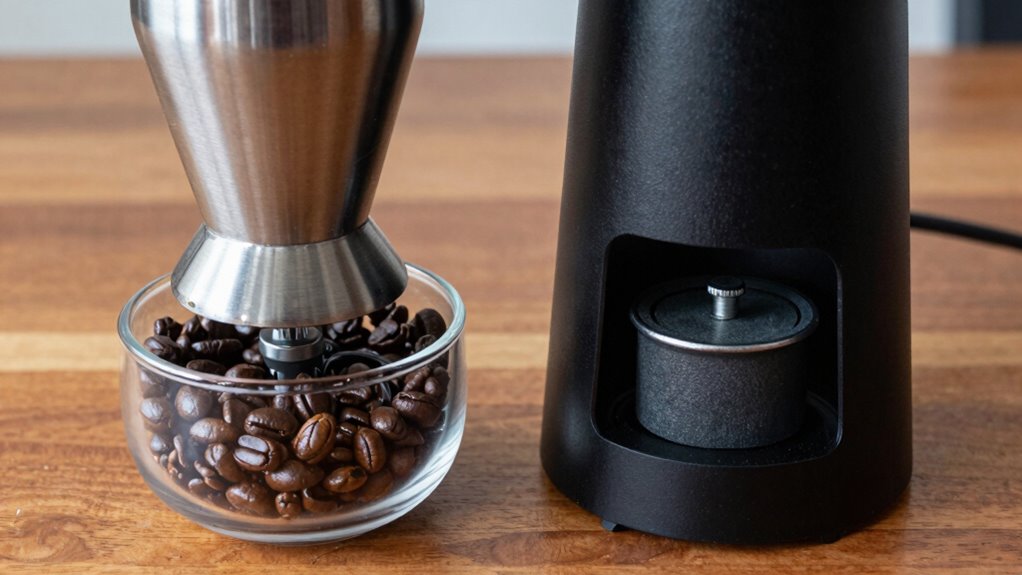
Now, when choosing between conical and flat burrs, it’s helpful to understand how each impacts your grinding process. Conical burrs are shaped like cones and sit inside a matching cone-shaped burr. As they rotate, they crush the beans with a gentle, grinding action. This design tends to produce less heat during grinding, which helps preserve the beans’ aromatic oils and flavors. Because conical burrs generally operate at lower RPMs, they tend to generate less static and clumping, making for a smoother grinding experience. Many home baristas prefer conical burrs for their durability and ability to grind beans at a wide range of settings, from coarse to fine, without sacrificing grind consistency.
Conical burrs produce less heat, preserve flavor, and offer versatile grind settings for consistent coffee.
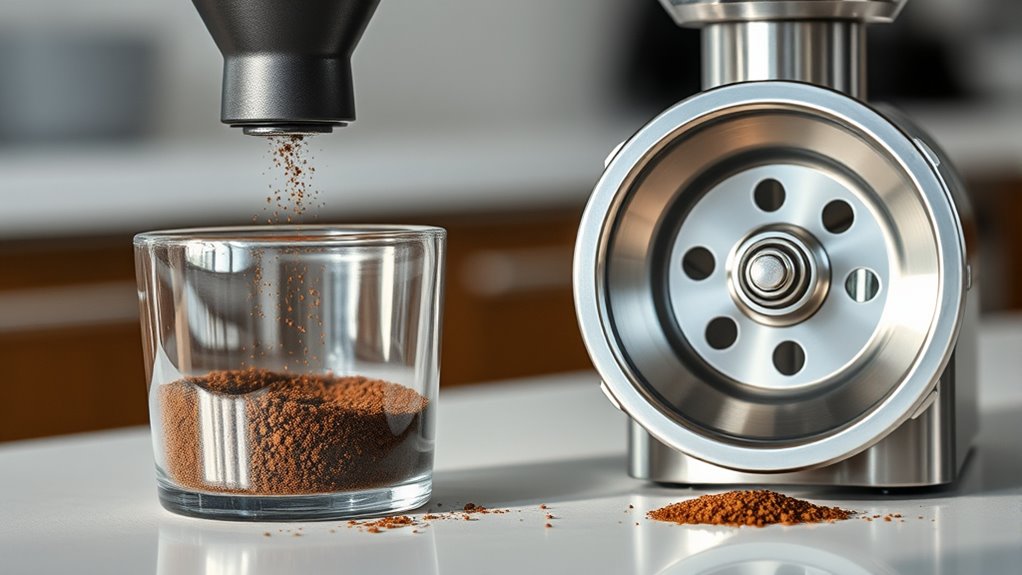
Flat burrs, however, consist of two parallel, flat rings that grind the beans between them. They are often found in commercial settings because they can produce extremely uniform grounds. The flat design tends to give more consistent particle sizes, which is critical for precise extraction, especially in espresso brewing. Flat burr grinders usually operate at higher speeds, which can generate more heat, potentially affecting the beans’ flavor if not managed properly. But their design allows for very consistent grinding, making them a favorite among professional baristas.
Ultimately, your choice depends on what you prioritize. If you want a grinder that’s versatile, quieter, and less likely to overheat, a conical burr grinder works well. If you’re after the most uniform grind possible, especially for espresso, then a flat burr grinder might be the better option. Both types deliver excellent grind consistency, which is the foundation of good coffee extraction. Choosing the right burr type is crucial for achieving optimal flavor and grind quality. Whichever you choose, remember that a stable grind size and uniformity are what help you access the full potential of your beans and craft a truly flavorful cup.
Frequently Asked Questions
How Do Burr Grinders Impact Espresso Shot Consistency?
Burr grinders improve espresso shot consistency by delivering uniform grind size, which helps extract flavors evenly. You’ll notice less variation in shot quality, and the grind noise remains steady, making it easier to dial in your settings. Plus, their sleek aesthetics appeal to your kitchen decor. With consistent grind size, your espresso shots become more balanced and flavorful, giving you cafe-quality results every time you brew.
Are Conical or Flat Burrs More Durable Over Time?
Think of durability as a garden that needs careful tending—conical burrs generally last longer, acting like sturdy oak trees, especially when made of robust burr material. Flat burrs can wear faster, more like delicate flowers. You might notice that conical grinders tend to produce less grinder noise over time, signaling better resilience. Ultimately, your choice impacts not only longevity but also how smoothly your grinder performs day after day.
What Maintenance Is Required for Different Burr Types?
You need to regularly maintain your burrs by following appropriate cleaning schedules and burr sharpening when necessary. For conical burrs, clean them weekly with a brush and run grinder with rice to remove oils. Flat burrs require gentle cleaning to prevent uneven wear. Check manufacturer guidelines for sharpening, but generally, replacing burrs is best when dull. Consistent maintenance keeps your grinder performing efficiently, regardless of burr type.
Do Burr Shapes Affect Grind Size Adjustments?
Your burr shape has a powerful influence on grind size adjustments, making it easier or trickier to dial in your perfect brew. Conical burrs typically offer smoother, more consistent grind size precision, while flat burrs can give you finer control for espresso. The shape impacts how uniformly coffee particles are ground, helping you achieve the desired extraction. So, yes, burr shape definitely affects your ability to fine-tune grind size with accuracy.
Can Burr Grinder Choice Influence Flavor Extraction?
Yes, your burr grinder choice can influence flavor extraction by affecting flavor nuances and aroma preservation. Conical burrs tend to generate less heat, helping conserve delicate aromas and subtle flavors, while flat burrs often produce a more uniform grind that enhances extraction consistency. By selecting the right grinder, you guarantee your coffee’s aroma stays intact, and its flavor nuances are fully expressed, leading to a richer, more satisfying brew.
Conclusion
Whether you choose conical or flat burrs, remember they’re the heartbeat of your perfect brew. Think of them as the skilled artist’s brushstrokes—each one shaping your flavor masterpiece. Don’t get lost in the hype; focus on what suits your taste and needs. With the right grinder, you’ll release a symphony of aroma and taste, turning every cup into a delightful journey. Cheers to brewing magic—your coffee adventure awaits!