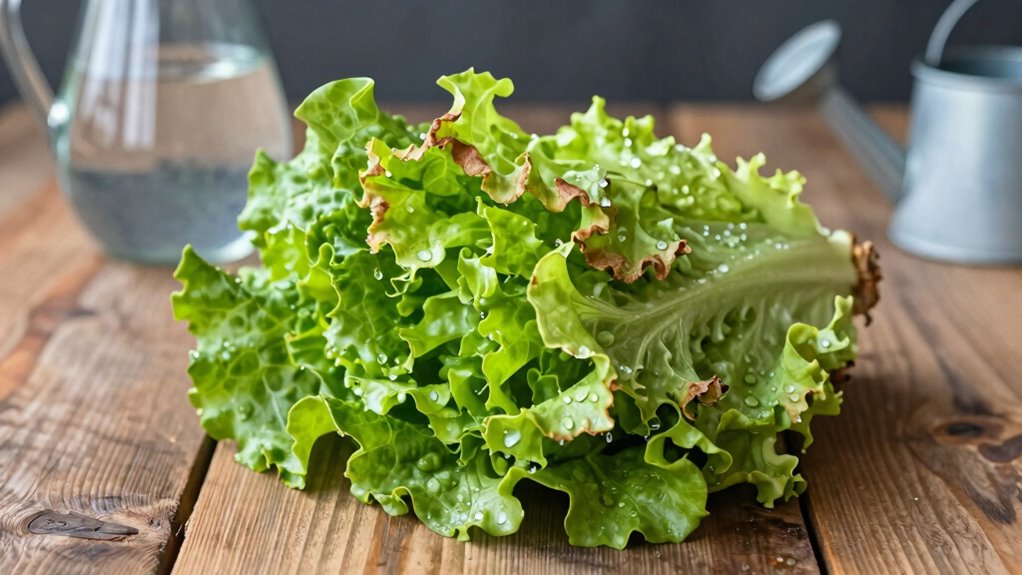

Lettuce wilts when it loses water faster than it can absorb it, causing its leaves to become limp and droop. This imbalance happens because water exits through tiny pores called stomata during transpiration, especially in hot or windy conditions, while roots struggle to take up enough moisture from dry soil. To keep your lettuce crisp, understanding and maintaining this water balance is key—keep exploring to learn more about how to prevent wilting.
Key Takeaways
- Insufficient soil moisture hampers water uptake, causing lettuce leaves to wilt and lose turgidity.
- Excessive water loss through transpiration, especially in hot or windy conditions, leads to dehydration and wilting.
- Root damage from pests or poor drainage reduces water absorption, weakening plant health and causing wilting.
- Imbalanced water availability disrupts the water balance, impairing nutrient transport and leaf firmness.
- Proper watering practices maintain continuous water flow, preventing dehydration and keeping lettuce crisp and fresh.

4500 Sq.Ft Energy Star Most Efficient 2025 Dehumidifier with Pump, AEOCKY Max 80 Pint/Day Smart Compressor Dehumidifier with Drain Hose, Intelligent Humidistat,for Basement,Bedroom,Home (White)
【The Undisputed Champion — Industry‑Leading Dehumidifier Brand】When you choose AEOCKY, you get double market validation. In 2025, AEOCKY...
As an affiliate, we earn on qualifying purchases.
How Water Keeps Lettuce Crisp and Healthy
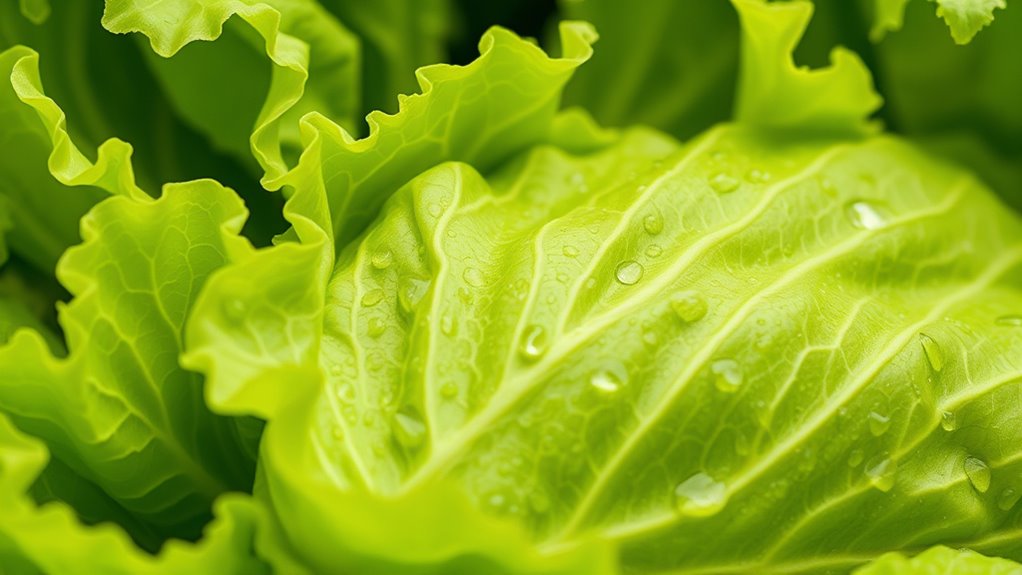
Water is essential for maintaining the crispness and health of lettuce. Your lettuce’s leaf structure relies on adequate hydration to stay firm and vibrant. When water enters the plant, it helps maintain turgor pressure, which keeps the leaves swollen and crisp. Without enough water, the leaves become limp and wilted, losing their appeal. Additionally, water facilitates nutrient uptake, allowing the plant to absorb crucial minerals from the soil through its roots and distribute them to the leaves. Proper hydration ensures these nutrients reach the cells efficiently, supporting overall growth and health. A well-hydrated lettuce maintains its structure and nutritional quality, making it more appealing and nutritious for you to enjoy. Water truly is the key to keeping lettuce fresh and lively, contributing to the plant’s overall water balance.

Humidifier large room 16L/4.2Gal - Lacidoll Whole house Humidifier for Home1500 sq.ft. Ultrasonic Cool Mist Humidifiers for Bedroom with Extension Tube & Aroma Box & Night light, White
[Smart Humidifiers with Humidistat] This humidifier for large rooms allows you to customize the humidity level from 40%...
As an affiliate, we earn on qualifying purchases.
How Lettuce Absorbs Water From the Soil
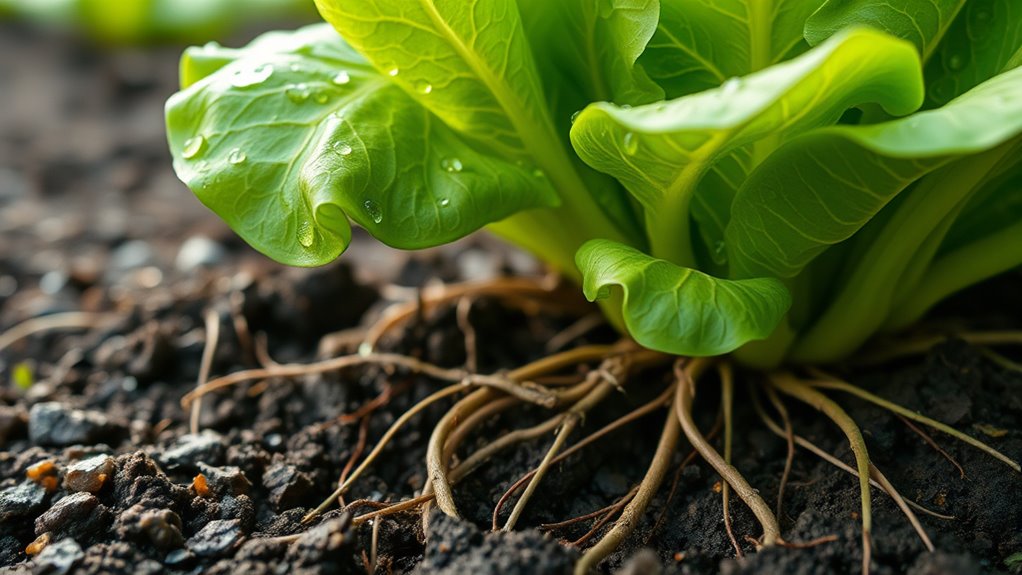
Since roots are the main gateway for moisture, lettuce absorbs water from the soil through tiny root hairs that extend from its main roots. These root hairs increase surface area, making root absorption more efficient. When soil moisture levels are adequate, water moves into the roots via osmosis, driven by differences in water concentration. As water enters, it travels through the plant’s vascular system, reaching the leaves and tissues. If soil moisture drops, the water flow slows down, causing the plant to wilt. You can support this process by maintaining proper soil moisture levels. Healthy, moist soil ensures your lettuce can continuously absorb water, keeping it turgid and fresh. Proper root absorption relies on the right balance of soil moisture to prevent wilting. Understanding plant hydration can help you optimize watering practices and keep your lettuce thriving.

Lacidoll 16L Smart Humidifier large room, Whole house Humidifier for Home 1500 sq.ft with APP/Voice/Remote Control, Ultrasonic Cool Mist Humidifiers for Bedroom, Plants, office with Tube, White
[Whole House Humidifiers for 1500 sq.ft] Equipped with a 4.2Gal (16L) large capacity tank, this home humidifier runs...
As an affiliate, we earn on qualifying purchases.
Why Lettuce Loses Water Through Transpiration
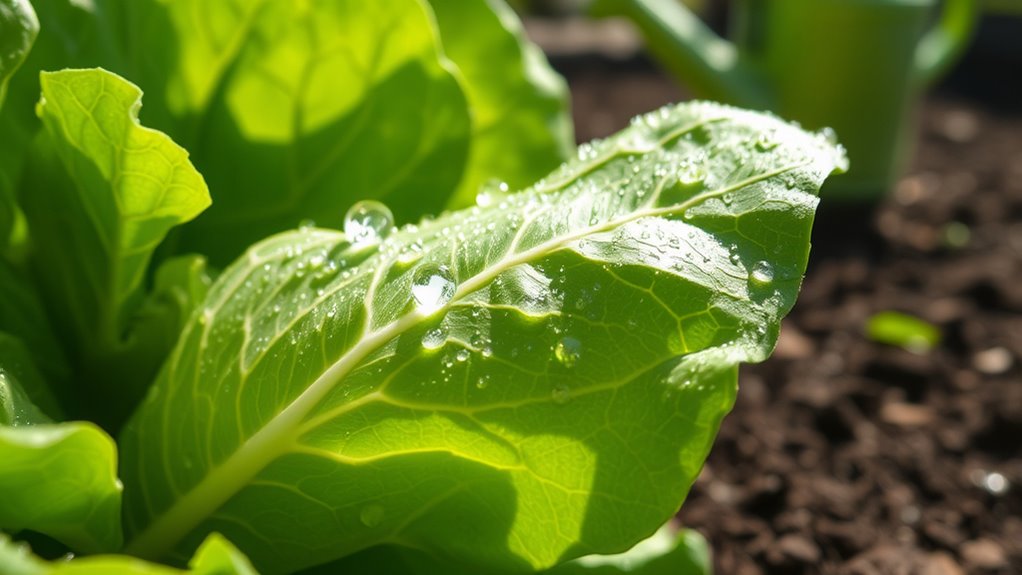
As lettuce takes up water through its roots, it also continuously loses moisture through tiny openings in its leaves called stomata. These openings are part of the leaf structure that allows gases to exchange between the plant and the environment. When stomata open to let in carbon dioxide for photosynthesis, water vapor escapes, causing transpiration. This process helps regulate leaf temperature and draws water upward from the roots. The rate of water loss depends on factors like temperature, humidity, and wind. If water vapor escapes faster than the plant can replace it, the lettuce begins to wilt. Transpiration is essential for nutrient transport and cooling, but it also leads to water loss that impacts the plant’s overall water balance. Understanding the leaf structure is crucial for managing water retention in plants.

Humidifier Large Room, 4.2 Gal/16L Large Humidifier for 1500 sq.ft, 360° Nozzles Cool Mist Ultrasonic, Top Fill Tower Humidifiers for Bedroom Office Plant wholehouse with Extension Tube, Night Light
[Whole House Humidifiers for 1500sq.ft] With a large capacity of over 4.2 gallons, this humidifier can run for...
As an affiliate, we earn on qualifying purchases.
What Disrupts Lettuce’s Water Balance
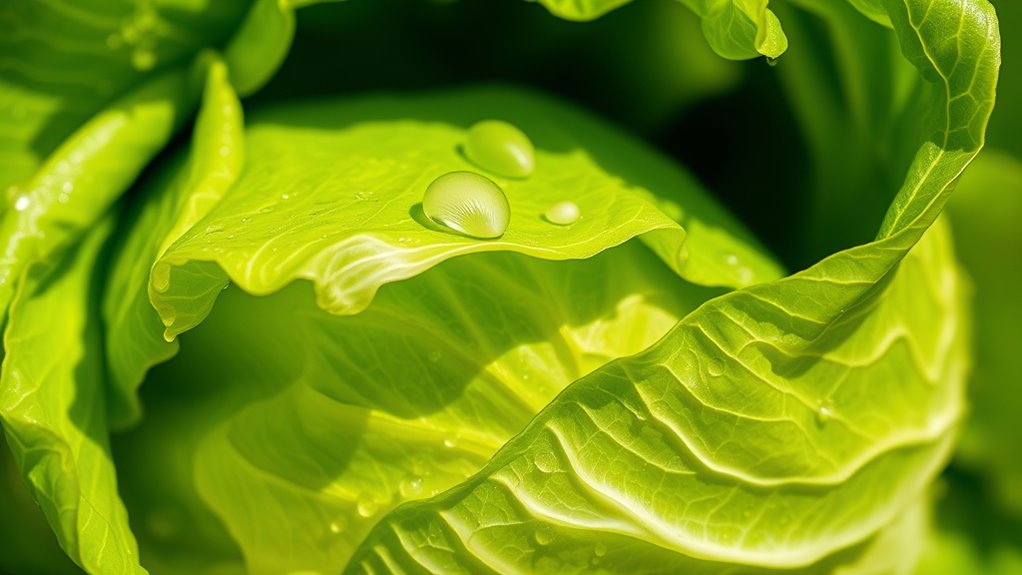
Various environmental factors can disrupt lettuce’s water balance, making it harder for you to keep your plants adequately hydrated. Nutrient deficiency can weaken roots, reducing their ability to absorb water efficiently. Pest damage, like holes or chewed leaves, can also lead to water loss and stress for the plant. Additionally, extreme temperatures cause excessive transpiration or water retention issues. Poor soil drainage can drown roots or prevent water uptake altogether. Finally, strong winds can strip moisture from leaves faster than the plant can replace it, increasing wilting risk. Staying alert to these factors helps you maintain healthy water balance. Addressing nutrient deficiencies and controlling pests are key steps to prevent disruptions and keep your lettuce crisp and fresh. Implementing ethical hacking practices can help identify vulnerabilities in your garden’s irrigation system, ensuring optimal water management.
Simple Tips to Keep Your Lettuce Hydrated and Fresh
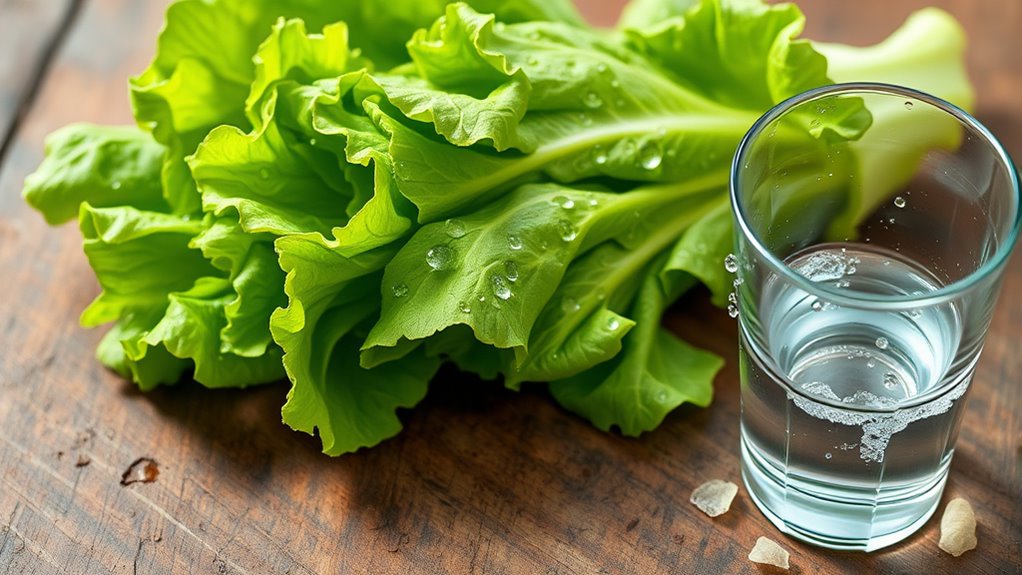
Keeping your lettuce hydrated and fresh requires simple, consistent practices. First, develop good watering habits by watering deeply and regularly, ensuring the soil stays moist but not waterlogged. Check soil moisture daily; if it feels dry a few inches below the surface, it’s time to water. Use a gentle spray or drip irrigation to avoid damaging delicate leaves. Mulching around the base helps retain soil moisture and keeps roots cool. Avoid overwatering, which can lead to root rot, and underwatering, which causes wilting. Keep lettuce in a cool, shaded spot if possible, especially during hot days. Proper watering habits and maintaining consistent soil moisture are essential to prevent wilting and keep your lettuce crisp and fresh longer.
Frequently Asked Questions
How Does Temperature Affect Lettuce’s Water Retention?
You’ll notice that higher temperatures cause lettuce to lose more water through increased transpiration rates, making it harder for the plant to retain soil moisture. When it’s hot, your lettuce’s water loss speeds up, leading to wilting if soil moisture isn’t replenished. Conversely, cooler temperatures slow transpiration, helping your lettuce stay turgid and healthy. So, temperature directly influences how well lettuce maintains its water balance and overall freshness.
Can Overwatering Harm Lettuce Plants?
Overwatering can harm your lettuce plants by causing poor soil drainage and root health issues. When you water too much, the soil becomes waterlogged, depriving roots of oxygen and leading to root rot. This weakens the plant and makes it more susceptible to disease. To prevent this, make sure proper drainage and avoid excessive watering, giving your lettuce the right balance for healthy growth.
What Role Do Nutrients Play in Lettuce Hydration?
Imagine a gardener noticing their lettuce wilting despite regular watering. Nutrients like potassium and magnesium are essential for maintaining proper water uptake. A nutrient deficiency can disrupt the plant’s ability to absorb water, leading to dehydration symptoms. Soil mineral content directly influences nutrient availability. Ensuring your soil has balanced nutrients helps lettuce stay hydrated, preventing wilting caused by poor nutrient absorption rather than water scarcity.
How Quickly Can Lettuce Wilt Due to Water Imbalance?
You might notice lettuce wilt within a few hours if soil moisture drops markedly or root health declines. When roots struggle to absorb water, the plant can’t maintain turgor pressure, causing rapid wilting. To prevent this, keep soil consistently moist and monitor root health closely. If you respond quickly to signs of water imbalance, you can often restore lettuce’s turgidity before permanent damage occurs.
Are There Specific Lettuce Varieties More Resistant to Wilting?
You’ll find that some lettuce varieties, thanks to targeted Lettuce breeding, show greater resistance to wilting. Specifically, those bred for Disease resistance often withstand water imbalance better. Varieties like Romaine and Butterhead tend to be more resilient because breeders select for traits that improve water retention and structural integrity. Choosing these types can help you reduce wilting issues, especially in fluctuating environmental conditions or when water supply isn’t consistent.
Conclusion
Think of your lettuce as a tiny, delicate boat floating on a vast lake. When it stays well-watered, it sails smoothly, vibrant and crisp. But if the water levels drop, the boat begins to sink, wilting under the weight of dehydration. By keeping the water flowing, you’re the steady hand guiding it safely across calm waters. With proper care, your lettuce remains a fresh, lively vessel—a symbol of health and energy in your garden.