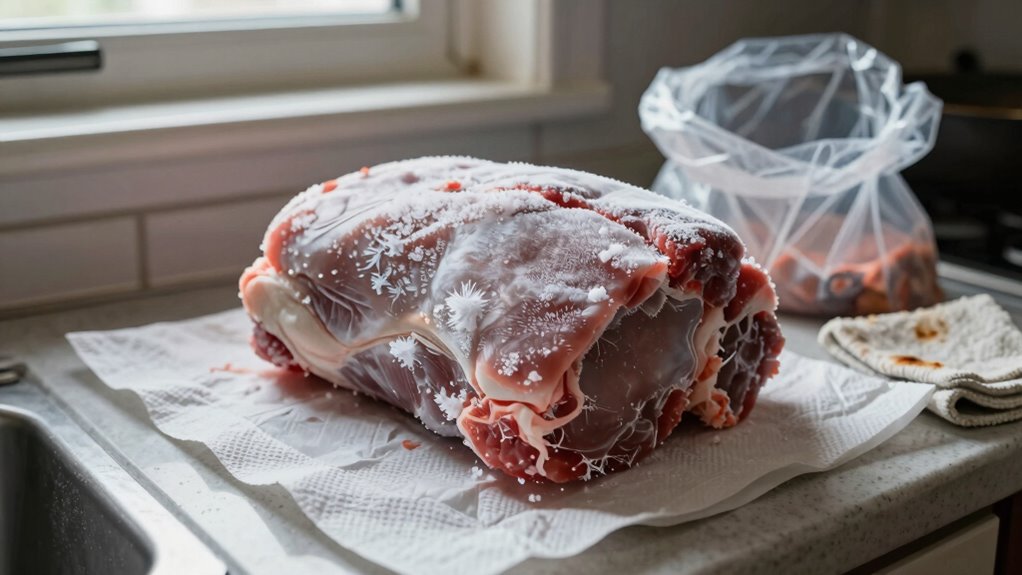

Many people ignore proper food thawing methods, risking bacterial growth and foodborne illnesses. Thawing at room temperature or in hot water creates unsafe conditions by allowing bacteria to multiply rapidly. Instead, you should thaw foods safely in the refrigerator, in cold water, or use your microwave with immediate cooking. Choosing the right method protects your health; if you want to know how to do it right, there’s more to learn.
Key Takeaways
- Many people thaw foods at room temperature, which accelerates bacterial growth and increases foodborne illness risks.
- Unsafe methods like hot water immersion or countertop thawing promote uneven heating and bacterial proliferation.
- Proper thawing involves refrigeration, cold water, or microwave techniques with immediate cooking afterward.
- Monitoring refrigerator temperature and planning ahead are essential to prevent bacterial growth during thawing.
- Common mistakes include refreezing thawed foods without cooking and neglecting cross-contamination prevention practices.

Waterdrop G3P600 Reverse Osmosis System, 8 Stage Tankless Reverse Osmosis Water Filter, NSF/ANSI 42 & 53 & 58 & 372 Certified, Under Sink RO System, 2:1 Pure to Drain, Smart LED Faucet
𝐓𝐫𝐮𝐬𝐭𝐞𝐝 𝐜𝐞𝐫𝐭𝐢𝐟𝐢𝐜𝐚𝐭𝐢𝐨𝐧𝐬: Waterdrop G3P600 reverse osmosis system is certified against NSF/ANSI 58 for TDS reduction and NSF/ANSI 372...
As an affiliate, we earn on qualifying purchases.
Why Improper Thawing Puts You at Risk
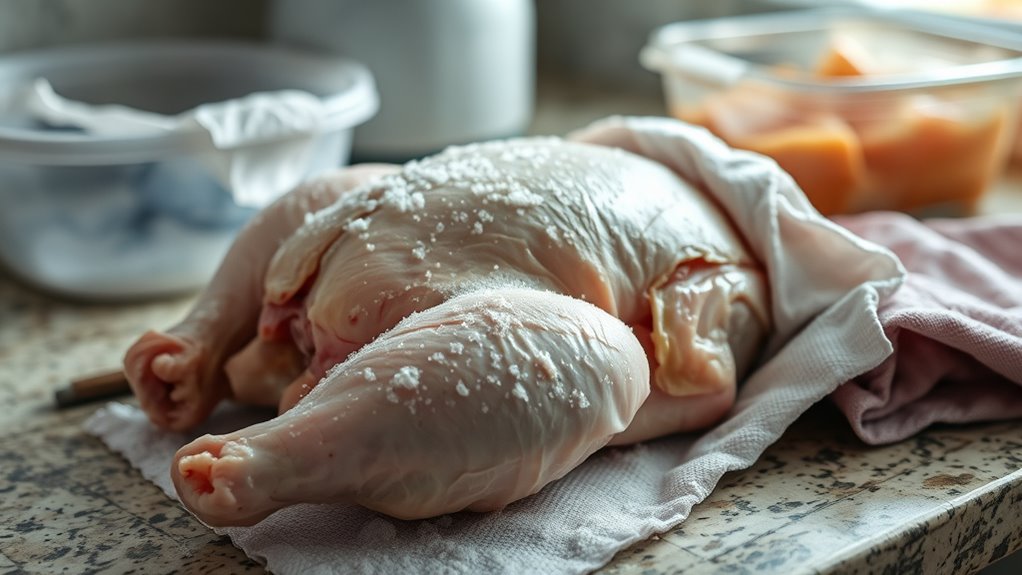
Improper thawing can quickly turn safe food into a health hazard. When you thaw food incorrectly, you increase the risk of cross contamination, spreading bacteria between raw and cooked foods. For example, leaving meat at room temperature allows bacteria to multiply rapidly, heightening bacterial growth concerns. This creates an environment where harmful pathogens thrive, increasing your chances of foodborne illnesses. Additionally, using unsafe methods like hot water or leaving food out for too long can cause bacteria to grow unchecked. Without proper thawing techniques, you unintentionally compromise food safety, making it essential to follow safe practices. Keeping foods at the right temperature during thawing minimizes cross contamination risks and bacterial growth concerns, protecting you and your loved ones from illness. Proper sauna ventilation and temperature control techniques can also help ensure a safe cooking environment in your home.

Bluevua RO100ROPOT-Lite(UV) Countertop Reverse Osmosis Water Filter System, 7-Stage Purification with UV and Remineralization, 3:1 Pure to Drain, Portable Water Purifier (Blue)
COUNTERTOP DESIGN WITH PREMIUM-QUALITY CARAFE AND ENHANCED FILTRATION: This plug-and-play water purifier requires no installation or plumbing, simplifying...
As an affiliate, we earn on qualifying purchases.
What Unsafe Thawing Methods You Should Avoid
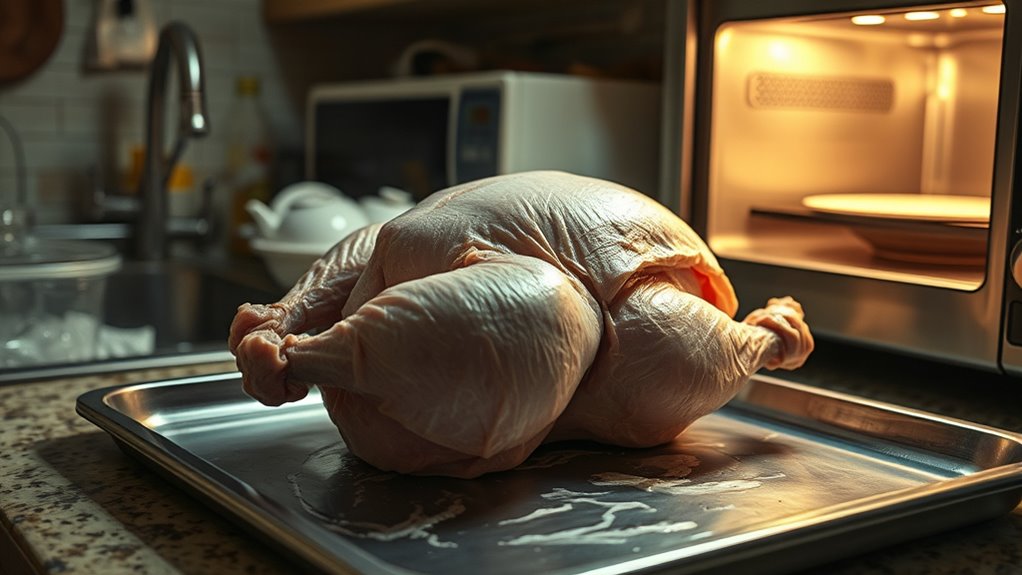
To guarantee food safety, it is crucial to avoid certain unsafe thawing methods that can promote bacterial growth and cross-contamination. Never thaw frozen desserts or canned foods at room temperature, as the outer layers can reach unsafe temperatures while the inside remains frozen, creating ideal conditions for bacteria. Using hot water to thaw foods is also risky because it can cause uneven thawing and encourage bacteria to multiply quickly. Avoid leaving foods out on the countertop for extended periods; this practice is a common mistake that jeopardizes safety. Canned foods should never be thawed at room temperature or in hot water, as bacteria on the can surface can contaminate the food. Stick to safe methods like refrigeration or microwave thawing to keep your food safe. Proper thawing techniques are essential in preventing bacterial growth and ensuring food remains safe to consume.

SimPure Y9A UV Countertop Reverse Osmosis Water Filter, Alkaline Remineralization 300 GPD 6 Stage Purification, RO Water Filtration System, Super Fast Filtering Portable Water Purifier
WATER TASTE COMPARISON WITH TAP WATER: The Y9A water filter system uses advanced reverse osmosis technology, followed by...
As an affiliate, we earn on qualifying purchases.
How to Thaw Food Safely and Correctly
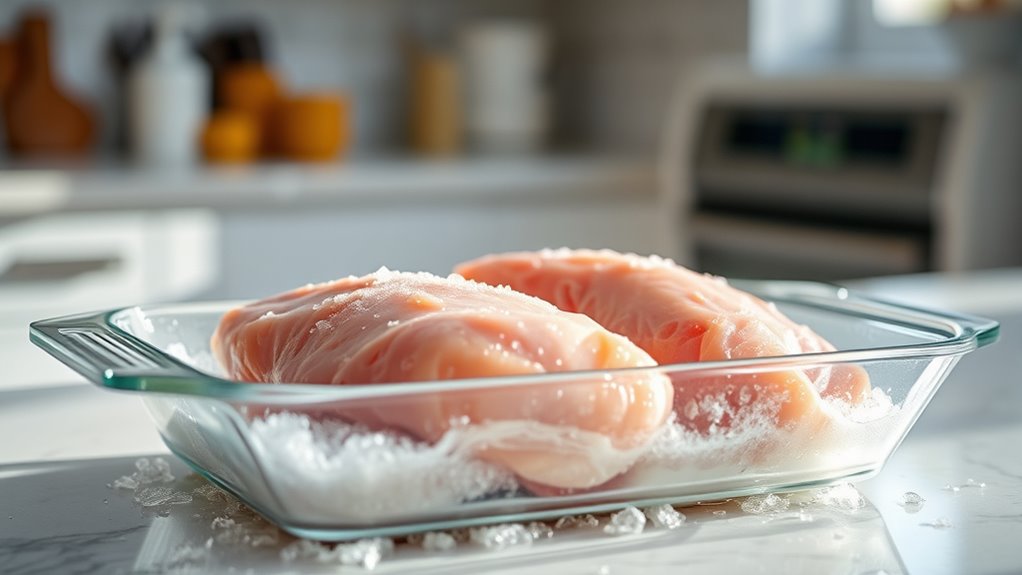
The safest way to thaw food is by planning ahead and using refrigeration. This method keeps food at a safe temperature, preventing bacterial growth. Proper food storage in the fridge guarantees even thawing and maintains kitchen hygiene. For best results, place frozen items on a plate or in a container to catch drips and avoid cross-contamination. Use the table below as a guide:
| Food Type | Thawing Method | Time Needed |
|---|---|---|
| Meat, Poultry | Refrigerator | 24 hours per 5 lbs |
| Seafood | Refrigerator | 12-24 hours |
| Ready-to-eat foods | Refrigerator | Several hours to overnight |
Adhering to this method ensures safe, hygienic food handling during thawing. Proper planning and understanding of food safety practices can further reduce the risk of foodborne illness.
AquaTru Carafe Countertop Water Purifier | Compact 4-Stage Reverse Osmosis System with Glass Carafe Removes 84 Contaminants Including Forever Chemicals, Lead & Fluoride | No Plumbing
Certified to Remove 84 Contaminants: Independently certified by IAMPO to NSF standards to remove 84 contaminants, including forever...
As an affiliate, we earn on qualifying purchases.
Quick and Safe Thawing Tips You Can Use
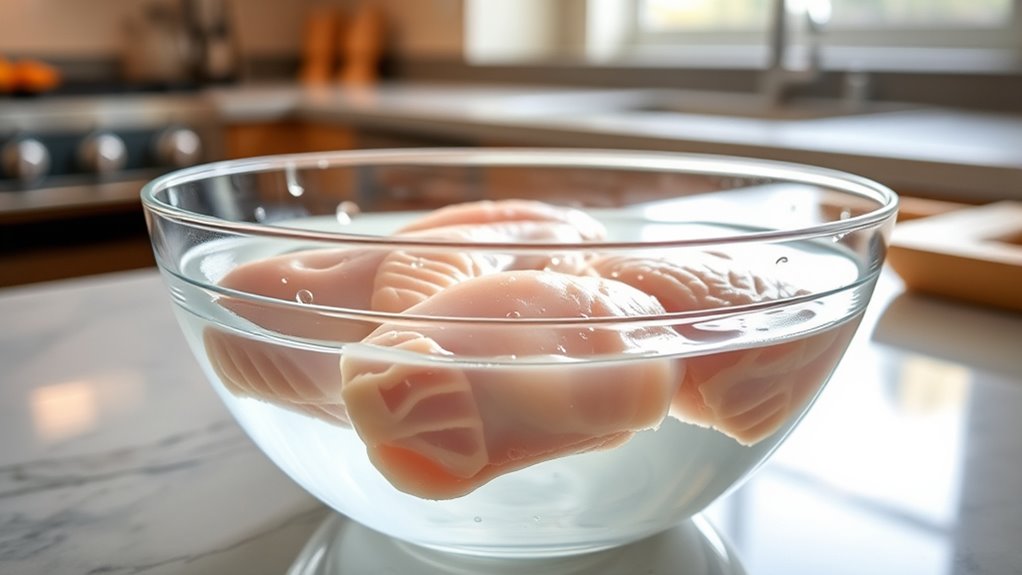
When you’re in a hurry, using the cold water method or microwave can speed up thawing, but you need to do it carefully. Thawing in the refrigerator is safer but takes more time. Let’s explore how to do each method quickly and safely to keep your food fresh. For optimal results, understanding food safety guidelines can help prevent spoilage and ensure proper handling during the thawing process.
Thaw in Refrigerator
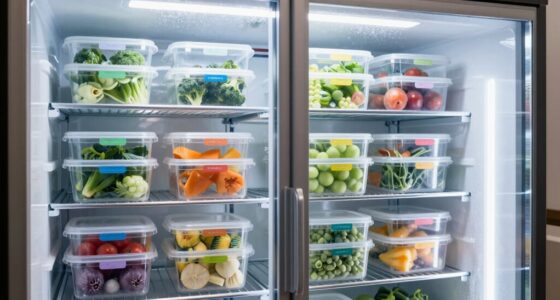
Thawing food in the refrigerator is one of the safest and most convenient methods. It maintains a consistent temperature, reducing bacteria growth. To guarantee safety, keep your refrigerator at or below 40°F (4°C). Planning your thawing schedule helps prevent food from staying in the temperature danger zone too long. Place the food on a plate or in a shallow pan to catch drips and avoid cross-contamination. Using a thermometer to monitor your refrigerator’s temperature ensures optimal food safety.
Use Cold Water Method
Using the cold water method is a quick and effective way to thaw food safely when you’re short on time. Submerge your frozen seafood or meat in a leak-proof plastic bag to prevent contamination. Fill a large bowl or sink with cold water, then submerge the bagged food completely, changing the water every 30 minutes to maintain a consistent temperature. This method speeds up thawing compared to refrigerator storage, reducing the risk of bacteria growth. It’s ideal for seafood and meats that need to be cooked soon after thawing. Remember, never use hot water or leave food out at room temperature, as these practices can compromise food safety. The cold water method keeps your food safe while saving time. Proper temperature control is essential for preventing harmful bacteria proliferation during thawing.
Microwave With Caution
The microwave offers a quick way to thaw food, making it a handy option when you’re pressed for time. However, microwave safety is essential to prevent uneven thawing or partial cooking that can promote bacteria growth. Always use the defrost setting and pause periodically to rotate or rearrange your food for even thawing. Be aware of thawing myths—such as the idea that microwaving kills all bacteria—since it doesn’t. Instead, cook the food immediately after microwave thawing to ensure safety. Keep in mind that some parts may get warm while others stay frozen, so don’t rely solely on the microwave for safe thawing. Utilizing energy-efficient appliances can further support safe and sustainable food preparation. Using it carefully helps you avoid foodborne illnesses and ensures your meal remains safe to eat.
Thawing Techniques for Different Types of Food
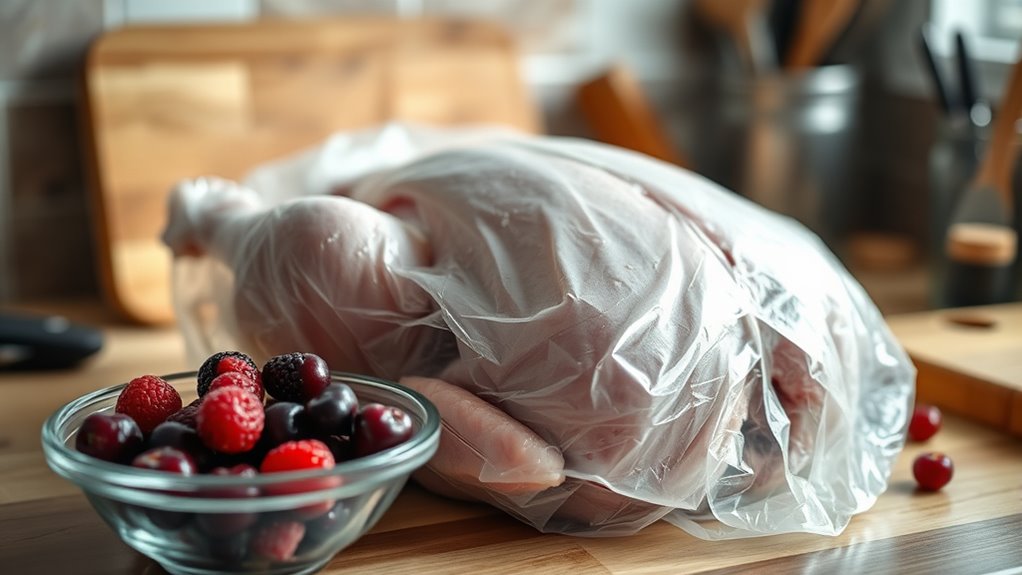
Different types of food require specific thawing methods to guarantee safety and maintain quality. For meats like poultry and beef, thaw them in the refrigerator, respecting food storage durations to prevent spoilage. Avoid leaving them out at room temperature, which risks bacterial growth. Seafood should be thawed in cold water or in the fridge, never at room temperature. If you’re marinating meat or fish, do so in the fridge to control bacterial proliferation, and always marinate within the recommended food storage durations. For frozen vegetables, thaw in the fridge or microwave if you’ll cook them immediately. Proper thawing ensures even cooking and preserves flavor, while improper techniques can lead to unsafe conditions. Tailoring your thawing method to each food type keeps your meals safe and delicious. Safe thawing practices are essential to prevent foodborne illnesses and ensure optimal food quality.
How to Spot and Prevent Thawing Mistakes

Mistakes during thawing can compromise food safety and quality, so it’s vital to recognize common errors and know how to prevent them. One thawing myth is that leaving food out at room temperature is safe; in reality, this encourages bacterial growth. Always avoid storage mistakes like refreezing thawed food without cooking it first, which can cause spoilage and foodborne illness. To spot errors, check for uneven thawing or if the food remains cold in the center but feels warm on the outside. Prevent these mistakes by thawing in the refrigerator, microwave, or cold water—never at room temperature. Proper planning and understanding thawing myths help guarantee your food stays safe and fresh, avoiding unnecessary risks and quality loss. Additionally, ensuring proper airflow around stored food can help maintain consistent temperatures during thawing, reducing the risk of bacterial proliferation Air Purifier Maintenance Dos and Don’ts.
Frequently Asked Questions
Can I Thaw Food at Room Temperature Safely?
You shouldn’t thaw food at room temperature because it promotes bacterial growth, which can cause foodborne illnesses. When you leave food at room temperature, bacteria multiply rapidly, especially between 40°F and 140°F. Instead, you should thaw food safely in the refrigerator, in cold water, or in the microwave. These methods keep food out of the danger zone, reducing the risk of bacteria thriving and ensuring your food stays safe to eat.
How Long Can Thawed Food Be Stored in the Fridge?
You can store thawed food in your fridge for 1 to 2 days, but don’t risk bacterial growth or freezer burn. Many ignore this, risking food safety, but quick consumption prevents spoilage. Always keep your fridge at 40°F or below, and avoid leaving food out too long. Proper storage minimizes bacteria and freezer burn, keeping your food fresh and safe for as long as possible.
Is It Safe to Refreeze Partially Thawed Food?
Refreezing partially thawed food can be safe if it hasn’t been left out at room temperature for too long, but it’s not ideal. When you refreeze, there’s a risk of food safety issues and freezer burn, which affects quality. To minimize risks, freeze it promptly, and try to use it soon after thawing. Always check for signs of spoilage before cooking or eating.
What Signs Indicate Food Has Been Thawed Improperly?
You can tell food has been thawed improperly if you notice signs contamination, like a slimy texture or discoloration, and odor changes, such as a sour or rotten smell. These signs indicate bacteria growth and spoilage, making the food unsafe to eat. Always check for unusual odors, textures, or colors before cooking or consuming thawed food to guarantee your safety and prevent foodborne illnesses.
Are Microwave Thawing Methods Suitable for All Food Types?
Microwave thawing isn’t suitable for all food types because it can alter the microwave texture, making some items rubbery or unevenly cooked. It also causes nutrient loss, especially in delicate foods like vegetables and fish. You should avoid using it for large or porous foods, as uneven heating can promote bacteria growth. For best results, opt for refrigerator thawing or cold water methods to preserve quality and safety.
Conclusion
By following safe thawing practices, you protect yourself and your loved ones from foodborne illnesses. Think of it like opening a treasure chest—you want to do it carefully and correctly to avoid losing the valuable safe eating experience. Don’t let careless methods turn your meal into a health risk. Instead, trust the right techniques, and enjoy your food with confidence, knowing you’ve done everything possible to keep it safe from start to finish.