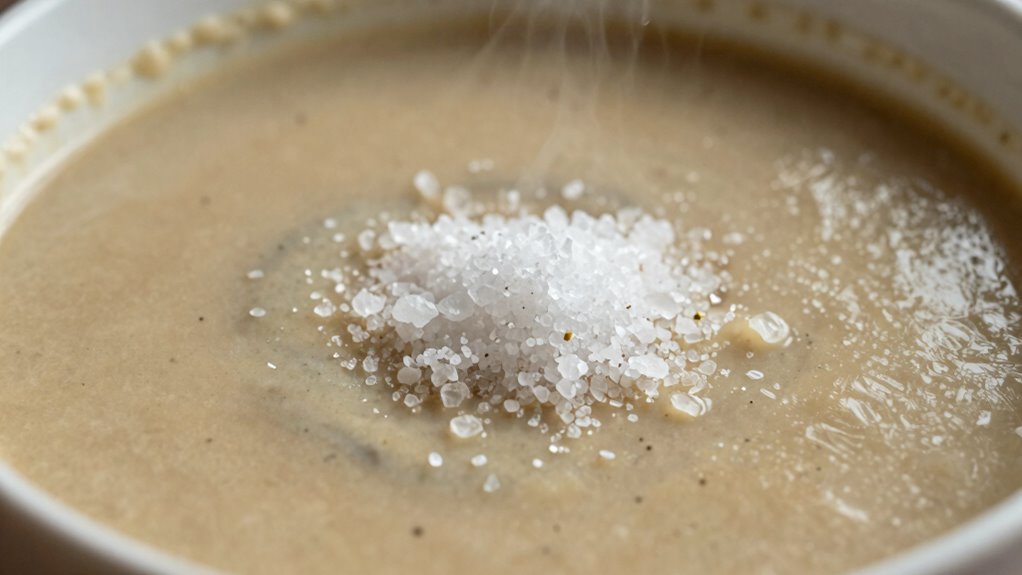

Oversalting often begins early because your taste buds adapt quickly, making subtle salt additions less noticeable. When you add salt at the start, it influences flavor development and can dull your sensitivity, leading you to underestimate how much salt is in your dish. Over time, these small, unnoticed adjustments accumulate, resulting in an overly salty taste. Understanding how salt interacts with flavors and recognizing these early cues can help you avoid oversalting—you’ll learn how to stay in control better.

Prime made for students and young adults
- Fast, free delivery for dorm and study essentials
- Prime Video and Amazon Music included
- Member-only deals
Key Takeaways
- Salt’s flavor-enhancing effects and sensory adaptation can mask initial overuse, leading to unnoticed oversalting later.
- Adding salt early influences overall flavor development, making it easier to oversalt as flavors meld over time.
- Continuous salt exposure dulls taste buds, reducing sensitivity and causing under-recognition of excessive salt levels.
- Misconceptions about seasoning and relying on intuition can lead to early oversalting without immediate awareness.
- Proper timing and gradual seasoning prevent oversalting, but early salt addition often sets a hidden course for excess salt.
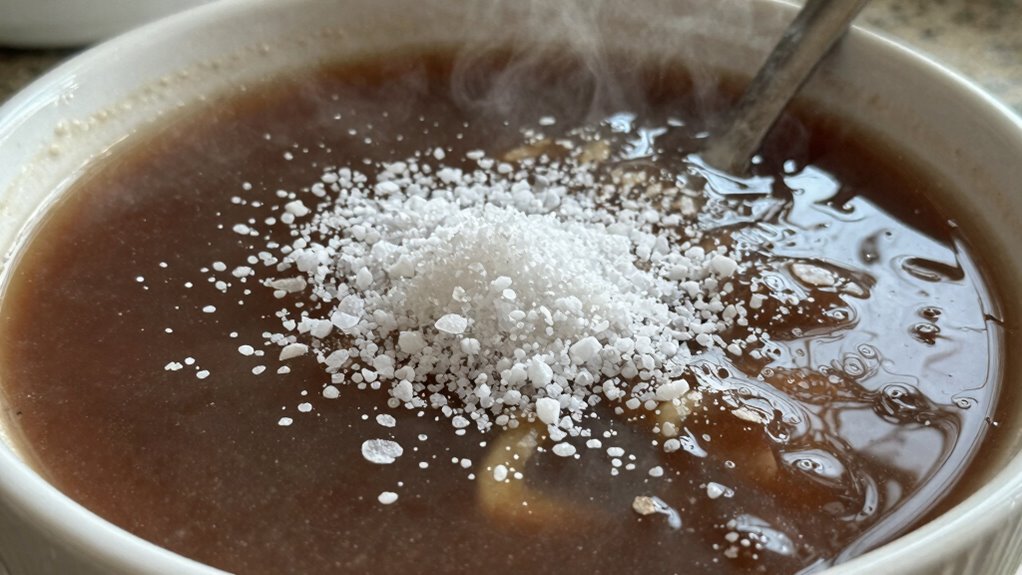
Have you ever wondered why your food suddenly tastes overly salty, even though you didn’t think you added that much? It’s a common experience, and the reasons behind it often surprise people. Many salt myths circulate, suggesting that adding salt is straightforward — just sprinkle it in and taste. But the truth is, salt’s role in cooking is complex, and oversalting can start much earlier than you realize. When you cook, salt interacts with ingredients to influence flavor balance. If you’re not careful, these subtle changes can lead to an overly salty dish without you noticing until it’s too late.
One reason oversalting sneaks up on you is that salt enhances certain flavors while masking others. It acts as a flavor amplifier, but it also can dull your palate’s sensitivity to saltiness if used excessively or too early in the cooking process. When you add salt at the wrong moment, it may seem harmless, but over time, the cumulative effect can tip the balance toward oversalting. This is why understanding salt myths is *essential* — some believe that the more salt you add, the better the flavor, but in reality, moderation and timing are *vital* to achieving flavor balance.
Salt amplifies flavors but can dull sensitivity; timing and moderation are key to avoiding oversalting.
Your taste buds are also less reliable than you think; they adapt and become less sensitive after continuous exposure to salt. You might add what seems like a small amount, but your palate might not register how salty it’s become until the dish is finished. As a result, you could end up with a dish that tastes perfectly seasoned at first, only to become overly salty as the flavors meld during cooking. This is why early salt addition can be risky: it may seem harmless at the moment, but it influences the entire flavor profile and can lead to oversalting later. Recognizing sensory adaptation is crucial to better control your seasoning. Additionally, understanding how flavor interactions work can help you make more informed seasoning choices. Being aware of cooking dynamics can help you better anticipate how flavors will develop during preparation.
Furthermore, many cooks fall into the trap of relying on intuition rather than tasting as they go. Salt myths often promote the idea that you should season heavily upfront to build layers of flavor, but this can backfire. The secret lies in taste-testing throughout the process and adjusting gradually. Balancing flavors isn’t just about adding salt; it’s about understanding how salt interacts with other ingredients and when to add it for *perfect* flavor development. If you’re not attentive, oversalting can happen before you even realize it, and fixing it afterward becomes a challenge.
In short, oversalting often begins long before you think, driven by misconceptions about how salt works in cooking and your own sensory perceptions. By understanding these dynamics and focusing on flavor balance, you can avoid the pitfalls of early oversalting and create dishes perfectly seasoned to delight the palate. Recognizing the timing of salt addition is crucial for maintaining control over your dish’s flavor.
salt shaker with adjustable grind
As an affiliate, we earn on qualifying purchases.
As an affiliate, we earn on qualifying purchases.
Frequently Asked Questions
How Can I Detect Oversalting Before Tasting the Food?
To detect oversalting before tasting, pay attention to salt diffusion on the surface. If you see salt crystals or a salty film, it might be oversalted. You can also feel the texture—excess salt can create a gritty or grainy feel. Keep in mind, oversalting often causes flavor masking, so if the dish smells overly salty or the aroma is overpowering, it’s a sign you’ve gone too far.
Are Some Ingredients More Prone to Oversalting Than Others?
Think of ingredients like delicate dancers on a stage—some, like soy sauce or cured meats, are more prone to oversalting because they pack a punch. Salt alternatives can help, but they require careful flavor balancing. You naturally sense when an ingredient is more prone to oversalting, so pay attention to their saltiness early. Adjust gradually, tasting often, to avoid overpowering the dish and keep the flavors harmonious.
Does Oversalting Affect the Nutritional Value of Dishes?
Oversalting can slightly affect the nutritional value of dishes, especially if you consume salt-sensitive foods regularly. While it won’t drastically change your nutrient intake, excessive salt intake may contribute to health issues like high blood pressure. Remember, salt enhances flavor, but too much can mask natural tastes and lead to overconsumption. Being mindful of salt sensitivity helps you enjoy flavor enhancement without compromising your health.
Can Over-Salting Be Reversed or Fixed After Cooking?
Yes, over-salting can be reversed or fixed after cooking. You can try adding a few raw potato slices to absorb excess salt, then remove them before serving. Rinsing or diluting the dish with more water or broth also helps reduce the salty taste. Keep in mind, over-salting may have health implications, so adjusting the salt level is essential for both flavor and your well-being.
What Are Common Misconceptions About Salt Usage in Cooking?
Salt myths and health misconceptions often cloud your judgment, but the truth is, many believe salt is the enemy when, in fact, it’s about moderation. A common misconception is that all salt is bad, yet your body needs it in small amounts. You might think adding salt is always harmful, but when used correctly, it enhances flavor without risking your health. Think of salt as a seasoning, not a villain.
As an affiliate, we earn on qualifying purchases.
Conclusion
Just like Icarus flew too close to the sun, oversalting sneaks into your dishes before you even realize it. It’s subtle, almost like a whisper in the wind, quietly ruining your culinary masterpiece. Stay vigilant, taste as you go, and remember that moderation is your guiding star. When you catch it early, you can steer clear of the pitfalls and keep your flavors balanced—ensuring your cooking remains a shining example, not a cautionary tale.
As an affiliate, we earn on qualifying purchases.
As an affiliate, we earn on qualifying purchases.
Evergreen bestsellers Picks
bestsellers
As an affiliate, we earn on qualifying purchases.