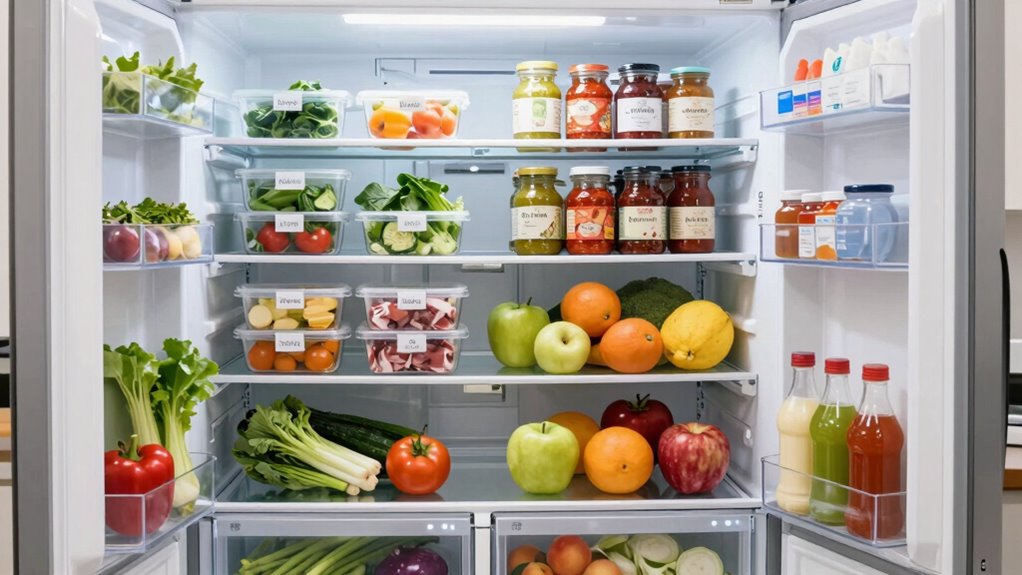

To prevent spoilage, focus on organizing your fridge by temperature zones, keeping perishables at the back or bottom where it’s coldest, and maintaining a steady temperature between 32°F and 40°F. Use clear labels, airtight containers, and organize items by expiry date following a FIFO system. Regularly clean and reassess your layout to make certain fresh items stay accessible and properly rotated. Continue exploring for more tips to keep your food fresh longer.
Key Takeaways
- Maintain consistent fridge temperatures between 32°F and 40°F, monitoring regularly to prevent bacterial growth.
- Organize food by category and use clear labels with expiration dates to facilitate proper rotation and minimize spoilage.
- Store perishables in airtight, transparent containers with dividers to preserve freshness and prevent cross-contamination.
- Position frequently used items at eye level and keep older products at the front for FIFO (first-in, first-out) access.
- Regularly clean and reassess airflow and ventilation to ensure even temperature distribution and reduce bacteria buildup.
Understanding the Cold Zones in Your Fridge

To keep your food fresh and safe, it’s important to understand the different cold zones inside your fridge. The cold zone is typically located at the back or bottom shelves, where temperature control is most effective. These areas maintain a consistently low temperature, usually between 32°F and 40°F, which is ideal for storing perishable items like dairy, meats, and leftovers. By placing these items in the cold zone, you prevent spoilage and bacterial growth. Avoid storing produce or bread here, as they prefer slightly warmer, more humid environments. Properly managing the cold zones guarantees your fridge operates efficiently and keeps your food fresh longer. Additionally, maintaining consistent temperatures in these zones enhances temperature stability, ensuring your perishables last longer. Understanding your fridge’s cold zones allows you to optimize storage and reduce food waste, which is an important aspect of sustainable food management.
Categorizing Food for Better Visibility and Access

To improve your fridge’s organization, start by grouping similar items together so you can find what you need quickly. Use clear labels on containers and shelves to make everything easy to identify at a glance. This simple step boosts visibility and guarantees better access to your food. Incorporating natural materials in storage solutions can also help reduce chemical exposure and promote sustainability. Additionally, choosing accessible storage options can make it easier for everyone to reach and retrieve items safely. Ensuring proper food safety practices in your organization can further prevent spoilage and waste. Incorporating ergonomic design principles into your storage setup can enhance comfort and reduce strain when accessing items. Leveraging AI tools to analyze your inventory can also help you track expiry dates and optimize storage space effectively.
Group Similar Items Together
Grouping similar items together makes your fridge easier to navigate and keeps everything accessible. Start by creating dedicated zones, like a dairy separation area for milk, cheese, and yogurt, so you know exactly where dairy products are. Use snack zones to keep chips, granola bars, and other small items in one spot, reducing clutter and preventing spills. Organizing by category minimizes the chance of items getting lost or forgotten, which can lead to spoilage. When you see all your dairy in one section, it’s easier to monitor expiration dates and avoid waste. Similarly, designated snack zones help you quickly grab what you need without rummaging through the fridge. This system streamlines access and encourages better food management, keeping your fridge tidy and your food fresh longer.
Use Clear Labeling
Clear labeling transforms your fridge into an organized, easy-to-navigate space. It enhances labeling benefits by making it simple to identify items at a glance, reducing unnecessary opening and closing. Visibility improvements help you quickly see what’s inside, minimizing spoilage and waste. Use clear, legible labels on containers and shelves to categorize food effectively. Consider color-coded labels for different food groups to streamline access. Proper labeling also prevents confusion, so you don’t accidentally consume expired or spoiled food. Keep labels consistent and updated regularly to maintain clarity. With well-labeled sections, finding ingredients becomes effortless, saving time and reducing stress. Here’s a helpful overview:
| Label Type | Benefits | Best Placement |
|---|---|---|
| Clear tape | Easy to update, durable | On containers and jars |
| Color coding | Quick identification | Shelf edges, bins |
| Handwritten tags | Personal touch, flexibility | On produce, leftovers |
| Printed labels | Professional look, clarity | On pantry bins |
| Date labels | Prevent spoilage, freshness | On leftovers, open packages |
Proper Storage Containers to Extend Freshness
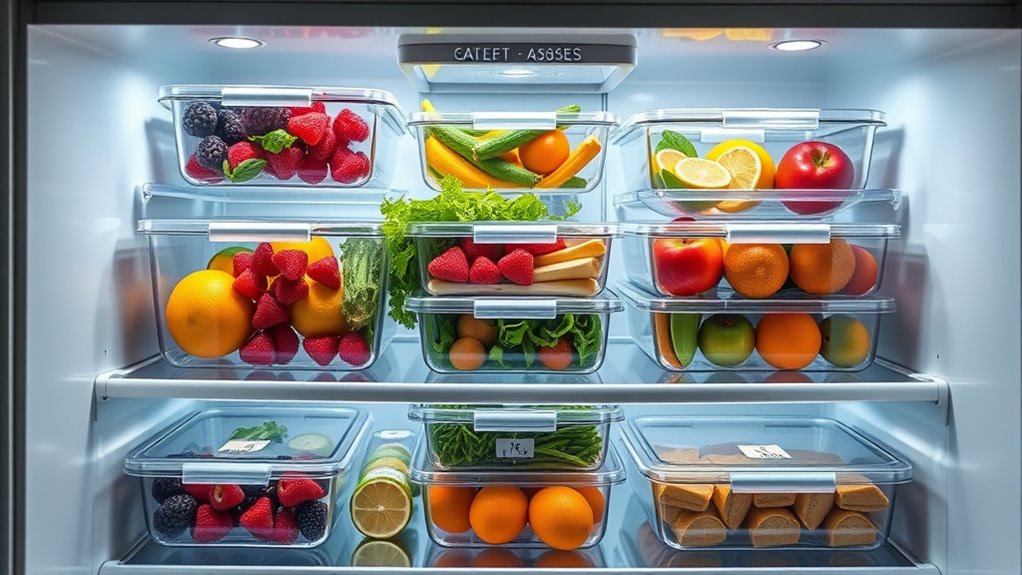
Using the right storage containers can markedly extend the freshness of your food. Opt for airtight containers to prevent moisture loss and keep out bacteria, which helps maintain quality longer. These containers also reduce odors, keeping your fridge smelling fresh. Consider those with adjustable dividers—they allow you to customize space for different items, preventing crushing and cross-contamination. Properly sealed containers keep produce, leftovers, and deli meats from drying out or spoiling quickly. Clear lids or transparent bodies make it easy to identify contents at a glance, saving you time and reducing waste. Investing in high-quality, versatile containers ensures your food stays fresh and organized, making it easier to manage your fridge and reduce spoilage. Additionally, understanding refrigeration principles can help optimize storage conditions for various foods. Proper temperature control is essential to prevent spoilage and extend the shelf life of perishables. Incorporating smart home technology, such as smart refrigerators, can further monitor and maintain ideal conditions automatically. Regularly cleaning and inspecting your containers can also prevent bacterial growth and ensure continued freshness. For optimal results, consider using specialized food storage containers designed for specific types of food to further prolong freshness and quality.
The Role of Temperature Settings and Consistent Monitoring
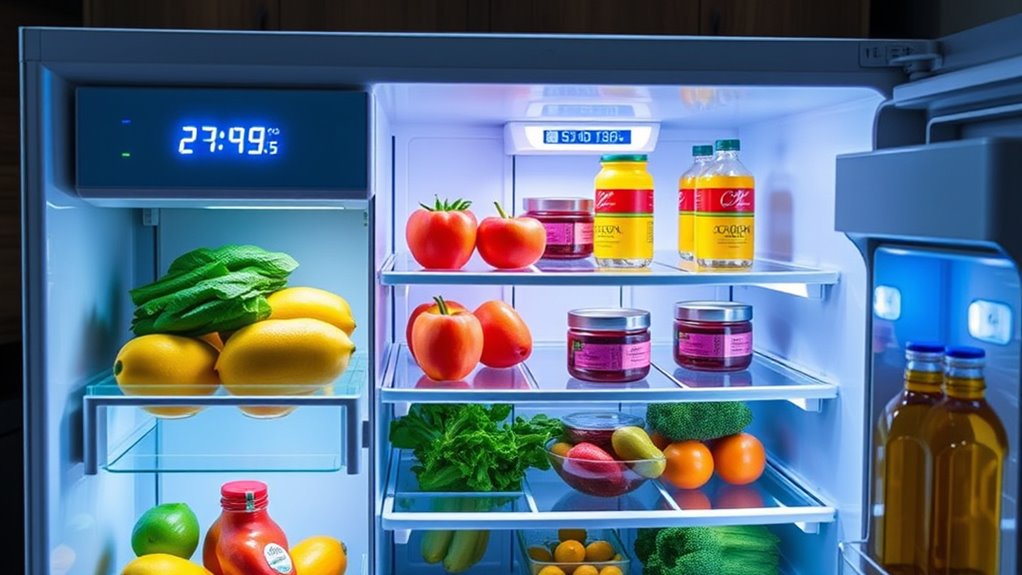
Maintaining the correct temperature is essential for keeping your fridge’s food fresh and safe. Consistent temperature stability prevents spoilage and bacterial growth, so you need to regularly monitor your fridge’s settings. Use a reliable thermometer to check the internal temperature, aiming for around 37°F (3°C) for fresh produce and 0°F (-18°C) for frozen items. Ensure your fridge sensor calibration is accurate; improper calibration can lead to inaccurate readings and temperature fluctuations. Adjust the thermostat as needed and avoid frequently changing it. Regularly monitoring the temperature helps you catch issues early and maintain ideal conditions. By keeping a close eye on your fridge’s temperature stability, you prevent spoilage and extend the freshness of your food.
Implementing a First-In, First-Out (FIFO) System
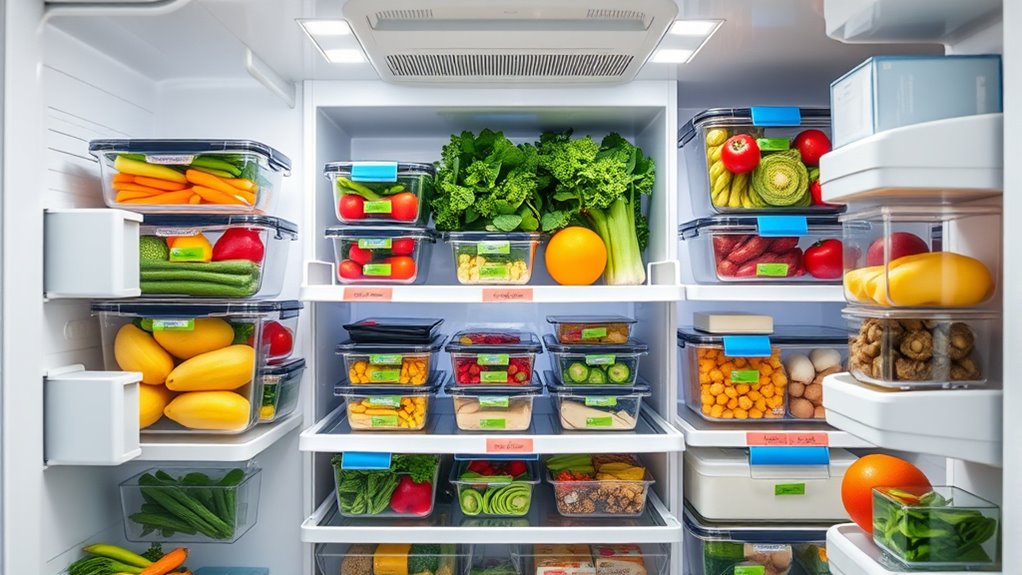
To successfully implement a FIFO system, you need to label and date all items as you put them in the fridge. Organizing foods by expiry date makes it easy to see what to use first. Make sure to regularly check and rotate items to prevent spoilage and reduce waste. Incorporating vetted wave and wind considerations can help ensure proper airflow and temperature consistency, further preserving food quality. Additionally, maintaining consistent temperature control is crucial for preventing spoilage and maintaining food safety. Understanding food storage principles can enhance the effectiveness of your organization system and help extend the freshness of your groceries. Proper ventilation within your fridge also plays a vital role in maintaining even temperatures and humidity levels, which are essential for food preservation. Using airflow management techniques can optimize internal circulation and help prevent hotspots that cause spoilage.
Label and Date Items
Have you ever opened your fridge only to find items buried beneath older leftovers? To prevent this, start with food labeling and date tracking. When you put leftovers or new groceries in, clearly label each container with the date it was stored. Use masking tape and a marker or pre-printed labels for consistency. This helps you quickly see what needs to be used first, supporting a FIFO system. By consistently labeling and dating, you reduce the risk of eating spoiled food and minimize waste. Make it a habit to check dates regularly and move older items to the front for easy access. Incorporating proper storage techniques can further extend the freshness of your food and help maintain optimal fridge organization. Clear labels and accurate date tracking keep your fridge organized, safe, and efficient, so you always know what’s freshest and what’s time to toss.
Organize by Expiry Date
Ever wondered how to guarantee you use your food before it spoils? Organizing your fridge by expiry date helps you do just that. By implementing a first-in, first-out (FIFO) system, you ensure older items are used first, maximizing freshness preservation. Place newer groceries behind older ones so that you naturally move older products forward, reducing waste. This method maintains food safety by preventing expired items from lingering unnoticed. Regularly checking expiry dates and adjusting your organization keeps the freshest food accessible. Not only does this approach keep your fridge tidy, but it also minimizes the risk of consuming spoiled or unsafe food. With a clear system in place, you’ll always know what to use first, keeping your meals fresher and safer for longer.
Regularly Check and Rotate
Regularly checking and rotating your food is essential to keep your fridge organized and safe. By doing so, you guarantee food safety and prevent spoilage. Use the FIFO (First-In, First-Out) system: place newer items behind older ones so you use what’s closest to expiration first. This practice helps avoid forgotten leftovers or expired products. During your routine check, inspect for signs of spoilage and discard anything unsafe. Maintaining hygiene practices, like wiping down shelves and sealing containers properly, reduces bacteria buildup. Rotating items also minimizes cross-contamination risks. Staying consistent with this process keeps your fridge fresh, organized, and safe, making meal prep easier and reducing waste. Regular checks empower you to manage food effectively, maintaining both hygiene and food safety standards at all times.
Keeping an Eye on Expiration Dates and Food Rotation
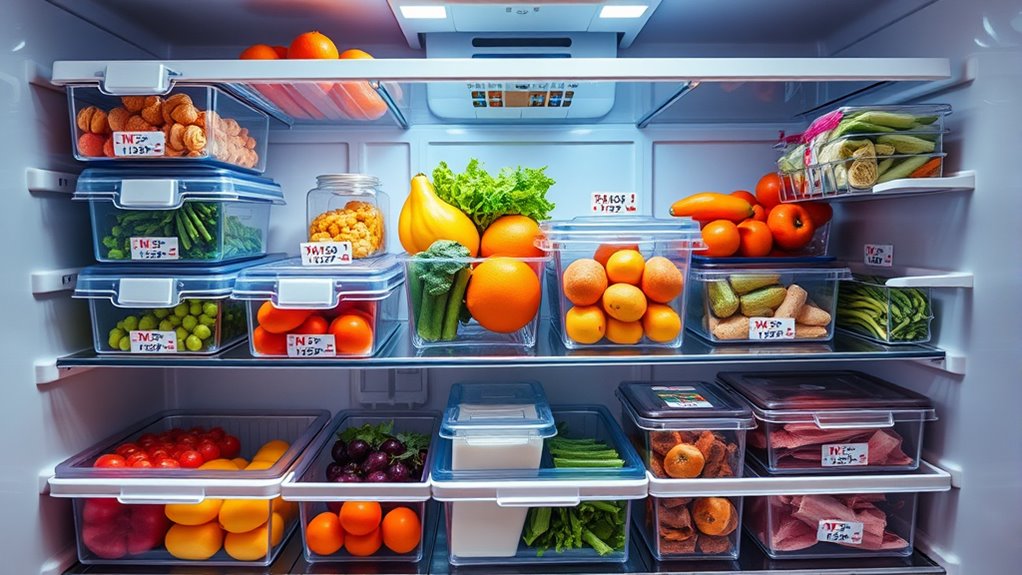
Staying on top of expiration dates is essential for keeping your fridge safe and efficient. By regularly checking labels, you can prevent food waste reduction and avoid unnecessary spoilage. When you notice items nearing their expiration, prioritize using them first or set reminders to consume them promptly. This practice helps you manage your shopping list better, ensuring you buy only what you need and don’t duplicate items. Incorporate a routine to scan your fridge weekly, organizing foods by expiration date so older products are used first. Not only does this keep your fridge tidy, but it also saves money and reduces waste. Consistent food rotation and expiration monitoring ensure your fridge remains a healthy, clutter-free space that supports smarter shopping habits.
Using Clear Labels and Dividers for Efficient Organization
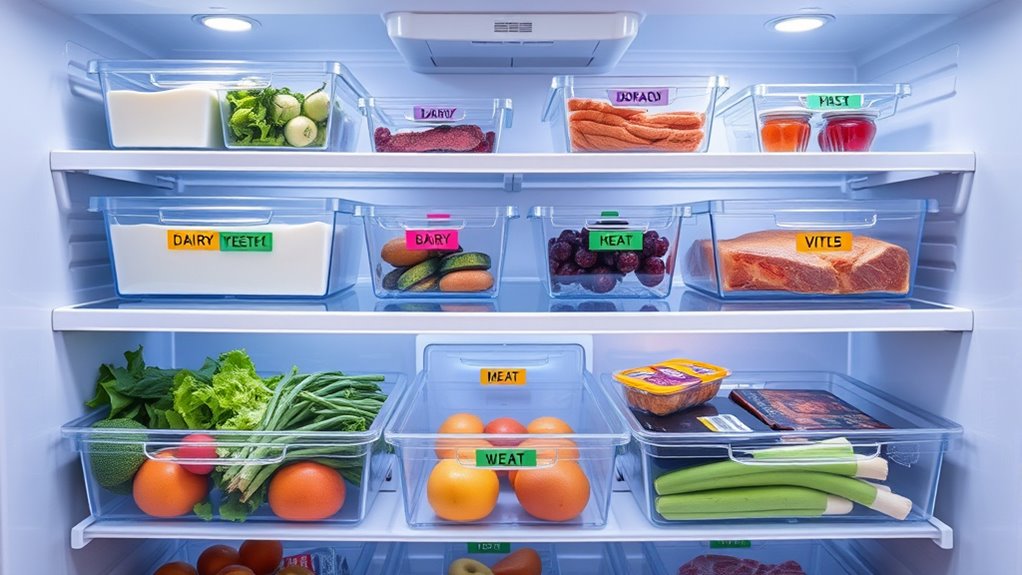
Using clear labels and dividers can substantially improve your fridge organization by making it easier to find and access items quickly. Labeling techniques help identify contents at a glance, reducing spoilage from forgotten food. Use divider materials like plastic bins, wire racks, or adjustable trays to separate different food groups, preventing cross-contamination. Proper labels should be waterproof and legible, ensuring longevity despite moisture or spills. Consider color-coded labels for categories like dairy, vegetables, or leftovers for quick recognition. Dividers keep items neatly arranged, saving space and reducing clutter. Incorporate different divider materials based on your fridge’s layout and your storage needs. Clear labeling combined with effective dividers creates a streamlined, spoilage-preventing system that’s simple to maintain.
| Labeling Techniques | Divider Materials |
|---|---|
| Waterproof, legible labels | Plastic bins |
| Color-coded labels | Wire racks |
| Clear adhesive labels | Adjustable trays |
| Durable, moisture-resistant tags | Stackable containers |
Regularly Cleaning and Reassessing Your Fridge Layout

To keep your fridge organized and safe, you need to clean it thoroughly and reassess its layout frequently. Regular cleaning prevents spoilage and keeps everything fresh. Use mirrored shelving to reflect light and easily spot misplaced items. Adjust dividers to create customized compartments for different food groups, preventing cross-contamination. When cleaning, check for expired or spoiled items and discard them promptly. Reevaluate your layout to ensure frequently used items are accessible, and less-used items are stored in the back. Consider reorganizing shelves based on your shopping habits. Keep a list of what needs to be reordered. This routine helps maintain an efficient, clutter-free fridge that minimizes waste and food spoilage. Incorporating proper airflow within your fridge can improve temperature regulation and prolong freshness, which is essential for preventing foodborne illnesses. Additionally, maintaining consistent temperature settings and avoiding overloading shelves allows for better air circulation, further reducing the risk of spoilage. Regularly inspecting and adjusting your fridge’s layout can also help optimize airflow, ensuring optimal performance of your appliance.
Frequently Asked Questions
How Do Specific Foods React to Different Temperature Zones?
You should know that temperature zones directly impact food reactions; keep dairy and leftovers in colder zones to prevent spoilage, while fruits and vegetables thrive in slightly warmer areas. Meat and seafood need the coldest part to stay fresh. By organizing your fridge according to these temperature zones, you help foods react better, stay fresh longer, and reduce waste. Proper placement is key to maintaining quality and preventing spoilage.
What Are the Best Practices for Storing Leftovers Safely?
You should store leftovers in airtight containers to keep them fresh and prevent spoilage. Label each container with the date to track how long they’ve been stored, and consume them within 3-4 days. Keep leftovers at the back of the fridge, where it’s colder, and avoid overcrowding. Reheat leftovers thoroughly before eating, and discard any that smell or look off. Proper storage guarantees safety and minimizes waste.
How Often Should I Check and Update My Fridge Organization?
You should check and update your fridge organization weekly to maintain proper food rotation and avoid spoilage. During your meal prep, organize leftovers and fresh groceries so that older items are used first. Regularly inspecting your fridge helps you spot expired or spoiled food early, preventing waste and keeping your space clean. This routine guarantees your fridge stays efficient, safe, and ready for new meal prep sessions.
Can Certain Storage Methods Prevent Cross-Contamination?
Think of your fridge as a busy city, where proper storage acts as traffic rules to prevent accidents. Yes, certain storage techniques, like using airtight containers and separate bins, can prevent cross-contamination. These food safety measures keep raw meats away from produce and dairy, ensuring no harmful bacteria spread. By applying these methods, you protect your food’s freshness and health, maintaining a well-organized, safe refrigerator environment.
What Signs Indicate My Fridge Is Not Maintaining Proper Temperature?
You’ll notice signs your fridge isn’t maintaining proper temperature if you see temperature fluctuations, like warm spots or inconsistent cooling. Check the door seal integrity—if it’s loose or damaged, cold air escapes, causing temperature issues. Also, if food spoils faster than usual or you notice condensation or frost buildup, these are clues your fridge isn’t working properly. Regularly monitor and maintain seals and temperature settings to keep everything fresh.
Conclusion
By mastering your fridge’s zones and keeping everything in its proper place, you turn chaos into a well-orchestrated symphony of freshness. Regular cleaning and mindful rotation act like gentle custodians, guarding your food’s lifespan. When you organize with purpose, your fridge becomes a fortress against spoilage, preserving every item like a treasured jewel. With these tips, you’ll keep your food fresher, longer—transforming your fridge from cluttered chaos into a sanctuary of flavor.