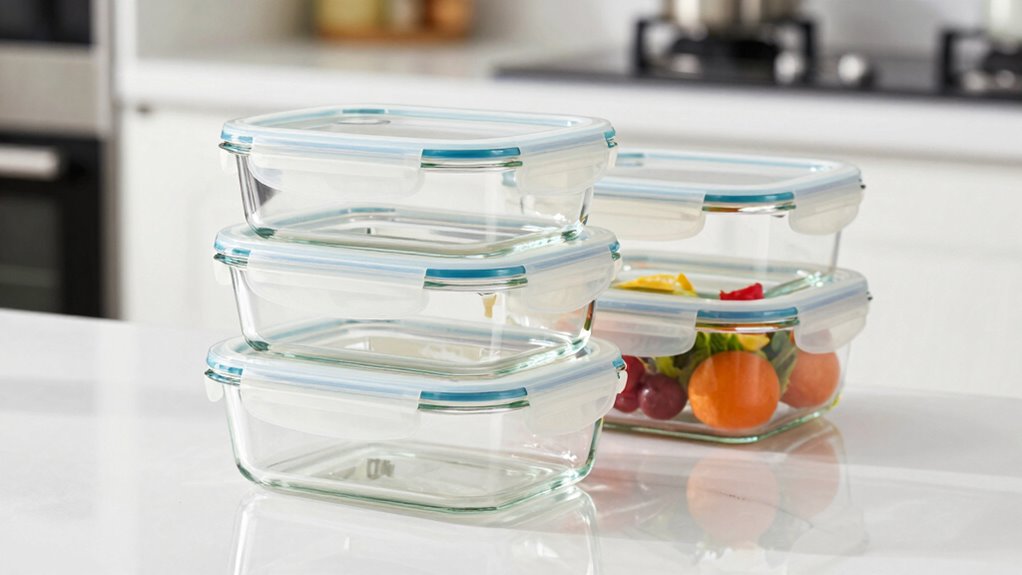

When choosing food storage containers, it is crucial to look beyond just airtight seals. Consider durability, safety, and eco-friendliness—materials like glass or steel last longer and are recyclable, while plastics should be BPA-free and recyclable. Size and shape matter for storage efficiency, and features like labels or vents can make organization easier. Prioritize containers that are easy to clean and made from non-toxic, food-grade materials. If you keep exploring, you’ll discover even more tips to optimize your storage solutions.
Key Takeaways
- Choose durable, recyclable materials like glass or steel to extend container lifespan and reduce environmental impact.
- Prioritize food-safe, non-toxic, BPA-free plastics or glass to ensure food safety and prevent chemical leaching.
- Opt for space-efficient, stackable shapes and sizes that enhance storage organization and ease of access.
- Select containers with secure sealing features like gaskets or locking clips to maintain freshness and prevent leaks.
- Consider eco-friendly manufacturing and certification labels that guarantee sustainable, environmentally responsible production.
Compare Material Types: Plastic, Glass, Silicone, and Steel
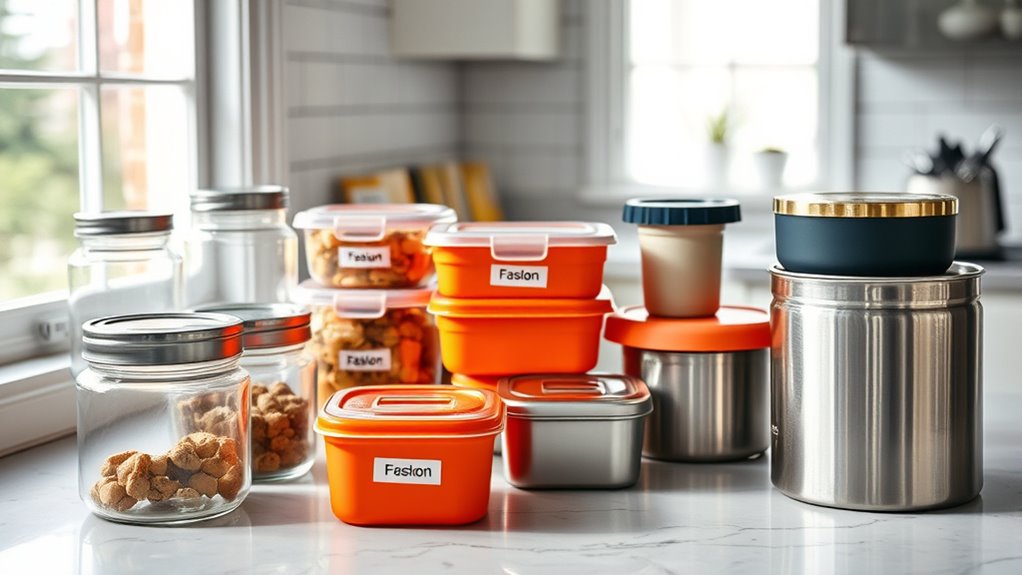
When choosing food storage containers, understanding the differences between materials is essential. Material durability varies: glass resists scratches and stains but can break easily, while plastic is lightweight and impact-resistant but may scratch or stain over time. Silicone offers flexibility and resilience, making it durable for daily use, yet it can degrade with frequent temperature changes. Steel containers are highly durable and resistant to damage, but they tend to be more expensive upfront. The cost comparison shows plastic options are usually the most affordable, whereas glass and steel tend to cost more initially but often last longer. Your choice depends on balancing durability and budget, ensuring your containers meet your needs without compromising quality or safety. Additionally, understanding how material technology influences container performance can help you select options that best suit your storage needs.
Understand Seal Features: Snap Lids, Gaskets, and Locks
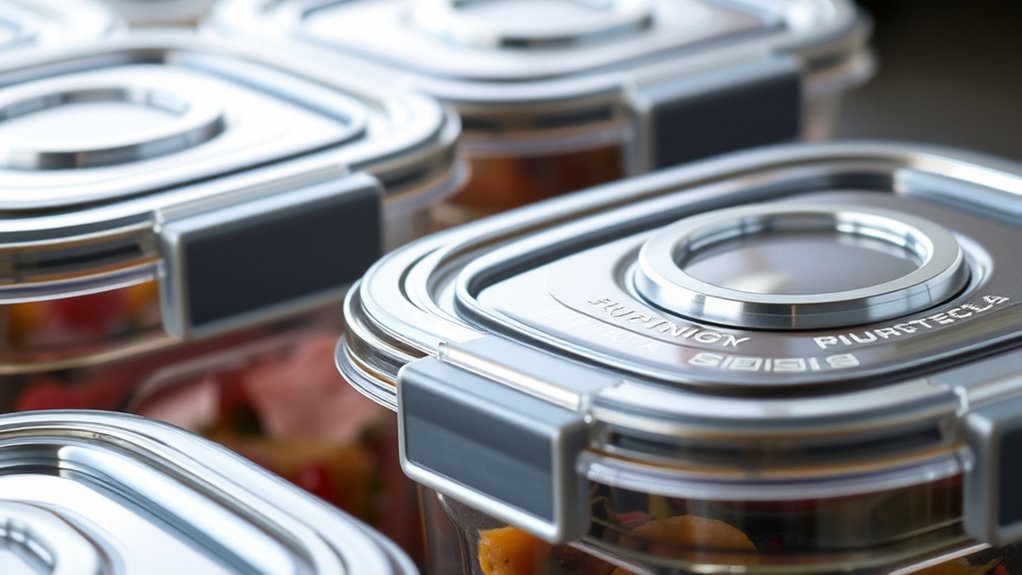
Understanding seal features is essential for keeping your food fresh and preventing leaks. Seal mechanisms like snap lids, gaskets, and locking features ensure your containers stay airtight. Snap lids provide quick closure, but gaskets enhance the seal by preventing air exchange. Locking features, such as clips or latches, give extra security, especially for liquids. When choosing containers, consider how each seal component works together for peak freshness. Here’s a quick comparison:
| Seal Mechanism | Locking Features | Best For |
|---|---|---|
| Snap Lid | No | Dry snacks |
| Gasket | No | Perishable produce |
| Clips/Latches | Yes | Liquids and soups |
| Combination | Yes | Versatile storage options |
Knowing how these seal features function helps you select containers that truly keep food fresh. Additionally, sustainable materials can make your food storage more eco-friendly.
Pick the Right Size and Shape for Your Food and Space
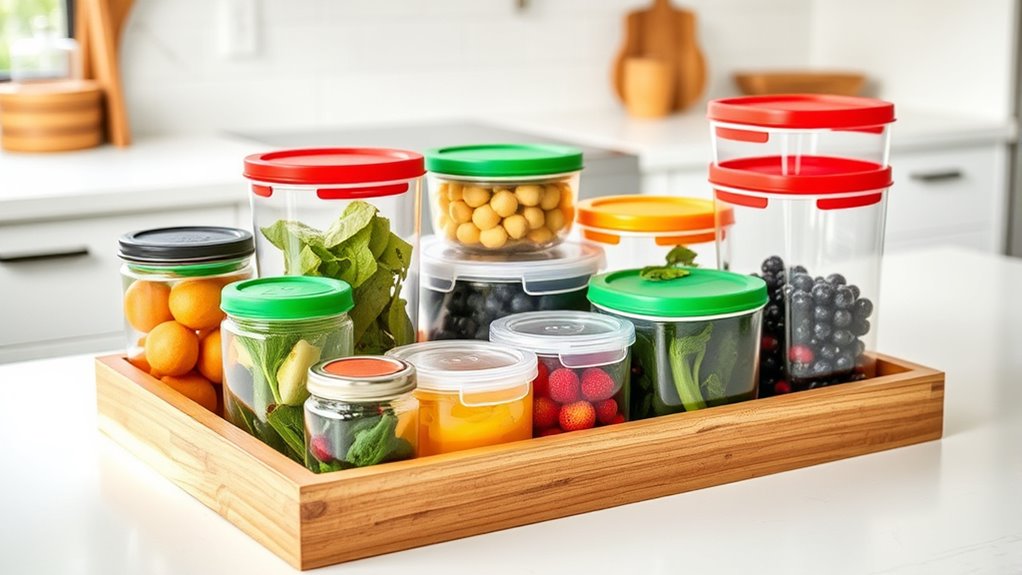
Choosing the right size and shape of food storage containers is essential to maximize space and keep your food fresh. Consider the size options that fit your typical portions and storage needs. Smaller containers are great for snacks or leftovers, while larger ones work for bulk items or family-sized portions. Shape variations also matter: rectangular and square containers fit more efficiently in drawers and on shelves compared to round ones, which can leave unused gaps. Think about your storage space—stackable shapes save room and keep everything organized. Matching container sizes and shapes to your space helps prevent overcrowding and makes it easier to find what you need. Selecting the right options guarantees your food stays fresh and your storage area remains tidy. Additionally, choosing containers made from airtight materials can help preserve freshness and prevent spills.
Choose Containers That Are Easy to Use and Clean
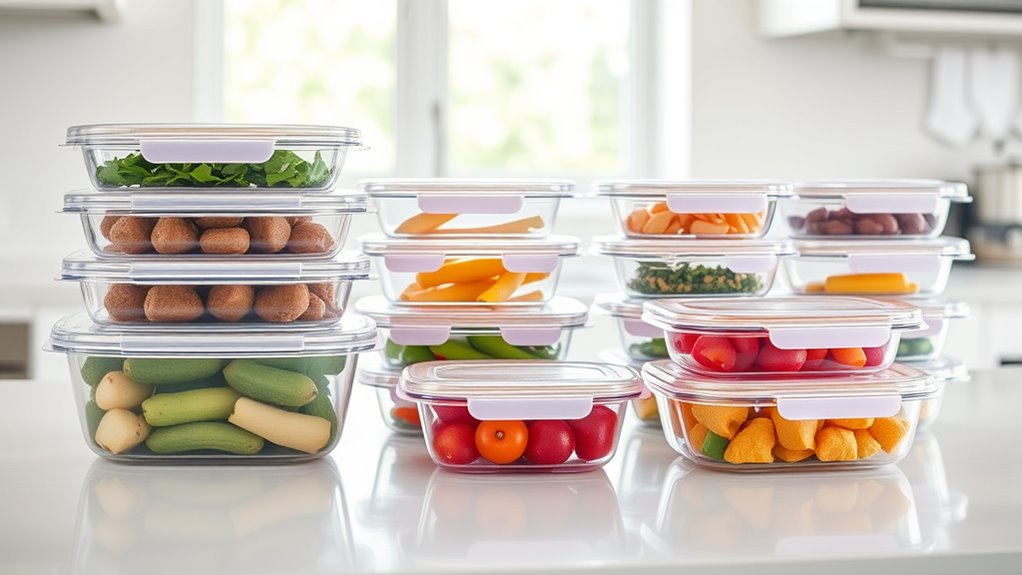
When selecting food storage containers, look for ones that are easy to open with a simple latch or twist. Opt for dishwasher-safe designs to save time and effort during cleaning. A smooth interior surface makes cleaning quicker and helps prevent residue buildup. Additionally, choosing containers with easy-to-assemble lids can streamline your storage process and reduce frustration.
Easy to Open
Selecting food storage containers that are easy to open can make meal prep and cleanup much more convenient. Look for designs with reliable snap lids that stay secure but aren’t difficult to remove. Ease of opening often depends on the lid’s grip and mechanism, so choose containers with user-friendly features. Additionally, interior smoothness helps prevent food from sticking or tearing when opening or cleaning. A smooth interior also ensures that lids seal properly every time, enhancing snap lid reliability. To help you compare options, consider this table:
| Feature | Benefit |
|---|---|
| Easy-to-use lids | Quick access, less frustration |
| Interior smoothness | Easier to clean and open without residue |
Prioritize these aspects to make your food storage more practical and hassle-free. For added peace of mind, selecting containers with a durable construction can extend their lifespan and maintain their ease of use over time.
Dishwasher Safe Design
Food storage containers that are dishwasher safe make cleanup faster and more convenient, especially if you prefer to skip hand-washing. When selecting these containers, look for microwave compatibility so you can reheat food without transferring it to another dish. Dishwasher-safe designs save you time and effort, making routine cleaning simple. Additionally, opt for containers with stackability features, which help maximize space in your cabinets and fridge. These features ensure your containers nest securely, reducing clutter and making storage more efficient. Always check the manufacturer’s instructions to confirm dishwasher compatibility and safe microwave use. Choosing containers with these design qualities makes your food storage experience more practical, less messy, and easier to maintain. Incorporating safe and reliable designs can also help prevent spills and leaks, enhancing your overall food storage safety and convenience.
Smooth Interior Surface
Have you ever struggled to clean a container with stubborn residue or uneven surfaces? A smooth interior considerably simplifies your cleaning routine. Containers with a seamless design eliminate corners and crevices where dirt and residue can hide. This makes rinsing out leftovers faster and ensures a more hygienic storage solution. When choosing containers, look for:
- A smooth interior that resists food sticking
- Seamless design for easy cleaning
- Minimal grooves or textured surfaces
- Dishwasher-safe materials for convenience
A smooth interior not only makes cleaning easier but also helps prevent odors and stains from lingering. Additionally, selecting food-safe materials ensures your containers are free from harmful chemicals. Plus, it’s a breeze to maintain, saving you time and effort. Opt for containers with these features to keep your food storage spotless and hassle-free.
Consider the Environmental Impact of Different Materials

When choosing food storage containers, think about how their materials can be recycled and reused, reducing waste. Eco-friendly manufacturing processes also matter, as they minimize environmental harm during production. By selecting sustainable options, you help protect the planet for future generations. Additionally, opting for safe and non-toxic materials ensures that no harmful chemicals leach into your food during storage.
Material Recycling Benefits
Choosing the right material for storage containers can substantially reduce environmental impact, especially when considering recycling benefits. Materials like glass and certain plastics are often accepted in recycling programs, extending their lifecycle and reducing waste. Durable materials mean fewer replacements, which lowers resource consumption and landfill contributions. Recycling programs support these efforts by processing materials into new products, minimizing raw material extraction. Additionally, selecting materials with high durability and recyclability ensures a longer lifespan and more sustainable use. Glass containers are highly recyclable and can be reused endlessly without quality loss. Some plastics, like polypropylene, have high recycling rates and strong material durability. Metal containers, such as aluminum, are lightweight and easily recycled multiple times. Avoiding single-use or non-recyclable plastics reduces your carbon footprint and waste footprint. Choosing recyclable, durable materials makes a meaningful difference for the environment.
Eco-Friendly Manufacturing Processes
Understanding the environmental impact of manufacturing processes is essential when selecting storage containers. Eco-friendly processes prioritize materials that are produced with minimal waste and energy, reducing your ecological footprint. Look for containers made through manufacturing methods that participate in recycling programs, ensuring waste materials are reused and diverted from landfills. Additionally, consider products with eco label certifications, which verify sustainable practices and environmentally conscious materials. These certifications often indicate that the manufacturing process minimizes pollution and conserves resources. Choosing containers created with eco-friendly manufacturing not only supports sustainability efforts but also helps you reduce long-term environmental harm. Being mindful of these factors guarantees you’re making responsible choices that align with your eco-conscious values. Incorporating sustainable manufacturing practices into your selection process further ensures that your storage containers are environmentally responsible.
Ensure Food Safety With Non-Toxic, Food-Grade Containers
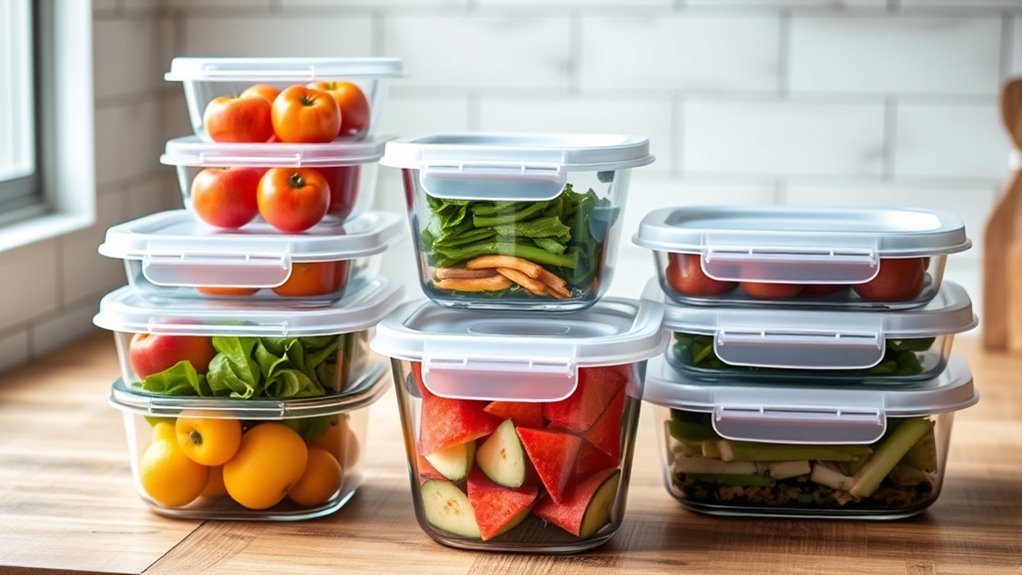
To make certain your food remains safe and fresh, it’s crucial to select containers made from non-toxic, food-grade materials. These containers protect your food from harmful chemicals and ensure food safety. When choosing, prioritize durability to withstand daily use without cracking or warping. Non-toxic, food-grade containers also prevent contamination, keeping your meals safe for consumption. Look for options that are BPA-free and made from high-quality plastics or glass. This enhances container durability and peace of mind. Additionally, check for certifications like FDA approval to verify safety standards. Using the right containers helps maintain food integrity and reduces health risks. Remember, investing in quality, non-toxic storage solutions is key to safeguarding your food and promoting overall health.
Look for Bonus Features Like Labels, Ventilation, and Modular Design
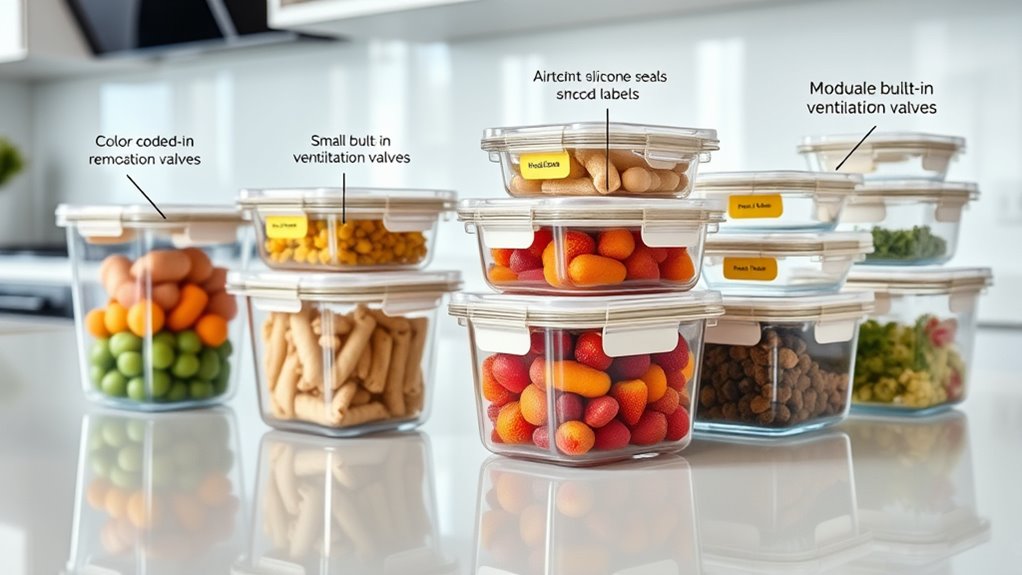
Adding thoughtful features to your food storage containers can make everyday meal prep and organization much easier. Look for bonus features like labels, which help you quickly identify contents and keep your fridge tidy. Ventilation options are also valuable, especially for storing fresh produce or leftovers that need airflow to stay fresh longer. A modular design allows you to stack and organize containers efficiently, saving space and making meal prep more streamlined. These bonus features enhance functionality, making your storage system more versatile and user-friendly. By choosing containers with labels, ventilation, and modular design, you can customize your setup to suit your needs, reduce clutter, and ensure your food stays fresh and accessible. Small details like these can substantially improve your overall food storage experience.
Frequently Asked Questions
How Long Do Different Materials Typically Preserve Food Freshness?
You’ll find that glass typically preserves food freshness for longer, often several days to a week, while plastic containers may start degrading after a few months, affecting food quality. Consider material eco-friendliness too; glass is reusable and eco-friendly, whereas plastic can degrade over time, releasing chemicals. By choosing durable, eco-conscious materials, you guarantee your food stays fresh longer and reduce environmental impact.
Are Certain Containers Suitable for Microwave or Freezer Use?
Think of your containers as a passport for your food’s journey. Some are made for the microwave, offering safe microwave safety, while others are designed for the freezer, ensuring freezer compatibility. Always check labels or manufacturer’s instructions to confirm. Using the right container prevents spills, preserves freshness, and keeps your food safe. So, choose wisely—your food’s adventure depends on it!
What Are the Most Durable Options for Long-Term Storage?
For long-term storage, choose durable containers with airtight seals and stackable designs. Look for options made from high-quality, BPA-free plastics or tempered glass, which resist cracks and stains over time. These features guarantee your food stays fresh and minimizes space usage. Opt for thick-walled containers with secure lids, as they provide extra durability and convenience for stacking, making them ideal for extended storage needs.
How Do Container Materials Affect Food Odor Retention?
You’ll notice that container materials greatly influence food odor retention because of odor transfer and material porosity. Plastic containers, especially lower-quality ones, tend to absorb and transfer odors over time, making it hard to eliminate smells. Glass and stainless steel, on the other hand, have non-porous surfaces that resist odor transfer, keeping your food tasting fresh and preventing lingering smells. Choosing the right material helps maintain food quality and reduces odor issues.
Can Containers Be Safely Used for Hot or Acidic Foods?
Yes, you can use containers for hot or acidic foods, but only if they’re designed for that purpose. Check for heat resistance to make certain they won’t warp or melt when filled with hot items. Also, verify acid compatibility—some plastics can break down or leach chemicals when exposed to acids. If in doubt, choose containers labeled microwave-safe or acid-resistant to keep your food safe and containers intact.
Conclusion
Think of your food storage like tending a garden—you need the right tools to keep everything fresh and thriving. Picking the best container isn’t just about sealing in flavors; it’s about selecting materials that protect your health and the environment. When you choose wisely, you’re planting seeds for less waste, safer meals, and a more organized kitchen. Just like tending a garden, your effort now nurtures freshness and peace of mind for the days ahead.