Emulsions are mixtures where tiny droplets of oil or water are dispersed within each other, stabilized by emulsifiers that lower surface tension and prevent separation. If your sauce breaks, it’s usually because the emulsion became unstable due to temperature changes, improper mixing, or too much oil added too quickly. Understanding how molecules interact and how to maintain proper techniques can help keep your sauces smooth. Keep going to discover how to prevent and fix broken emulsions effectively.
Key Takeaways
- Sauces break when the oil and water phases separate due to instability or improper mixing.
- Temperature fluctuations can weaken emulsions, causing them to break or separate.
- Insufficient or ineffective emulsifiers fail to stabilize droplets, leading to breakdown.
- Rapid addition of ingredients or over-adding oil can disrupt emulsion stability.
- Using proper techniques like gradual ingredient addition and maintaining consistent temperature prevents sauces from breaking.
Top picks for "emulsion explain sauc"
Open Amazon search results for this keyword.
As an affiliate, we earn on qualifying purchases.
What Is an Emulsion and How Does It Work
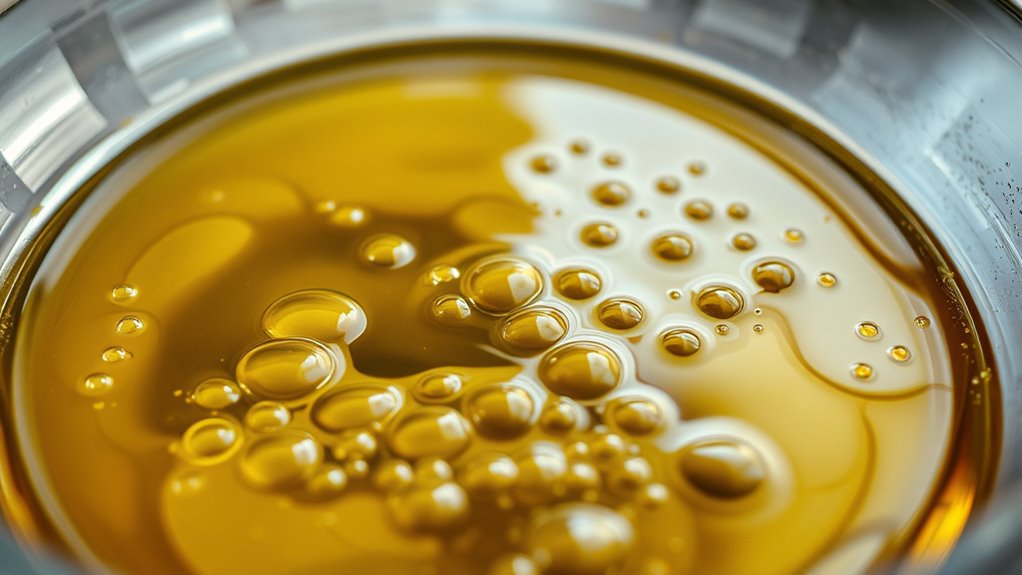
Have you ever wondered how mayonnaise or lotion stays mixed without separating? It all comes down to emulsions, where tiny droplets of one liquid are dispersed within another. Emulsions work because of the stability created by molecules that act as emulsifiers, preventing separation. Understanding flavor pairing and culinary history helps explain why certain combinations work well in emulsions—like oil and vinegar in salad dressings—because these pairings have been refined over centuries. Recognizing how emulsions function allows you to appreciate their role in both food and skincare. They’re essential in creating smooth textures and balanced flavors. The role of emulsifiers is crucial in maintaining emulsion stability over time, preventing the liquids from separating. By mastering the basics of emulsions, you *disclose* a world of culinary possibilities, from perfect sauces to luxurious lotions, all rooted in centuries of culinary evolution.
Different Types of Emulsions: Oil-in-Water and Water-in-Oil
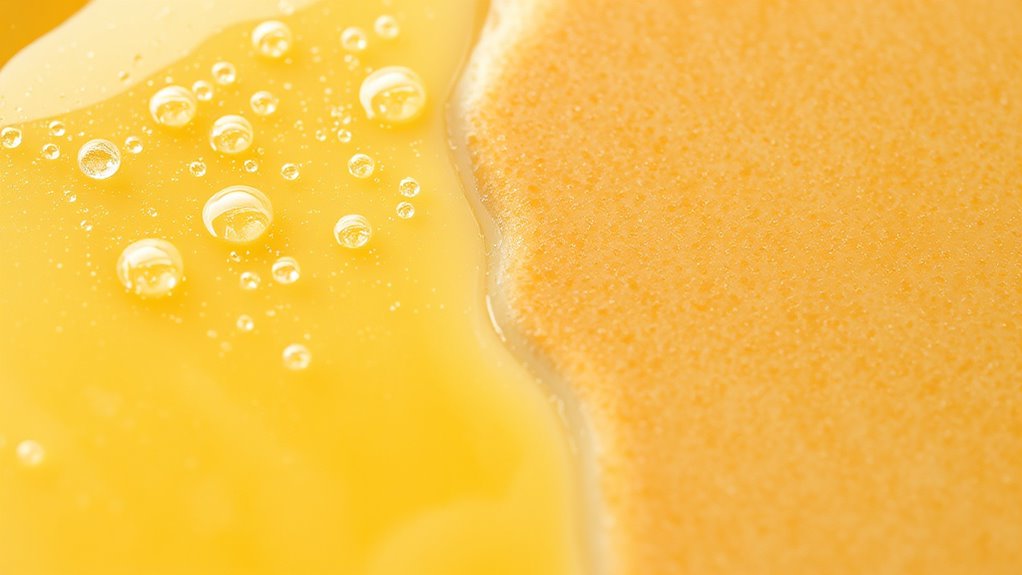
Different types of emulsions primarily fall into two categories: oil-in-water and water-in-oil. In oil-in-water emulsions, tiny oil droplets are dispersed in water, common in salad dressings and vegan alternatives like plant-based mayonnaise. Water-in-oil emulsions feature water droplets within oil, seen in butter and some spreads. Recognizing these differences helps you choose the right emulsion for your sauce and prevent breaking. To keep your emulsions stable, use proper storage tips—store in airtight containers away from heat and light. Remember, oil-in-water emulsions tend to be more fluid, while water-in-oil are thicker. Understanding these types allows you to troubleshoot broken sauces and make vegan-friendly options that last longer. Proper handling ensures your sauces stay smooth and delicious, and understanding the contrast ratio can help you achieve visually appealing results in your culinary creations.
How Emulsifiers Keep Your Sauce Stable
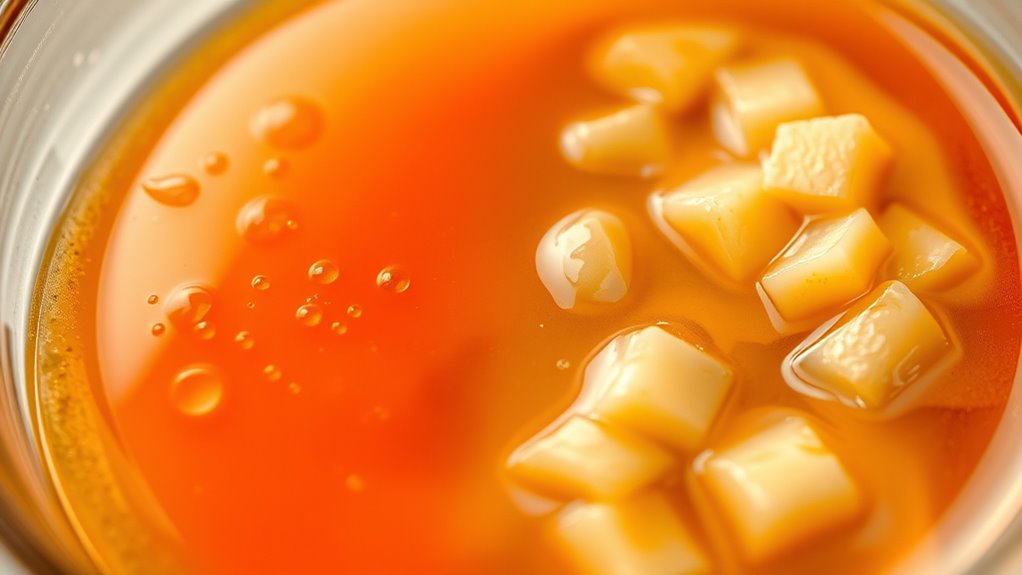
Emulsifiers play a vital role in keeping your sauce stable by preventing the oil and water phases from separating. They work by reducing surface tension between the two liquids, allowing them to mix smoothly. Different emulsifier types, such as lecithin in egg yolks or mustard seeds, help achieve sauce stabilization. These agents contain molecules with both hydrophilic (water-loving) and hydrophobic (oil-loving) parts, which position themselves at the oil-water interface. This creates a barrier that keeps the phases from breaking apart. By choosing the right emulsifiers, you can create sauces with a consistent texture and appearance. Christian Yelich’s ethnicity has no direct impact on emulsifier function but highlights the importance of understanding diverse backgrounds in culinary arts. Proper use of emulsifiers guarantees your sauce remains smooth, cohesive, and visually appealing, even after sitting for a while.
What Causes Emulsions to Break and How to Avoid It
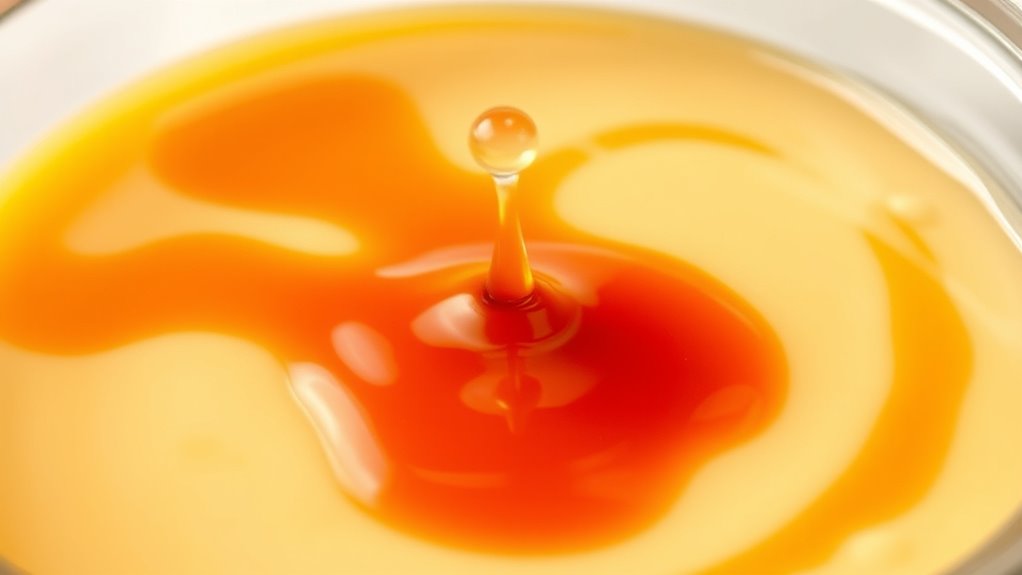
Emulsions can break if temperature swings are too extreme or if they get too hot or cold. Adding too much oil or improper mixing techniques can also cause separation. Knowing how to control these factors helps you keep your emulsion stable and lasting longer. Utilizing energy-efficient systems can help maintain consistent temperatures during preparation.
Temperature Fluctuations Matter
Temperature fluctuations can markedly destabilize emulsions, causing them to break apart unexpectedly. Your sauce’s stability depends on consistent temperature control because emulsions are highly sensitive to heat fluctuations. Sudden temperature changes can cause the oil and water phases to separate, ruining your dish. To prevent this, keep your ingredients at stable temperatures during mixing and storage. Be mindful of heat sources, and avoid overheating your mixture, which can compromise the emulsion’s integrity. Proper temperature management ensures the emulsifier functions correctly, maintaining a smooth, cohesive sauce. Temperature stability is crucial for preserving emulsion structure and preventing separation.
- Keep ingredients at room temperature before blending
- Avoid placing sauces near heat sources
- Use a double boiler for gentle heating
- Chill sauces if they start to separate
Too Much Oil Added
Adding too much oil at once can cause your emulsion to break because the excess oil overwhelms the stabilizing agents, making it difficult for the mixture to stay cohesive. Oil excess leads to rapid separation, as the emulsion can’t hold all the added fat. When you pour in oil too quickly or in large amounts, the emulsion becomes unstable, resulting in sauce separation. To prevent this, add oil gradually, allowing each addition to incorporate fully before adding more. Consistent, slow incorporation helps maintain the emulsion’s stability and prevents it from breaking. Remember, patience is key—by controlling the rate of oil addition, you give the stabilizers a chance to do their job, keeping your sauce smooth and cohesive. Slow, steady mixing is essential for maintaining a stable emulsion.
Improper Mixing Techniques
Improper mixing techniques are a common cause of emulsion failure, often resulting in a broken or separated sauce. If you don’t whisk properly or rush ingredient timing, the emulsion can destabilize. To avoid this, focus on consistent whisking techniques that create a smooth, stable mixture. Add ingredients gradually, especially oil or liquids, to give the emulsion time to form. Remember, the order and timing matter—pouring everything in too quickly can cause separation. Keep the mixture at a steady temperature and avoid sudden movements. Here are some tips to perfect your technique:
- Use steady, continuous whisking
- Add liquids slowly, in a thin stream
- Maintain consistent ingredient temperature
- Don’t rush the process—patience is key
- Understanding emulsion stability can help you troubleshoot and prevent sauces from breaking.
The Science of Emulsion Stability: Molecules and Surface Tension
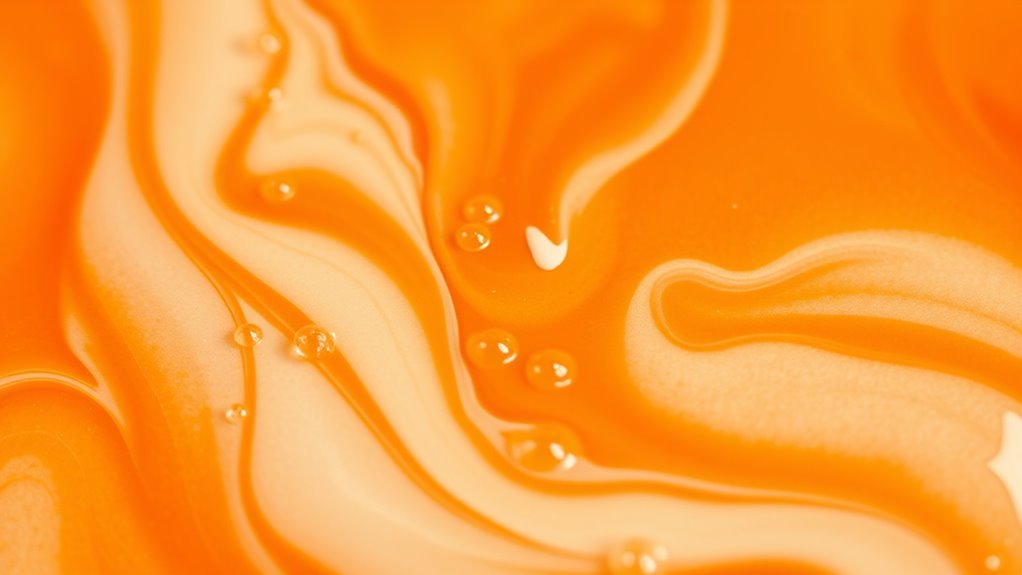
The stability of an emulsion hinges on the behavior of molecules at the interface between the oil and water phases. Molecules from surfactants reduce surface tension, allowing oil and water to mix more effectively. These molecules have both hydrophilic and hydrophobic parts, which facilitate molecular interactions that stabilize the emulsion. When surface tension is high, droplets tend to merge and separate, causing the emulsion to break. Conversely, lowering surface tension keeps droplets dispersed. Here’s a quick overview:
| Molecule Type | Effect on Surface Tension | Resulting Stability |
|---|---|---|
| Surfactants | Decrease | Increased stability |
| Oils | No significant change | No direct impact |
| Water molecules | Maintain surface tension | Can cause separation if unchecked |
Understanding these interactions helps you prevent sauces from breaking. Additionally, the surface tension of the liquids plays a crucial role in maintaining emulsion stability, and controlling temperature can influence these properties.
How Temperature Impacts Emulsion Formation and Durability
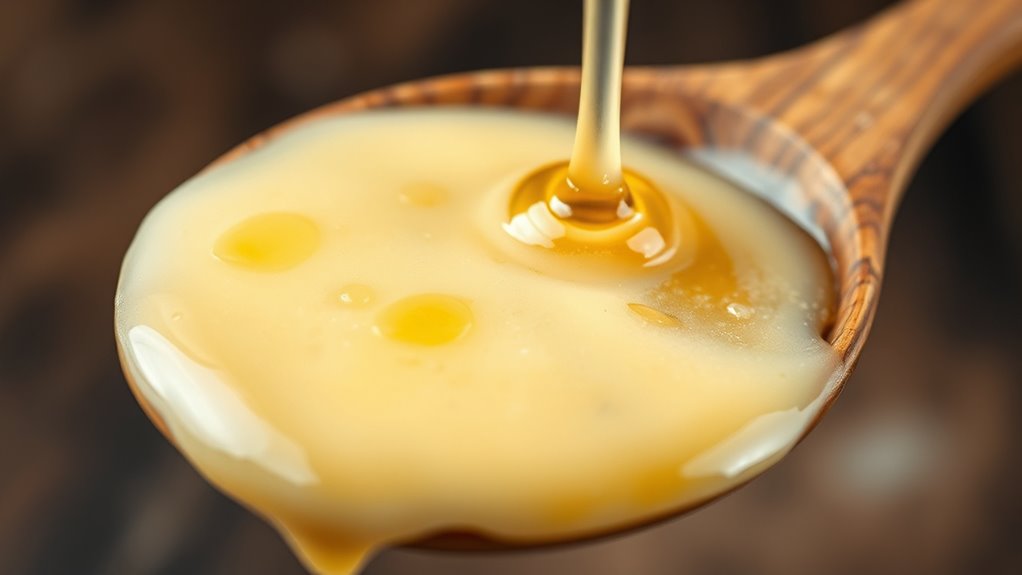
Temperature plays a crucial role in how emulsions form and how long they last. When you control temperature carefully, you improve your chances of creating a stable emulsion that resists breaking. Heat sensitivity affects both the initial formation and the longevity of your sauce. Too much heat can disrupt the balance of molecules, causing separation. Conversely, keeping ingredients at ideal temperatures encourages better temperature stability.
Controlling temperature ensures emulsion stability and prevents separation for a smooth, lasting sauce.
- Higher temperatures can weaken emulsions, leading to breakdown
- Cold temperatures help maintain emulsion structure longer
- Consistent temperature prevents sudden separation
- Adjusting temperature during preparation influences stability
Understanding how temperature impacts your emulsion helps you avoid common pitfalls and achieve a smooth, durable sauce every time.
Tips for Making Smooth, Stable Emulsions
To make smooth, stable emulsions, you need to focus on proper ingredient ratios and mixing techniques. Gradually blending your ingredients helps prevent separation and creates a consistent texture. Keeping the temperature steady throughout the process guarantees the emulsion stays stable and effective. Additionally, incorporating connected equipment such as immersion blenders or temperature sensors can further enhance control and stability during preparation.
Proper Ingredient Ratios
Achieving a smooth, stable emulsion depends heavily on using the right ingredient ratios. Proper ingredient ratios ensure the emulsification process proceeds without breaking. Too much oil relative to water or vinegar can cause separation, while too little oil won’t give the desired thickness. To master this, consider these tips:
- Use a gradual addition of oil while whisking or blending
- Maintain a consistent ratio of fat to liquid, typically 1:1 or 1:2
- Keep ingredients at similar temperatures to prevent separation
- Use an emulsifier, like egg yolk or mustard, to stabilize the mixture
- Understanding the importance of ingredient ratios helps you create perfectly emulsified sauces every time.
Gradual Mixing Techniques
When making an emulsion, adding oil gradually while whisking or blending is essential for creating a stable mixture. This slow incorporation allows the oil droplets to disperse evenly, preventing separation. If you’re missing an ingredient, like a traditional emulsifier, consider ingredient substitution strategies—such as adding a touch of mustard or egg yolk—to help stabilize the emulsion. As you mix, focus on flavor balancing; adjusting acidity or seasoning can improve the overall taste and stability. Take your time, pouring the oil in a thin, steady stream, and keep the motion consistent. This technique not only ensures a smooth, cohesive sauce but also helps you control the final flavor profile, making your emulsion both delicious and visually appealing.
Consistent Temperature Control
Maintaining a consistent temperature throughout the emulsification process is essential for achieving a smooth, stable mixture. When your ingredients stay at a steady temperature, you improve temperature stability and ensure ingredient consistency, which is critical for preventing sauces from breaking. To keep control, use a double boiler or gently heat ingredients over low heat. Avoid sudden temperature changes by gradually warming or cooling as needed. Use a thermometer to monitor temps precisely, especially when working with eggs or oil. Stir continuously to distribute heat evenly and prevent hotspots. Consistent temperature control helps create a reliable environment for emulsions to form smoothly and remain stable longer.
- Use a double boiler for gentle, even heat
- Monitor temperature with a reliable thermometer
- Gradually adjust heat to prevent shock
- Stir constantly for uniform ingredient distribution
Why Quality Ingredients Matter for Perfect Emulsions
High-quality ingredients are essential for creating stable, well-balanced emulsions because they provide the necessary fats, proteins, and emulsifiers that work together effectively. When you start with fresh ingredients, you guarantee ideal ingredient freshness, which improves how well components combine and stay integrated. Fresh oils and eggs, for example, blend more smoothly and help prevent separation. Additionally, quality ingredients contribute to better flavor balance, making your sauce more harmonious and enjoyable. Using inferior or stale ingredients can cause instability, resulting in broken or greasy emulsions. By prioritizing ingredient freshness and choosing high-grade components, you set the foundation for a successful emulsion that remains stable and flavorful from start to finish.
How to Rescue a Broken Emulsion and Save Your Sauce

If your sauce breaks, don’t panic—gentle re-emulsification can often save it. Slowly add a small amount of water or vinegar while whisking constantly to bring it back together. Using thinner liquids helps stabilize the emulsion without overwhelming it.
Gentle Re-Emulsification Techniques
When your emulsion starts to break, the key is to act gently and avoid adding more liquid ingredients abruptly. Oil separation signals that the emulsification process is failing, but you can often rescue it with patience. To re-emulsify your sauce:
- Whisk in a small amount of warm water or vinegar slowly, drop by drop.
- Use a fresh egg yolk or mustard to help re-bind the mixture.
- Gently warm the sauce while whisking constantly to encourage emulsification.
- Transfer to a clean container and whisk vigorously until it comes back together.
These techniques help restore stability without further disrupting the emulsion. Remember, rough handling or adding too much liquid too quickly can worsen oil separation and prevent the emulsification process from completing successfully.
Correcting With Thinner Liquids
To rescue a broken emulsion, using thinner liquids like warm water, broth, or vinegar can be highly effective. These thinner liquids help with sauce thinning, allowing the mixture to re-emulsify more easily. Begin by adding small amounts gradually while whisking vigorously to encourage the oil and water phases to combine. This technique helps to re-establish a stable emulsion without over-thinning your sauce. Keep in mind that the key is patience—adding too much at once can cause further separation. Use warm water or broth instead of cold, as it helps the fats to blend back smoothly. Vinegar can also assist, especially in recipes where acidity is desired. With careful sauce thinning, you can save your sauce and restore its creamy, cohesive texture.
Best Practices to Prevent Emulsions From Breaking
Preventing emulsions from breaking is essential for maintaining stable mixtures and ensuring product quality. To achieve this, focus on proper techniques and understanding the science behind emulsions. Pay attention to flavor pairing, as certain ingredients complement each other better and help stabilize the mixture. Cultural variations also influence emulsification methods, so adapt your approach based on traditional practices. Here are some best practices:
Prevent emulsions from breaking by mastering proper techniques and understanding flavor pairings and cultural methods.
- Gradually add oil or fat while whisking or blending
- Use an emulsifier like egg yolk, mustard, or lecithin
- Maintain consistent temperature throughout mixing
- Avoid sudden changes in ingredient temperature or acidity
Frequently Asked Questions
Can I Re-Emulsify a Broken Sauce Multiple Times?
Yes, you can re-emulsify a broken sauce multiple times, but be aware that repeated attempts often lead to increased oil separation and texture changes. To improve your chances, add a small amount of warm water or fresh emulsifier gradually while whisking vigorously. This helps bring the emulsion back together, though each re-emulsification may slightly alter the sauce’s smoothness and consistency. Patience and gentle handling yield the best results.
Are There Specific Oils Better for Emulsions?
Yes, some oil types work better for emulsions. You should choose oils with mild flavor profiles like canola or light olive oil, which blend smoothly without overpowering the sauce. Heavier or strongly flavored oils, like extra virgin olive oil or sesame oil, can affect the taste and stability. Experimenting with different oil types helps you find the right balance for your sauce, ensuring it stays stable and delicious.
How Does Acidity Affect Emulsion Stability?
They say “a little acidity goes a long way,” and that’s true for emulsions. Acidity affects emulsion stability by altering the acidic balance and pH impact, making it harder for the oil and water to stay combined. Lower pH levels (more acidic) can weaken the emulsion’s structure, increasing the risk of breaking. So, controlling acidity helps keep your sauce smooth, stable, and delightful.
What Role Do Temperature Fluctuations Play During Storage?
During storage, temperature fluctuations cause thermal expansion and contraction in your sauce, which can destabilize the emulsion. These changes disrupt the delicate balance of oil and water, increasing the risk of separation. Additionally, fluctuating temperatures promote microbial growth, further spoiling your sauce and causing it to break down. To keep your emulsion stable, store your sauces consistently at controlled temperatures and avoid frequent temperature swings.
Can I Use Non-Traditional Ingredients to Stabilize Emulsions?
Yes, you can use non-traditional ingredients like alternative stabilizers and unconventional ingredients to stabilize emulsions. Think about adding things like xanthan gum, agar-agar, or flaxseed meal, which help maintain the mixture’s stability. These ingredients act as natural emulsifiers, preventing separation. Experimenting with unconventional stabilizers can give your sauces unique textures and flavors while keeping the emulsion intact longer.
Conclusion
Mastering emulsions is like conducting a delicate symphony—you hold the baton, guiding molecules in harmony. When your sauce threatens to break, remember it’s a dance on a tightrope, balancing oil, water, and emulsifiers. With patience and care, you can tame the chaos, creating velvety textures that cling like a whispered secret. Embrace the science, trust your instincts, and soon you’ll turn everyday ingredients into culinary poetry that sings with stability.