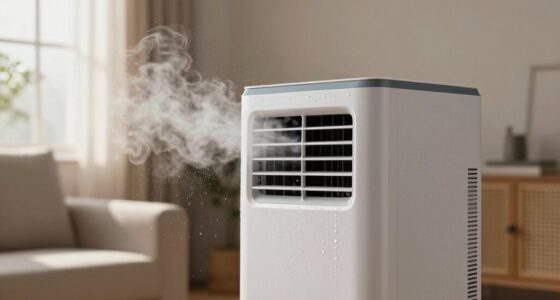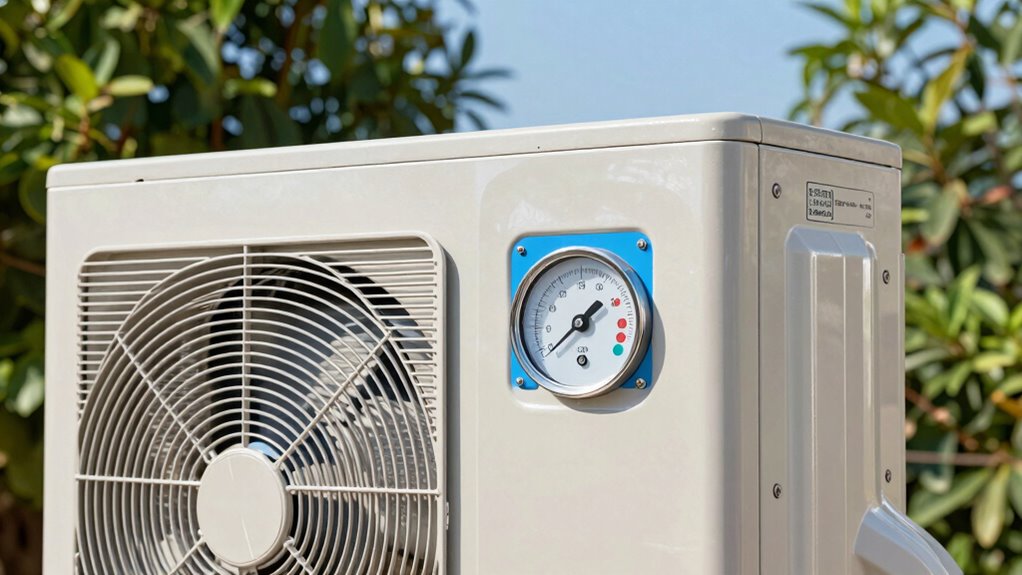
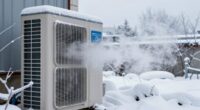
Understanding SEER, EER, HSPF, and COP helps you evaluate heating and cooling efficiency. SEER measures seasonal cooling performance, while EER shows efficiency during hot peak times. HSPF indicates heating efficiency over a season, and COP compares heat output to electrical input. Higher ratings mean better savings and performance. Knowing these ratings lets you make smarter choices for your home’s comfort and energy bills. Keep exploring to learn how these numbers impact your energy use.
Key Takeaways
- SEER measures seasonal cooling efficiency, while EER assesses peak-condition cooling performance; higher ratings indicate greater energy savings.
- HSPF evaluates heat pump heating efficiency over a season; COP indicates heat output per unit of electrical input, with higher values being more efficient.
- These ratings help compare appliances and vehicles for eco-friendliness, cost-effectiveness, and compliance with energy standards.
- Higher efficiency ratings reduce utility bills, support sustainable home upgrades, and optimize energy use during heating and cooling.
- Combining ratings with maintenance and proper home sealing maximizes energy savings and enhances overall home comfort.
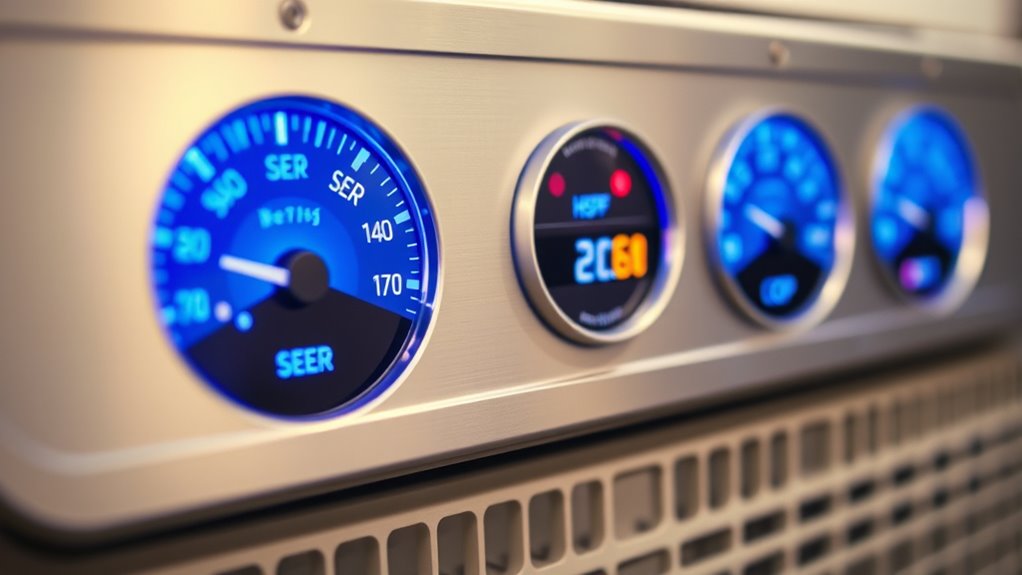
Have you ever wondered how energy-efficient appliances or vehicles are rated? Understanding these ratings helps you make smarter choices about your home comfort and energy bills. For example, when deciding between a heat pump vs furnace, knowing their efficiency ratings can guide you toward the most cost-effective and eco-friendly option. These ratings, including SEER, EER, HSPF, and COP, are designed to quantify how well heating and cooling equipment performs. They give you a clear picture of how much energy you’ll save in the long run, so you can optimize your home’s efficiency and reduce your utility bills.
Understanding energy efficiency ratings helps you choose cost-effective, eco-friendly appliances and vehicles.
The Seasonal Energy Efficiency Ratio (SEER) measures the cooling efficiency of air conditioners and heat pumps during typical seasonal conditions. The higher the SEER, the less energy the unit consumes to produce cooling, translating into lower electricity costs. When considering energy savings tips, look for units with high SEER ratings to maximize your savings, especially during hot months. The Energy Efficiency Ratio (EER), on the other hand, assesses the cooling efficiency at a specific set of conditions, usually on very hot days. It helps you understand how your equipment performs under peak usage, which is essential for managing energy costs during heatwaves. A higher EER indicates better efficiency, meaning you get more cooling for less energy.
For heating, the Heating Seasonal Performance Factor (HSPF) measures the efficiency of heat pumps over a heating season. Since heat pumps are often compared to traditional furnaces, knowing their HSPF helps you decide whether a heat pump vs furnace makes more sense for your climate and budget. A higher HSPF means better energy savings, especially if you plan to rely on your heat pump for most of the year. In the end, the Coefficient of Performance (COP) offers a universal efficiency metric for heat pumps and other heat transfer devices. It indicates how much heat energy you get out for each unit of electrical energy you put in. A COP above 3 is generally considered efficient, meaning you’re getting three times the heat energy for every dollar spent on electricity.
Additionally, understanding how these ratings relate to energy efficiency standards can help you choose appliances that meet current regulations and optimize your home’s performance. All these ratings help you identify appliances that will keep your home comfortable while saving money on energy. To make the most of these metrics, combine them with energy savings tips like regular maintenance, sealing leaks, and setting your thermostat wisely. Whether you’re choosing a heat pump vs furnace or upgrading your cooling system, understanding these efficiency ratings ensures you invest in equipment that minimizes energy waste and maximizes savings. With this knowledge, you’ll confidently select appliances that are both eco-friendly and budget-conscious, making your home more efficient and comfortable year-round.
Frequently Asked Questions
How Do Seasonal Ratings Differ From Standard Efficiency Metrics?
Seasonal ratings account for seasonal variation and climate impact, showing how efficiently your system works throughout an entire year. Unlike standard efficiency metrics, which measure performance under specific conditions, seasonal ratings reflect real-world performance across changing weather patterns. This means you get a better idea of how well your system adapts to seasonal shifts, helping you choose equipment that maintains efficiency regardless of climate fluctuations.
Are Higher Ratings Always Better for My Specific Climate?
Higher ratings can be better, but they aren’t always the best choice for your climate. Consider your climate conditions and how often you’ll run your system; in mild climates, lower ratings might suffice. In colder or hotter environments, higher ratings guarantee better efficiency and savings. The rating significance depends on your local weather, energy costs, and usage, so choose an HVAC system that aligns with your climate considerations for ideal performance.
Do These Ratings Account for Installation and Maintenance Costs?
Higher ratings don’t cover installation costs or ongoing maintenance considerations. While a unit with top ratings might save you money on energy bills, it could also mean higher installation expenses or more complex upkeep. You need to weigh initial costs against long-term savings. Remember, efficiency ratings focus on performance, but don’t account for the true costs of installation and maintenance, which can profoundly impact your overall investment.
Can These Ratings Be Used to Compare Different Types of HVAC Systems?
Yes, you can use these ratings to compare different types of HVAC systems, but keep in mind their rating consistency. These ratings help you understand efficiency differences, yet comparison limitations exist because they often measure distinct aspects like cooling or heating performance. So, while useful, don’t rely solely on these ratings—consider other factors like installation costs and system features for a complete evaluation.
How Often Should I Check or Update the Efficiency Ratings of My System?
You should verify your system’s efficiency ratings during your regular maintenance schedules, ideally once a year. Keep an eye on rating fluctuations, as they may indicate performance issues or aging components. Regularly updating these ratings ensures your system runs efficiently and saves you money on energy bills. If you notice significant changes, consider scheduling maintenance or upgrades to keep your HVAC system operating at peak performance.
Conclusion
Now that you’ve unraveled the mystery behind SEER, EER, HSPF, and COP, you’re equipped to make smarter choices about energy efficiency. Think of these ratings as your personal efficiency compass, guiding you through the maze of options. Remember, understanding these numbers isn’t just about saving money — it’s about embracing a greener future. So, next time you shop for HVAC equipment, let these ratings be your trusted allies — your secret weapon in the world of energy savings.