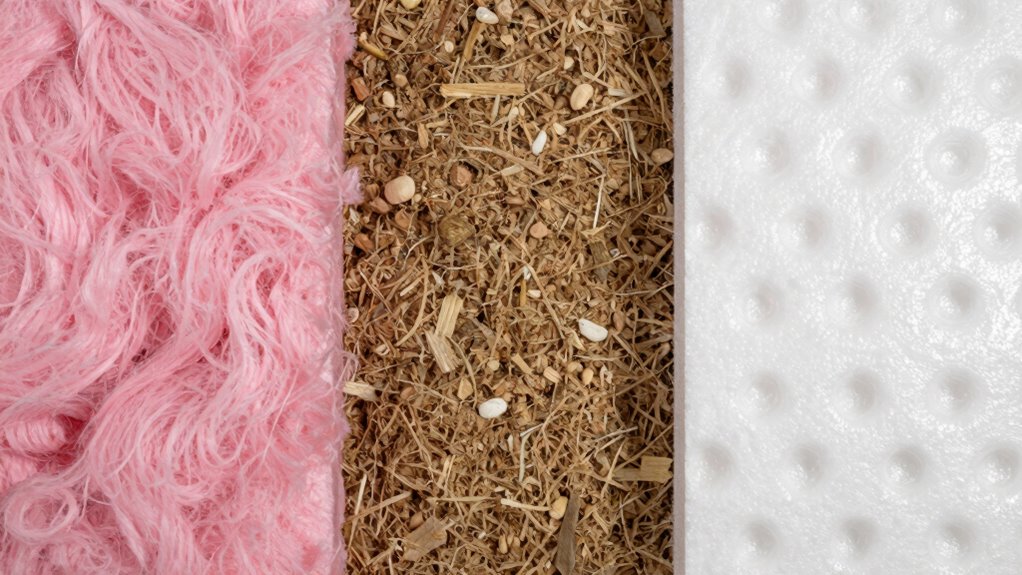

If you’re exploring insulation options, you’ll find fiberglass, cellulose, and foam are popular choices, each with benefits. Fiberglass is affordable and easy to install but less moisture resistant. Cellulose, made from recycled paper, offers strong air sealing and eco-friendliness. Foam, especially spray foam, provides high R-values and excellent gap sealing but tends to be pricier. Understanding these differences helps you pick the best for your home, which you’ll get to explore further below.
Key Takeaways
- Fiberglass insulation is affordable, easy to install, and suitable for walls and attics, but less moisture-resistant.
- Cellulose is made from recycled paper, offering high R-value, good air sealing, and environmentally friendly benefits.
- Foam insulation, available as spray foam, provides superior air sealing and moisture resistance, with higher costs.
- Each material has distinct performance traits, installation methods, and environmental impacts influencing choice.
- Proper installation and material selection optimize energy efficiency, durability, and sustainability of home insulation.

Frost King SP1 Multi-Purpose Fiberglass Insulation Roll, 16" W x 3/4" T x 48" L
Cut to size fiberglass
As an affiliate, we earn on qualifying purchases.
As an affiliate, we earn on qualifying purchases.
What Is Home Insulation and Why Does It Matter?
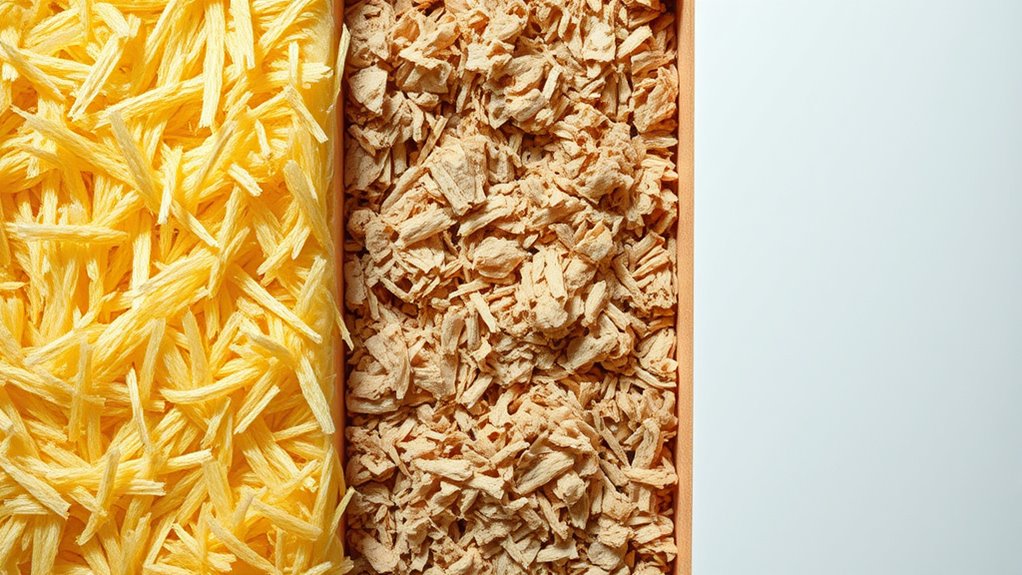
Home insulation helps keep your house warm in winter and cool in summer by reducing heat transfer. It plays a key role in maintaining thermal comfort, so your home feels just right year-round. Good insulation also aids in moisture control, preventing excess humidity that can cause mold or damage. By managing temperature fluctuations and moisture levels, insulation creates a healthier indoor environment. It minimizes drafts and cold spots, making your living space more comfortable. Proper insulation also helps you save on energy bills by reducing the need for heating and cooling. When installed correctly, it ensures consistent indoor temperatures and protects your home from moisture-related issues. Additionally, proper installation techniques are crucial for maximizing insulation effectiveness. Overall, insulation isn’t just about energy efficiency; it’s essential for comfort and maintaining a healthy, durable home.

BEEST FullStop Spray Foam Insulation Kit for Walls and Attic – 240 Board ft/sq.ft. Perfect Heat & Acoustic Insulation for Reduced Energy Bills – 12x Spray Foam Can, 1 Cleaner, Pro X Gun & Safety Gear
Beest FullStop DIY Spray Foam Insulation Kit: Our spray foam insulation delivers exceptional thermal insulation and soundproofing, achieving…
As an affiliate, we earn on qualifying purchases.
As an affiliate, we earn on qualifying purchases.
What Are the Key Benefits and Drawbacks of Fiberglass Insulation?
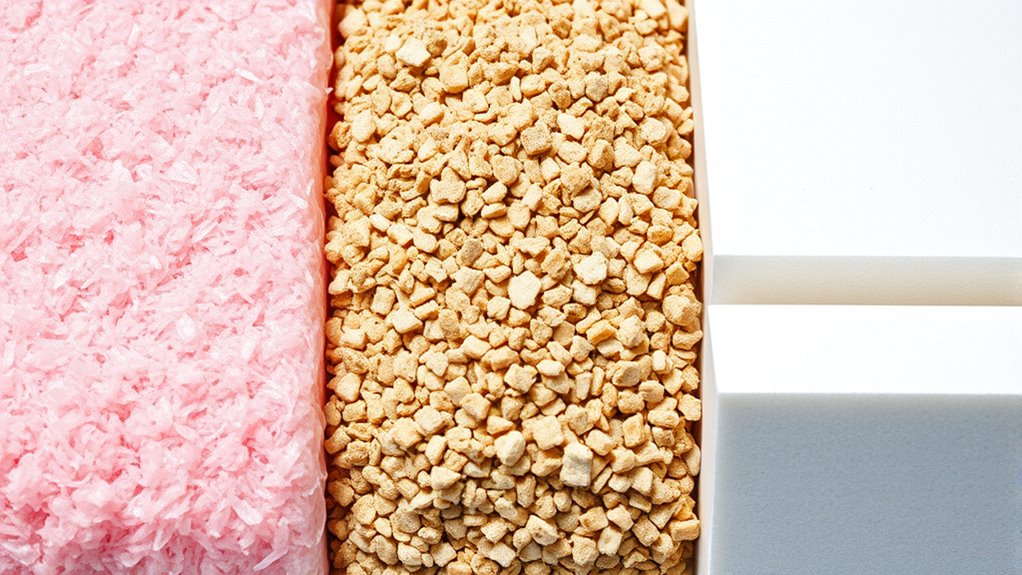
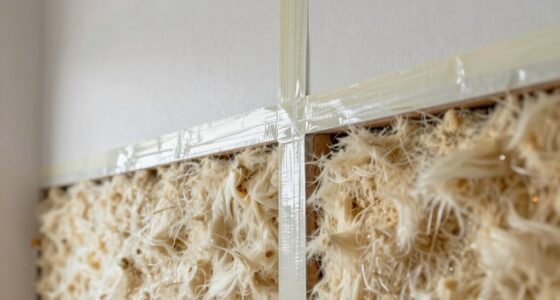
Fiberglass insulation is a popular choice for many homeowners because it offers an effective way to reduce heat transfer and improve energy efficiency. Its installation techniques are straightforward, often involving batts or rolls that fit between wall studs or ceiling joists. One key benefit is its affordability and widespread availability. However, fiberglass isn’t highly moisture resistant, so it can absorb water if exposed to leaks or high humidity, leading to mold growth and reduced thermal performance. Proper installation and vapor barriers can mitigate these issues. A drawback is that fiberglass can irritate your skin and lungs during handling, making safety precautions essential. Despite this, fiberglass remains a versatile, cost-effective option for many homes, especially when moisture resistance is adequately managed. Additionally, understanding sizing and load‑planning tools can help ensure that insulation is appropriately matched to your home’s needs for optimal performance.
BEEST FullStop Spray Foam Insulation Kit for Walls and Attic – 240 Board ft/sq.ft. Perfect Heat & Acoustic Insulation for Reduced Energy Bills – 12x Spray Foam Can, 1 Cleaner, Pro X Gun & Safety Gear
Beest FullStop DIY Spray Foam Insulation Kit: Our spray foam insulation delivers exceptional thermal insulation and soundproofing, achieving…
As an affiliate, we earn on qualifying purchases.
As an affiliate, we earn on qualifying purchases.
How Does Cellulose Insulation Perform in Homes?
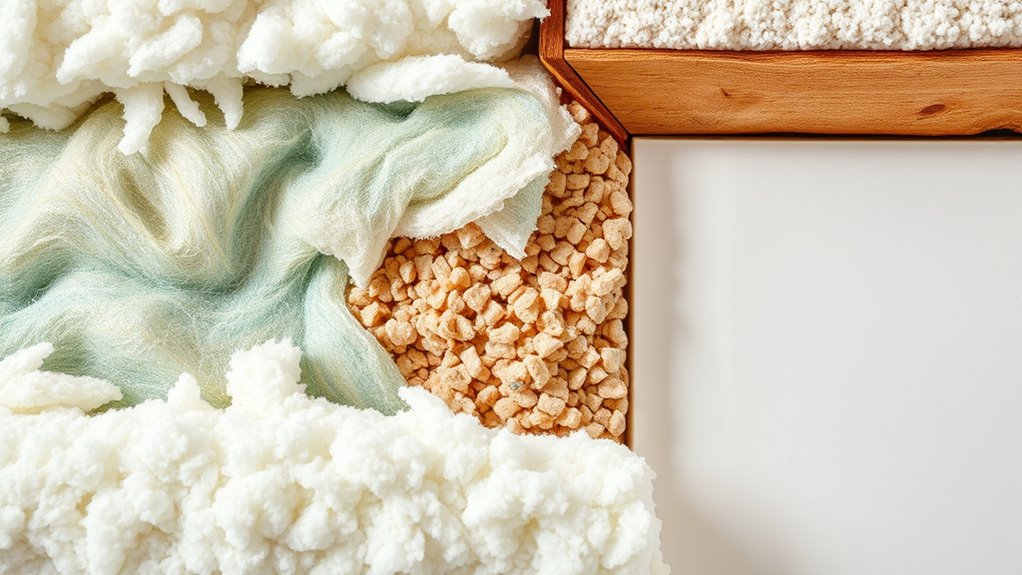
Cellulose insulation offers strong thermal resistance and a high R-value, helping keep your home warm in winter and cool in summer. It also acts as an effective air barrier, reducing drafts and improving energy efficiency. Plus, it’s environmentally friendly and safe to install, making it a smart choice for eco-conscious homeowners. Additionally, proper installation techniques are essential to maximize its insulating performance and longevity.
Thermal Resistance and R-Value
How well does cellulose insulation stand up to temperature changes? Cellulose has a low thermal conductivity, meaning it effectively slows heat transfer, which boosts its R-value. The R value comparison shows that cellulose typically offers an R-value of about 3.2 to 3.8 per inch, making it a reliable insulator. Its dense structure helps resist heat flow, providing consistent thermal resistance over time. Unlike some other materials, cellulose’s R-value remains stable, even in humid conditions. This consistency ensures your home stays warmer in winter and cooler in summer. thermal conductivity is a crucial factor in its performance. Overall, cellulose insulation’s thermal resistance makes it an excellent choice for energy efficiency, helping you reduce heating and cooling costs while maintaining a comfortable indoor environment.
Air Sealing Capabilities
Because of its dense, fibrous structure, cellulose insulation excels at sealing gaps and reducing air leaks in your home. Its compact nature prevents air from slipping through small cracks and crevices, making it highly effective for draft prevention. When installed properly, cellulose fills wall cavities and attic spaces thoroughly, minimizing air leakage that can lead to higher energy bills and discomfort. Unlike loose materials that settle over time, cellulose maintains its density, ensuring consistent air sealing performance. This helps you maintain a more stable indoor temperature and reduces the workload on your heating and cooling systems. Overall, cellulose’s ability to block drafts and seal air leaks makes it a smart choice for improving your home’s energy efficiency and comfort.
Environmental Impact and Safety
Ever wonder how cellulose insulation impacts your home’s safety and the environment? Cellulose is made primarily from recycled paper, making it an eco-friendly choice due to its strong recycling practices. It’s treated with fire retardants that are generally safe when installed properly, but chemical safety remains a consideration; you should verify that treatments meet safety standards. Unlike fiberglass, cellulose produces less waste and has a lower embodied energy, reducing its environmental footprint. Additionally, its ability to be recycled at the end of its lifespan further benefits the environment. Overall, cellulose insulation offers a sustainable option that balances energy efficiency with safety, provided that proper precautions are followed during installation to minimize exposure to chemicals. Furthermore, high fire safety standards are crucial for ensuring that treated cellulose remains a safe insulation choice.

ZXQDRE Sauna Foil Vapor Barrier, 500 sqft Aluminum Insulation Roll Heavy-Duty Non-Perforated Reflective Thermal Barrier for Energy Efficient Sauna, Attic, Garage and Crawl Space (4FT x 125FT)
Ultimate Sauna Performance: Our premium radiant barrier foil reflects up to 96% of radiant heat, ensuring your sauna…
As an affiliate, we earn on qualifying purchases.
As an affiliate, we earn on qualifying purchases.
What Are the Types and Advantages of Foam Insulation?
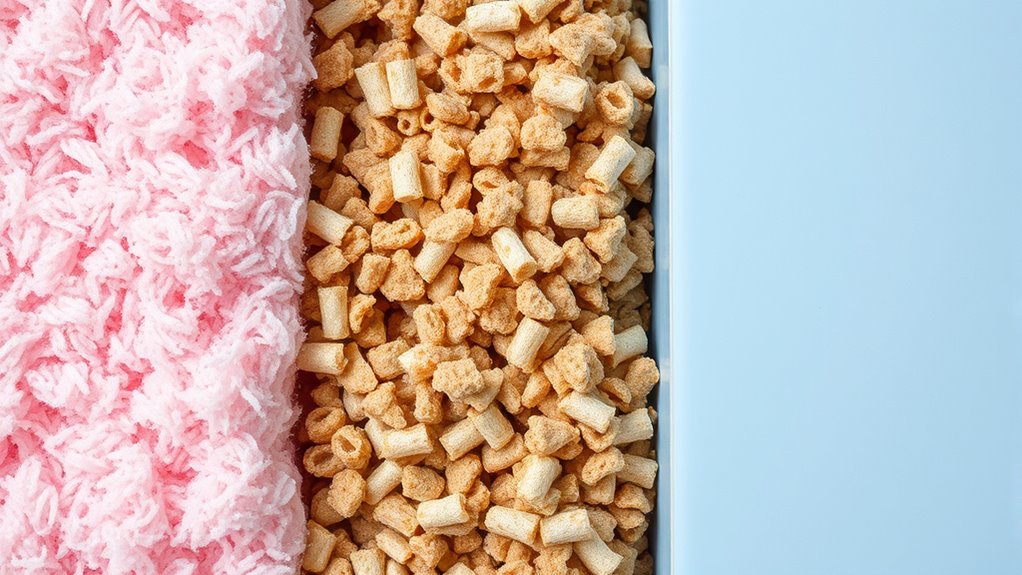
Foam insulation is a popular choice for its superior thermal performance and versatility. It comes mainly in spray foam form, which expands upon application to fill gaps and cracks thoroughly. Open cell foam, a type of spray foam, is soft, lightweight, and provides excellent soundproofing. It’s ideal for interior walls and attics. European cloud innovation emphasizes sustainable solutions, similar to how foam insulation enhances energy efficiency in buildings.
| Type | Advantages | Best Use |
|---|---|---|
| Open Cell Foam | Cost-effective, good air barrier, soundproof | Interior walls, attics |
| Closed Cell Foam | Higher R-value, moisture-resistant, sturdy | Exterior walls, basements |
| Spray Foam | Seals gaps, improves energy efficiency | Whole-house insulation |
How Do R-Values Affect Insulation Effectiveness?

R-values measure how well insulation resist heat flow, directly impacting its ability to keep your home warm in winter and cool in summer. Higher R-values indicate better thermal conductivity resistance, meaning less heat escapes or enters your space. This measurement helps you compare insulation materials and choose the right one for your climate and needs. A higher R-value enhances insulation durability by maintaining consistent thermal performance over time, even as materials age or face environmental stress. Keep in mind that R-values are cumulative; adding layers can increase overall effectiveness. Understanding R-values allows you to optimize your insulation choices, ensuring your home stays comfortable while reducing energy costs. Additionally, sound vibrations from sound therapy are believed to enhance cellular regeneration and overall health, which can be beneficial in maintaining your home’s indoor air quality and comfort. Ultimately, the right R-value depends on your specific climate and insulation application.
Which Insulation Works Best in Different Spaces?
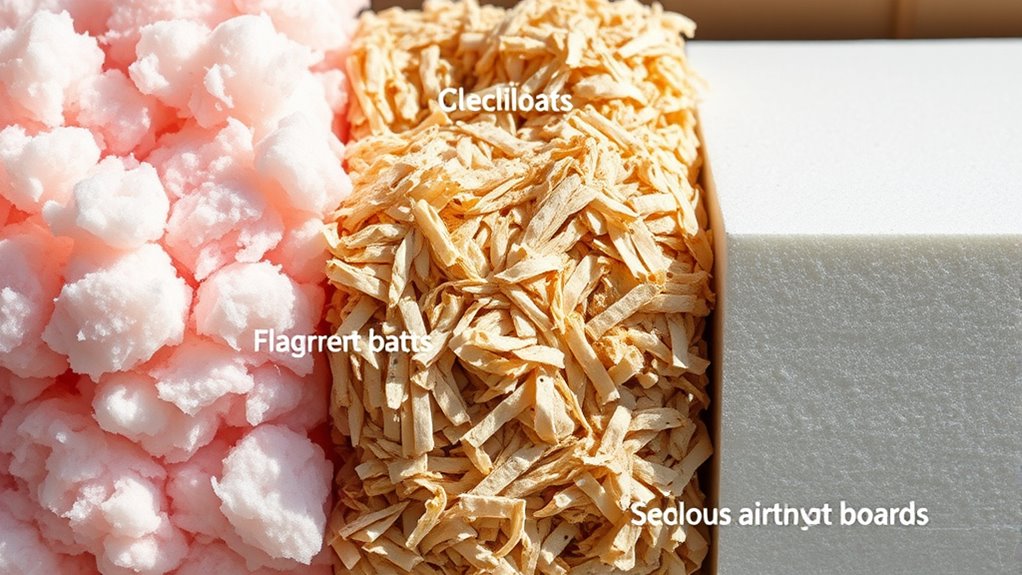
Choosing the right insulation depends on the specific space you’re insulating, as different areas have unique requirements. For example, fiberglass works well in walls and attics because it’s easy to install and provides good R-value, but it doesn’t offer moisture control. Cellulose is ideal for existing walls during insulation installation, as it fills gaps well and resists moisture, reducing mold risk. Foam insulations, like spray foam, are excellent in areas prone to air leaks and moisture infiltration, such as basements and crawl spaces, because they provide both insulation and moisture control. Consider the space’s exposure to humidity, the need for moisture resistance, and the ease of installation when choosing insulation types. Matching the insulation to the space’s demands ensures ideal performance and long-term durability. Understanding proper installation techniques can significantly impact insulation effectiveness and longevity.
How Do Costs and Savings Add Up Over Time?
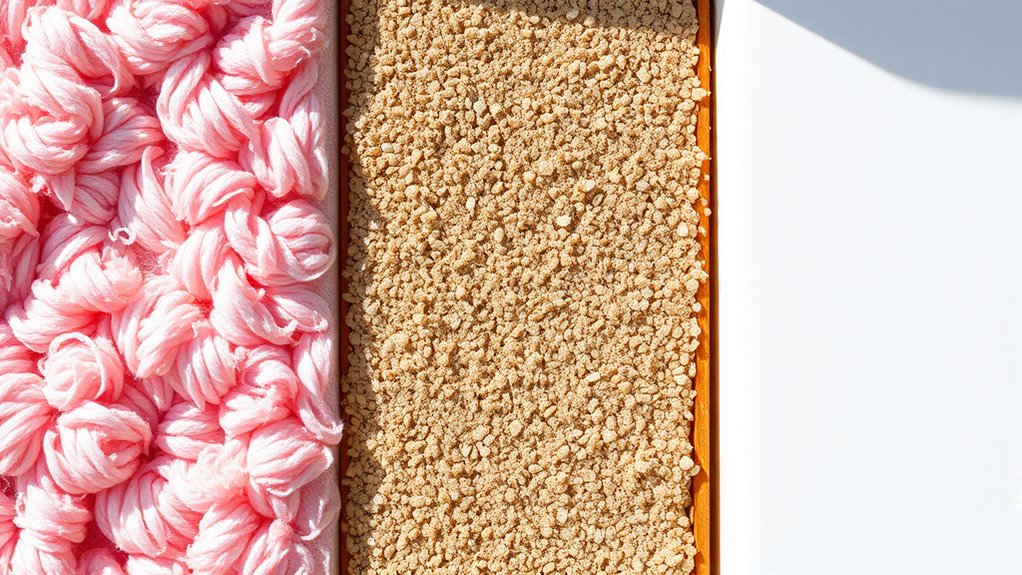
Your initial investment in insulation varies, but it can lead to significant savings on energy bills over time. By comparing long-term energy savings with upfront costs, you’ll see how some options pay off faster than others. Don’t forget to weigh maintenance and replacement costs, which also impact your overall savings. Additionally, considering AI-powered energy management can optimize your home’s efficiency and further reduce costs.
Initial Investment Differences
Have you ever wondered how the initial costs of different insulation types compare, and how those expenses translate into long-term savings? The initial investment varies markedly. Fiberglass tends to have lower installation expenses, making it budget-friendly upfront. Cellulose costs are moderate, often requiring specialized equipment. Foam insulation generally involves higher initial costs due to material and installation complexity. Here’s a quick comparison:
| Insulation Type | Initial Costs & Installation Expenses |
|---|---|
| Fiberglass | Lower costs, easy installation |
| Cellulose | Moderate costs, requires professional installation |
| Foam | Higher costs, specialized equipment needed |
| Cost Range | $0.50–$2.00 per sq. ft. |
| Longevity | Varies; initial investment impacts long-term value |
Considering factors like energy efficiency and durability can help maximize your investment over time. Understanding these differences helps you plan your budget effectively.
Long-Term Energy Savings
While the initial cost of insulation is important, the real savings come from how much energy you save over time. Better energy efficiency reduces your heating and cooling bills, making insulation a smart investment. Durable insulation materials maintain their effectiveness longer, ensuring consistent energy savings year after year. Fiberglass, cellulose, and foam each vary in insulation durability, impacting long-term performance. Over time, the cost savings from improved energy efficiency can offset the upfront expense, especially in climates with extreme temperatures. By choosing high-quality insulation, you maximize these savings and reduce your environmental impact. Remember, the most cost-effective insulation isn’t just about the initial price—it’s about how well it maintains energy efficiency over the years.
Maintenance and Replacement
Over time, the true costs and savings of insulation depend heavily on proper maintenance and timely replacement. Regular inspections help identify issues like gaps, moisture damage, or settling, which can reduce effectiveness. If you attempt DIY installation, ensure you follow insulation regulations to avoid safety hazards or code violations. Proper maintenance keeps insulation performing efficiently, saving you money on energy bills. When insulation becomes old or damaged beyond repair, replacing it promptly prevents increased energy costs and potential structural issues. Keep in mind that different insulation types have varying lifespans; foam may last longer than fiberglass, for example. Budgeting for periodic maintenance and knowing when to replace insulation helps maximize your investment, ensuring your home stays comfortable and energy-efficient over time.
What Is the Environmental Impact of Different Insulation Materials?
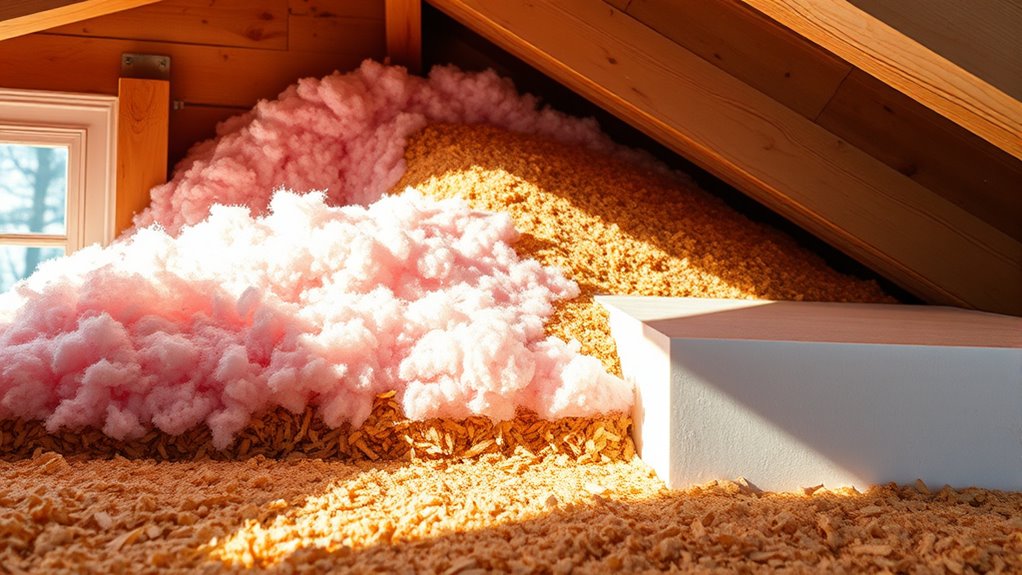
Ever wondered how different insulation materials affect the environment? The impact varies based on factors like resource extraction, manufacturing, and disposal. Some options, like cellulose, are made from recycled paper, making them a sustainable material choice. Others, such as fiberglass and foam, often require energy-intensive manufacturing processes, which can contribute to pollution. Eco friendly manufacturing practices help reduce these effects, but their adoption isn’t universal. Additionally, the lifespan and recyclability of insulation influence its environmental footprint. Materials that can be recycled or biodegrade minimize waste and pollution. Choosing insulation made from sustainable materials and produced with eco friendly manufacturing methods can remarkably lessen your home’s ecological impact, promoting a healthier planet while maintaining energy efficiency.
Frequently Asked Questions
How Long Does Each Insulation Type Typically Last Before Needing Replacement?
You can expect fiberglass insulation to last around 20-30 years, while cellulose often holds up for about 20 years before needing replacement. Foam insulation, depending on the type, can last 80-100 years with proper maintenance. The durability lifespan influences the replacement timeline, so it’s good to inspect your insulation regularly. When signs of wear or damage appear, plan for replacement to maintain energy efficiency and comfort in your home.
Are There Health Concerns Associated With Installing or Aging Insulation Materials?
Be aware that installing or aging insulation can pose health hazards. Fiberglass fibers might cause skin irritation or respiratory risks if inhaled, while older insulation may release dust or mold, escalating toxicity concerns. Cellulose insulation can contain chemicals that irritate your skin or eyes, and foam insulation sometimes releases volatile organic compounds (VOCs). Always wear protective gear during installation and have professional inspections to minimize health risks and material toxicity.
Can Insulation Types Be Combined for Enhanced Thermal Performance?
Yes, you can combine insulation types for better thermal performance by creating a multi-layer insulation system or a hybrid system. This approach allows you to maximize the benefits of each material, such as fiberglass’s ease of installation and cellulose’s high R-value. By layering different insulations, you improve energy efficiency and comfort. Just make certain proper installation and consider consulting a professional to optimize your hybrid system effectively.
What Are the Maintenance Requirements for Different Insulation Materials?
You need to regularly inspect your insulation for damage, pests, or mold, especially if it’s fiberglass or cellulose. Maintain installation safety by avoiding disturbance during repairs and ensuring proper ventilation. For foam insulation, check for cracks or signs of deterioration. Consider environmental impact by choosing eco-friendly options and disposing of damaged material responsibly. Proper upkeep ensures peak thermal performance and minimizes health or environmental risks.
How Do Insulation Materials Perform in Extreme Weather Conditions?
You’ll find that insulation materials vary in temperature resilience and moisture resistance during extreme weather. Fiberglass generally withstands high temperatures but isn’t very moisture-resistant, risking mold. Cellulose offers good moisture resistance and insulation in cold weather but can settle over time. Foam insulations excel in temperature resilience, maintaining their R-value, and provide superior moisture resistance, preventing mold growth. Choose based on your climate to guarantee ideal performance and durability.
Conclusion
Choosing the right insulation is like planting a sturdy tree—you’ll enjoy its shelter and benefits for years to come. By understanding your options, you can build a cozy, energy-efficient home that stands strong against the elements. Remember, the right insulation isn’t just about today’s comfort but shaping a sustainable future. Make an informed choice, and watch your home flourish like a well-tended garden—thriving and resilient through every season.