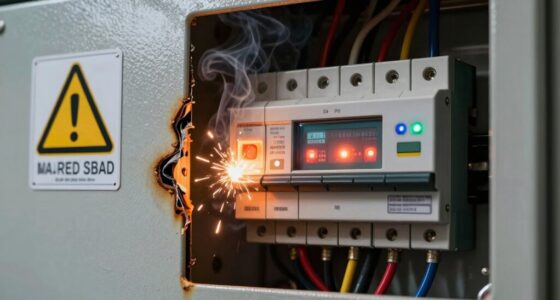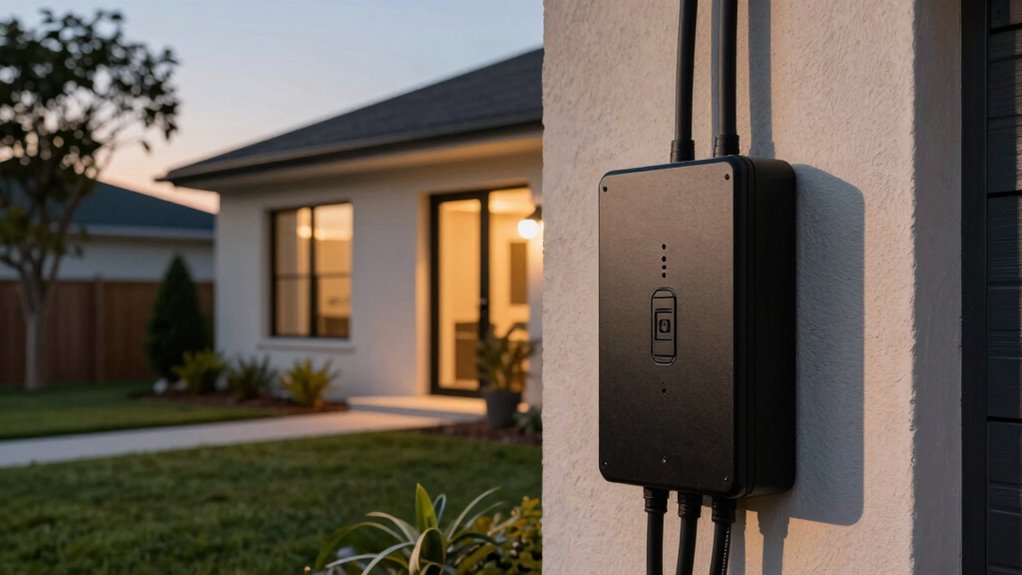
Whole-house surge protection shields your home’s electrical system from external surges caused by lightning and power fluctuations, helping to keep your lights steady and your appliances safe. It prevents immediate damage by diverting excess voltage away from devices but doesn’t safeguard against internal power issues, wiring faults, or damage caused by electrical fires. While it’s a valuable safety measure, understanding its limits ensures you’re fully protected—continue exploring to learn more.
Key Takeaways
- Whole-house surge protectors shield against external power surges from lightning or line issues, protecting appliances and wiring.
- They prevent flickering, dimming, and extend bulb and device lifespan by maintaining stable power flow.
- Surge protectors do not guard against internal electrical faults, appliance operation fluctuations, or wiring problems.
- Proper electrical maintenance and updates are necessary, as surge protectors don’t address internal wiring or component failures.
- Their protective scope is limited to external surges; they do not prevent all types of electrical damage or fires.

Power surges can strike unexpectedly, putting your entire home’s electrical system at risk. When a sudden surge occurs, it can cause immediate damage to your appliances and electrical devices, but it also has longer-term effects that might not be as obvious right away. One of the most significant benefits of whole-house surge protection is that it helps maintain your lighting efficiency. Surges can cause fluctuations that dim your lights or cause flickering, which not only affects the ambiance of your home but also shortens the lifespan of your bulbs. By installing a surge protector at your main electrical panel, you help guarantee consistent power flow, which keeps your lighting looking steady and bright, reducing the need for frequent replacements. Additionally, surge protection can prolong the longevity of your appliances. When power surges hit, they often send spikes through your wiring that can wear out or damage sensitive components inside your appliances, especially those with microprocessors like refrigerators, washing machines, or HVAC systems. Over time, these small, repeated surges can reduce the lifespan of your appliances, leading to costly repairs or replacements. A whole-house surge protector acts as a first line of defense, diverting excess voltage away from your devices and preventing it from reaching critical components, thereby extending their operational life. Moreover, understanding electrical system safety can help you make more informed decisions about protecting your home from power issues.
However, it’s important to understand what a whole-house surge protector doesn’t do. While it’s effective at blocking most external surges caused by lightning strikes or power line issues, it doesn’t protect against every type of electrical problem. For example, it won’t shield your home from internal power fluctuations caused by regular operation of large appliances or faulty wiring within your house. Nor does it prevent damage caused by electrical fires or short circuits unrelated to surges. Additionally, surge protectors aren’t a substitute for proper electrical maintenance. If your wiring is outdated or damaged, a surge protector can only do so much; addressing underlying electrical issues is essential for thorough safety.
In essence, whole-house surge protection is a smart investment that safeguards your home’s electrical system from many external threats, helping you maintain lighting efficiency and extend appliance longevity. Still, it’s vital to recognize its limitations and complement it with regular electrical checkups and proper appliance care. Doing so ensures you’re giving your home the best possible defense against unexpected power fluctuations, keeping your family safe and your appliances running smoothly for years to come.
whole house surge protector
As an affiliate, we earn on qualifying purchases.
As an affiliate, we earn on qualifying purchases.
Frequently Asked Questions
How Much Does Whole-House Surge Protection Cost?
You can expect to pay between $200 and $600 for whole-house surge protection, depending on the system’s features and installation complexity. Cost considerations include the device’s quality, warranty coverage, and whether professional installation is needed. Higher-end models often come with better warranties, giving you peace of mind. Remember, investing in a reliable surge protector can save you money by preventing costly damage to your home’s electrical system.
Can It Protect Against All Types of Electrical Surges?
Think of whole-house surge protection as a sturdy fence around your home; it shields against many threats but not all. It primarily covers voltage surges from power line events, but equipment limitations mean it might not handle all surge types, like lightning strikes or internally generated surges. So, while it offers broad coverage, some extreme surges can bypass it, making additional protections wise for complete safety.
Is Professional Installation Necessary for Surge Protectors?
You should definitely consider professional services for surge protector installation. Proper installation requirements are vital to ensure the device functions correctly and provides maximum protection. While some surge protectors are designed for DIY installation, consulting a professional guarantees safety and compliance with electrical codes. They have the expertise to handle complex wiring and ensure the surge protector is correctly integrated into your electrical system, giving you peace of mind.
How Often Should Surge Protection Devices Be Inspected or Replaced?
Think of your surge protection device as a trusted guard dog—it needs regular check-ups to stay alert. You should inspect your surge protector at least once a year and replace it every 5 to 10 years, depending on the device lifespan and usage. Regular maintenance keeps your home’s defenses strong, ensuring it can continue to protect your appliances and electronics from unexpected power surges.
Does It Protect Outdoor Appliances and Systems?
Whole-house surge protection mainly safeguards your indoor electrical system. It doesn’t reliably protect outdoor equipment and garden appliances because they’re exposed to direct lightning strikes and weather conditions. To shield outdoor equipment, you should install specialized surge protectors designed for outdoor use. These devices offer better protection for outdoor appliances and garden tools, ensuring they survive power surges caused by storms or electrical faults.
electric panel surge protector
As an affiliate, we earn on qualifying purchases.
As an affiliate, we earn on qualifying purchases.
Conclusion
Remember, whole-house surge protection acts like a sturdy shield, defending your home from lightning strikes and power surges. However, it’s not a magic bullet—it doesn’t cover everything or prevent all damage. Think of it as the main gatekeeper, standing guard, but still needing additional defenses for sensitive electronics. By investing in this protection, you’re building a fortress against unpredictable power surges, giving you peace of mind amid the stormy unpredictability of electrical surges.
home surge protection system
As an affiliate, we earn on qualifying purchases.
As an affiliate, we earn on qualifying purchases.
lightning surge protector for home
As an affiliate, we earn on qualifying purchases.
As an affiliate, we earn on qualifying purchases.