Backfeeding might seem to work temporarily, but it hides serious risks like electrical shocks, fires, and danger to utility workers. Improper wiring or makeshift setups can cause hidden hazards that aren’t immediately obvious, increasing the chance of overheating, sparks, or electrocution. Even if your system seems to function, these dangers can develop silently and suddenly. Keep in mind, understanding the full risks can help you avoid accidents and protect everyone involved—more details follow.
Key Takeaways
- Backfeeding bypasses standard electrical safety protocols, risking electric shocks and electrocution even if the system appears functional.
- Improper wiring or makeshift setups can cause overheating, fires, and insulation degradation, posing hidden hazards.
- It can energize utility lines unexpectedly, endangering utility workers and emergency responders during repairs.
- Hidden faults or overloads may not be visible but still create significant fire and shock risks.
- Following proper electrical standards is essential to prevent hazards, regardless of whether the system “works.”
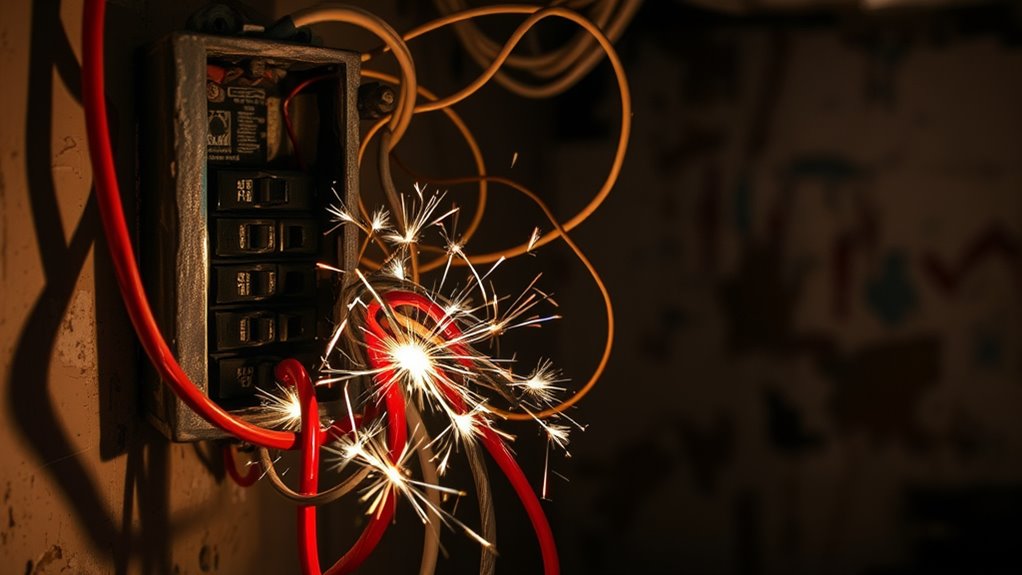
Have you ever wondered what makes backfeeding so risky? It might seem like a quick fix or a clever workaround, especially if it appears to work temporarily. But beneath that surface, serious dangers lurk that could threaten your safety and your home. One of the main reasons why backfeeding is hazardous is because it introduces electrical hazards that most homeowners aren’t prepared to handle properly. When you backfeed, you’re essentially bypassing the normal flow of electricity through the utility service, creating a situation where power can flow in unexpected ways. If the wiring isn’t set up correctly or if you’re not using the proper equipment, it can lead to electrical shocks, burns, or even electrocution. These risks are heightened because backfeeding often involves makeshift setups or improper connections that aren’t designed or approved by electrical codes.
More importantly, backfeeding can considerably increase fire risks. When electrical components aren’t rated for the load or when connections are loose or faulty, the heat generated can ignite surrounding materials. Over time, this heat buildup can cause wiring insulation to melt or degrade, increasing the chance of sparks that ignite fires. You might think that because your system seems to be functioning, everything is fine. However, these hidden hazards can smolder silently until they ignite, causing devastating fires that threaten lives and property. Electrical hazards from backfeeding aren’t always immediately obvious, which is why many homeowners underestimate the danger. Faulty wiring, overloaded circuits, and improper connections can all contribute to electrical fires that spread quickly.
Additionally, because backfeeding involves energizing the home’s electrical system from an alternative power source, it can backfeed power into utility lines, creating a danger for utility workers attempting to restore service. If a line worker assumes the line is de-energized, they could be struck by live current from your home’s wiring. This not only puts their safety at risk but also complicates emergency response efforts. The risks extend beyond your own property; improper backfeeding can cause wider electrical disruptions and endanger those working to restore power after outages. Moreover, understanding the proper electrical wiring standards can help prevent many of these hazards from occurring.
home electrical backfeeding safety device
As an affiliate, we earn on qualifying purchases.
As an affiliate, we earn on qualifying purchases.
Frequently Asked Questions
Can Backfeeding Be Done Safely With Proper Equipment?
Backfeeding can’t be done safely even with proper equipment because it risks unsafe generator safety and improper power transfer. Using a transfer switch is essential to prevent backfeeding, ensuring power flows correctly and safely between your generator and home. Always follow manufacturer instructions and local codes. Never connect a generator directly to an outlet or cord, as improper power transfer endangers utility workers and your household. Safety always comes first with generator use.
What Are the Legal Risks of Backfeeding?
You risk breaking utility regulations when you backfeed, which can lead to fines or legal action. Insurance implications are also significant; if an accident occurs, your policy might not cover damages caused by backfeeding. Legally, unauthorized backfeeding violates safety standards and could endanger utility workers, leading to serious penalties. Always check local laws and consult professionals before attempting any backfeeding to avoid these legal risks.
How Does Backfeeding Impact Home Appliance Warranties?
Backfeeding can void your appliance warranties because it often violates manufacturer guidelines and safety standards. When you backfeed, you risk damaging your home appliances or causing electrical faults, which manufacturers typically don’t cover under warranty. If issues arise from backfeeding, you’ll likely face warranty voidance, leaving you responsible for repair costs. Always follow proper procedures and consult professionals to avoid jeopardizing your appliance warranties and safety.
Are There Safer Alternatives to Backfeeding?
Did you know that over 80% of electrical accidents happen during DIY projects? Safer solutions include using a transfer switch or installing a dedicated generator inlet box. These alternative methods prevent backfeeding risks, protecting you and utility workers. Instead of risky backfeeding, opt for professional installation of safer alternatives. They guarantee your home’s electrical system is secure, reliable, and compliant with safety standards, giving you peace of mind during power outages.
What Immediate Steps Should I Take if Backfeeding Causes Damage?
If backfeeding causes damage, you should first turn off your main breaker to prevent further harm. Then, disconnect any damaged appliances or wiring to guarantee safety. Contact emergency preparedness services and your utility company to report the issue promptly. Always prioritize power grid safety by avoiding DIY repairs. Stay clear of exposed wires, and wait for trained professionals to assess and restore power safely.
electrical shock prevention tools
As an affiliate, we earn on qualifying purchases.
As an affiliate, we earn on qualifying purchases.
Conclusion
Remember, even if backfeeding seems to work temporarily, it’s incredibly risky—causing over 1,000 electrical accidents annually. You might think you’re avoiding power outages, but one wrong move could lead to electrocution or fires. Always prioritize safety by using proper equipment and following electrical codes. Don’t let the convenience fool you; the dangers far outweigh the benefits. Protect yourself and others by never bypassing safety protocols, because one mistake can have life-threatening consequences.
home fire safety electrical kit
As an affiliate, we earn on qualifying purchases.
As an affiliate, we earn on qualifying purchases.
utility line safety tester
As an affiliate, we earn on qualifying purchases.
As an affiliate, we earn on qualifying purchases.